
-

-


Follow Us
-

 On Facebook
 On Flipboard


Two state legislatures. Two billion-dollar packages. One football team sitting between them, watching the offers climb. The Chicago Bears have turned stadium negotiations into something that resembles a hostage auction, with Illinois and Indiana racing to assemble public financing deals before a late-spring or early-summer 2026 window the team itself controls. Bears President Kevin Warren has insisted publicly that the process “is not about leverage,” even as the front office has advanced planning in both states on parallel tracks. Nearly $1.9 billion in combined potential public money now hangs in the balance.
The $197 Million Down Payment
The Bears bought the former Arlington International Racecourse property in Arlington Heights for $197.2 million in February 2023. That purchase turned 326 acres of suburban land into the centerpiece of a roughly $5 billion development vision, with the stadium itself projected at about $2 billion in private team investment. The team says it will cover stadium construction. Taxpayers would cover the rest. In Illinois, that “rest” is anchored by an ask of about $855 million in public infrastructure funding for roads, utilities, and transit connections — the kind of spending that makes a billionaire’s investment functional. Illinois hadn’t finalized that legislation when Indiana saw an opening.
Indiana Smelled Blood

While Illinois lawmakers debated how to structure tax agreements, Indiana moved. The state legislature passed Senate Bill 27, creating the Northwest Indiana Stadium Authority, and laid the groundwork for a domed stadium in Hammond with a public contribution package generated from bonding against local taxes — a structure modeled on the financing used for Lucas Oil Stadium in Indianapolis. Reports describe long-dated bonds with the stadium potentially transferring to the Bears for one dollar after debt repayment. One dollar. For a facility taxpayers financed. Analysts began describing the competition as a near coin flip. The assumption that teams only threaten relocation as a last resort was already cracking.
Same Day, Opposite Directions

Indiana’s House Ways and Means Committee unanimously approved the stadium funding bill in February 2026. Around the same period, closely watched Illinois action on a competing framework was repeatedly delayed. One state accelerating, the other stalling. That timing wasn’t coincidence. It was the playbook working exactly as designed. NFL teams create parallel tracks, let momentum build in the competing state, and watch the home state move toward concessions. Warren’s “not about leverage” line has aged poorly. The deeper truth: relocation threats are systematic, premeditated negotiation tools baked into many modern stadium deals.
The Infrastructure Shell Game
The trick is in the categories. The Bears say they’ll pay for stadium construction. Generous, right? Except the $855 million in “infrastructure” spending in Illinois is what makes the stadium possible. Without public roads, sewers, and transit, the building is useless. Separating “stadium” from “infrastructure” is an industry-standard move that makes the public cost look smaller on paper. Indiana’s deal skips much of the pretense, bundling a substantial direct public contribution generated through bonded local taxes. Different packaging, same result: taxpayers fund the foundation so a private franchise can profit from the structure above it.
The Debt You’re Still Paying
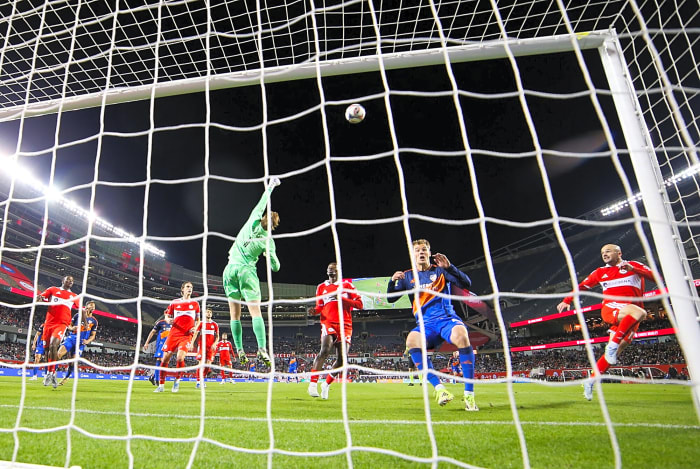
Soldier Field underwent a major renovation completed in 2003, financed through bonds issued by the Illinois Sports Facilities Authority. Hundreds of millions in outstanding ISFA debt remain on the books, with payments running into the early 2030s. The Bears want to leave that stadium. The public still owes on the mortgage. Now Illinois is being asked to approve a megaprojects bill offering long-term tax agreements for the Arlington Heights site, with a portion of PILOT funds directed to property tax relief. New obligations potentially stacked on top of old ones that haven’t been retired.
Toxic Ground, World-Class Ambitions
The Hammond site sits near Wolf Lake, on land that has included the Lost Marsh Golf Course. Environmental groups have flagged contamination concerns in the broader area, including questions about legacy industrial pollutants. The Bears called Indiana’s legislative progress “the most meaningful step forward in our stadium planning efforts to date” and committed to completing site-specific due diligence. Due diligence on a complicated parcel for a world-class stadium. Meanwhile, other NFL teams are watching this two-state squeeze play as a template for their own future negotiations.
The Playbook Has a Pattern
In the mid-1990s, the Bears explored a stadium and entertainment complex in Gary, Indiana that ultimately collapsed when public funding never materialized. Three decades later, the franchise is running a similar geographic threat against the same state border — only this time with legislation actually signed in Indiana. The venue changed. The tactic didn’t. Once you see it, many NFL stadium negotiations look identical: “explore options,” create a credible alternative, and let the home state’s fear of losing the team do the negotiating. This deal could establish that NFL franchises can successfully extract close to $1 billion in public funding in a competitive bidding situation.
The Clock Is the Weapon

The Bears have publicly framed their decision window as late spring or early summer 2026, with Warren saying so at the NFL annual meeting. That timeline conveniently aligns with the Illinois legislative calendar, whose spring session ends May 31. The Illinois House has already passed a megaprojects bill, but the Bears say more changes are needed. The team controls the pace. Warren has said that with the right legislation, the Bears could begin moving dirt in Arlington Heights within the year. If Illinois doesn’t deliver, Hammond awaits with legislation already signed. Taxpayers in both states risk losing regardless of which site wins, funding infrastructure for a franchise valued in the billions.
Who Pays When the Music Stops

The Bears have stated “there is not a viable site in the city” of Chicago, declaring their Chicago options exhausted. A franchise that played at Soldier Field for more than five decades just erased its own geography. Illinois communities could resist a PILOT agreement despite state-level approval, creating local opposition that slows the entire process. Arlington Heights has projected meaningful annual tax revenue from the development, while Hammond promises economic transformation for Northwest Indiana. Both promises depend on projections that stadium deals historically struggle to deliver. The person who understands the financing trick is the person everyone at the bar wants to hear from next. So here’s the question worth fighting about in the comments: should taxpayers ever foot a dollar for a billionaire’s stadium — and if Illinois lets the Bears walk to Hammond, does Chicago lose its soul, or finally call the bluff? Tell us where you stand.
More must-reads:
- Chiefs' Travis Kelce sends fun warning to Patrick Mahomes after latest business decision
- Shedeur Sanders gets more bad news in Browns' QB competition
- The '3 3-pointer, 3-block Playoff games' quiz
Breaking News
Trending News






Customize Your Newsletter
 +
+




Get the latest news and rumors, customized to your favorite sports and teams. Emailed daily. Always free!
PRIVACY POLICY COOKIE POLICY CONTACT US
ABOUT YARDBARKER TERMS OF SERVICE


By using this site, you agree to our Terms of Service and Privacy Policy.
This site is for entertainment purposes only.
There is no gambling offered on this site.
Gambling Problem? Call 1-800-Gambler.
