
-

-


Follow Us
-

 On Facebook
 On Flipboard
 On Twitter
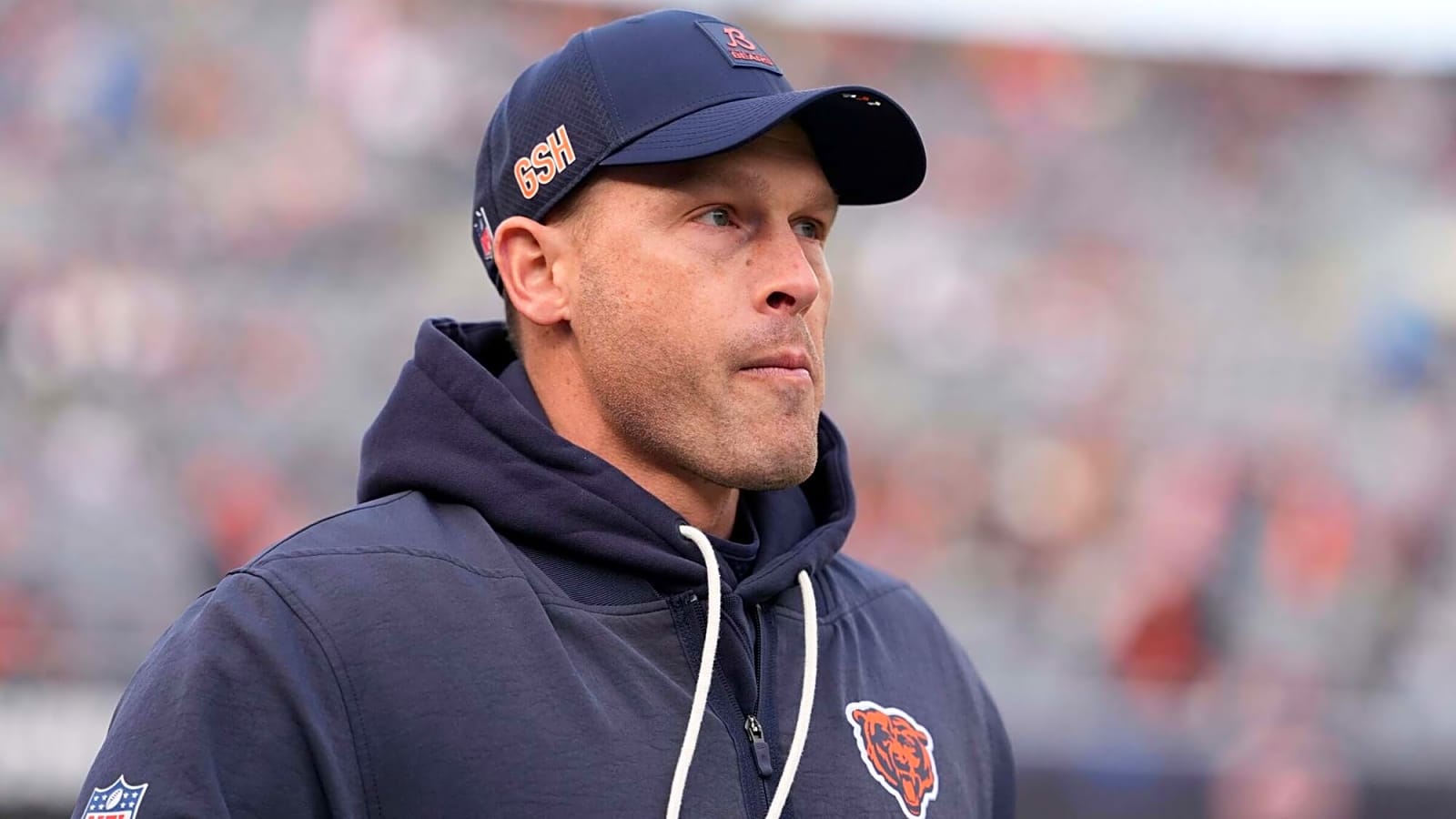
“We got to get right back to work,” Ben Johnson said in a recent Bears offseason interview, and the context around that statement makes it more than a routine message. Chicago is coming off an 11-6 season with a top-10 offense, but the roster that produced it is already changing in meaningful ways.
Johnson’s point is not about motivation. It is about reset. The Bears are not carrying last season forward. They are rebuilding parts of it while expecting the same level of production.
The offense was productive enough to invite complacency
Chicago finished the 2025 season scoring 25.9 points per game (9th in the NFL) and averaging 369.2 yards per game, the sixth-best mark in the league. That jump from a bottom-tier unit the year before is what makes Johnson’s urgency notable.
Caleb Williams threw for 3,942 yards with 27 touchdowns and seven interceptions, setting a franchise record for passing yards. The structure worked, and the production was real.
Roster turnover is forcing immediate change
The Bears are not running that group back. DJ Moore was traded, removing a primary target from the offense. Drew Dalman retired unexpectedly, forcing a change at center, and Chicago responded by acquiring Garrett Bradbury as a replacement.
On defense, Kevin Byard departed in free agency, and the team added Coby Bryant as a younger option. Johnson acknowledged the reality directly, saying the roster will look “completely different,” which puts added weight on his call to reset immediately.
Competition at receiver is no longer theoretical
The Bears’ late-season production explains why Johnson emphasized internal competition. Colston Loveland finished with 58 receptions for 713 yards and six touchdowns, including 597 yards over his final 10 games. Luther Burden III added 652 yards and surged late with 324 yards over the final four regular-season games.
With Moore gone, those opportunities are no longer supplemental. They are central, which is why Johnson pointed to competition for targets as a defining feature of the offseason.
Caleb Williams is being pushed into a different role
Johnson has already pointed to Williams’ growth in command of the offense, and the offseason structure reinforces that shift. Williams was involved early in building relationships with new additions, including Bradbury, as the quarterback-center connection becomes a priority.
The expectation is no longer development. It is control. Williams led the NFL with seven fourth-quarter comebacks in 2025, and the Bears are now structuring the roster around that level of responsibility.
The pass rush explains why the reset is necessary
If the offense suggests continuity, the defense explains Johnson’s urgency. The Bears finished with 35 sacks and a 31.1 percent pressure rate, both near the bottom of the league. Montez Sweat led the team with 10 sacks, but the lack of a consistent second pass rusher limited the unit.
That gap remains one of the clearest reasons the Bears are approaching the offseason the way Johnson described. The team improved, but it did not solve everything.
The message matches the situation
Johnson’s “get right back to work” line holds up because it reflects the actual position the Bears are in. They have a productive offense, a quarterback coming off a franchise season, and a roster that is already shifting around them.
This is not a team starting over. It is a team that cannot afford to assume anything carries over, and Johnson made that clear before the offseason even fully began.
More must-reads:
- Early look at Seahawks' sale reveals name of interest
- Five teams that should consider NFL Draft trades
- The 'Rushing-TD leaders by NFL team' quiz
Breaking News
Trending News






Customize Your Newsletter
 +
+




Get the latest news and rumors, customized to your favorite sports and teams. Emailed daily. Always free!
PRIVACY POLICY COOKIE POLICY CONTACT US
ABOUT YARDBARKER TERMS OF SERVICE


By using this site, you agree to our Terms of Service and Privacy Policy.
This site is for entertainment purposes only.
There is no gambling offered on this site.
Gambling Problem? Call 1-800-Gambler.
