
-

-


Follow Us
-

 On Facebook
 On Flipboard
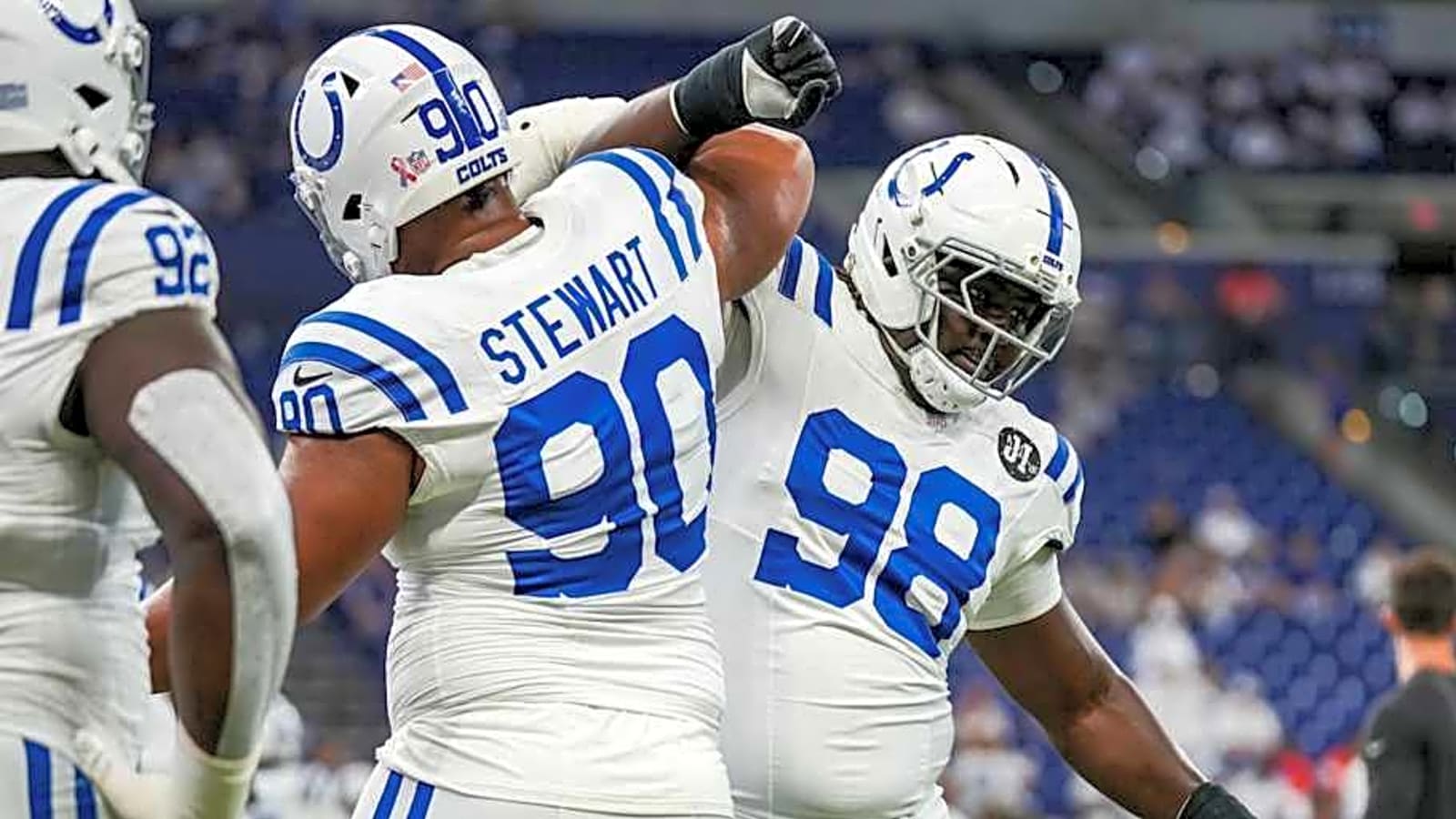
Indianapolis Colts defensive coordinator Lou Anarumo hates linebackers… Okay, not really, but his style of defense has heavily leaned into the modern-day philosophy of nickel defense being the new base personnel grouping. The era of football debate over whether 3-4 or 4-3 was the best system to originate from is long gone, and Anarumo doesn’t deploy either one of these styles as his primary defensive set.
According to Sumer Sports, the Colts had exactly seven snaps this past season where they featured four defensive linemen and three linebackers on the field. Just 7 snaps! However, NFL PRO has the Colts with 209 snaps in traditional base personnel packages. So, how did the Colts accomplish that with so few snaps with three linebackers on the field? Their grizzly personnel grouping.
The term grizzly front comes from Baylor head coach Dave Aranda’s playbook from back when he worked at Louisiana. I’m not sure if this is how the Colts tag their 5-2 front internally, but it is a convenient term that works for me, so that’s what we are going with.
I went through and charted every instance where the Colts used their grizzly fronts in 2025, and came away with 159 calls (excluding plays against QB sneaks and QB kneel downs to be consistent). This base personnel set was, as expected, much better against the run than it was against the pass, holding opponents to just 3.3 yards per carry on 103 rushing attempts.
The Colts' usage of this front almost directly correlated with opponent 12, 13, 21, and 22 personnel usage. Shanahan-tree offenses, Arthur Smith’s Steelers, and Drew Petzing’s Cardinals rely on heavier personnel groupings, so the Colts matched in those games with their grizzly front. In contrast, teams like the Titans, the Dolphins, and the Rams (this was prior to their 13 personnel revelation later in the season) saw very little of the Colts’ grizzly front in their match-ups.
When it came to defending the run, it was all about getting bodies around the line of scrimmage on defense. If an offense wanted to come out in 12 or 13 personnel, the Colts would gladly roll out five defensive linemen (including three defensive tackles), along with two linebackers and Nick Cross in the box. This 8-man box helped the Colts create negative yardage runs, in particular in their match-ups against the Steelers (-.25 yards per carry), the two Texans match-ups (1.79 yards per carry), and the Rams match-up (-.66 yards per carry).
Sign Up For the Colts Daily Digest - OnSI’s Indianapolis Colts Newsletter
The Colts could stand to get a bit better in the redzone out of this package by adding another run-stuffing defensive tackle in the draft, but overall, the Colts did a good job of stopping the run out of their grizzly fronts. The more fascinating aspect of this front is how it performed against the pass.
In the first half of the year, primarily facing bad offenses to be fair, the Colts held down yards per attempt in their base personnel front. Prior to the bye week, quarterbacks completed 28 of 43 passes for 241 yards with 2 touchdowns and one interception against grizzly fronts. That’s just an 85.51 passer rating against and just 5.60 yards per attempt.
The standout performance from this grouping in the first half of the year came against the Las Vegas Raiders, as the Colts bailed out of the front to get a redzone interception early in the game and then dialed up two redzone sacks out of under looks after late defensive shifts. The Colts also held the Steelers to just 1.9 yards per attempt in their match-up against them.
Colts' 6-1 under front in the redzone. Lou Anarumo brings all 6 players on the line to create two sacks vs Raiders in week five pic.twitter.com/2E2OKvYaaQ
— Zach Hicks (@ZachHicks2) January 27, 2026
However, things changed after that Steelers game when the Colts ran into a few Shanahan-style offenses. It started with the Atlanta Falcons and Zac Robinson. The Falcons torched the Colts for 83 yards on seven pass attempts, dialing up chunk gains off of play-action against this front.
The Seattle Seahawks (108 yards on nine pass attempts), the San Francisco 49ers (97 yards on 11 pass attempts), and the Houston Texans (95 yards on seven pass attempts) all shredded this heavy personnel package through the air down the stretch.
Over the year, these grizzly fronts were an asset to the Colts, but teams adjusted down the stretch to really go after Germaine Pratt, Zaire Franklin, Nick Cross, and the Colts' injured cornerback in coverage.
Base defense personnel groupings are outstanding against the run, but the trade-off simply isn’t worth it when you are giving up 10+ yards per attempt. The Colts managed well against non-Shanahan-style offense teams last year, but Kyle Shanahan is like a plague spreading slowly across the league. His influence exists across too many teams to struggle against that system.
Overall, I had major concerns with the Colts’ run defense coming into the year with Anarumo’s known resistance to base personnel. I expected him to match 12/13 personnel with nickel/penny fronts, which gave me real pause when it came to the Colts’ run defense. Instead, he utilized these grizzly fronts, and the Colts’ defense was better for it (especially with their deeper defensive tackle rotation this year).
For the Colts to improve upon this going forward, they have to upgrade their linebacker room. Having at least one linebacker that can quickly diagnose and get depth against play-action would be a massive boost, and it would be a big step forward to limiting big plays against this base personnel group. That being said, though, I loved this wrinkle overall by Anarumo, and I’m excited to see more of it in the future.
More must-reads:
- Colts make big decision on Anthony Richardson's future
- Russell Wilson may reject Jets via career-altering decision
- The 'No.2-overall NFL Draft picks' quiz
Breaking News
Trending News




Customize Your Newsletter
 +
+




Get the latest news and rumors, customized to your favorite sports and teams. Emailed daily. Always free!
PRIVACY POLICY COOKIE POLICY CONTACT US
ABOUT YARDBARKER TERMS OF SERVICE


By using this site, you agree to our Terms of Service and Privacy Policy.
This site is for entertainment purposes only.
There is no gambling offered on this site.
Gambling Problem? Call 1-800-Gambler.
