
-

-


Follow Us
-

 On Facebook
 On Flipboard

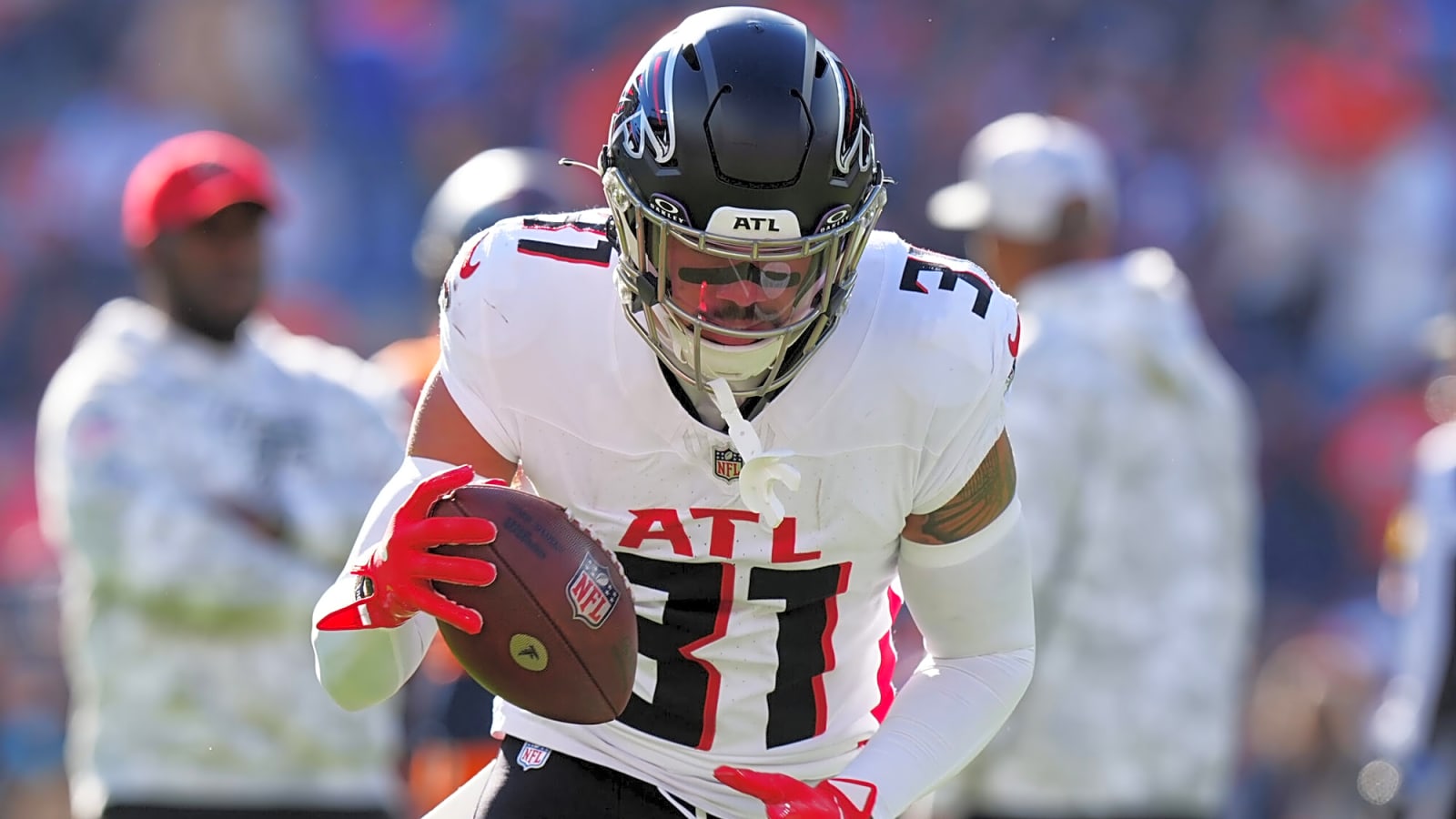
A one-day contract sat on a table inside the Denver Broncos facility. Justin Simmons picked up the pen on April 29, 2026, roughly ten years after the franchise drafted him with the 98th overall pick in the 2016 NFL Draft. The four-time All-Pro safety who had recorded 32 interceptions, 666 tackles, and 71 passes defended across 134 games wrote his name one final time in orange and blue. The 2026 NFL Draft had ended days earlier. Thirty-two teams passed on him in free agency. Every single one.
The Contract That Changed Everything
In March 2021, Denver handed Simmons a four-year, $61 million extension after franchise-tagging him twice. That deal said everything a franchise can say without words. You are the cornerstone. Simmons responded by becoming the only NFL player to record three or more interceptions in six consecutive seasons, from 2018 through 2023. He tied for the league lead with six picks in 2022. He earned multiple Walter Payton Man of the Year team nominations. Denver had its safety. Then Denver did the math.
The Peak Nobody Talks About

From 2018 through 2022, Simmons averaged roughly five interceptions per season while starting every game. In 2022 he tied for the NFL lead with six picks, and in 2023 he was voted a second-team All-Pro for the third consecutive season while ranking 57th on the NFL Top 100 Players list by his peers. Two Pro Bowls, four All-Pro nods, and a reputation as one of the league’s most reliable deep safeties, all of it compressed into a five-year window that most front offices conveniently forgot by 2025.
The Salary Cap Doesn’t Care

February 2024. Denver released its three-time team captain in a salary cap move that saved the team roughly $14.5 million. The assumption most fans carry is that elite players control their exits, that loyalty earns continuity. Simmons had given eight seasons, 118 games, and a spot among the franchise’s all-time interception leaders. The cap number said none of that mattered. He signed a one-year deal with Atlanta worth roughly $7.5 million. That represented about a 50 percent pay cut from his Denver extension’s $15.25 million annual average. The market had already started forgetting him.
What the Release Actually Saved

Denver’s decision in February 2024 was not emotional. It was surgical. Cutting Simmons cleared meaningful cap space heading into a rebuild under a new quarterback regime. That cap flexibility funded replacements who collectively produced less than Simmons had in a single Pro Bowl season. The spreadsheet won. It almost always does.
‘More Than I Deserve’

Simmons started 16 games for the Falcons in 2024, recording two interceptions. Then the 2025 season arrived and nobody called. Not Atlanta. Not Denver. Not anyone. A four-time All-Pro sat home for an entire NFL season. When the 2026 draft passed without a single team showing interest, he announced retirement. “I am so grateful and appreciative for the send-off,” he said. “In some ways it is more than I deserve.” He directed that gratitude at Denver. The team that cut him.
The 2025 Silence

Simmons spent the 2025 season watching football from home. No training camp invite. No mid-season injury call-up. No practice squad offer. At 31 years old with four All-Pro selections, he became living proof that the safety market collapses the moment a player crosses 30. By March 2026, he publicly said he still wanted to play with a contender. Nobody followed up.
The System Behind the Sentiment

The one-day contract is a brilliant piece of machinery. Denver gets a cost-free PR win. Simmons gets to say he will always be a Denver Bronco instead of saying nobody wanted him. Both sides walk away looking good. But strip the ceremony and the sequence is stark. Franchise tags him twice, extends him for $61 million, cuts him when the cap tightens, watches him struggle to find a fit elsewhere, then welcomes him back for a photo op. The free agent market did not fail Simmons. It functioned exactly as designed.
The Numbers Nobody Mentions

Simmons earned roughly $69.8 million across his career. That sounds like a victory until you realize the trajectory. A $61 million extension, then a $7.5 million one-year deal, then zero. His production in Atlanta dipped, and interest from other teams evaporated entirely in 2025. He played the overwhelming majority of his career games in Denver. Outside that ecosystem, the four-time All-Pro became a replacement-level option in the eyes of every front office. Elite credentials did not translate. The system that built him was the only system that valued him.
Who Gets Discarded Next

Simmons’ exit creates a template. Teams facing cap crunches in 2026 and 2027 now have Denver’s playbook. Release the aging Pro Bowler, let the market devalue him, then offer the one-day contract when he is ready to quit. The free agent market for safeties over 30 just got smaller. Every veteran defender watching Simmons’ retirement ceremony saw a preview of their own future. The cap does not negotiate. It purges. And the ceremony afterward makes the purge look voluntary.
The Off-Field Résumé

Simmons was a multi-time Broncos Walter Payton Man of the Year nominee, a distinction given for community impact as much as play. His foundation work in Denver-area schools, his faith-driven public speaking, and his consistent presence at community events were cited by teammates and coaches during his retirement ceremony. If he never plays another snap, the community footprint outlasts the stat line.
A Ring of Fame Question

Simmons finished among the top interception leaders in franchise history, with the overwhelming majority of his 32 career picks coming in Denver. That puts him in a statistical neighborhood with Broncos Ring of Fame defensive backs. Whether the franchise eventually honors him that way is an open debate among Denver beat writers. The one-day contract may be the first step in that longer conversation.
What Happens When the Phone Stops

Simmons said he plans to spend time with his family, work with his foundation, and figure out what comes next. That is the language of a man who expected to still be playing. He had publicly said he wanted to return in 2026. Then the draft came and went. The retirement was not a sunset. It was a door closing from the outside. Simmons walked through it with more grace than most people could manage, which is exactly what makes the whole thing harder to watch.
What Every Veteran Safety Learns From This

The Simmons arc offers a blueprint any agent representing a 29-plus safety will now study. Maximize the second contract because there will not be a third, and negotiate a no-cut or heavy guarantee clause before cap pressure arrives. Players who assume loyalty equals continuity get replaced. Players who price in the cap cycle protect themselves. Simmons did almost everything right, and the system still ended his career a year before he was ready.
The Story They’ll Tell vs. the One That Happened

The official version. A beloved All-Pro retires as a Bronco on a near-perfect anniversary. The real version. The salary cap forced him out, the market cooled on him, unemployment lasted a full season, and a ceremonial contract let everyone pretend it ended on his terms. “Being a Denver Bronco was more than just a team. It was my heart, my home and my story.” That quote will live in highlight reels forever. Knowing what produced it makes you wonder how many other retirement stories are built the same way.
Does Justin Simmons belong in the Broncos Ring of Fame, or did the salary cap quietly erase that conversation before it could start? Tell us where you land in the comments.
Sources:
ESPN, “Justin Simmons retires as Bronco, ‘grateful’ for send-off from team,” April 29, 2026
DenverBroncos.com, “‘My heart, my home, my story’: All-Pro safety Justin Simmons announces retirement from NFL, reflects on Broncos’ tenure,” April 29, 2026
The Athletic, “Justin Simmons, Pro Bowl safety and 3-time Man of the Year nominee, announces retirement,” April 29, 2026
Over the Cap, “Justin Simmons Contract Details,” accessed May 1, 2026
CBS Sports, “Justin Simmons agrees to extension with Broncos that makes him NFL’s highest-paid safety, per report,” March 18, 2021
Colorado Springs Gazette, “Emotional ex-Broncos star Justin Simmons retires from NFL 10 years after being drafted,” April 30, 2026
More must-reads:
- Chiefs provide major Patrick Mahomes injury update
- This John Harbaugh decision could define the Giants' season
- The 'No.2-overall NFL Draft picks' quiz
Breaking News
Trending News





Customize Your Newsletter
 +
+




Get the latest news and rumors, customized to your favorite sports and teams. Emailed daily. Always free!
PRIVACY POLICY COOKIE POLICY CONTACT US
ABOUT YARDBARKER TERMS OF SERVICE


By using this site, you agree to our Terms of Service and Privacy Policy.
This site is for entertainment purposes only.
There is no gambling offered on this site.
Gambling Problem? Call 1-800-Gambler.
