
-

-


Follow Us
-

 On Facebook
 On Flipboard

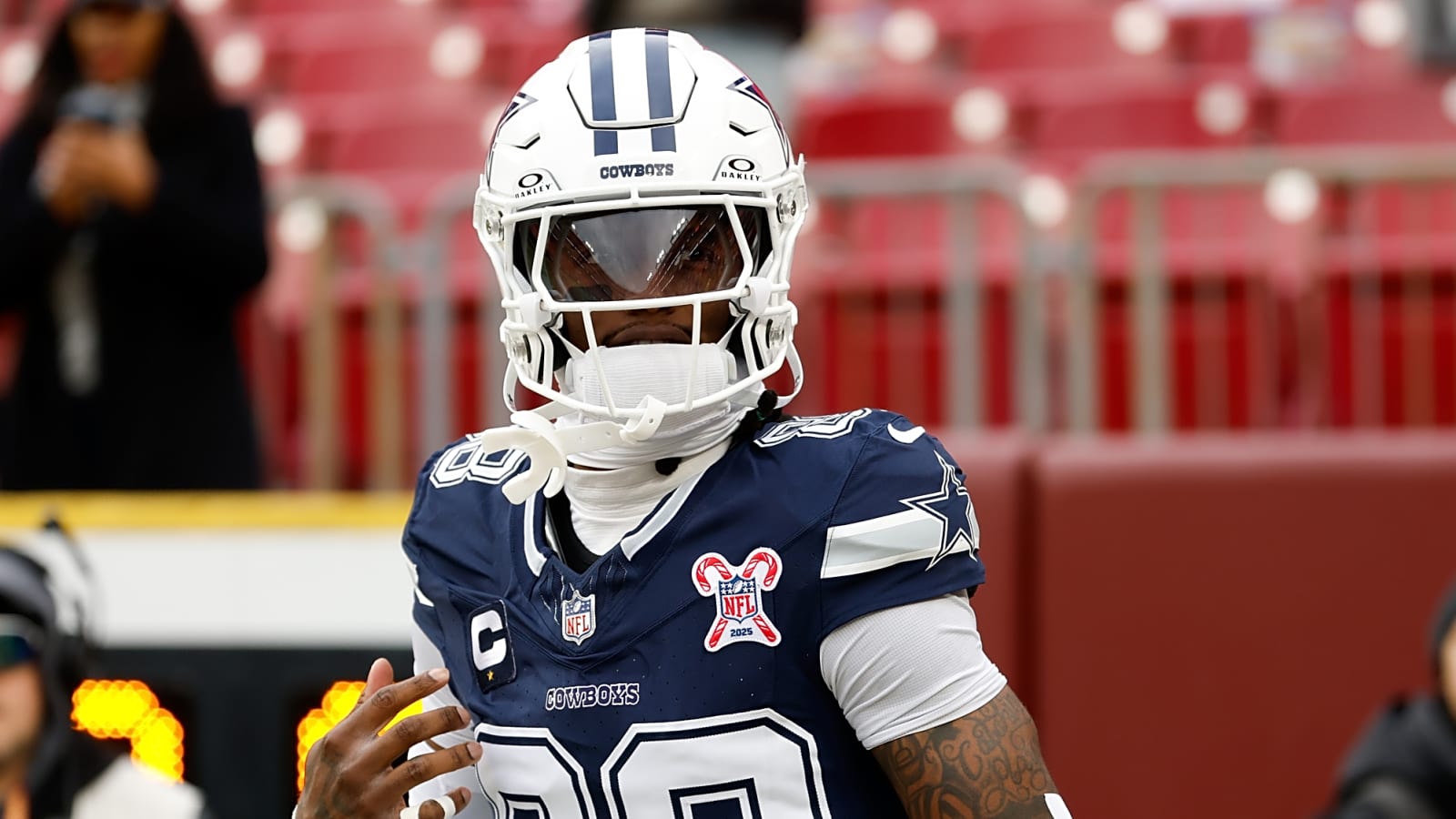
Since the 2020 season, the NFL has been heavily invested in a pass-happy scheme.
Offensive coordinators spread defenses horizontally, quarterbacks are encouraged to be aggressive, and wide receivers enter the league more polished than ever.
The result is a statistical environment where yardage piles up at a torrid pace, and elite receivers are just crossing milestones; they’re redefining them.
Route precision, alignment versatility, and post-catch creativity have turned the position into the engine of modern offense, and no metric captures that evolution better than total receiving yards over an extended window.
Over the last several seasons, a handful of stars have separated themselves from an increasingly crowded field.
These are the five wide receivers who have accumulated the most receiving yards since 2020, and how each has helped their team succeed offensively.
Justin Jefferson: 8,480
Justin Jefferson sits alone at the top, and by a wide margin.
His combination of route nuance, body control, and contested-catch reliability makes him nearly impossible to defend with a single coverage solution.
Corners can’t sit on his breaks, safeties can’t shade away with consequences, and zone defenders consistently lose leverage against his timing.
What separates Jefferson is how consistently he dictates defensive structure.
Teams roll coverage his way, lighten the box, and still struggle to keep him under control.
His production isn’t just volume; it’s efficiency paired with game-breaking impact.
Davante Adams: 7,439
Davante Adams remains the gold standard for route running.
His release package routinely wins before the ball is even snapped, and defensive backs are forced to guess; usually incorrectly.
Even as his surroundings have changed, Adams’ ability to dominate isolated matchups hasn’t wavered.
He thrives on timing routes and red zone precision, turning third downs into routine conversions.
Yardage follows naturally when defenses can’t crowd him without paying elsewhere.
CeeDee Lamb: 7,416
CeeDee Lamb’s rise reflects the modern receiver archetype: alignment flexible, catch and run dangerous, and durable.
Whether working from the slot or outside, he punishes mismatches and turns short completions into explosive gains.
What makes Lamb especially valuable is his ability to absorb volume without efficiency dropping.
Defensive backs are forced into uncomfortable leverage decisions, and once Lamb gets the ball, tackling becomes optional rather than guaranteed.
Tyreek Hill: 7,248
Speed still kills, and Tyreek Hill proved that on a week-to-week basis.
His vertical threat forces defenses to retreat, opening throwing lanes underneath while simultaneously creating explosive plays downfield.
Corners are terrified of getting beat over the top, and that hesitation is all Hill needs.
Beyond raw speed, Hill’s spatial awareness and acceleration after the catch allow him to turn routine plays into touchdowns.
His yardage total reflects both big-play volatility and sustained usage.
A.J. Brown: 6,978
A.J. Brown rounds out the top five by blending power and efficiency.
He overwhelms defensive backs physically, breaking tackles and winning through contact.
Press coverage rarely slows him, and once he gains inside leverage, defenders are often along for the ride.
Brown’s value lies in reliability.
He moves chains, dominates intermediate routes, and gives his quarterback a trustworthy target in high-pressure moments.
Just Missed the Cut
The margin between elite and merely excellent is razor-thin.
Brown’s 6,978 yards place him right on the edge of the list, and right below him are two other stars who just missed the cut.
Stefon Diggs (6,881) has been a model of consistency and separation, thriving on timing and precision.
Ja’Marr Chase (6,837) has paired physical dominance with explosive upside, often turning contested situations into highlight plays.
Together, this group illustrates just how deep the receiver talent pool has become, and how relentless production has defined the NFL’s modern era.
More must-reads:
- Browns reportedly make surprising Deshaun Watson, Shedeur Sanders decision
- 49ers owner Jed York arrested on suspicion of engaging in prostitution
- The '4K-yard, 30 TD NFL seasons' quiz
Breaking News
Trending News






Customize Your Newsletter
 +
+




Get the latest news and rumors, customized to your favorite sports and teams. Emailed daily. Always free!
PRIVACY POLICY COOKIE POLICY CONTACT US
ABOUT YARDBARKER TERMS OF SERVICE


By using this site, you agree to our Terms of Service and Privacy Policy.
This site is for entertainment purposes only.
There is no gambling offered on this site.
Gambling Problem? Call 1-800-Gambler.
