
-

-


Follow Us
-

 On Facebook
 On Flipboard
 On Twitter

One of the biggest storylines of the offseason revolves around Ole Miss Rebels quarterback Trinidad Chambliss and his legal battle against the NCAA to gain another year of eligibility.
Chambliss completed the last season with 3,937 passing yards, 22 touchdowns and three interceptions, achieving a 66.1% completion rate. He also rushed for 527 yards and scored eight touchdowns, leading the Rebels to their first College Football Playoff appearance. Chambliss then filed to play another year of college football in what would be his sixth year after four seasons with the Ferris State Bulldogs and one with Ole Miss.
Chambliss reported that he was unable to play during his second year at Ferris State due to respiratory issues. As a result, he did not participate in any games or dress for the Bulldogs that season. The NCAA denied Chambliss' request for another year of eligibility on Jan. 9 and again upon appeal on Feb. 5. Ole Miss submitted a request for reconsideration to the NCAA, citing new evidence, but that request was also denied.
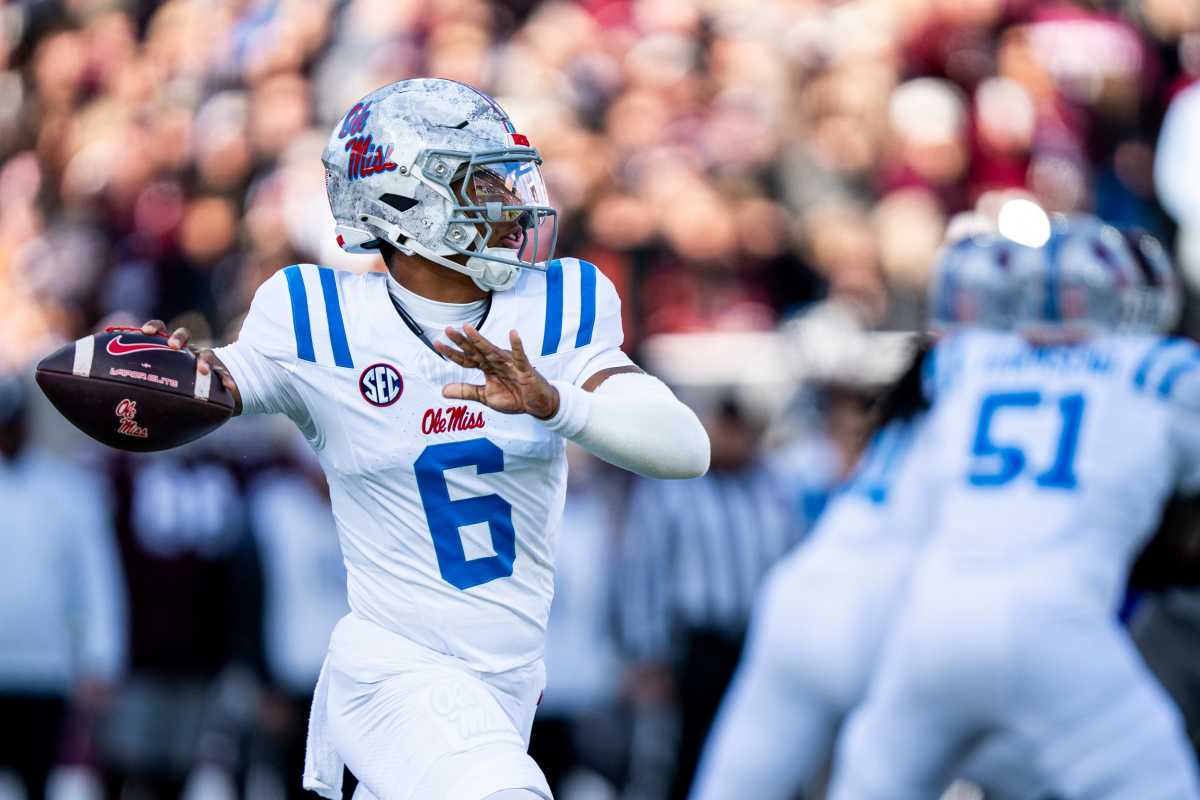
However, Chambliss has been granted an additional year of eligibility by a state court judge, who issued an injunction allowing him to be eligible in 2026. Judge Robert Whitwell declared that Chambliss met the necessary criteria to receive a medical redshirt for a sixth season.
Whitwell explained that the NCAA disregarded medical evidence when it denied Chambliss' waiver. He emphasized that the quarterback would face irreparable harm if the waiver was not granted this year. The judge determined that Chambliss provided sufficient medical documentation and concluded that the NCAA did not act in good faith in denying the waiver.
On the "See Ball Get Ball" podcast with David Pollack, the college football analyst stated that this serves as a perfect example of what student-athletes should aspire to do in the future.
"I mean, just sue the NCAA and sue him again and sue him again," Pollack said. "And we've seen time and time again, you're going to win at some point."
The immediate effect of the ruling is that Ole Miss retains one of the nation’s most productive quarterbacks for another season. Keeping his level of production in the lineup dramatically alters Ole Miss’ 2026 outlook.
From a broader standpoint, the case adds to the growing list of legal challenges reshaping the NCAA’s authority over eligibility decisions. Looking ahead, this decision could set a practical precedent. As Pollack noted, athletes may view litigation as a viable path when waivers are denied.
Whether that trend continues remains to be seen, but for now, Chambliss’ victory ensures that Ole Miss enters 2026 with continuity at the most important position, and it signals another shift in the evolving balance of power between student-athletes and the NCAA.
More must-reads:
- Steelers' QB plans revealed if Aaron Rodgers doesn't return
- Travon Walker's contract extension could be long-term steal for Jaguars
- The 'Rushing-TD leaders by NFL team' quiz
Breaking News
Trending News




Customize Your Newsletter
 +
+




Get the latest news and rumors, customized to your favorite sports and teams. Emailed daily. Always free!
PRIVACY POLICY COOKIE POLICY CONTACT US
ABOUT YARDBARKER TERMS OF SERVICE


By using this site, you agree to our Terms of Service and Privacy Policy.
This site is for entertainment purposes only.
There is no gambling offered on this site.
Gambling Problem? Call 1-800-Gambler.
