
-

-


Follow Us
-

 On Facebook
 On Flipboard

Forty-three seconds left. Fourth down. The Eagles’ season hanging on one play in a wild-card game against San Francisco. The offensive coordinator held the play sheet. The head coach stood watching. And the quarterback earning $50 million-plus per year pushed for another aggressive downfield shot. The vertical concept was approved. The pass fell incomplete on a fourth-and-11. The Eagles lost 23-19. Months earlier, Jalen Hurts had hoisted the Super Bowl LIX MVP trophy, yet when his agency approached the team about an extension, the organization showed little urgency to talk.
Six Chefs, One Kitchen
Hurts has had six different primary play-callers in six seasons: Doug Pederson, Nick Sirianni, Shane Steichen, Brian Johnson, Kevin Patullo, Sean Mannion — with Mannion now stepping in as the latest voice. Only one real stretch of continuity, under Steichen in 2022, coincided with Hurts finishing as MVP runner-up. Every other year brought a new play-caller and another reset. Some left for promotions, others were fired, but the constant was a franchise trying to find the right offensive partner for its $50 million quarterback.
The Play Nobody Stopped Talking About
On that fourth-and-11, Hurts pushed for another vertical shot into a look that made coaches uneasy. People in the building later admitted there were serious reservations about attacking that way, but the call went in anyway. The ball hit the turf, and the season ended. Weeks later, Kevin Patullo was dismissed after just one year as primary play-caller. The coordinator who signed off on the call paid with his job, while Hurts remained entrenched. Inside a locker room already sensitive to hierarchy, that sequence sharpened questions about accountability.
The System That Demands Surrender

New coordinator Sean Mannion arrived tasked with steering the offense toward a McVay–Shanahan style built on motion, under-center play-action, and clear answers against zone. Those are the exact concepts Hurts has often been perceived as less comfortable with. A detailed national report described a quarterback who has resisted some changes meant to diversify the scheme, especially under center, and who sometimes strayed from game plans. The Eagles responded by reshaping the offensive staff and by talking less about tailoring everything to Hurts and more about building a system designed to win in January.
The Numbers That Bury Him
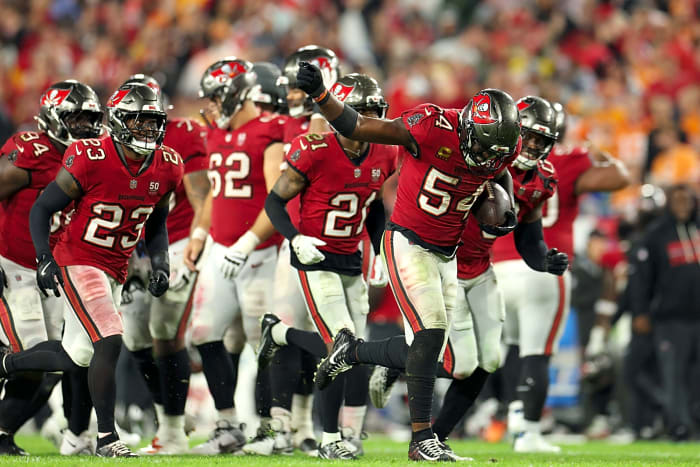
Lavonte David spent more than a decade studying quarterbacks from the linebacker position. His verdict on Hurts was blunt: “Jalen Hurts was never a guy who we were worried about when we played the Eagles… we’re going to keep him in the pocket… and make him beat us.” For a Super Bowl MVP on a top-of-market contract, that is a jarring scouting report. It mirrors what teams have shown on tape, leaning on zone coverages and disciplined rush lanes to test Hurts’ processing and accuracy when he can’t lean on early-down RPO rhythm.
The Trap Both Sides Built

Void elements in Hurts’ contract and potential restructures stretch into the late 2020s, creating significant potential dead money if the Eagles ever move on. Trading him in the wrong year would trigger a massive cap acceleration that touches the entire roster. Keeping him means committing to a quarterback whose strengths, limitations, and preferences are now fully visible around the league. That $50 million salary, once read as automatic security, has become a financial anchor. It binds player and team together in a high-stakes referendum neither can easily escape.
The New Rule for $50M Quarterbacks

David’s public dismissal broke an informal code. Veterans with Hall-of-Fame résumés rarely speak that bluntly about reigning Super Bowl MVPs. When a defender of his stature says his defense was “never worried” about Hurts and explains exactly how they planned to attack him, it legitimizes internal doubts. The Eagles had already begun to prioritize the system over the star. Across the league, teams paying at this level are watching closely. In today’s NFL, rings and accolades no longer shield a $50 million quarterback from being treated as the problem as often as the solution.
OTAs Are 18 Days Away

Mannion’s first OTAs will test how fully Hurts buys into an offense that emphasizes under-center snaps and motion he’s often been linked with resisting. If there’s early friction, it will surface quickly in a city that dissects every throw. A.J. Brown’s value is naturally tied to Hurts’ performance and the health of the passing game; if the offense stalls again and cap pressure rises, even stars become part of difficult conversations. The Eagles’ expensive offensive core could start to shift, and another play-caller would find himself judged on how well his system fits the same quarterback.
The Audition Nobody Can Escape

Hurts’ future guarantees, including money tied to 2027, hinge on choices the organization will make after this season. One year can separate a long-term franchise quarterback from a trade candidate whose dead money lingers for seasons. Every team paying a premium passer is watching Philadelphia to see whether a McVay-style system can unlock another level or whether the fit proves stubbornly imperfect. The difference between a “championship offense” and a “Jalen Hurts offense” is the distinction the Eagles are already making. Their Super Bowl MVP now faces the most public audition of his career.
Sources:
ESPN – Eagles quarterback Jalen Hurts named MVP of Super Bowl LIX – 2025-02-09
Sportsnet (AP) – Eagles’ Jalen Hurts named MVP of Super Bowl LIX – 2025-02-08
Yahoo Sports – Eagles Fall to 49ers in Wild Card Game; Fail To Defend Super Bowl Title – 2026-01-11
ESPN – Kevin Patullo no longer Eagles’ OC after offense’s sharp decline – 2026-01-12
The Eagles Wire/USA Today – Report: Newly hired Sean Mannion will call the Eagles offensive plays – 2026-01-29
Yahoo Sports – “Never a Guy We Worried About”: Lavonte David Takes Shot at Jalen Hurts as QB Gets Concerning Update on Future – 2026-04-04
More must-reads:
- First-round NFL mock draft: Mendoza goes No.1, then who?
- Fernando Mendoza makes an emotional decision about NFL Draft
- The 'Rushing-TD leaders by NFL team' quiz
Breaking News
Trending News



Customize Your Newsletter
 +
+



Get the latest news and rumors, customized to your favorite sports and teams. Emailed daily. Always free!
PRIVACY POLICY COOKIE POLICY CONTACT US
ABOUT YARDBARKER TERMS OF SERVICE


By using this site, you agree to our Terms of Service and Privacy Policy.
This site is for entertainment purposes only.
There is no gambling offered on this site.
Gambling Problem? Call 1-800-Gambler.
