
-

-


Follow Us
-

 On Facebook
 On Flipboard
 On Twitter

A woman lay dying from severe injuries inside a Tennessee home. Somewhere in the same space, a former NFL linebacker allegedly reached for his phone. Not to dial 911 or even to call for an ambulance. According to court documents cited across multiple national outlets, he opened ChatGPT. He typed a prompt. He asked for advice. Then, and only then, did he contact emergency services. That sequence, allegedly preserved in digital logs, now sits at the center of a criminal case.
The Charges
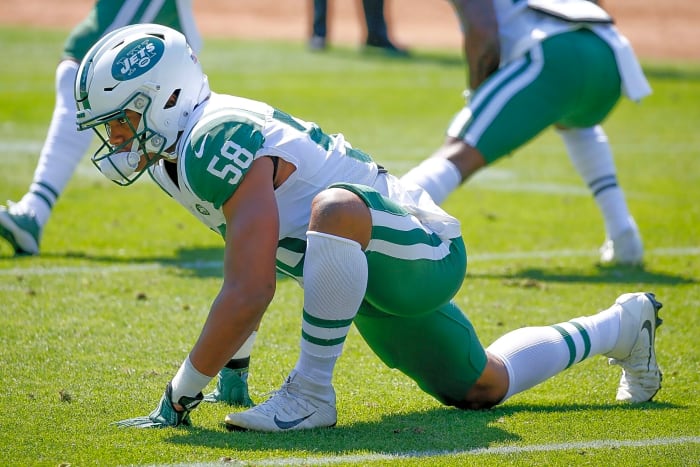
The defendant, identified in multiple reports as former NFL linebacker Darron Lee, faces first-degree murder and evidence-tampering charges in connection with his girlfriend’s killing. Court documents form the backbone of every allegation circulating nationally. The “former pro athlete” label is why the story traveled beyond local news, but the domestic reality underneath strips away any glamour. One woman was killed. One man charged. And between the violence and the emergency call, prosecutors allege, a chatbot conversation that could redefine how digital evidence works in American courtrooms.
The Assumption

Most people treat ChatGPT like a private diary with a brain. Ask it anything. Vent. Confess. Delete the tab and move on. That assumption, that prompts vanish into the ether, is exactly what this case dismantles. Court records allegedly describe the AI query as part of the prosecutorial timeline, not as background noise but as a sequenced event with evidentiary weight. Every chatbot user who has ever typed something regrettable should feel a chill reading that sentence.
The Receipt

The chatbot was never the adviser. It was the receipt. Court documents allegedly place the ChatGPT interaction in the narrow window between a killing and a 911 call, creating what amounts to a multi-step decision chain: consult AI, then contact authorities. Prosecutors told the court the defendant used ChatGPT as “a legal advisor,” asking it “to basically give him advice on how to cover up a crime scene.” One digital breadcrumb. Logged, timestamped, and now sitting in a case file that could send a man to prison.
The Mechanism

Consumer AI tools log interactions tied to user accounts and devices. That architecture, built for product improvement and personalization, creates discoverable artifacts that investigators can extract. Court documents can transform a casual chatbot exchange into narrative evidence, and statutory homicide frameworks care about intent and circumstances, not just what physically happened. The hidden machinery is simple: type a prompt, generate a record, and hand prosecutors a window into your decision-making at the worst possible moment of your life.
The Timeline

The reporting frames a specific sequence: killing, then alleged AI queries, then the 911 call. That ordering is the entire prosecutorial weapon. Prosecutors say the ChatGPT messages were sent the day before the victim, 29-year-old Gabriella Perpétuo, was found dead on Feb. 5, 2026. In homicide cases, the gap between an act of violence and a call for help can distinguish between panic and calculation. The alleged ChatGPT interaction fills that gap with something tangible. Not silence. Not frozen shock. A typed request for guidance, allegedly preserved in court filings that multiple independent outlets repeated from the same documentary basis.
The Ripple

This case will not stay contained. Defense and prosecution teams will likely fight over the admissibility and meaning of the alleged AI queries in pretrial litigation. That battle alone puts AI chat logs under a legal microscope that affects every user, not just this defendant. More warrants for app data, more forensic extraction of AI usage, more scrutiny of what “asking a chatbot” actually produces in terms of recoverable records. The courtroom door just opened for a category of evidence that barely existed two years ago.
The New Rule

This is not an outlier. Courts may further normalize AI-interaction records as timeline evidence, establishing a precedent where your prompts carry the same evidentiary weight as text messages or search history. Once you see that pattern, every chatbot conversation looks different. The tool millions use for homework help, recipe ideas, and idle curiosity operates on the same infrastructure that can place your words inside a criminal case file. That realization is the story underneath the story.
The Exposure
The people who lose next are the ones who treat chatbots like confidential counselors. No, the attorney-client privilege does not protect a ChatGPT prompt. No therapist confidentiality shields what you type into a text box owned by a tech company. As warrants and subpoenas expand to cover AI interactions, the escalation path points toward routine forensic extraction of chatbot data in serious criminal investigations. The legal system is moving faster than the privacy expectations of roughly 100 million weekly ChatGPT users.
The Open Door

Platforms may eventually push stronger privacy controls and clearer warnings about sensitive use. But that counter-move arrives after the precedent, not before it. Right now, the framework is stark: anything you type into a chatbot can be logged, subpoenaed, and read aloud in a courtroom. The person at the bar who understands that distinction, who knows the chatbot is a receipt and not a confidant, is the person who just became privacy-literate in an age that punishes the alternative.
Sources:
NBC News, “Ex-NFL linebacker charged with killing girlfriend asked ChatGPT for advice before calling 911, officials say,” March 10, 2026
Associated Press, “Prosecutor alleges ex-NFL player Darron Lee consulted AI bot to help cover up girlfriend’s killing,” March 11, 2026
People, “Darron Lee Asked ChatGPT How to Cover Up Crime Scene After Killing Girlfriend, Prosecutor Alleges,” March 10, 2026
USA Today, “Ex-NFL player Darron Lee charged with girlfriend’s murder,” March 11, 2026
The Independent, referenced for timeline and “before 911 call” sequencing details, March 2026
OpenAI Help Center, referenced for ChatGPT data retention and privacy policy context, ongoing
More must-reads:
- Insider shares notable update on Shedeur Sanders' status with Browns
- Travon Walker's contract extension could be long-term steal for Jaguars
- The 'Rushing-TD leaders by NFL team' quiz
Breaking News
Trending News







Customize Your Newsletter
 +
+




Get the latest news and rumors, customized to your favorite sports and teams. Emailed daily. Always free!
PRIVACY POLICY COOKIE POLICY CONTACT US
ABOUT YARDBARKER TERMS OF SERVICE


By using this site, you agree to our Terms of Service and Privacy Policy.
This site is for entertainment purposes only.
There is no gambling offered on this site.
Gambling Problem? Call 1-800-Gambler.
