
-

-


Follow Us
-

 On Facebook
 On Flipboard
 On Twitter

The Atlanta Falcons carry $22.5 million in dead money tied to Kirk Cousins’ 2026 post-June 1 designation. Another $12.5 million follows in 2027, bringing the two-year total to ~$35 million. Few fans considered these cap consequences when the quarterback move happened, but this obligation directly shapes every roster decision. Analysts note the $10 million offset clause could reduce the net impact if Cousins signs elsewhere. Understanding these numbers is essential to reading Atlanta’s offseason, where every signing, cut, and restructure flows from this multi-year financial hit.
Why This Matters Now
Cousins’ dead money isn’t just a ledger entry—it dictates strategy. The Falcons entered 2026 with only ~$13.9 million in cap space, meaning every positional move is constrained. Veteran backups, rotational linemen, and secondary contributors now compete for fewer dollars. The ripple effects span multiple offseasons. Every restructure, signing, or cut is evaluated in the context of this obligation. Analysts tracking Atlanta’s front office see a clear chain reaction: a single QB decision cascades across the depth chart, forcing tough choices and shaping both immediate performance and long-term roster flexibility.
Top-Tier Impact in Numbers

$22.5 million 2026 dead money equates to a top-tier starter or low-end franchise tag. Across 2026–2027, the $35 million combined hit limits multiple roster moves. Jake Matthews’ restructure freed $10.5 million, and Darnell Mooney’s release added $7.4–$11.9 million, illustrating the mechanics of cap triage. These are not abstract figures: each dollar dictates who the Falcons can retain or pursue. Publicly tracked by Spotrac and Over The Cap, these numbers allow analysts to follow the exact constraints shaping Atlanta’s decisions, turning every financial move into a measurable competitive factor.
Depth Chart Squeeze
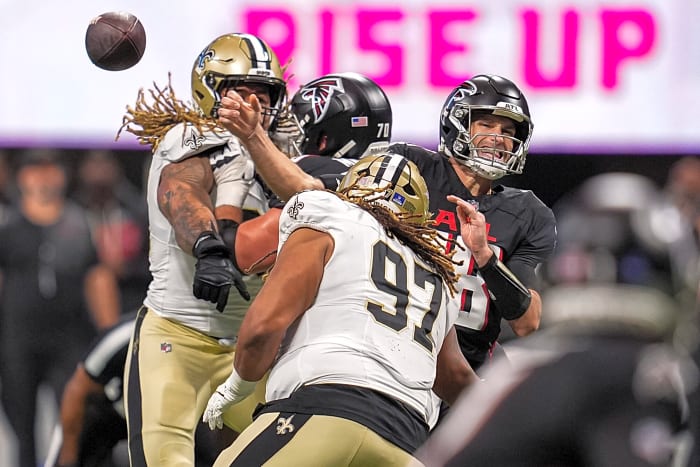
The dead-money obligation directly constrains roster construction. Cornerbacks, pass-rushers, and rotational linemen compete for limited dollars, while salary-cap mechanics prevent full flexibility. Every position group feels the impact: one contract shapes choices across the entire depth chart. Analysts note the Falcons’ limited 2026 cap space magnifies these constraints. Even standard decisions—extensions or free-agent signings—now require balancing immediate needs against future obligations. This is financial strategy as much as football planning, and it explains why the Falcons’ offseason looks more like an accounting exercise than a simple roster rebuild.
Front Office Triage in Action
Atlanta’s strategy is deliberate: base salaries converted to signing bonuses, deals backloaded, and contracts restructured. Matthews’ $10.5 million relief and Mooney’s release illustrate how these moves free space while creating future dead-money exposure. Every restructure borrows against the next season, forcing precise spreadsheet management. Analysts describe this as cap triage: short-term breathing room purchased at long-term cost. The front office now operates as much like a financial team as a football organization. Decisions are measured, and miscalculations echo across seasons. Managing the $22.5 million 2026 hit and $12.5 million 2027 carryover dictates the pace and scope of every roster adjustment.
Unexpected Casualties Across Positions
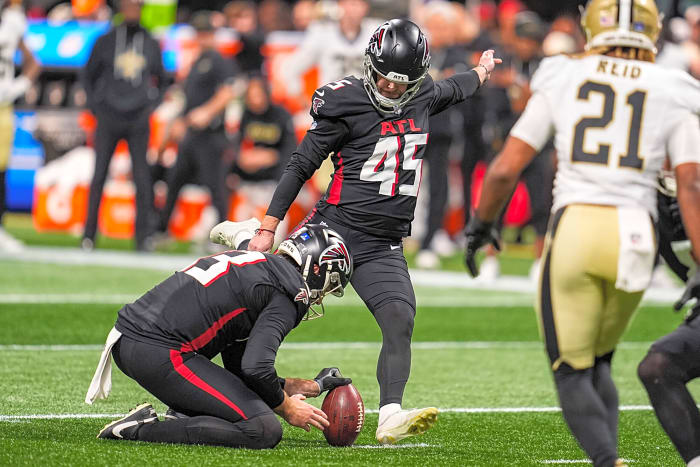
Dead money reshapes opportunities beyond quarterback. Position groups like cornerback and pass rush now compete for limited dollars, affecting potential re-signings and free-agent acquisitions. Mooney’s release and Hodge’s cut are tangible examples of accounting dictating roster outcomes. Analysts note these are not hypothetical: dead-money obligations directly reduce flexibility, forcing prioritization among contributors. Every dollar committed to the past constrains present options. The Falcons’ adjustments illustrate how financial strategy often drives roster construction more than raw competition, and the consequences play out across multiple offseasons as analysts track every chain reaction.
“You Live With It,” Says the Ledger

Publicly accessible ledgers on Spotrac and Over The Cap expose every dollar. “Guaranteed money is another way of saying you live with it,” analysts observe. Every restructure, cut, or lost signing ties back to Cousins’ exit. Transparency creates accountability, forcing deliberate decision-making. Analysts can follow the chain reaction from a single QB move to roster-wide adjustments. This human and professional pressure highlights that cap obligations aren’t just numbers—they shape strategy, narrative, and team culture simultaneously. Atlanta’s handling of these challenges sets a benchmark for both front offices and informed observers.
Historical Context and Precedent

The Falcons’ cap situation echoes prior examples, including Matt Ryan’s ~$40.5 million dead-money hit in 2022. Analysts view these scenarios as cautionary tales for quarterback transitions: mismanaged guaranteed money constrains multiple offseasons. Cousins’ $22.5 million 2026 and $12.5 million 2027 hits reinforce a pattern where upgrades require balance-sheet planning as much as talent evaluation. Each franchise-level decision has cascading effects across the roster. For the Falcons, lessons from Ryan’s exit inform current strategy, turning what fans see as a single move into a multi-year financial and competitive challenge.
Looking Ahead: Managing Constraints
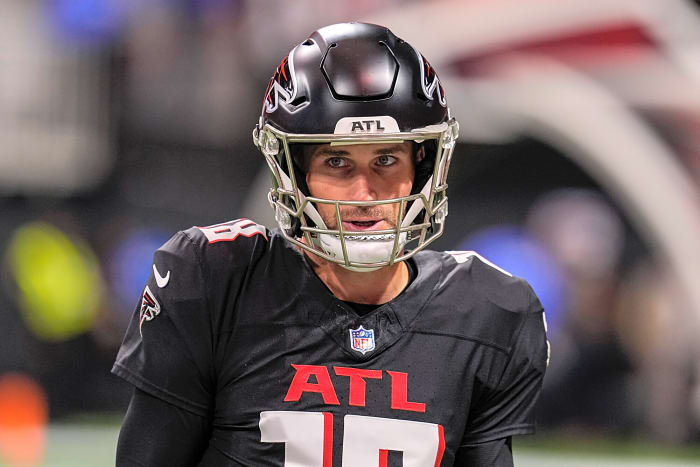
Future flexibility will remain tight. Restructures and the 2027 $12.5 million carryover compress options, while the $10 million offset clause offers potential relief if Cousins signs elsewhere. Analysts project continued spreadsheet-driven management: each move affects next season’s cap and depth decisions. Atlanta’s front office is navigating multi-year obligations with precision, balancing immediate roster needs against long-term strategy. Observers will watch how the Falcons allocate dollars across starters, backups, and draft resources, providing insight into both the decision-making process and the cascading effects of guaranteed contracts.
The Takeaway

Cousins’ departure is only part of the story. The $22.5 million 2026 dead-money hit and $12.5 million 2027 carryover, totaling ~$35 million, shape every move the Falcons make. Analysts tracking Spotrac and Over The Cap see the multi-year implications clearly. Offset clauses, restructures, and cuts illustrate that football strategy now blends seamlessly with financial planning. For NFL fans following roster construction, Atlanta’s handling of this obligation is a case study in managing guaranteed money, roster depth, and multi-season consequences while keeping competitiveness intact.
Sources:
Falcons add $22.5 million to dead money total by cutting Kirk Cousins. Falcons Wire / USA Today, March 11, 2026
How will cutting Kirk Cousins affect the Falcons’ salary cap in 2026? Falcons Wire / USA Today, February 26, 2026
Falcons Modify Kirk Cousins Contract for Post June 1 Release. Over The Cap, January 5, 2026
Source: Falcons restructure Kirk Cousins deal, set up key decision. ESPN, January 5, 2026
Falcons tell Kirk Cousins they’re releasing him to end $100M disaster. New York Post, February 24, 2026
Falcons Could Clear Nearly $12 Million in Cap Space with Latest Move. SI.com, March 4, 2026
More must-reads:
- Update expands on bombshell report about alleged Eagles, Jalen Hurts drama
- Chiefs HC Andy Reid shuts down this Justin Fields narrative
- The 'Rushing-TD leaders by NFL team' quiz
Breaking News
Trending News








Customize Your Newsletter
 +
+




Get the latest news and rumors, customized to your favorite sports and teams. Emailed daily. Always free!
PRIVACY POLICY COOKIE POLICY CONTACT US
ABOUT YARDBARKER TERMS OF SERVICE


By using this site, you agree to our Terms of Service and Privacy Policy.
This site is for entertainment purposes only.
There is no gambling offered on this site.
Gambling Problem? Call 1-800-Gambler.
