
-

-


Follow Us
-

 On Facebook
 On Flipboard
 On Twitter

The new general manager stood at a podium in Phoenix, league meetings buzzing around him, and said what nobody with his title is supposed to say out loud. Ian Cunningham, the Falcons’ freshly hired GM and one of the few Black executives running an NFL front office, looked into cameras and admitted the system that helped elevate him was broken. Somewhere in Tallahassee, a state attorney general was drafting the legal paperwork to prove it. The Rooney Rule had survived 23 years. It might not survive May.
A Letter With a Deadline
Florida Attorney General James Uthmeier sent his letter to Commissioner Roger Goodell on March 25, 2026, and the language left zero room for interpretation. He called the Rooney Rule “blatant race and sex discrimination” and demanded the NFL confirm by May 1 that it would stop enforcing the policy in Florida. Three NFL franchises operate in that state: the Buccaneers, Dolphins, and Jaguars. If Uthmeier follows through with civil rights enforcement action, the league’s flagship diversity initiative faces its first state-level legal assault.
Perfect Compliance, Zero Results

Here is the number that cracks the whole narrative: all 32 NFL teams exceeded Rooney Rule interview requirements during the 2026 coaching cycle. Every single franchise checked the box. Then ten head coaching jobs opened, and zero went to a Black candidate. Robert Saleh, of Lebanese descent, was the only minority hired. Three Black head coaches remain across the entire league, down from six the prior season. That 50 percent drop happened while every team followed the rules perfectly. Compliance became camouflage.
The Rule That Opened His Door and Locked His Reward
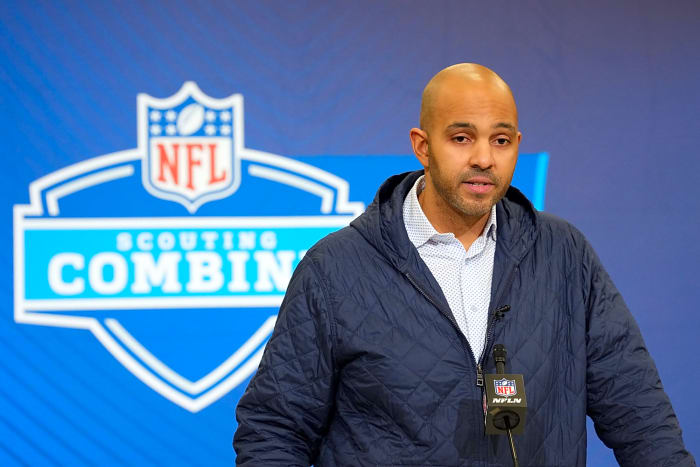
Cunningham said it plainly: “I’m the General Manager. I was hired. I would think that they would get two third-round picks.” He meant the Chicago Bears, who developed him as assistant GM. Under the Rooney Rule’s 2020 compensatory pick amendment, the Bears should have earned two third-round selections. They got zero. The Falcons hired Matt Ryan as President of Football above Cunningham, and that hierarchy disqualified the compensation. The rule created his opportunity. The organization’s structure erased its reward.
The Loophole Nobody Wrote on Purpose
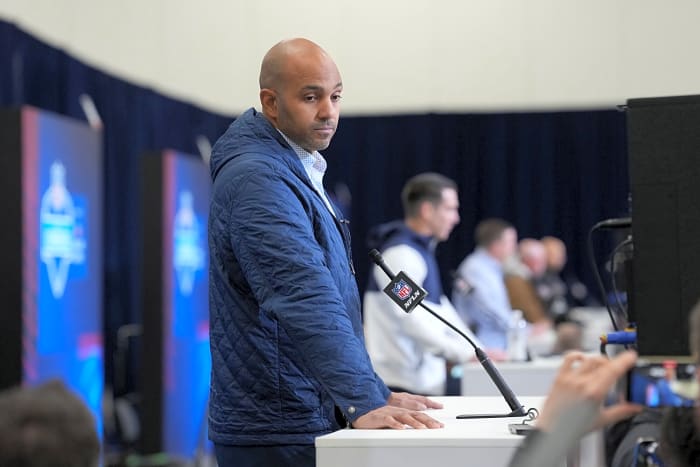
The mechanism is almost elegant in its dysfunction. Compensatory picks flow to teams that develop minority executives who leave to become the top decision-maker elsewhere. But if a franchise installs a president above the GM, the GM is no longer the top decision-maker, and the developing team gets nothing. No one designed this loophole. It emerged from organizational charts that the rule never anticipated. Cunningham is simultaneously proof the Rooney Rule works and proof it can be structurally neutralized without anyone breaking a single bylaw.
The Numbers That Bury the Myth

African American players make up 53.5 percent of NFL rosters. African American head coaches hold approximately 9.4 percent of those jobs. That is roughly a 5.7-to-1 underrepresentation gap. In 2017, the league had seven Black head coaches. By 2026, three. The Rooney Rule expanded four times across 23 years, adding GM requirements, coordinator mandates, and an Accelerator Program. The Accelerator produced one head coach and two general managers in four years before being paused. More rules, more programs, worse outcomes.
Three States, Thirty-Two Dominoes

If the NFL bends to Florida, three franchises get exempted from the Rooney Rule. That is roughly 9 percent of the league operating under different hiring standards. Other conservative-led states could file identical challenges. The Accelerator Program already signaled retreat: paused in 2025, it restarts in May 2026 with white male participants included alongside minority candidates. Goodell told reporters “diversity has been a benefit to the National Football League,” but the policy apparatus behind that statement is shrinking in real time.
The Rule’s Fatal Design Flaw

It is not the first time since 2003 that zero Black head coaches were hired during a coaching cycle. Far from it. The Rooney Rule mandates interviews. It cannot mandate hiring. Goodell himself acknowledged it is “not a hiring mandate.” Once you see that distinction, the entire 23-year framework collapses into a single insight: teams can interview minorities, comply fully, refuse to hire, and now cite legal attacks to justify abandoning even the interview requirement. The rule’s greatest strength became its fatal weakness.
A Namesake Admits the Ground Shifted

Art Rooney II, the Pittsburgh Steelers owner whose family name sits on the policy, said publicly that “the environment has changed.” That is the closest thing to a white flag from the rule’s founding bloodline. Cunningham, meanwhile, committed to action “from grassroots initiatives to the director level.” One man defending a policy that failed to protect his own compensation. Another acknowledging the political ground beneath it eroded. The May 1 deadline arrives in weeks, and the NFL has not disclosed its response.
What Happens After May 1

Uthmeier’s letter framed the Rooney Rule as illegal under Florida civil rights law. If the NFL ignores the deadline, he can file enforcement action. If the NFL complies, it fractures its own policy. Either path sets precedent for every diversity initiative in professional sports. The counter move exists: the league could mandate hiring accountability, close the president-above-GM loophole, and tie compensation to outcomes. Nobody in the league office has proposed any of it. The rule that was supposed to change hiring may have only changed the paperwork.
Sources
“Florida Attorney General Gives NFL Until May 1 to Ditch Rooney Rule.” NBC Sports / Pro Football Talk, March 25, 2026.
“Goodell Backs Rooney Rule, Says Diversity ‘a Benefit’ to NFL.” ESPN, March 31, 2026.
“NFL’s Rooney Rule Under Spotlight Again Amid Lack of Head Coaching Diversity.” Sports Business Journal, February 2, 2026.
“Bears Seek Compensatory Picks for Falcons’ Hire of GM Cunningham.” ESPN, February 23, 2026.
“NFL Cancels Accelerator Program, Aims to Revamp for May 2026.” Reuters, May 13, 2025.
“NFL Racial and Gender Report Card.” Institute for Diversity and Ethics in Sport (TIDES), University of Central Florida, 2023.
More must-reads:
- Five teams that should consider NFL Draft trades
- Insider shares notable update on Shedeur Sanders' status with Browns
- The 'Rushing-TD leaders by NFL team' quiz
Breaking News
Trending News





Customize Your Newsletter
 +
+




Get the latest news and rumors, customized to your favorite sports and teams. Emailed daily. Always free!
PRIVACY POLICY COOKIE POLICY CONTACT US
ABOUT YARDBARKER TERMS OF SERVICE


By using this site, you agree to our Terms of Service and Privacy Policy.
This site is for entertainment purposes only.
There is no gambling offered on this site.
Gambling Problem? Call 1-800-Gambler.
