
-

-


Follow Us
-

 On Facebook
 On Flipboard
 On Twitter
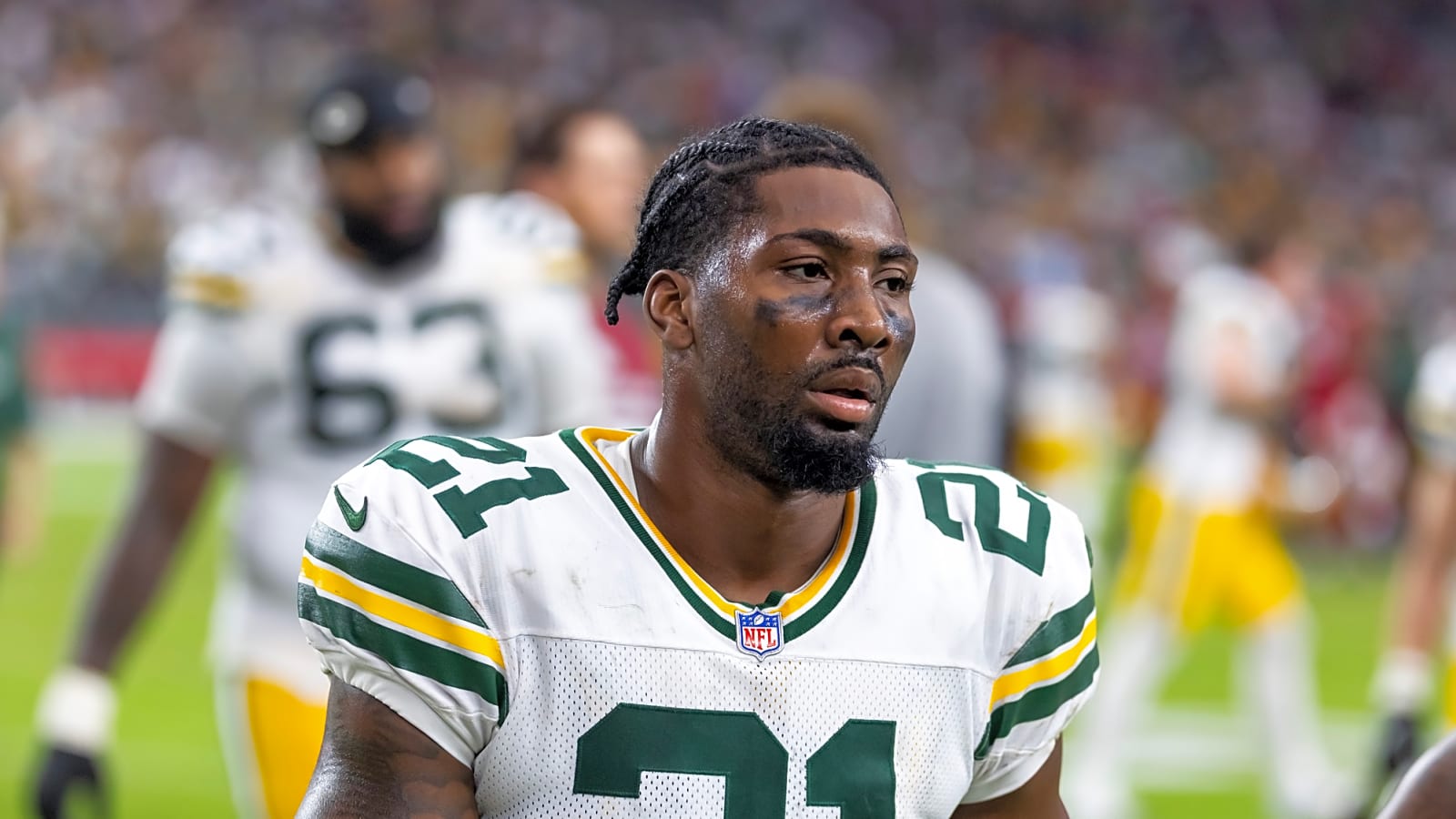
The Green Bay Packers have made a definitive and surprising move early in the free agency period. Just one year after signing cornerback Nate Hobbs to a massive four-year, $48 million contract, the front office officially released him. This rapid departure highlights a clear shift in defensive strategy and proves the organization will quickly correct costly roster mistakes. By cutting ties with a high-priced veteran, the Packers send a strong message about their standards for on-field production.
Green Bay Packers Release CB Nate Hobbs
When Green Bay acquired Nate Hobbs from the Las Vegas Raiders last offseason, they envisioned a versatile playmaker who could anchor the perimeter of their defense. However, the team fundamentally miscast him. Hobbs built his professional reputation by thriving in the slot, where he could use his quickness and tackling ability in tight spaces. The Packers asked him to move outside to the boundary, a position that requires different footwork, vertical speed, and isolation skills.
This positional shift proved highly unsuccessful. Hobbs struggled to adapt to the demands of outside coverage. Furthermore, injuries disrupted his only season in Green Bay, limiting him to just 11 games and a mere five starts. Over his 358 defensive snaps, opposing offenses consistently targeted his side of the field. The numbers tell a grim story. He allowed an inflated passer rating of 111.1, failed to intercept a single pass, and recorded only two pass breakups. The Packers paid for a premier shutdown defender, but they received a player who looked entirely uncomfortable in the defensive scheme.
The Rise of Javon Bullard
Roster decisions rarely happen in a vacuum. As Hobbs struggled to find his footing, another young player seized a golden opportunity. Javon Bullard emerged as a highly capable and dynamic presence in the secondary. Bullard showed the exact instincts, aggressive tackling, and fluid coverage skills the defense desperately needed in the middle of the field.
Because Bullard locked down the slot position so effectively, the coaching staff had no logical reason to move Hobbs back to his natural role. Bullard simply outplayed him and earned the trust of the defensive coaches. To compound matters, the Packers recently signed free-agent cornerback Benjamin St-Juste. This new acquisition provides the reliable boundary depth the team originally hoped Hobbs would deliver. With Bullard thriving on the inside and St-Juste arriving to play on the outside, Hobbs simply lost his place on the depth chart.
Financial and Strategic Implications
Releasing a player just one year into a highly lucrative contract carries heavy financial consequences. To manage the salary cap impact, the Packers designated this move as a post-June 1 cut. Because of this specific designation, Green Bay must carry his full $12.8 million salary cap charge until the first of June. After that date passes, the dead money splits across two seasons. The team will absorb $4 million against the 2026 salary cap and push the remaining $8 million penalty into 2027.
Crucially, releasing him right now allows the franchise to avoid paying a massive $6.25 million roster bonus that was due this week. General Manager Brian Gutekunst made a tough but necessary business decision. Strategically, this move demonstrates that the front office refuses to let a large contract dictate playing time. They recognized a severe evaluation mistake, cut their financial losses, and immediately pivoted to better roster options. As the Green Bay Packers build their defense for the upcoming season, they clearly value current performance and scheme fit far more than financial commitments from the past.
More must-reads:
- Early look at Seahawks' sale reveals name of interest
- Five teams that should consider NFL Draft trades
- The 'Rushing-TD leaders by NFL team' quiz
Breaking News
Trending News






Customize Your Newsletter
 +
+




Get the latest news and rumors, customized to your favorite sports and teams. Emailed daily. Always free!
PRIVACY POLICY COOKIE POLICY CONTACT US
ABOUT YARDBARKER TERMS OF SERVICE


By using this site, you agree to our Terms of Service and Privacy Policy.
This site is for entertainment purposes only.
There is no gambling offered on this site.
Gambling Problem? Call 1-800-Gambler.
