
-

-


Follow Us
-

 On Facebook
 On Flipboard
 On Twitter
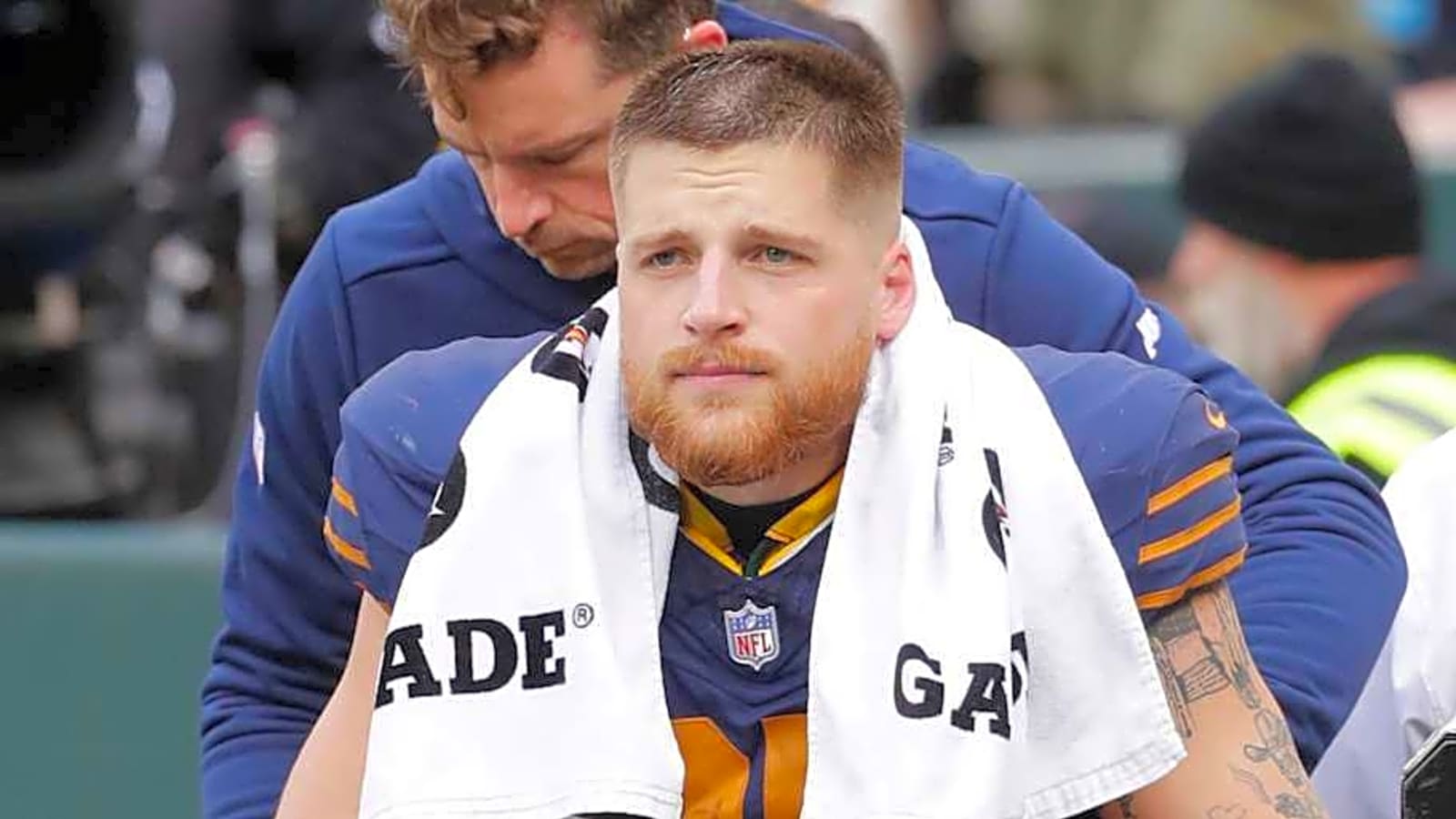
The Green Bay Packers weren’t exactly firing on all cylinders, but they were 9-3-1 headed into a showdown at the Denver Broncos that was billed as a potential Super Bowl preview.
With Green Bay leading in the third quarter, Micah Parsons suffered a torn ACL. Without Parsons, one of the best players in the NFL, and Tucker Kraft, arguably the team’s best player on offense, the Packers’ goose was cooked.
However, after the season, general manager Brian Gutekunst wouldn’t use injuries as a crutch.
As it turns out, for good reason.
Aaron Schatz of FTN Fantasy had the Packers in the middle of the pack in his Adjusted Games Lost metric. AGL measures how often a team’s starters and other important players are sidelined by injuries or playing at less than 100 percent.
“The Packers were pretty average for injuries in 2025,” Schatz wrote in an e-mail. “They had some big injuries. Every team has some big injuries! The Micah Parsons injury was a big deal but he only missed three regular-season games. Compare that to, say, Rashawn Slater and Joe Alt combining to miss 28 games for the Chargers.
“The defense in particular was really healthy. Other than Parsons, the only players with over 3 AGL were Devonte Wyatt, Nate Hobbs and Lukas Van Ness.”
No, Packers Weren’t Hammered by Injuries
The Packers ranked 15th overall in AGL. The Arizona Cardinals, who were coached by new Packers defensive coordinator Jonathan Gannon, finished 32nd as the most-injured team in the NFL. In fact, the Cardinals were the second-most-injured team since Schatz began computing AGL in 2001.
That’s perhaps why Gutekunst, when he spoke to reporters at Lambeau Field after he and coach Matt LaFleur signed contract extensions, wouldn’t point to injuries as the reason the team finished the season on a five-game losing streak. Gutekunst has been around the sport long enough to know that injuries are a way of life in the NFL.
“I got one ring since I’ve been doing this, and it was the year that we had more injuries than I think any other, right?” Gutekunst said, pointing to the 2010 season. “So, like, it’s nothing against any other teams here. But you never feel like, ‘Hey, we can’t go win this game.’
“I fully expected where we were in the middle of the playoff game, to win that game and be heading to Seattle and win that game.”
Schatz’s numbers aren’t an anomaly. The Packers were 19th in Sports Info Solutions’ Total Points Missed metric; the Cardinals were 32nd in that, as well.
Timing Matters
The data doesn’t downplay the impact of the injuries to Parsons and Kraft. Rather, as Schatz said, no team is immune to injuries.
At the same time, the injuries to Parsons and Kraft were season-changers. That Parsons, in particular, played most of the season meant his absence didn’t have a dramatic impact on the numbers. Timing is everything. Green Bay’s championship outlook would have looked different had Parsons missed three early-season games and not three end-of-season games.
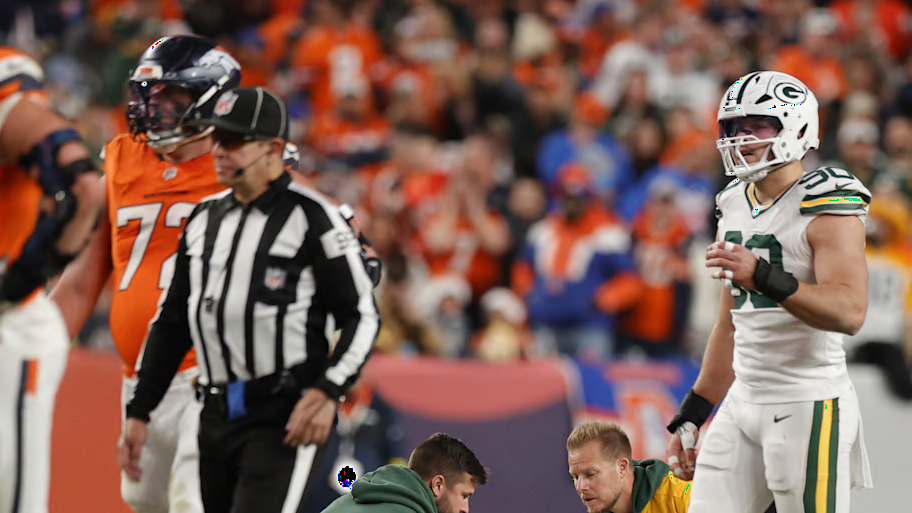
While it’s perhaps undeniable that Green Bay’s hopes of getting to the Super Bowl were doomed without their game-changing impact, in Gutekunst’s mind, it was up to everybody else to pick up the slack. That didn’t happen.
“As tough as those moments are, what draws us a lot to it is the competitive nature of it,” Gutekunst said. “I always say it up here that roster building is always 365, and we’re always on top of that stuff. To me, if you’re going to do this in those moments, that’s where your leaders better step up and be ready to go.
“Not only your players, but your coaches, and myself included. So, yeah, those things suck but it’s the nature of the business. Even these two teams playing [in the Super Bowl], they’ve had their share of injuries, as well. And sometimes it’s unfortunate, sometimes it’s the way you’re doing things. You take a look at it all and just try to make the best decisions.”
Health Matters
According to Schatz’s data, only three of the 10 most-injured teams reached the playoffs. Meanwhile, only three of the 10 least-injured teams fell short of the playoffs.
The Patriots (No. 1 in the rankings as the least-injured team) and Seahawks (No. 3) rode good health to the Super Bowl.
Meanwhile, unable to hold onto their NFC North lead, the Packers finished as the seventh seed for the third consecutive season.
“The consistency was the thing to me, that we didn’t play consistently enough in a lot of different phases – probably all three,” Gutekunst said. “I did think at times we played at a very, very high level, but I think the thing for me was that when we had some injuries, we didn’t probably perform as well as I would’ve liked when we had those injuries, if that makes sense, across the board.”
Moving ahead to 2026, Gannon will coordinate Green Bay’s defense after a failed three-year run as coach of the Cardinals. Arizona went 4-13 in 2023 but improved to 8-9 in 2024. That made the Cardinals a chic pick to qualify for the playoffs in the loaded NFC West. Instead, they tumbled to 3-14.
Gannon’s defense crashed from 15th in points allowed in 2024 to 29th in 2025. Why? It didn’t help that his defense was one of the most-injured in Schatz’s 25 years of AGL data.
Looking at AGL overall and not just on defense, Schatz wrote, “No other team came close to the Cardinals in AGL for 2025, as the gap between Arizona and No. 31 Detroit was larger than the gap between Detroit and No. 19 New Orleans.”
That perhaps bodes well as the Packers make the transition from Jeff Hafley to Gannon, who coordinated the Philadelphia defense that reached the Super Bowl in 2022.
More must-reads:
- Texans, Danielle Hunter agree on $40.1M deal — Is Will Anderson Jr. next?
- Jets fans may scream upon learning who Frank Reich allegedly wants at quarterback
- The 'NFL year-by-year sack leaders' quiz
Breaking News
Trending News






Customize Your Newsletter
 +
+




Get the latest news and rumors, customized to your favorite sports and teams. Emailed daily. Always free!
PRIVACY POLICY COOKIE POLICY CONTACT US
ABOUT YARDBARKER TERMS OF SERVICE


By using this site, you agree to our Terms of Service and Privacy Policy.
This site is for entertainment purposes only.
There is no gambling offered on this site.
Gambling Problem? Call 1-800-Gambler.
