
-

-


Follow Us
-

 On Facebook
 On Flipboard

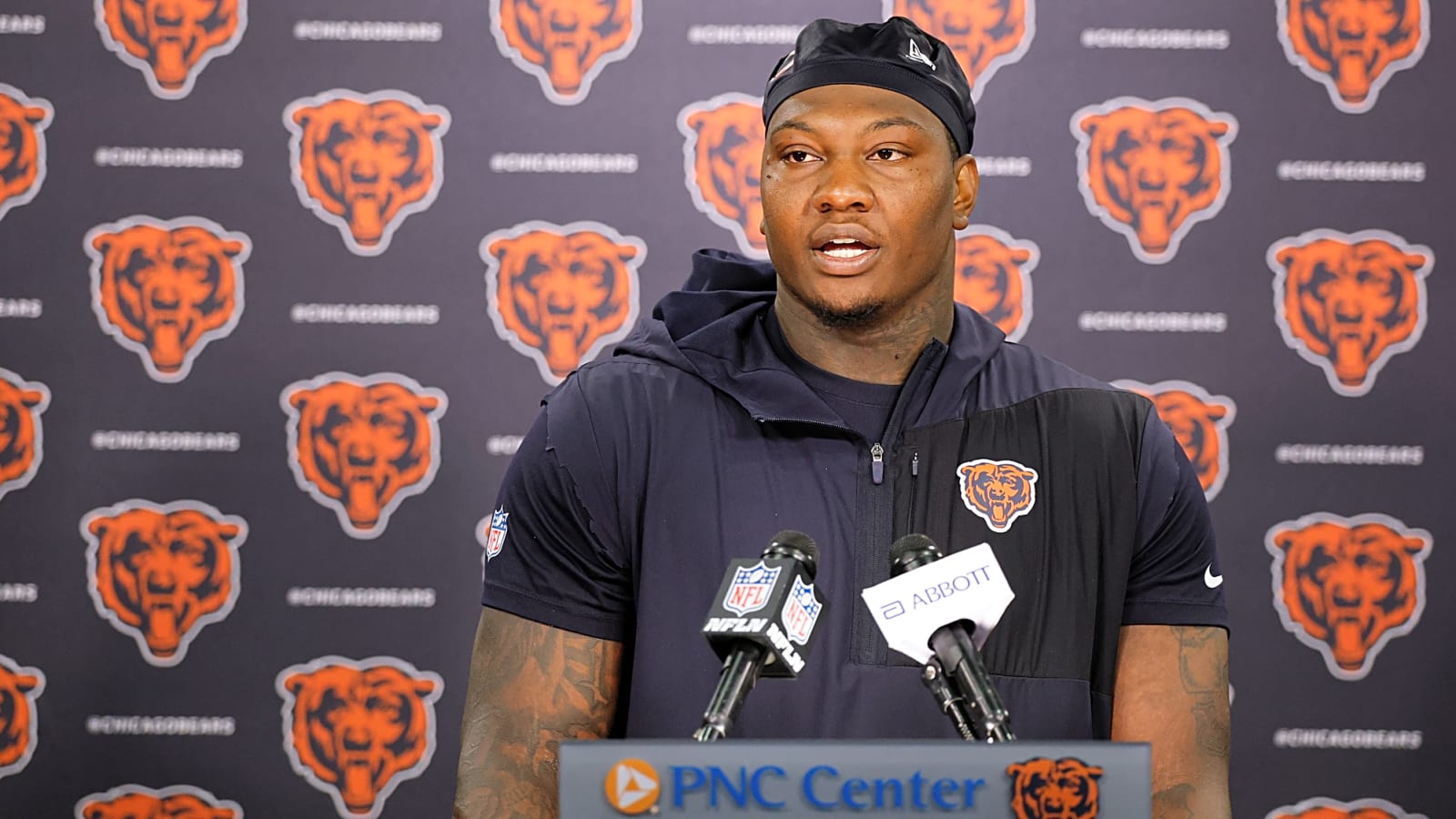
There are a few Bears discourse takes that take on a life of their own, whether the tape backs them up or not, and one of the loudest over the last year has been this: Gervon Dexter is a bad run defender.
Not inconsistent or “he has some good moments, but…” Just bad. Full stop. I ran a poll on Twitter to get a true gauge for this, and found that very few people were interested in the topic (only 32 votes). Among those votes, nearly half the responses said he was poor or downright bad as a run defender.
And I get why that label has stuck. Dexter has some ugly reps. He plays too high at times. He can get rocked on vertical double teams. And if you catch the wrong handful of clips on a Sunday, it’s easy to walk away thinking the Bears have a defensive tackle who’s mostly just along for the ride against the run. But after going back through the tape, not just a rep here or there, but game after game, snap after snap, I think that framing is too harsh.
This is not a “Gervon Dexter is secretly elite” piece. It’s not me trying to pretend the negatives aren’t there. They show up. Some of them were on his scouting report coming out of Florida, and some of them still show up now. But the more film you watch, the harder it becomes to call him poor against the run with a straight face.
Dexter does a lot of the dirty work that doesn’t show up in a box score, doesn’t always show up in grades, and definitely doesn’t show up in the way fans usually talk about run defense. He holds the line of scrimmage, muddies run lanes, and squeezes cutbacks. He wins more one-on-one power reps than people realize. And maybe most importantly, he plays the kind of violent, annoying, pain-in-the-ass football that makes life harder on offensive linemen.
That’s really what this article is about. Not proving Dexter is great or pretending he doesn’t have flaws. Just answering a much simpler question: Is Gervon Dexter actually a bad run defender, or are people missing the kind of run defense he’s providing because it doesn’t show up neatly on the stat sheet?
Find a full discussion and breakdown of Gervon Dexter’s All-22 tape on YouTube, Spotify, or in audio form on Apple Podcasts!
The online case against Gervon Dexter
The anti-Dexter run defense argument is pretty familiar by now.
You’ve seen versions of all of these:
- “He’s late and too high off the snap.”
- “He added weight and lost some quickness.”
- “He’s a pass rusher first, and when he has to read and react, it falls apart.”
- “His lack of get-off keeps him from even being average against the run.”
And to be fair, none of those criticisms came out of nowhere. If you go back to his pre-draft profile, some of the same concerns were already there. Scouting reports for Dexter will set our baseline for what he was coming into the NFL. The scouting graphics below from various sources describe Dexter’s strengths as a run defender in college, including “extreme power” and describe him as having “two-gapping qualities.”
That’s the good. The negatives are just as telling. The same sources note that Dexter “allows run blockers to take the action to him,” and that “double teams take him for a ride.”
That sounds familiar, right? Because it should. A lot of what Bears fans are frustrated with was visible before he ever got to Chicago. But that’s exactly why Dexter is such an interesting evaluation: the strengths and weaknesses were never a mystery. The question has always been which side of that scouting report would win out in the NFL. The answer, at least right now, is: both.
The film is clear: Dexter is not “nothing” against the run
There’s a certain kind of defensive tackle rep that will never go viral. Nobody’s clipping it and posting the all-22 with sirens and red circles. Nobody’s saying, “Oh my God, what a monster,” because the result is usually a tackle by a linebacker or safety 3-5 yards downfield. But for defensive tackles, especially in fronts that ask them to hold, muddy, squeeze, and spill, those reps matter. And Dexter has a lot of them. Over and over on tape, you see the same core strengths show up:
1. He is a problem one-on-one
This is probably the most consistent aspect of his run defense. If Dexter is isolated on a blocker, especially a tackle, he is a real pain. That part of the scouting report absolutely carried over. This is especially true against power-based blockers. If the rep turns into strength-on-strength, Dexter can typically win it. He can lock out, hold the line, bench-press guys into the backfield, and close running lanes without ever being the one making the tackle.
2. He’s better at disrupting run concepts than his tackle totals suggest
This is where people lose the thread. Dexter has a bunch of reps where the running back still gets a decent gain, but Dexter did his job. He changed the lane, forced the action elsewhere, wiped out the cutback land, muddied up the picture, or held the point long enough for somebody else to get in on the action. And if you’re watching run defense like it’s just “Did he make the play? Yes or no?” then you’re going to miss all of that. Dexter’s run defense lives in that gray area. Not always flashy. Not always clean. But often disruptive.
3. His effort is constant
This one is not technical, but it matters. Dexter hustles. He chases. He keeps working beyond initial contact. Even when the rep goes the opposite direction, he rarely looks checked out. It’s not rare to see him hustling to the opposite side of the field to corral the ball carrier. That matters for a defensive tackle because so much of the position is ugly labor. You’re eating contact, getting leaned on, trying not to get displaced, and finding ways to recover after initial contact. Dexter keeps fighting in those situations. That doesn’t excuse the losses, but it should frame the evaluation.
What even counts as a “win” for a run defending DT?
A good run defense rep for a defensive tackle does not always mean a tackle for loss. Sometimes the win is:
- holding the line of scrimmage
- forcing the run to bounce somewhere else
- squeezing the cutback lane
- occupying two blockers
- keeping a linebacker clean
- making the ball carrier hesitate
If you only judge run defense by tackles and splash plays, you’re going to miss a lot of what Dexter actually does well.
Where the Gervon Dexter criticism is fair
Now for the other side of it: the ugly stuff is real, too. This cannot be a film breakdown that pretends otherwise.
Double teams are still the biggest issue
If you wanted one clean explanation for why some fans come away from Dexter feeling disappointed, this is it. When offenses get vertical movement against him on downhill doubles, the rep can go bad fast. That’s not invented criticism. It’s in the original scouting language, too: “double teams take him for a ride.”
While he has really grown with his take-on technique against horizontal run concepts, his ceiling against more vertical run concepts might be capped by his height. Dexter is a huge human being, but he’s also an extremely tall defensive tackle, standing nearly 6’6″. There are just going to be leverage situations where he is naturally at a disadvantage if his timing, knee bend, or hand placement isn’t right. On those reps, especially against inside zone and duo-type movement, he can get uprooted more dramatically than you’d like. When people say, “The bad reps are really bad,” they’re not wrong.
Pad level is still a constant battle
Again: fair criticism. The scouting reports explicitly said he“stands up out of his stance” and that it causes problems against double teams and combo blocks. That still shows up. The nuance here is that Dexter is one of those players where pad level has to be judged relative to body type. He’s enormous. His “playing low” is different from a squatty nose tackle’s “playing low.” So not every high-looking rep is actually a bad leverage rep. But yes, there are still too many moments where his pads rise, the blocker gets into his hip, and the rep is functionally over.
He is still inconsistent finishing plays
This one also tracks directly with the scouting notes, which said he had more to develop in“shedding blocks and finishing.” That remains part of the conversation. There are plays where Dexter does the hard part, controls the blocker, changes the gap, forces the ball inside, and then still doesn’t finish cleanly. That inconsistency is one of the reasons “fine” feels like the honest middle ground for a lot of people, and I am hard-pressed to disagree.
Why the stat sheet makes this harder than it should be
Run defense is one of the most misunderstood parts of football analysis because the stats seldom tell you enough of the story to get a firm grasp. This is especially true for interior defensive linemen. If Dexter gets knocked for a missed tackle on a rep where he also:
- held the point,
- forced the back off his original rush lane,
- and made the run spill to help,
The spreadsheet still just sees the missed tackle. If he absorbs a blocker, keeps a linebacker clean, and the linebacker makes the stop, Dexter often gets nothing in the box score besides another anonymous snap. That doesn’t mean stats are useless. They do matter. They can highlight trends, win/loss frequency, and efficiency issues. But they are incredibly bad at capturing the kind of disruptive but easily accounted for run defense that Dexter provides.
That’s why his run profile feels so contradictory. If you only use stat output, you can talk yourself into “well below average.” If you only watch his best reps, you can talk yourself into “dominant.” The truth is in between.
Verdict: Dexter is fine… and sometimes better than that
So where does that leave us? If you want the cleanest possible answer, it’s this:
Gervon Dexter is not a poor run defender. He is also not suddenly a top-tier one. He is a functional, often disruptive, occasionally dominant, but still flawed run defender whose value depends heavily on:
- matchup type,
- front structure,
- and what exactly you’re asking him to do.
Against wide zone concepts, reach attempts, and one-on-one strength battles, he can be a real problem. If an offensive coordinator tasks a blocker with moving Dexter off his spot without help, that blocker is probably questioning the playcaller’s IQ. The draft profile scouting notes about his power, extension, and ability to stay square and disrupt blockers climbing to the second level absolutely show up on NFL tape.
Against vertical double teams and more downhill combination blocks, the weaknesses from his scouting report still show up, too. The issues with leverage, block shedding, and being moved by doubles haven’t vanished, but they have gotten quieter. That’s why “fine” is more than defensible.
But here’s the part I’d push back on: “fine” is not the same thing as “bad.”
And too much of the online conversation treats those as the same category. Dexter’s run defense is not perfect, but it is highly useful and an asset to the Bears’ defense. It affects the opponent’s offense more than the stat line indicates. Dexter does enough invisible work that calling him “poor” feels like flattening the player into only his worst reps. And that’s not what the film says.
Final takeaway on Gervon Dexter’s Run Defense
If you want the most film-nerd, least agenda-driven version of this evaluation, here it is: Gervon Dexter is a run defender whose lows are loud, whose strengths are subtle, and whose value often disappears if you’re only looking at tackles and grades.
Dexter is not a destroyer, a liability, or some misunderstood superstar. He’s something a little less sexy and a lot more useful: A big, violent, disruptive interior lineman whose run defense often matters even when the stat sheet forgets to mention him.
More must-reads:
- Steelers reportedly making Brendan Sorsby moves after supplemental draft decision
- Bills HC Joe Brady breaks silence on firing of Sean McDermott
- The 'Game-winning-drives record by team' quiz
Breaking News
Trending News





Customize Your Newsletter
 +
+




Get the latest news and rumors, customized to your favorite sports and teams. Emailed daily. Always free!
PRIVACY POLICY COOKIE POLICY CONTACT US
ABOUT YARDBARKER TERMS OF SERVICE


By using this site, you agree to our Terms of Service and Privacy Policy.
This site is for entertainment purposes only.
There is no gambling offered on this site.
Gambling Problem? Call 1-800-Gambler.
