
-

-


Follow Us
-

 On Facebook
 On Flipboard
 On Twitter

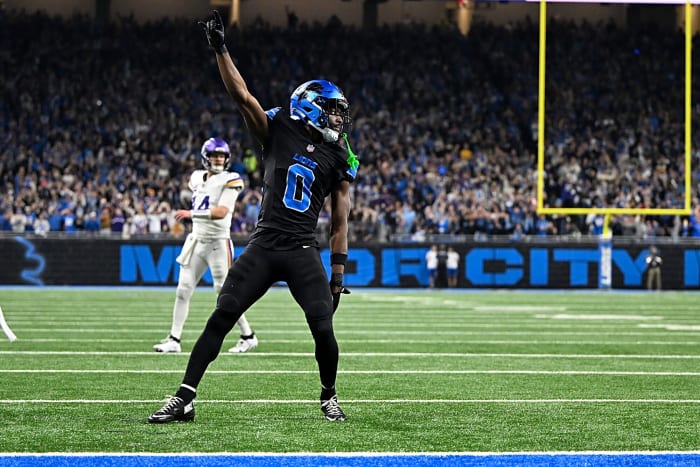
Terrion Arnold’s Airbnb rental in Largo, Florida, was broken into twice. The thieves took designer bags, guns, $100,000 in cash, an $80,000 necklace, and his NFL phone. On Feb. 3, 2026, the Detroit Lions cornerback reported the thefts to the Largo Police Department. Officers began investigating, and the process was moving forward. Arnold had every resource available to a 24th-overall pick with a $3.9 million cap hit. And then, less than 24 hours later, he abandoned all of it.
One Day
By Feb. 4, Arnold and his circle had decided the police were too slow. The court order from Hillsborough County Circuit Judge J. Logan Murphy states it plainly: Arnold and his friends “decided to take matters into their own hands.” That phrase now sits in a judicial record attached to a first-round NFL draft pick’s name. Arnold had started 15 games as a rookie, posted 60 tackles, and 10 pass defenses. He had a career trajectory most defensive backs dream about. One day of impatience put it all on a shelf.
The Trap
Three men were lured to an apartment at the Eagles Point complex in Tampa Palms. Adrianna Del Valle, identified in court documents as Arnold’s girlfriend, allegedly promised payment to Jasmine Randazzo for bringing the targets in. The victims: Yan Lopez, Arnold’s own private driver. Daniel Tenesacca, Lopez’s friend. Soljah Anderson. None of them had been connected to the Airbnb thefts by any evidence. Judge Murphy confirmed that explicitly. Arnold’s people grabbed three men who, by every available measure, had nothing to do with the robberies.
Gun Barrel
For over an hour, the three men were beaten, pistol-whipped, and interrogated about property they denied stealing. One victim had a gun barrel placed in his mouth. Judge Murphy’s words landed like a verdict on Arnold’s judgment: “Rather than allowing law enforcement to investigate and retrieve the stolen property, the co-defendants sought vigilante justice by kidnapping the victims for over an hour, interrogating them, beating them, and threatening them with a gun barrel in the mouth.” Arnold reported a theft. His circle committed torture.
The Quarterback
Boakai Eugene Hilton, 23, ran the operation by text message. Detective John Barnett testified that Hilton coordinated every participant, gave directions, and asked Lyndell Hudson directly if he had his gun. Arnold was in the car with Hilton during a drive back from Tallahassee, where the scheme was allegedly planned. Every text Hilton sent while Arnold sat beside him now exists as evidence. The judge called Hilton “the quarterback calling the play.” Five people were arrested. Arnold was not one of them. His phone, however, was in the room.
Wrong Targets
Judge Murphy found the weight of evidence against Hilton “overwhelming” and ordered pretrial detention, citing a “significant probability” that victims would face harm if Hilton walked free. Three kidnapping counts. Three robbery-with-a-firearm counts. Potential life sentences. All of it was triggered by Arnold’s impatience with a police investigation that was barely a day old. The victims emphatically denied any involvement in the thefts. No evidence contradicted them. Three innocent men tortured for roughly 90 minutes over property they never touched.
The Ripple
Five people now face major criminal charges: Hilton, Hudson, Christion Williams, Randazzo, and Del Valle. The charges include kidnapping with a firearm and aggravated battery with a deadly weapon. Arnold has not been charged, but his name appears in a court order that describes his decision to go around law enforcement. His 2026 season was already clouded by shoulder surgery that ended his 2025 campaign after eight games. Now the Lions’ secondary depth faces a different kind of fracture, one no surgeon can repair, one that makes Arnold’s trade value crater overnight.
The Precedent
The structural comparison writes itself: a famous person uses associates to forcibly recover stolen property, and the associates commit violent felonies in the process. That was O.J. Simpson in Las Vegas in 2007. Simpson ended up in prison. Arnold passed every NFL character evaluation the Lions’ front office ran before drafting him 24th overall. Scouts reviewed his game film, interviews, and personal history before the draft. Nothing suggested he would be in a car while someone next to him planned a kidnapping over text. Background checks can catch a lot, but they can’t predict everything.
The Subpoena
Arnold still has two years left on his rookie contract. His $3.9 million cap hit is affordable, but his legal situation is a bigger problem. If prosecutors call him to testify at Hilton’s trial, anything he says could either land him in more trouble or conflict with the court order. Either way, it hurts him. The NFL could still punish him with probation, fines, or a suspension. Other teams will now question how thoroughly the Lions checked Arnold’s background before drafting him. Agents around the league will use this case as a warning to young players that trying to handle things yourself can end a career, not get your property back.
The Record
Arnold’s legal team will argue that he reported to the police, was a theft victim himself, and was not present during the violence. That defense has a problem: a sitting judge already wrote his name into a court order describing vigilante kidnapping and torture. That document does not expire. It does not get redacted. Every future contract negotiation, every background check, every NFL transaction involving Terrion Arnold will now include a Feb. 24, 2026, court order and a judge’s phrase that follows him forever: “vigilante justice.”
Sources:
CBS News Detroit, “Lions cornerback Terrion Arnold named in Florida court order in robbery, kidnapping case,” February 26, 2026
Fox 13 News, “5th suspect in Tampa armed robbery, kidnapping linked to Detroit Lions player appears in court,” February 23, 2026
NBC Sports / Pro Football Talk
Sports Illustrated, “In New Court Order, Terrion Arnold Tied to Florida Robberies,” February 26, 2026
Heavy.com
RotoWire, “Terrion Arnold NFL Stats & News,”
More must-reads:
- NFLRA should make key compromise in CBA negotiations with NFL
- Could Cowboys reopen the door for pursuit of Raiders' Maxx Crosby?
- The 'Receiving-record by NFL team' quiz
Breaking News
Trending News




Customize Your Newsletter
 +
+




Get the latest news and rumors, customized to your favorite sports and teams. Emailed daily. Always free!
PRIVACY POLICY COOKIE POLICY CONTACT US
ABOUT YARDBARKER TERMS OF SERVICE


By using this site, you agree to our Terms of Service and Privacy Policy.
This site is for entertainment purposes only.
There is no gambling offered on this site.
Gambling Problem? Call 1-800-Gambler.
