
-

-


Follow Us
-

 On Facebook
 On Flipboard

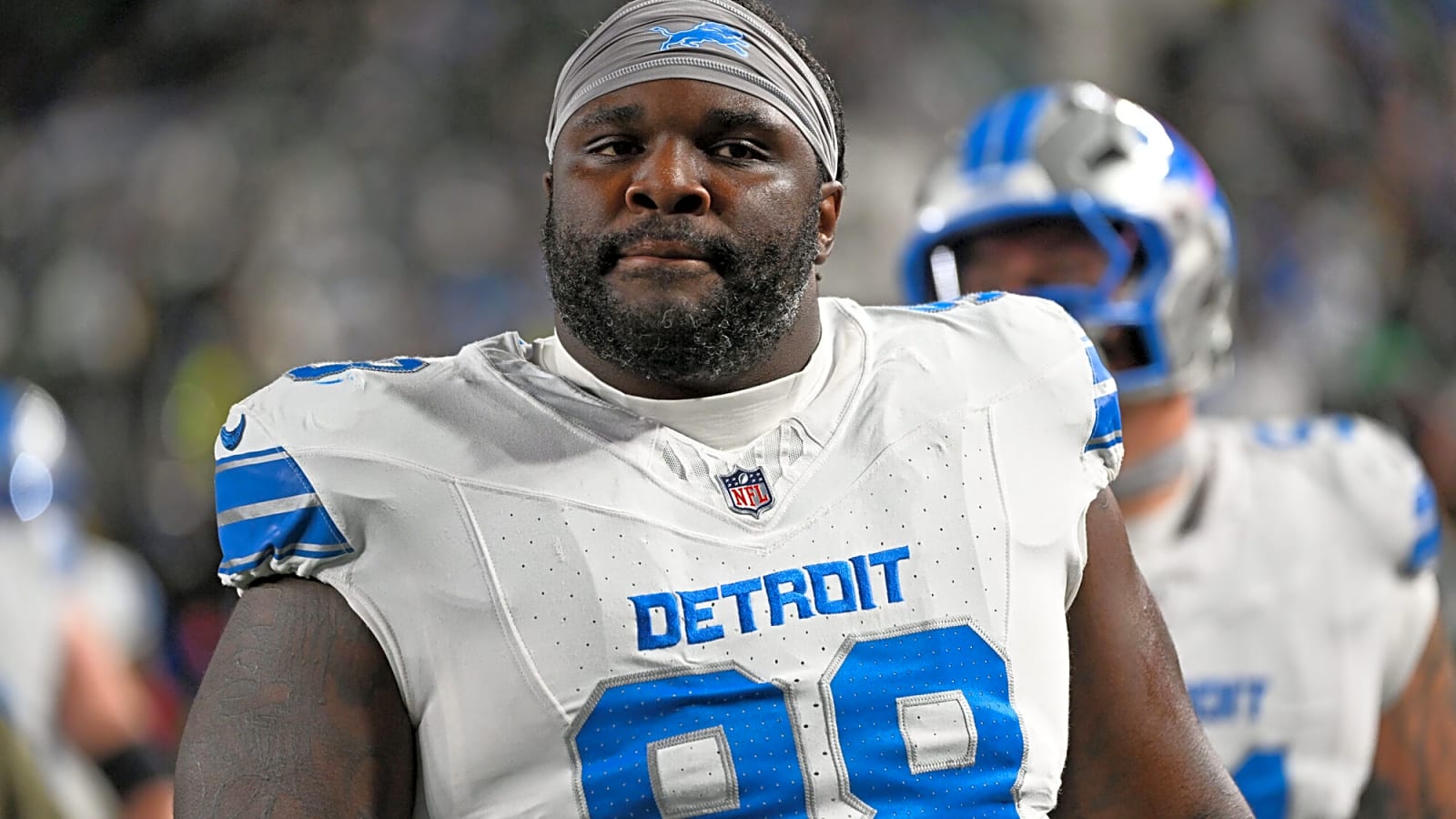
DJ Reader walked into the Giants’ facility on April 13, toured the building, met the coaches, and left without signing a contract. Roughly three weeks later, he put pen to paper. That gap matters more than most fans realize. The NFL’s compensatory free agent deadline fell on April 27, right between Reader’s visit and his signature. One date was a coincidence. Two dates, separated by the right number of days, started looking like a plan. The Lions lost more than a defensive tackle that week.
A $70 Million Reason to Wait
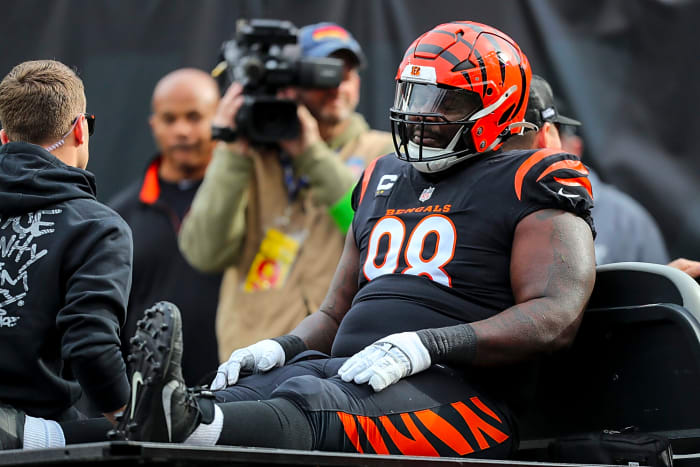
The Giants had already lost receiver Wan’Dale Robinson to Tennessee on a four-year, $70 million deal. That departure projected to earn New York a 2027 fourth-round compensatory pick, valuable draft capital for a rebuilding roster. Reader’s two-year, $12.5 million contract would have counted against that projection if finalized before April 27. Paul Schwartz of the New York Post reported on April 19 that the Giants were expected to sign Reader after the draft specifically to protect their compensatory picks. The strategy was documented before it was executed.
What Reader Actually Brings On The Field
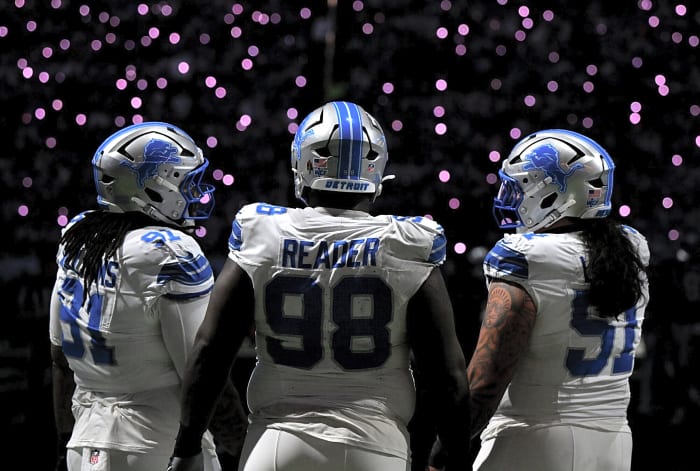
Reader is not a name-value signing. He has started 128 of 137 regular-season games across ten seasons with the Texans, Bengals, and Lions, accumulating 328 career tackles and 12.5 sacks at a position where sack totals underrate impact. In 2025 with Detroit he drew one of the highest double-team rates in the league, routinely freeing edge rushers for one-on-ones. Giving up that interior presence for nothing on the comp ledger is the part Detroit cannot replace internally.
The Dexter Lawrence Domino
The Giants did not pursue Reader in a vacuum. New York traded star defensive tackle Dexter Lawrence to the Cincinnati Bengals earlier in the offseason, creating the very hole Reader was signed to fill. That operational reality does not erase the comp-pick timing issue, but it does complicate the story. The Giants needed an interior defender regardless, and the calendar decided when they were allowed to acknowledge it publicly.
The System Everyone Trusts
Most fans assume the compensatory formula works like an insurance policy: lose a good player, get a draft pick. The system has operated since 1994, awarding picks based on salary, snap counts, and postseason honors. Sounds objective. Sounds fair. But the formula has a hard cutoff. Any free agent signed after April 27 simply vanishes from the calculation. Baltimore, Philadelphia, and Pittsburgh were among the teams awarded the maximum allotment of compensatory picks for 2026. Detroit received one. The difference between those outcomes had less to do with talent and more to do with timing.
How The Formula Actually Ranks Players
The NFL does not publish the exact weights, but the formula is understood to prioritize average per year salary first, then playing time and postseason honors. A player on a two-year, $12.5 million deal lands in the middle tier, which is precisely the range that can bump a projected compensatory pick up or down a full round. That is why a single signing in late April can reshape a team’s 2027 draft board without anyone on the roster bubble ever being involved.
The Qualifying Thresholds Nobody Explains
Not every free-agent signing affects the calculation. Only players above a salary and snap-count threshold count as qualifying compensatory free agents, which is why teams can sign veterans to minimum deals after the Super Bowl without losing projected picks. Reader’s contract clears that threshold easily. If the Giants had signed him on April 26, he would have cancelled out a chunk of the Wan’Dale Robinson departure. Signed on May 5, he counts as invisible.
The Days That Cost Detroit Twice
Reader visited April 13. The deadline passed April 27. The contract landed after. If that $12.5 million deal had been signed before the cutoff, the Lions would have been eligible for an additional compensatory pick. Instead, Detroit lost the player and the draft compensation. Two penalties for one departure. Jeremy Reisman of Pride of Detroit said plainly that “there is something fishy going on.” The Giants added a proven interior defender to their line without a single compensatory consequence touching their future draft board.
The Tax Code With Shoulder Pads
The compensatory formula operates like a tax code with well-known loopholes. Everyone follows the letter of the law while the sophisticated teams exploit the timing. The Giants strategically positioned themselves to benefit from their understanding of the April 27 cutoff, demonstrating front office sophistication that creates competitive advantage through timing discipline alone. Detroit has seen this dynamic play out before, with past cycles in which replacement signings before the deadline erased picks the team would otherwise have received.
The Numbers Behind the Disappearing Pick
Reader’s deal is worth up to $15.5 million when incentives are layered on top of the $12.5 million base. If that salary had counted in the formula, the Giants’ projected 2027 fourth-round pick would likely have downgraded to a later round. Jason Fitzgerald of Over The Cap confirmed the math, noting that “there’s a clear motivation for the Giants to wait.” So the Giants preserved a fourth-rounder worth considerably more trade value than the later-round pick Detroit never received. One calendar date separated a fair outcome from a lopsided one.
Who Else Waited This Year
The Giants are not the only team reading the calendar. League reporting confirms multiple front offices sit on veteran targets through April specifically to protect projected 2027 picks, with agents aware that their clients may be asked to keep a seat warm until the deadline passes. The pattern is quiet because nobody announces it in a press release, but it is observable every spring in the cluster of late-April visits that somehow do not convert into contracts until early May.
Who Loses When the Smart Teams Play
Detroit lost multiple compensatory free agents this cycle, including Carlton Davis, Ifeatu Melifonwu, and Kevin Zeitler, while adding replacements of their own. The net result earned them one compensatory selection. Meanwhile, 33 compensatory picks were distributed to 15 teams for the 2026 draft. Teams with larger analytics budgets and front offices that specialize in deadline management gain relative advantages every offseason. The system designed to restore competitive balance now rewards the organizations that least need the help.
The Giants’ Own Draft Capital Math
The timing matters more for New York than the raw pick value suggests. The Giants spent heavy capital in the 2026 draft on their rebuild, including first and second-round investments on the defensive front and secondary. Preserving a projected 2027 fourth-rounder allows the front office to either package it in a trade-up or use it as insurance against a missed evaluation. For a team rebuilding on multiple levels, a single mid-round pick two years from now is not a rounding error.
Thirty-Two Years of Looking the Other Way
The compensatory system has operated since 1994. The April 27 deadline has been exploitable for every one of those 32 years, and the league office has never closed it. Fitzgerald suggested the NFL could intervene based on available evidence of intentional timing. They haven’t. Once you see the pattern, every late-April free agent signing looks different. The objective formula becomes a subjective advantage for whoever understands the calendar best. That realization doesn’t go away.
The Dominos That Haven’t Fallen
Every front office in the league watched the Reader timeline unfold. If the Giants face no sanctions, the strategy becomes officially sanctioned by inaction. Agents will start advising clients on whether to finalize signings before or after April 27 based on team strategy. Smaller-market franchises without sophisticated analytics departments will suffer more as information asymmetry increases. Reporting confirms teams are aware of this pattern and often bide their time in the weeks leading up to the deadline to protect their compensatory picks. The next CBA negotiation may be the earliest fix.
The Advantage Nobody Admits Exists
Reader is a respected ten-year veteran defensive tackle with 328 career tackles, 12.5 sacks, and 128 starts across the Texans, Bengals, and Lions, and he now joins the Giants to help fill the void left by the Dexter Lawrence trade to Cincinnati. He deserved to sign wherever he wanted. That part is fair. The part that isn’t: the league built a compensation system that punishes teams for losing good players, then left a calendar-sized hole in it for 32 years. The Giants didn’t break a rule. They understood one better than anyone else in the building. And until the NFL closes that April 27 window, every team with a sharp front office will walk right through it.
Tell us in the comments whether you think the NFL should close the April 27 loophole before the next CBA, or whether smart front offices have simply earned the edge.
Sources:
Schwartz, Paul. “Giants Eyeing DJ Reader Signing After Draft To Preserve Compensatory Picks.” New York Post, April 19, 2026.
Fitzgerald, Jason. “2027 NFL Compensatory Pick Projections.” Over The Cap, April 28, 2026.
Reisman, Jeremy. “Lions Lost More Than DJ Reader In Giants Signing.” Pride of Detroit, May 5, 2026.
Rapoport, Ian. “Giants Signing DT DJ Reader To Two-Year Deal To Help Fill Vacancy Left By Dexter Lawrence.” NFL.com, May 5, 2026.
NFL Football Operations. “NFL Draft Rules: Compensatory Draft Selections.” operations.nfl.com, 2026.
ESPN Staff. “Source: Giants Agree To Two-Year Deal With Veteran DT DJ Reader.” ESPN, May 4, 2026.
More must-reads:
- NFL schedule release 411: Potential release dates, most interesting games and more
- Patriots have reportedly made massive Mike Vrabel decision amid Dianna Russini controversy
- The 'NBA scoring champions' quiz
Breaking News
Trending News







Customize Your Newsletter
 +
+




Get the latest news and rumors, customized to your favorite sports and teams. Emailed daily. Always free!
PRIVACY POLICY COOKIE POLICY CONTACT US
ABOUT YARDBARKER TERMS OF SERVICE


By using this site, you agree to our Terms of Service and Privacy Policy.
This site is for entertainment purposes only.
There is no gambling offered on this site.
Gambling Problem? Call 1-800-Gambler.
