
-

-


Follow Us
-

 On Facebook
 On Flipboard
 On Twitter

Inside the league office, a decision was made that few wanted to discuss openly. Labor negotiations between the NFL and its referees collapsed in late March 2026, prompting the league to recruit about 150 college-level officials as potential replacements. The current collective bargaining agreement expires May 31. Training is set to begin May 1. That leaves roughly 30 days where both sides are locked in a standoff as a backup crew prepares. The last time this scenario unfolded, it ended with a national apology.
The Collapse Nobody Saw Coming
A negotiating session set for two days concluded after only the first morning. The NFL Referees Association accused the league of spreading “false and misleading” information during talks. Main disputes involve compensation, performance-based pay, probationary periods, offseason work, and the push for some officials to become full-time. For the 119 active officials, each of these issues directly affects their livelihood. The league left the table with a contingency plan already in place.
A $110 Billion Backdrop

The NFL brought in about $23 billion in revenue in its most recent fiscal year and is aiming for $25 billion by 2027. Media rights deals total around $110 billion over eleven years. That amount of financial power shapes the backdrop for this labor dispute. Referees are negotiating with an organization that holds more leverage than many countries. The union’s claims of misleading information take on new weight when so much money is on the line.
The May 1 Ultimatum
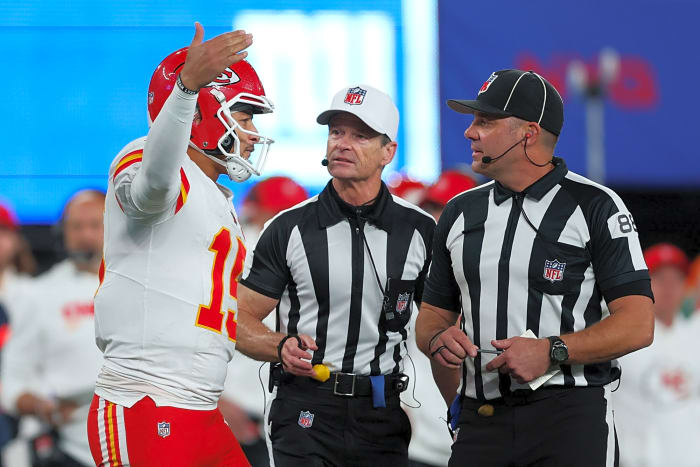
The league plans to bring in replacement officials soon, with training set for May 1. Reports indicate the NFL is seeking about 150 officials, mostly from small colleges, who will continue training through the summer and attend training camps if no agreement is reached. Once training begins, the economics of the dispute change. Resources are committed, and schedules become fixed. Each dollar spent preparing the backup crew lowers the chance of compromise. May 1 stands as the real deadline. The contract expiration is mostly a formality. The training start date marks the point of no return.
The Ghost of the Fail Mary

The 2012 officiating lockout lasted 110 days and continued into the regular season. Replacement officials made the infamous “Fail Mary” call, a simultaneous-catch ruling that led Commissioner Roger Goodell to issue an open letter to fans. That moment reshaped how both sides assess risk. The league realized the need for better-prepared replacements. The union saw that the league would act if necessary. Both lessons now drive strategies in different directions, widening the gap between the parties.
The Numbers Behind the Standoff

A league that generates $23 billion each year is locked in a compensation dispute with about 120 officials. The referee payroll barely registers on the NFL’s balance sheet. This gap between the money at stake and the resources available tells the whole story. The dispute centers on control: performance-based pay, evaluation systems, and full-time status requirements. Each of these issues shapes who holds authority over officials’ careers, not just their paychecks.
Who Pays When the Refs Disappear

The NFL Players Association is monitoring the situation closely. Players feel the impact of bad officiating through missed personal fouls, incorrect spots, and penalties that can shift the outcome of games. Replacement officials in 2012 created uncertainty and risked player safety. Broadcasters with shares of the $110 billion media deal need credible games on the field. Fans who place legal bets in many states rely on calls they can trust. Replacing experienced professionals with college-level recruits affects every revenue stream the league has built over the past decade.
The Playbook Changed in 2012

The league’s early preparation is not a negotiating tactic. It responds to what happened in 2012, when the NFL scrambled for replacements after the lockout began. This time, recruiting started before the contract expired, and training begins a month ahead of the deadline. The league is preparing in advance so a lockout brings less reputational risk. This approach turns the negotiation into a calculated standoff.
The Clock That Matters Most
League meetings began March 29 as owners gathered and the labor crisis continued. The NFL’s $25 billion revenue goal by 2027 relies on uninterrupted seasons and credible broadcasts. A prolonged officiating dispute before the 2026 season threatens both. The union recognizes that the league cannot risk another Fail Mary moment on national television. The league also knows the union cannot risk permanent replacement. Both sides hold leverage that could disappear quickly, but neither has backed down.
Thirty Days to Save the Season

The period between May 1 and May 31 will decide whether professional football’s most profitable season is officiated by experienced veterans or newly trained replacements. The league has prepared its backup earlier and more thoroughly than in 2012. The union has accused the league of negotiating in bad faith. In that 30-day stretch, one side will determine that settling makes more sense than continuing the fight. The real deadline came and went at the negotiating table in late March.
Sources:
Associated Press – NFL set to begin hiring and training replacement officials, AP sources say – March 29–30, 2026
ESPN – Sources: NFL, referees break off labor talks amid impasse – March 24, 2026
ESPN – Sources: NFL, far apart with NFLRA, to begin hiring replacement refs – March 29–30, 2026
Football Zebras – NFL officiating negotiations break down after 3 hours – March 25, 2026
Yahoo Sports – NFL, referee union stop negotiations on new CBA – March 26, 2026
Yahoo Sports / AP – NFL set to begin hiring and training replacement officials, AP sources say – March 30, 2026
More must-reads:
- Early look at Seahawks' sale reveals name of interest
- Five teams that should consider NFL Draft trades
- The 'Rushing-TD leaders by NFL team' quiz
Breaking News
Trending News





Customize Your Newsletter
 +
+




Get the latest news and rumors, customized to your favorite sports and teams. Emailed daily. Always free!
PRIVACY POLICY COOKIE POLICY CONTACT US
ABOUT YARDBARKER TERMS OF SERVICE


By using this site, you agree to our Terms of Service and Privacy Policy.
This site is for entertainment purposes only.
There is no gambling offered on this site.
Gambling Problem? Call 1-800-Gambler.
