
-

-


Follow Us
-

 On Facebook
 On Flipboard
 On Twitter

It’s March 2026, and somewhere in an NFL office, a staffer is composing emails to small-college officiating supervisors they’ve never met. Not a courtesy call. Not exploring options. A recruitment drive — names, credentials, availability — for 150 men and women to replace the officials who have called professional football games for the most powerful sports league on earth. The collective bargaining agreement expires May 31.
Nearly two years of talks have gone nowhere. This week, the two sides sat down in Florida for two days, as scheduled, and were gone before noon on day one. You don’t build a 150-man replacement roster while you’re still trying to make a deal. You build it when you’ve already decided what happens next.
The Room That Didn’t Make It to Lunch
NFLRA executive director Scott Green told ESPN exactly what happened in that Florida room: “We asked them to give us a response, and they refused. They then got up and left.” The NFL’s lead negotiator, Larry Ferazani, said he was not authorized to respond to the union’s counterproposal at that point, and the NFL delegation got up and left.
After 2 years of negotiations, the league sent a man who couldn’t say yes or no. That’s not a breakdown at the table. That’s a man following instructions from someone who made the call before anyone sat down.
This Was Never About the Money

Here’s what makes this fight unusual: the money isn’t actually the problem. According to ESPN sources, the average NFL official earned about $350,000 last season, with compensation structured around game fees, bonuses, meeting fees, preparation fees, and other benefits. The league offered a 10% increase in regular-season game fees and up to 30% for Super Bowl crews, sources told ESPN. The union barely engaged on it. The real fight is structural.
The league wants to extend probation for new officials beyond the current three years, redirect year-end bonuses away from seniority toward performance metrics it controls, and shorten the offseason dead period, limiting contact with officials. Give the league that authority, and the league decides who stays employed and why. The union understands exactly what that means.
The Parallel Track Nobody Announced
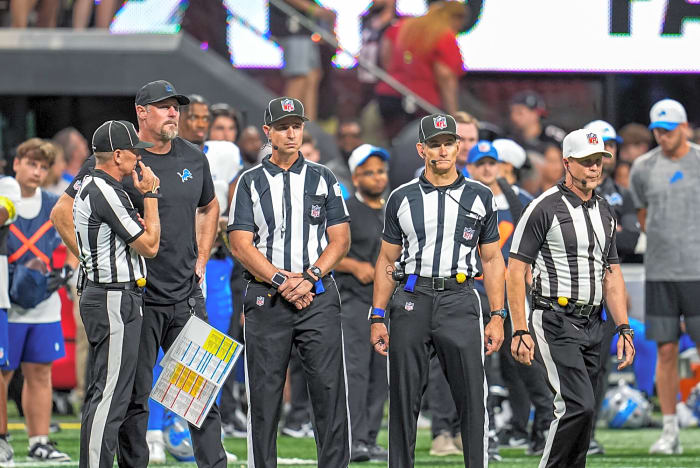
While Miller was issuing statements about wanting a deal, NFL executives were composing emails to conference supervisors at Division II and III colleges across the country. Target: approximately 150 replacement officials. A four-day evaluation clinic in May trims that list to roughly 130, per a letter obtained by ESPN. Onboarding could begin as early as April if no agreement is reached.
Miller said the league felt “compelled to begin considering alternatives”. That word — compelled — frames the union as the unreasonable party. The timeline frames the league as a body that opened a second front months ago and said nothing about it.
New York Is About to Run the Show

The competition committee’s contingent rule proposals say what the league won’t say out loud. If replacement officials take the field, the Art McNally Gameday Central command center in New York gains the authority to correct clear and obvious misses by on-field officials that affect the game. Roughing the passer. Intentional grounding. Pass interference. Disqualifications. The proposals go to an ownership vote in Phoenix on March 29, requiring 24 of 32 franchises to approve.
Cowboys co-owner Stephen Jones told CBS Sports at the combine: “I’m always the optimistic person in the room. I always feel there’s a deal that can get done.” He may be the only one in the building who still believes it. You don’t draft instructions for cleaning up a mess before the mess exists unless you know it’s coming.
The Rule Change Buried at the Bottom
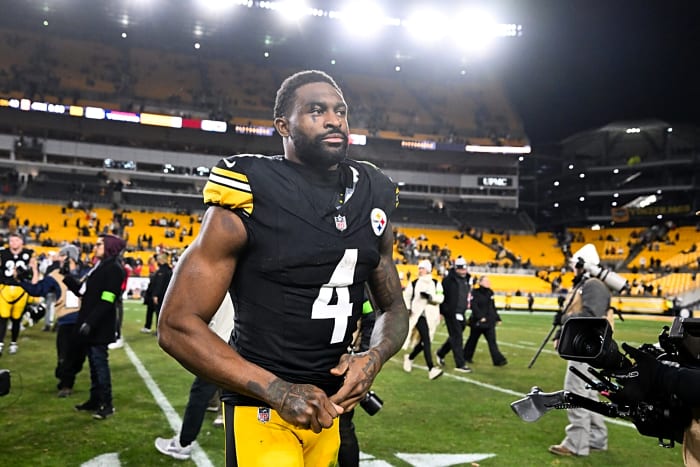
Tucked inside the replacement package is a proposal that deserves its own spotlight. The NFL wants to allow league personnel to consult with on-field officials and intervene in disqualifications for flagrant acts, even those that were never flagged on the field. The catalyst: Steelers receiver DK Metcalf had an altercation with a Lions fan at Ford Field, stayed in the game because officials didn’t see the incident, and was suspended two games after the fact. The league couldn’t reach him in real time.
This rule changes that. The competition committee labels most replacement-official proposals “for 2026 only”. But the disqualification-consultation rule is written as a standalone permanent change. The lockout threat opened a door. One rule closes with the lockout. The other one stays open.
119 Jobs. 150 Replacements. Read the Math
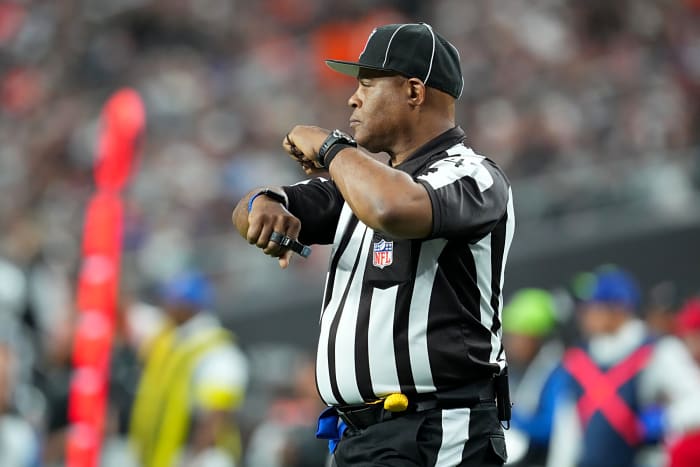
The union represents 119 officials. The league is recruiting 150 replacements, trimmed to roughly 130 after the May clinic. That’s not a skeleton crew. Not an emergency patch. It’s a full parallel roster with a surplus built in, more replacements than there are union members to replace. The NFLRA fired back this week, accusing the league of using a tactic “commonly used to extract unreasonable concessions”.
That’s union-speak for: we’ve seen this playbook and we know where it goes. The rule proposals need the support of 24 of 32 owners in Phoenix. According to ESPN, frustration among ownership has been building for months. The votes are probably there.
The Bet Nobody Priced In
In 2012, the worst replacement officials could do was blow a call. In 2026, legal sports betting operates across most of the United States, a reality that didn’t exist when the Fail Mary happened. Green raised the alarm explicitly, warning that small-college referees working NFL games can legally hold active sports-betting accounts in the same states where they’d be officiating.
The league’s onboarding plan includes background checks. Specific gambling screening criteria, addiction protocols, or disqualification standards for replacement candidates have not been publicly disclosed. Billions of dollars ride on every snap now. The vulnerability is acknowledged. The plan to address it is not.
A Bar in a Hilton Hotel, September 24, 2012
Scott Green and NFLRA vice president Jeff Triplette were in the middle of the 2012 lockout negotiations when Monday Night Football delivered the moment that ended it. Green Bay led Seattle 12–7 with seconds left. Russell Wilson heaved it into the end zone. Before the ball arrived, Golden Tate shoved Packers cornerback Sam Shields out of the way with both hands — offensive pass interference, plain and simple, then wrestled with safety M.D. Jennings for possession. Two replacement officials reached the pile simultaneously. One signaled touchdown. One signaled touchback. Triplette saw it live. “It was clearly intercepted,” he said. “We didn’t have to talk. We knew they screwed up.”
President Obama weighed in publicly, calling for the lockout to be resolved. The league defended the ruling while acknowledging the interference in the same statement. Two days later, the lockout ended after 110 days and three weeks of the regular season had already been played under replacement crews. Green remembers all of it. Which is why this week, when asked about the recruitment drive, his reaction was immediate: “Frankly, I’m surprised they would even consider it after 2012.” The league considered it anyway.
66 Days. Then We Find Out.

The CBA expires May 31. Rule votes close in Phoenix by early April. Onboarding could begin as early as April. The evaluation clinic runs in May. The two sides are not currently talking. The list is being built. The proposals are written. The command center override is drafted. Jeff Miller says the league wants a deal. The last scheduled two-day negotiating session ended before noon on the first day.
Sixty-six days from now, either a handshake saves it, or the league that walked out of that Florida room before lunch makes the most unaccountable decision in modern football history. In the name of accountability.
More must-reads:
- Early look at Seahawks' sale reveals name of interest
- Five teams that should consider NFL Draft trades
- The 'Rushing-TD leaders by NFL team' quiz
Breaking News
Trending News



Customize Your Newsletter
 +
+




Get the latest news and rumors, customized to your favorite sports and teams. Emailed daily. Always free!
PRIVACY POLICY COOKIE POLICY CONTACT US
ABOUT YARDBARKER TERMS OF SERVICE


By using this site, you agree to our Terms of Service and Privacy Policy.
This site is for entertainment purposes only.
There is no gambling offered on this site.
Gambling Problem? Call 1-800-Gambler.
