
-

-


Follow Us
-

 On Facebook
 On Flipboard
 On Twitter

Somewhere inside the NFL’s offices, a phone call went out to five broadcast partners carrying the same message: the deal you signed in 2021 no longer works for us. Not in 2029, when opt-out clauses activate. Now. Before the 2026 season kicks off in September. The league wants 50 to 60 percent more money from CBS, Fox, NBC, ESPN, and Amazon. That’s not a negotiation opening. That’s a ransom note delivered to companies that built their entire business models around Sunday football.
The Hostage
CBS currently pays $2.1 billion annually for its Sunday afternoon package. The NFL wants that number above $3 billion. Paramount, CBS’s parent company, carries roughly $14 billion in gross debt following its merger with Skydance, and could take on significantly more if its proposed acquisition of Warner Bros. Discovery closes. Analyst Richard Greenfield has argued that losing the NFL could pose an existential threat to Paramount, given the company’s leveraged position. A company under heavy financial pressure, told to pay a billion more per year or lose the one asset keeping it alive. That’s the negotiating table CBS walked into.
The Leverage Trap

Most networks hold guaranteed rights through 2029. Normally, that’s leverage. Walk away, wait, renegotiate later from strength. But the Skydance acquisition of Paramount triggered a change-of-control provision buried in CBS’s contract, giving the NFL the right to break the deal by 2027. The league picked its weakest partner first. CBS capitulates, and that price becomes the benchmark. Fox negotiates next against a number already set. Then ESPN. Then NBC. Then Amazon. One domino tips the rest. The NFL designed it that way.
The Surrender
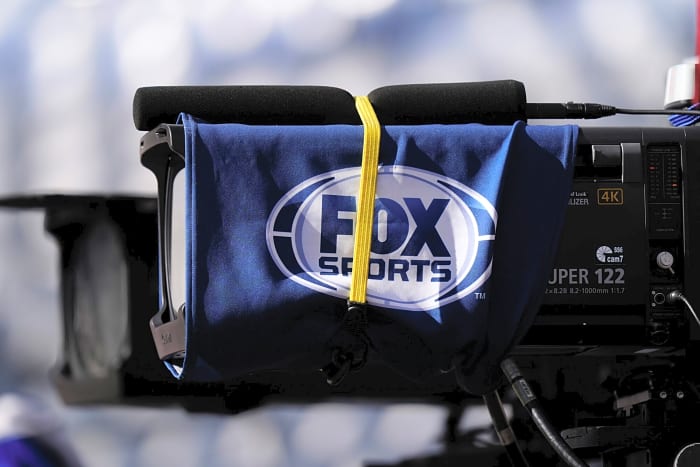
Fox CEO Lachlan Murdoch told investors in February that the current NFL price is competitive and indicated Fox would “rebalance” its sports portfolio to absorb any increase. Fox is reportedly weighing whether to scale back or exit its MLB partnership, which costs roughly $729 million annually, to free up budget for higher NFL fees. That’s not resistance. That’s rationing. Murdoch isn’t fighting the increase. He’s choosing which sports to deprioritize so he can afford to pay for it.
The Hidden Machine

The system binding networks to the NFL runs deeper than ratings. Broadcast networks survive on retransmission fees, the payments cable and satellite companies make to carry local channels. Those fees exist because NFL games deliver massive audiences. Remove the NFL, and the entire retransmission structure collapses. Networks aren’t paying for content. They’re paying for the right to justify their own existence to distributors. The NFL figured this out and weaponized it, turning what should be competitive bidding into a form of value extraction from partners who literally cannot walk away.
The Price Gap

NFL games cost broadcasters just $1.20 per viewer-hour in current deals, according to Guggenheim analysis. The NBA’s new agreement costs $3.55 per viewer-hour, nearly triple, for dramatically smaller audiences. Wall Street projects the NFL’s annual media revenue could reach $18 to $20 billion, roughly double current levels of $10 billion. The league’s own 2021 deal represented a 100-percent increase over the prior cycle. Every data point says the same thing: the NFL is still underpriced relative to its dominance, and the networks know the math supports paying more.
Collateral Damage

When networks exhaust their budgets on NFL renewals, every other sport loses. MLB faces uncertain rights value as Fox weighs its future commitment to the World Series. The NHL, MLS, and college sports will watch bidders disappear. Local broadcast stations that subsidized journalism through sports-driven audiences will see that pipeline narrow. The NFL isn’t just raising its own revenue. It’s destabilizing the entire sports media food chain by extracting so much capital that no network has room left to bid on anything else. One league’s gain becomes every other sport’s crisis.
The New Rule

This renegotiation sets a precedent no contract lawyer can ignore. For the first time, a league has weaponized change-of-control provisions and opt-out threats to force partners into early renegotiations years before any deadline required it. Every major sports league will now evaluate whether it holds similar leverage. The NBA, which recently signed a deal worth roughly $76 billion, is watching. The NFL proved that contractual terms are starting points, not commitments. Once you see that, every future media negotiation in American sports looks different.
Your Bill

To watch every NFL game in 2025, fans needed subscriptions to multiple services, costing between roughly $575 and over $1,500 annually, depending on their setup. The FCC launched a public inquiry into the shift of live sports from broadcast to streaming. Twenty games have already aired on exclusive streaming platforms. If networks accept 50-to-60-percent increases and cede inventory to streamers, that fragmentation accelerates. The cost of being a complete NFL fan is climbing toward a mortgage payment, and the league’s next round of deals will push it higher.
The Open Door

The NFL has signaled its willingness to carve out game packages for streaming services. YouTube already pays roughly $2 billion annually for Sunday Ticket and is reportedly negotiating for additional games. Netflix proved it could execute premium live football with its Christmas doubleheader. If traditional networks bleed enough inventory to afford their renewals, that inventory flows somewhere. Netflix and YouTube are standing at the door with open checkbooks. The broadcast networks built American football into a national religion, and now they’re funding the construction of the church that replaces them.
Sources:
Awful Announcing, “CBS could hypothetically lose NFL rights during new negotiations,” March 15, 2026
Front Office Sports, “Report: NFL seeing 50-60% increase in rights fee in Paramount talks,” March 14, 2026
Fox News, “A breakdown of NFL streaming costs for the complete 2025 season,” February 25, 2026
CNBC, “NFL discussing deal with Paramount that could be extra $1 billion,” March 13, 2026
Sports Business Journal, “Murdoch: Fox able to offset possible higher costs if NFL renegotiates,” February 3, 2026
NBC Sports ProFootballTalk, “NFL renegotiation coverage,” March 2026
More must-reads:
- Early look at Seahawks' sale reveals name of interest
- Five teams that should consider NFL Draft trades
- The 'Rushing-TD leaders by NFL team' quiz
Breaking News
Trending News



Customize Your Newsletter
 +
+




Get the latest news and rumors, customized to your favorite sports and teams. Emailed daily. Always free!
PRIVACY POLICY COOKIE POLICY CONTACT US
ABOUT YARDBARKER TERMS OF SERVICE


By using this site, you agree to our Terms of Service and Privacy Policy.
This site is for entertainment purposes only.
There is no gambling offered on this site.
Gambling Problem? Call 1-800-Gambler.
