
-

-


Follow Us
-

 On Facebook
 On Flipboard
 On Twitter
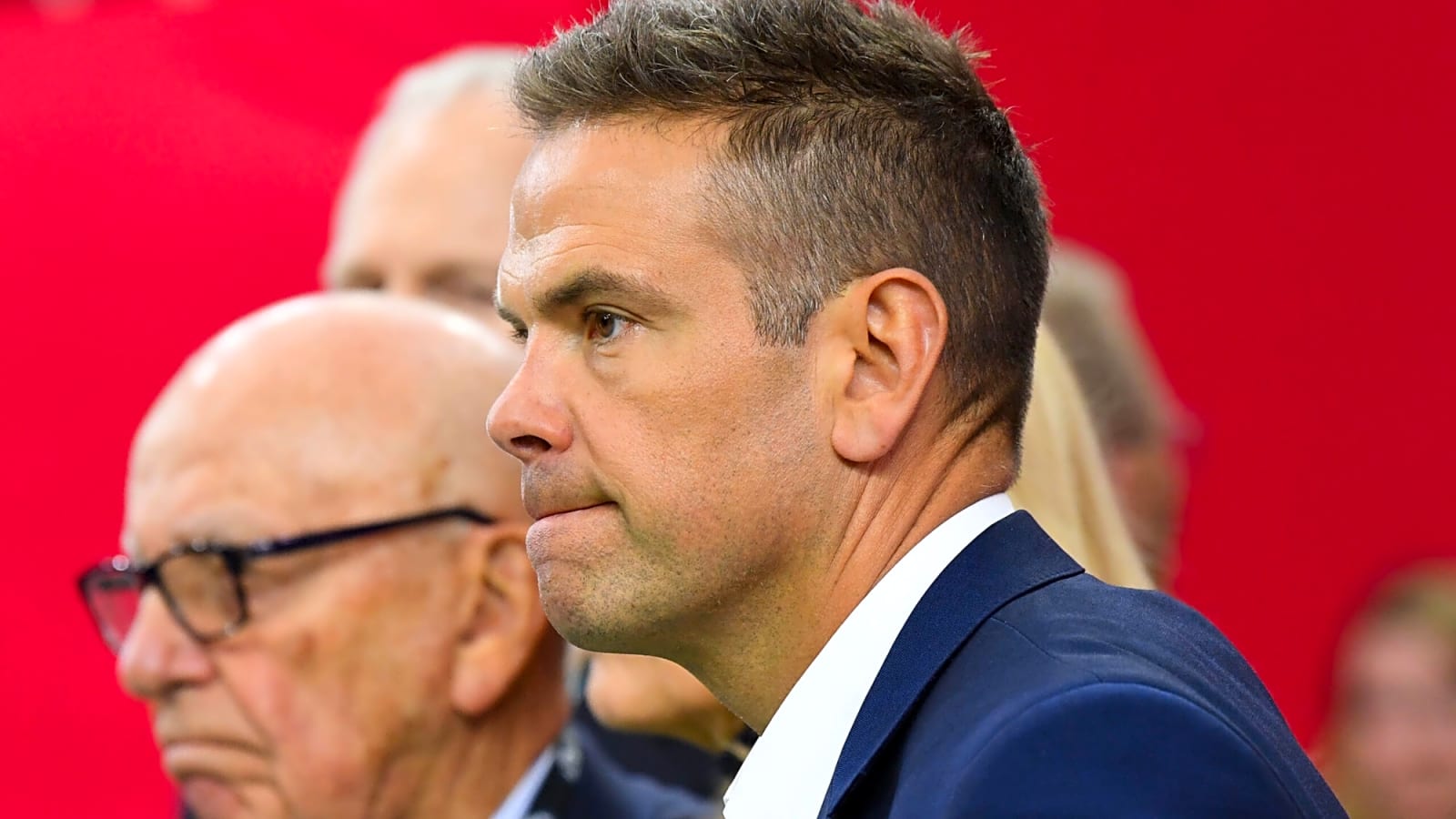
The NFL generates roughly $10 billion a year from its media rights deal. That number could rise well beyond today’s baseline before the 2026 season kicks off in September, as the league and its partners prepare for the next round of negotiations. And the man who speaks for every local broadcaster in America just said something that should make every cable subscriber sit up straight. Curtis LeGeyt, CEO of the National Association of Broadcasters, called consolidation “essential.” Not helpful. Not preferred. Essential. The broadcast industry’s top lobbyist admitted his members cannot survive future NFL rights battles alone. What he left out tells the real story.
The Price Tag Nobody Can Afford
FOX already pays about $2.25 billion annually for Sunday afternoon games. CBS is locked in at roughly $2.1 billion a year through 2033. Commissioner Roger Goodell has signaled that the league is already planning for its next round of media talks well before the current packages expire, adding pressure on every partner at the table. FOX CEO Lachlan Murdoch admitted prices “went up over 100% three years ago” and called current pricing “at market.”
The league’s posture suggests it believes those rights are still underpriced. Goodell and the league have made clear they are thinking well beyond the current contract cycle, and many executives expect the next serious round of talks to begin as early as next year, with the NFL holding every card at the table.
The Myth of Free Football
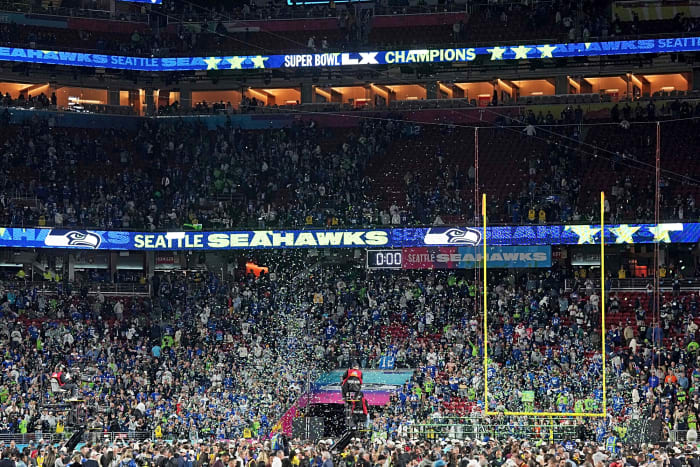
Here is the number that cracks the whole argument open: the FCC notes that last season NFL games were spread across 10 different platforms, even though a majority of games still aired on broadcast networks. Sounds great. Except NFL games now appear on a sprawling mix of channels and services: Netflix, Amazon, Peacock, YouTube, ESPN, and more.
The FCC estimates that a fan who wants to watch every NFL game might have to spend over $1,500 across various subscriptions and services. LeGeyt frames consolidation as preserving “freely available” local broadcasts. But fragmentation across a dozen platforms already destroyed practical free access. The majority-on-broadcast figure is technically true and functionally meaningless.
Consolidation as Surrender

LeGeyt said broadcasters need “some scale in order to compete” and called consolidation “the only way.” That language sounds like strategy. It reads like a white flag. The NFL sets prices unilaterally. Broadcasters consolidate to absorb the shock. Cable operators raise retransmission fees.
Consumers pay. Analysts at firms like Guggenheim Securities and Kagan have confirmed the mechanism: the majority of rising sports rights costs ultimately get passed through to consumers via higher bills. Every level of this stack extracts margin. Only one group has zero leverage. That group pays the cable bill every month, and the second half of this decade is when the extraction accelerates.
Amazon’s Billion-Dollar Loss Leader

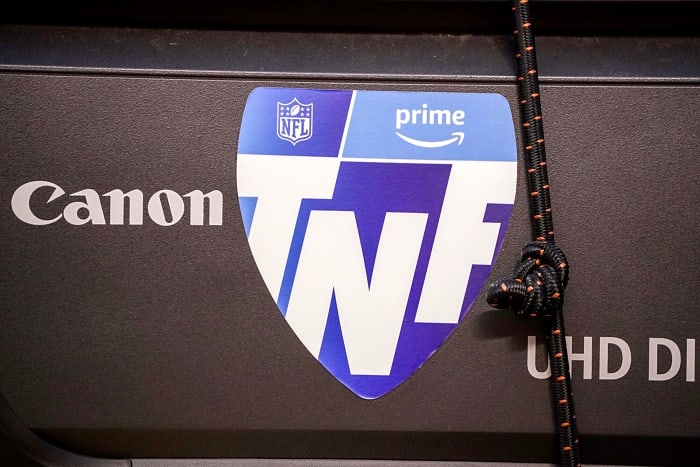
Amazon pays about $1 billion a year for Thursday Night Football and is estimated to lose hundreds of millions of dollars annually on the package, with some analysts putting the figure around $650 to $750 million per season.
That is not a mistake. Amazon treats football the way a grocery store treats rotisserie chicken: sell it at a loss, get customers through the door, make money on everything else in the cart. Traditional broadcasters cannot play that game. They need sports to generate profit directly. Amazon needs sports to generate Prime members. Two completely different economic models compete for the same product, and the NFL profits from both.
The Numbers on Your Bill
Average broadcast retransmission fees reached $22.62 per subscriber per month in 2024, according to S&P Global’s Kagan unit. Major station groups already control hundreds of local affiliates, giving them significant leverage in fee negotiations with cable and satellite providers.
Analysts expect those fees to keep rising, which would add several dollars a month to many households’ bills over the next few years. As NFL rights get more expensive and broadcasters consolidate to keep buying them, those higher retransmission costs do not disappear. They quietly show up on your statement.
The Ripple Hits Every League

The NBA’s new 11 year, $77 billion media rights deal gives it one of the richest per fan economics in American sports. On a per viewer basis, it narrows the gap with the NFL and encourages every league to push for more. MLB’s national broadcast deals with Fox and Turner run through the 2028 season, while ESPN’s MLB package also extends into the late 2020s. The NHL’s national TV agreements with ESPN and Turner extend through the 2027 to 2028 season.
If the NFL closes even part of the value gap with the NBA on its next deal, every other league recalibrates upward. FOX has already acknowledged it may need to “rebalance” its sports portfolio, which means cutting investment in World Cup coverage, baseball, or sports news to fund the NFL’s appetite. One league’s price increase becomes every league’s leverage play.
The 1961 Law Still Running the Show

The first modern NFL television deal with CBS in 1961 gave the network exclusive rights for two seasons for just over $9 million. Congress passed the Sports Broadcasting Act that same year, granting the NFL and other leagues an antitrust exemption to pool and sell their rights as a single package.
That law was written for an era of three broadcast networks. In 2026, the same exemption enables near monopoly pricing power across a landscape that now includes broadcast, cable, and at least 10 subscription and streaming services. The FCC opened an inquiry in February 2026 into the shift of live sports to pay TV and subscription platforms, explicitly citing concerns about rising costs and fragmentation. The regulator is studying a problem created by a law it has no authority to change.
The Labor Fuse Is Lit
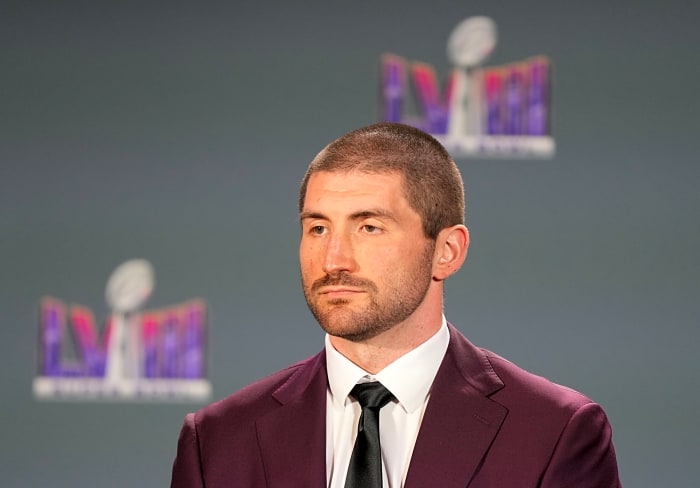
JC Tretter, the former NFL center and union president, was elected NFLPA executive director in March 2026 after a months long search. With media money growing, owners have repeatedly floated ideas like an 18 game regular season and more international dates as ways to justify ever higher rights fees to broadcasters and streamers.
Players will be asked to absorb more physical punishment so broadcasters can absorb more financial punishment. Tretter inherits a negotiation where the NFL’s leverage over its own players mirrors its leverage over networks. The new deal does not just reshape television. It reshapes the sport itself.
Who Fights Back

Congress could revoke or narrow the 1961 antitrust exemption. The NFLPA could refuse to authorize schedule expansion without major concessions. Streaming platforms could decide that bidding wars no longer make financial sense at current prices. None of those things are happening yet at scale.
Meanwhile, platforms like YouTube are experimenting with creator led alternate broadcasts of NFL games, tapping influencers with tens of millions of subscribers to reach younger fans online. The NFL is building a distribution model that makes every current partner replaceable. LeGeyt called consolidation “essential.” The more accurate word is “inevitable.” And when your cable or streaming bill jumps later this decade, you will know exactly which stack extracted the margin.
Sources
“NFL media rights deal with Amazon, CBS, ESPN, FOX & NBC worth $110 billion over 11 years.” Republic World, 2021.
“NAB CEO Curtis LeGeyt: Broadcast must have some level of consolidation to compete for sports rights.” Barrett Media, Mar 2026.
“FCC reviews growing shift of live sports to pay TV, subscription services.” FCC notice summary / Reuters pickup, Feb 2026.
“Kagan: Broadcast fee growth slowed in 2023.” S&P Global Market Intelligence (Kagan), Feb 2024.
“NBA unveils $77 billion TV and streaming deals with NBC, ESPN and Amazon.” Wall Street Journal, Jul 2024.
More must-reads:
- Cowboys' Jerry Jones sends clear message to players about 18-game regular season
- Cowboys' Jerry Jones leaves door open for Maxx Crosby trade, addresses Ravens-Raiders saga
- The 'Rushing-TD leaders by NFL team' quiz
Breaking News
Trending News





Customize Your Newsletter
 +
+




Get the latest news and rumors, customized to your favorite sports and teams. Emailed daily. Always free!
PRIVACY POLICY COOKIE POLICY CONTACT US
ABOUT YARDBARKER TERMS OF SERVICE


By using this site, you agree to our Terms of Service and Privacy Policy.
This site is for entertainment purposes only.
There is no gambling offered on this site.
Gambling Problem? Call 1-800-Gambler.
