
-

-


Follow Us
-

 On Facebook
 On Flipboard
 On Twitter

Free agency opened, and Isiah Pacheco had a decision sitting on the table from the only NFL franchise he’d ever known. Kansas City put an offer in front of their running back during the negotiation window. Pacheco looked at it. He knew his production numbers, which were publicly tracked across every major stat database. He knew what the cap sites said about running back compensation league-wide. And he knew what the Chiefs were actually willing to guarantee. The answer came back fast.
No Deal
Pacheco says he turned down Kansas City’s offer. That sentence alone flips the script on how most fans assume free agency works. The conventional wisdom holds that players chase contenders, accept hometown discounts, and prioritize rings over everything else. Pacheco had a Super Bowl-caliber roster, and he was offered a contract during a defined negotiation window governed by collectively bargained rules. He said no. The terms of that offer remain unpublished, meaning the public saw the rejection without the price tag.
Hidden Math

That gap between what fans know and what agents know is the entire story. Team bios celebrate players. Cap databases quantify what teams actually pay. The disconnect is massive. Running back compensation across the league shows wide variance by role and production tier, and contract databases confirm that this variance is structural, not accidental. Kansas City’s cap constraints shaped what they could offer and when they could offer it. Pacheco’s camp could see the math. The question was whether the open market would do better than what sat on the table.
The Bet

Declining a contender’s offer exposes you to immediate market and timing risk. Every day the free agency window stays open without a signature, leverage can evaporate. Teams reallocate cap dollars. Roster spots fill. The calendar itself becomes the opponent. Pacheco bet that his value exceeded Kansas City’s number. One offer declined. No fallback announced. Like quitting a job before the next offer letter arrives: leverage feels enormous until the market cools. That’s not ego. That’s risk pricing under a deadline.
The System
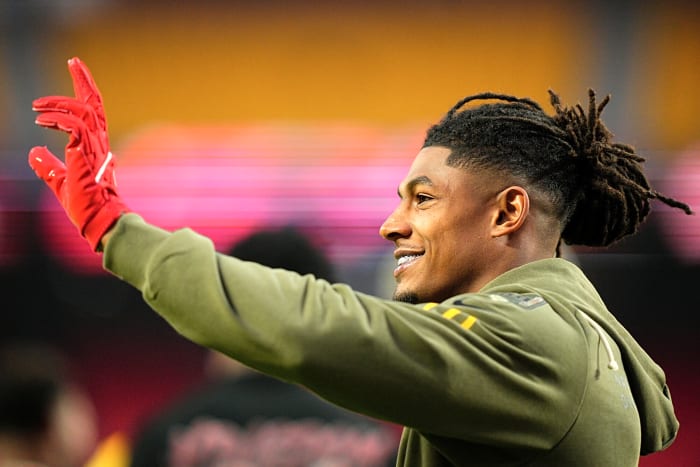
NFL free agency is a collectively bargained marketplace with defined negotiation windows, and those windows do the quiet work of setting prices. Cap accounting and contract structures shape roster decisions as much as raw talent does. Information asymmetry runs deep: teams and agents know far more about offers, medicals, and internal valuations than any fan watching from the outside. The league markets loyalty. The system rewards optionality. Pacheco chose optionality, and that choice exposed the machinery most people never bother examining.
The Numbers
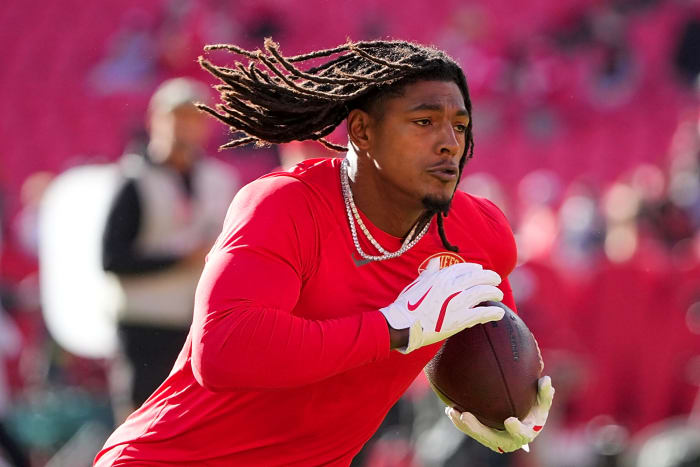
Pacheco’s career rushing and receiving statistics sit in public databases for anyone to audit. Games played, carries, yards, touchdowns, all tracked season by season through Pro Football Reference and ESPN. His contract value, cash earned, and cap figures are published by Spotrac and OverTheCap. Every number is visible except the one that matters most: what Kansas City actually put on paper. The offer terms remain private. Fans saw the performance. They never saw the guarantee structure underneath it.
Ripple Effect

Pacheco’s rejection sends a signal beyond one roster. His camp tests the open market while Kansas City adjusts cap plans and fills backfield needs elsewhere. Cap dollars that might have gone to a running back can shift to other positions entirely. For mid-tier backs watching from the sidelines, that’s a warning shot. If teams use replaceability arguments to hold the line on compensation, the leverage math gets uglier for every running back below the top tier. One player’s “no” reshapes the negotiation floor for an entire position group.
New Rule

This wasn’t an exception. Players signaling willingness to walk can force teams to reveal their real valuations, and that precedent reshapes how future negotiations unfold. The old assumption that contenders always win the recruiting battle dies a little more each time a player bets on himself over a ring. Guarantees, role clarity, and timing often outweigh championship proximity. Once you see free agency as a short-window auction where the calendar sets the price, every “shocking” rejection starts looking like basic arithmetic.
Cold Market

If the market cools, short-term prove-it deals become the norm for running backs testing free agency. Teams increasingly pivot toward draft capital and committee backfields to reduce spending at the position. That escalation path means Pacheco’s window to maximize his value has a shelf life measured in weeks, not months. The counter-move from front offices is already in motion: why pay premium dollars for one back when you can split carries across cheaper options? The clock is the opponent nobody roots for.
The Framework

Most people will remember this as a loyalty story. A running back who left a contender. That framing misses everything that matters. This is labor economics wearing a helmet. The person who understands Pacheco’s decision isn’t the fan arguing about rings on social media. It’s anyone who has ever calculated whether their current employer’s offer reflects their actual market value. The free agency window closes. The leverage disappears. Whether Pacheco priced himself correctly is a question only the next contract can answer.
Sources:
Pro Football Reference, Isiah Pacheco Career Stats and History
Spotrac, Isiah Pacheco NFL Contracts & Salaries
OverTheCap, Isiah Pacheco Contract Details
ESPN, Lions RB Isiah Pacheco Eager to Make His Mark, March 13, 2026
Heavy.com, Chiefs Made Offer to Keep Starter Who Opted to Leave in Free Agency, March 12, 2026
Yahoo Sports, Ex-Chiefs RB Isiah Pacheco Reveals Turning Down Kansas City’s Offer, March 17, 2026
More must-reads:
- Five teams that should consider NFL Draft trades
- Insider shares notable update on Shedeur Sanders' status with Browns
- The 'Rushing-TD leaders by NFL team' quiz
Breaking News
Trending News






Customize Your Newsletter
 +
+




Get the latest news and rumors, customized to your favorite sports and teams. Emailed daily. Always free!
PRIVACY POLICY COOKIE POLICY CONTACT US
ABOUT YARDBARKER TERMS OF SERVICE


By using this site, you agree to our Terms of Service and Privacy Policy.
This site is for entertainment purposes only.
There is no gambling offered on this site.
Gambling Problem? Call 1-800-Gambler.
