
-

-


Follow Us
-

 On Facebook
 On Flipboard

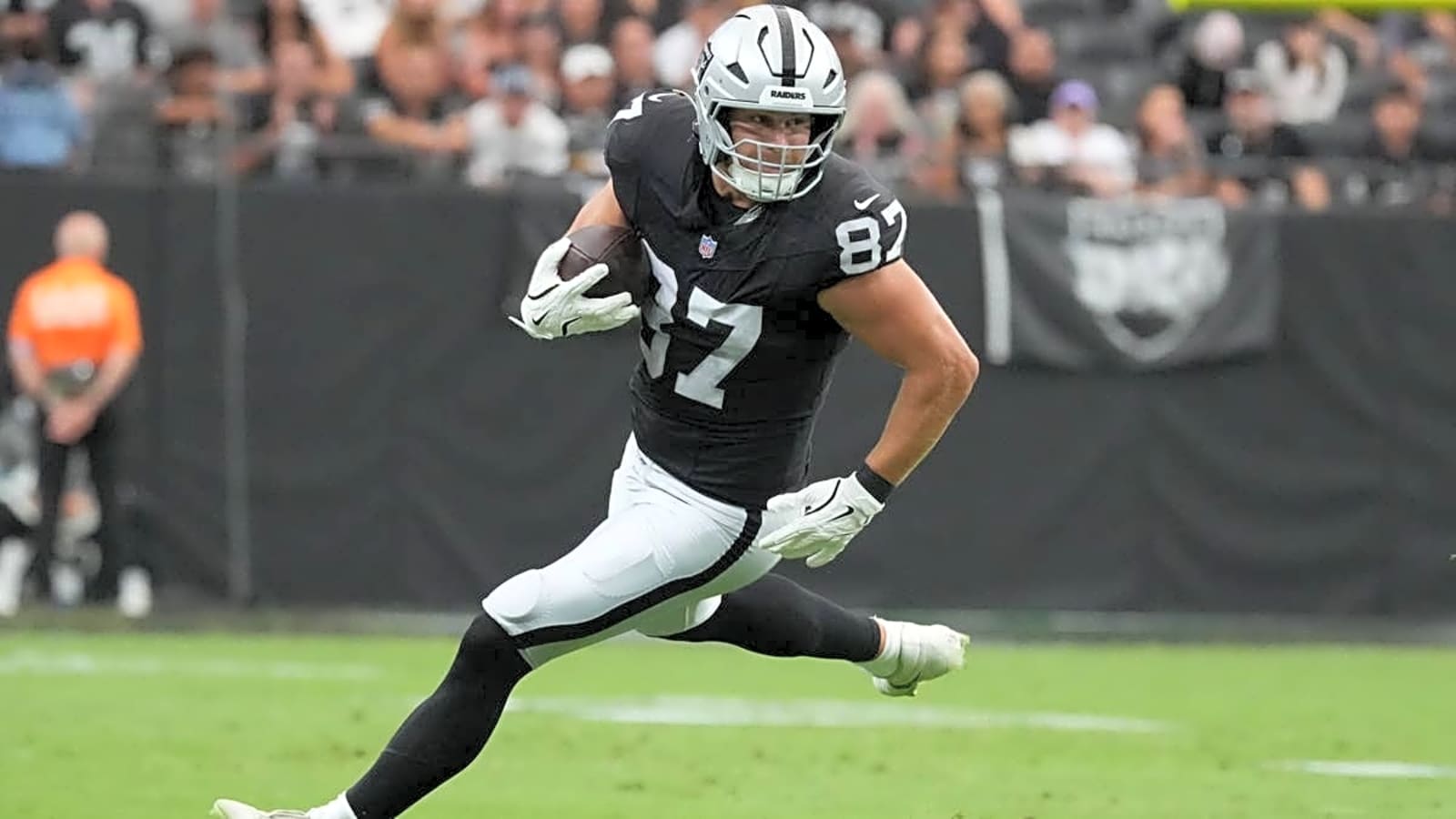
The Raiders gave Michael Mayer an extension on Saturday, making him the fifth highest-paid tight end in the NFL. But Mayer is the Raiders’ backup tight end.
Mayer signed a new three-year deal worth $45 million with $30 million guaranteed, according to Ian Rapoport. By average per year value, Mayer is now top five in tight end pay. His $30 million in guaranteed money also puts him among the top 10 of tight ends.
The Raiders decided to spend big on their second-best tight end.
Despite being a backup, Mayer will play quite a bit. With starter Brock Bowers out to begin the season, Mayer will assume number one tight end duties. Even with Bowers back, Mayer will see the field plenty, as Las Vegas will use two tight end sets.
Last season with Klint Kubiak calling plays, the Seahawks were top 10 in the NFL in 12 personnel usage (one running back, two tight ends) and 22 personnel usage (two running backs, two tight ends). The Raiders’ new head coach loves to use multiple tight ends. Mayer will be deployed frequently.
Kubiak isn’t the only coach using multiple tight ends. Last season the use of 12 personnel climbed to 22.3 percent of all offensive snaps across the NFL. The league is turning to more and more tight ends.
Having multiple good tight ends on the field allows offenses to run the ball more effectively with an extra blocker, but it can also create mismatches in the passing game if the tight ends can provide value as a receiver.
Tight End Pay
But part of the reason tight ends create value is because they are cheap.
No tight end has a contract worth $20 million per year. Every other offensive or defensive position (except fullback) has a player surpassing that $20 million mark. Teams don’t invest at tight end, especially at the backup spot.
Consider last year, when the Seahawks offense exploded with Kubiak using plenty of two tight end sets. Seattle didn’t have a single tight end making $2 million. Getting mismatches and production from tight ends is valuable because those players are rarely making a lot of money. It allows teams to pay other positions more money. The Raiders are taking the opposite approach.
Bowers will be eligible for a contract extension after this season. Assuming he returns from his knee injury and plays like his previous self, he will be in line for a massive new deal. Bowers will likely become the highest-paid tight end in the NFL, pushing to $25 million per season.
If the Raiders gave Bowers that type of deal, they would be committing $40 million to one of the cheapest positions in the NFL.
John Spytek’s Mistakes
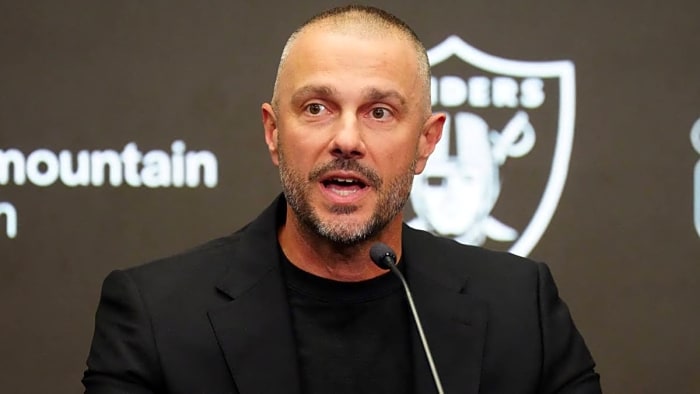
It is not the first time that general manager John Spytek has ignored positional value. He decided to draft running back Ashton Jeanty with the sixth-overall pick in the 2025 NFL Draft.
Similar to tight ends, running backs are a cheap position. Production out of the backfield can generally be found cheap. Meanwhile, one of the reasons first-round picks are so valuable is that those players can be cheap starters at premium positions like quarterback, edge rusher or offensive tackle.
Drafting Jeanty in the top 10 eliminated any of that value. Jeanty has the sixth-most guaranteed money on his contract of any running back in the NFL. The Raiders gained no monetary value in the Jeanty pick. He is being paid as if he is a proven star back.
Comparatively, Patriots offensive tackle Will Campbell, who was taken two spots ahead of Jeanty, is just 18th in guaranteed money among tackles.
Spytek also overspent at the center position. This offseason the Raiders made Tyler Linderbaum the highest-paid center in the NFL. He signed a three-year $81 million deal.
Linderbaum’s $27 million per-year average dwarfs all other centers. The Chiefs’ Creed Humphrey is the second-highest paid center at $18 million per season.
For a team with plenty of holes, overpaying at three non-premium positions is going to make it harder to build up a roster that can contend for a Super Bowl in the future.
Las Vegas Raiders Essentials
More must-reads:
- Ravens' Lamar Jackson contract extension will reportedly remain on hold
- Former NFL HC believes Tua Tagovailoa has already decided to retire
- The '4,500-yard, 15-INT NFL seasons' quiz
Breaking News
Trending News





Customize Your Newsletter
 +
+




Get the latest news and rumors, customized to your favorite sports and teams. Emailed daily. Always free!
PRIVACY POLICY COOKIE POLICY CONTACT US
ABOUT YARDBARKER TERMS OF SERVICE


By using this site, you agree to our Terms of Service and Privacy Policy.
This site is for entertainment purposes only.
There is no gambling offered on this site.
Gambling Problem? Call 1-800-Gambler.
