-

-


Follow Us
-

 On Facebook
 On Flipboard

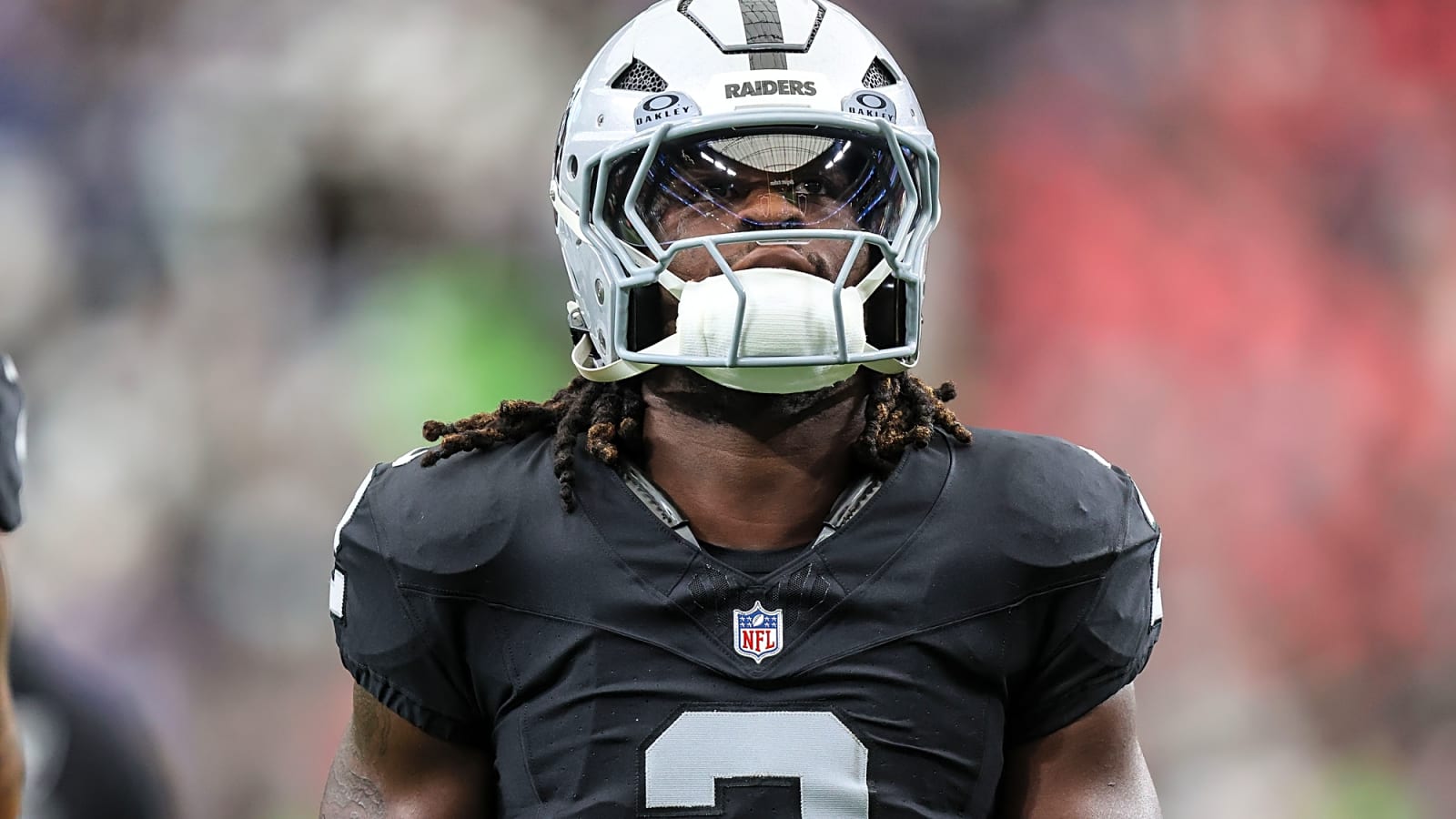
Ashton Jeanty did enough in the first half Sunday to carry an offense for a full game. The Las Vegas Raiders did not let him finish the job, and they left Empower Field at Mile High with a 38-24 loss to the division-rival Denver Broncos.
The numbers tell a strange story. Jeanty finished with 16 touches for 169 scrimmage yards and a touchdown. He carried 11 times for 79 yards, a 7.2-yard average, and caught five of eight targets for a team-high 90 yards and a score. The 79 rushing yards were his most since a 102-yard outing in the season-opening win over the Miami Dolphins.
But 153 of those scrimmage yards came before halftime. That means Jeanty managed just 16 yards after the break, on a handful of touches. The question that lingered long after the final whistle is whether Las Vegas lost this game, in part, by turning away from its most dangerous player.
The Raiders’ public relations staff noted that Jeanty’s 153 scrimmage yards in the first half, split between 75 rushing and 78 receiving, were the most by a Las Vegas player in any half since Justin Fargas piled up 172 in the second half of a game in Week 4, 2007. Jeanty is also the first Raider with 150 or more scrimmage yards in either half since Jordy Nelson did it in Week 3, 2018.
That is not a small piece of franchise history. Fargas is remembered fondly in Raider Nation, and one fan summed up the mood on social media by calling him “such a dog.” Comparisons to a beloved Raiders back from a lean era are the kind of company a young player wants.
There was also a flash of something Jeanty has lacked in his second season. Next Gen Stats clocked him at 21.38 mph on one long run, easily the fastest top speed of his career as a ballcarrier. For a back who entered the day averaging 3.1 yards per carry, that burst was a reminder of why he was drafted sixth overall in 2025.
The Second-Half Disappearing Act
Here is where the afternoon turns from celebration to frustration. One analyst noted Jeanty had 10 touches for 148 yards at halftime, though the Raiders’ own figure of 153 scrimmage yards is the more reliable one. Either way, the point stands: Offensive coordinator Klint Kubiak gave him only four touches in the second half, while rookie Mike Washington Jr. had seven touches.
Defenders of the play-calling will say the explanation is simple. Denver pulled away, and the Raiders had to throw. That is a fair argument, and it carries real weight. Teams trailing by multiple scores in the fourth quarter do not hand off 20 times. One fan made exactly that case in the replies, saying the Raiders needed to pass because of the clock.
The counterargument is sharper, though. The criticism is not about the final minutes. It is about the opening of the second half, when Washington reportedly received the majority of the early repetitions while the game was still within reach. A back with 153 yards at the break, who is averaging more than seven yards a carry, does not typically cede the next drive to a rookie. Even supporters of Washington’s talent were baffled. One put it bluntly: Even if you think Washington is better, Jeanty’s first half earns him the ball.
Both views contain truth. Game script explains the late touches. It does not explain the early ones.
What do we make about Klint Kubiak?
Fairness requires acknowledging the other side of the ledger. Kubiak is managing a backfield, not a single star, and the Raiders drafted Washington to be used. Rotating a rookie in during a long season can protect Jeanty’s legs, and it can build the kind of depth that matters in December.
There is also a reasonable argument that Jeanty’s receiving production was partly a product of circumstance. Star tight end Brock Bowers was out with an ankle injury, which funneled targets toward the running back. When Bowers is on the field, those targets shrink. Kubiak may be playing the long game, preserving Jeanty and not over-relying on a game in which the passing offense was missing its best weapon.
Even so, the process looked wrong. Snap counts and touch counts are decisions, and the decision to lean on Washington while Jeanty was dominating invites second-guessing. If the plan was to rest Jeanty, the Raiders chose a strange afternoon to do it.
The most important takeaway may be about identity…
Jeanty came into Sunday averaging just 3.1 yards per carry, a figure that has frustrated the Raiders and fantasy managers alike. As a runner, his second season has been a disappointment, and one big day does not erase it.
What has saved his value is the passing game. Jeanty has salvaged his status as a fantasy RB2 by becoming a far bigger threat as a receiver, and Sunday’s 90 receiving yards were easily a season high. He also threw in a notable footnote: a 68-yard pass from quarterback Fernando Mendoza to Jeanty, which Underdog NFL flagged as Jeanty’s first career passing touchdown involvement on the receiving side of a long play. The Raiders have clearly found that he can be a weapon in space.
That is a meaningful evolution for a player once defined by his workhorse college résumé. He is no longer simply a between-the-tackles bruiser. He is becoming a hybrid back, and the Raiders would be wise to build around that.
Looking Ahead to Week 12
The next test arrives Sunday night against the Cleveland Browns, and it comes with a complication. If Bowers returns from his ankle injury, Jeanty’s target share will almost certainly dip. His receiving ceiling in PPR formats would drop with it, and the Raiders would need him to rediscover his rushing efficiency.
That is the real stakes of the next few weeks. Jeanty’s value right now rests on a fragile foundation. His rushing average remains poor, his best receiving game came with the team’s top tight end sidelined, and his coordinator just showed a willingness to give a rookie meaningful carries. The 79 yards Sunday were his season best on the ground, but they were also an outlier.
Just give Ashton Jeanty the ball…
Jeanty deserves more touches, and Sunday’s film makes the case better than any argument could. A 7.2-yard average, a career-best top speed and 153 first-half yards from scrimmage are not the marks of a player who should be sharing a workload evenly with a rookie.
Washington has earned his role, and nobody should dismiss the idea that a deep backfield is a strength. But depth is a luxury, and the Raiders are in no position to treat it as one. They lost by 14 points to a division rival. They need their best playmaker involved from the first snap of the third quarter, not only when the score demands desperation.
Kubiak will have an answer, and it may even be a good one. But the criticism that followed Sunday’s loss is not noise. It is a fair read of a game in which Las Vegas had its most explosive player rolling and let the momentum drift.
If the Raiders want to salvage something from this season, Week 12 is the time to prove they understand that. Feed Jeanty early, feed him often and see what happens. After Sunday, there is little reason to believe the offense is better without him.
More must-reads:
- NFL Week 11 winners, losers: Statement win for Giants; Chiefs offense keeps rolling
- Giants RB Cam Skattebo's self-imposed backflip ban didn't even last one week
- The 'Most 5-passing-TD NFL games' quiz
Breaking News
Trending News
Customize Your Newsletter
 +



Get the latest news and rumors, customized to your favorite sports and teams. Emailed daily. Always free!
PRIVACY POLICY COOKIE POLICY CONTACT US
ABOUT YARDBARKER TERMS OF SERVICE


By using this site, you agree to our Terms of Service and Privacy Policy.
This site is for entertainment purposes only.
There is no gambling offered on this site.
Gambling Problem? Call 1-800-Gambler.