
-

-


Follow Us
-

 On Facebook
 On Flipboard
 On Twitter

The Rams were winning 30-28 in the fourth quarter. Sam Darnold threw a two-point conversion pass that went backward. Jared Verse knocked it, sending the ball forward. The refs blew the whistle and called the play dead. Both teams got ready for the next kickoff. Then Zach Charbonnet casually walked over, picked the ball up off the ground in the end zone, and held onto it. No one stopped him. No one threw a flag. The game just kept going as if nothing had happened. The stadium kept moving.
100 Seconds
For a minute and forty seconds, nobody in the NFL’s officiating infrastructure noticed. Both teams stood at the kickoff line. The game was about to resume with the Rams still leading. Then Terry McAulay, a broadcast rules analyst working for Amazon Prime, picked up his phone and called the league office. He wasn’t an NFL employee and, he wasn’t on the field. He was watching from a broadcast booth. That phone call triggered the replay review that reversed the ruling, awarded the two-point conversion, and tied the game 30-30.
The Loophole
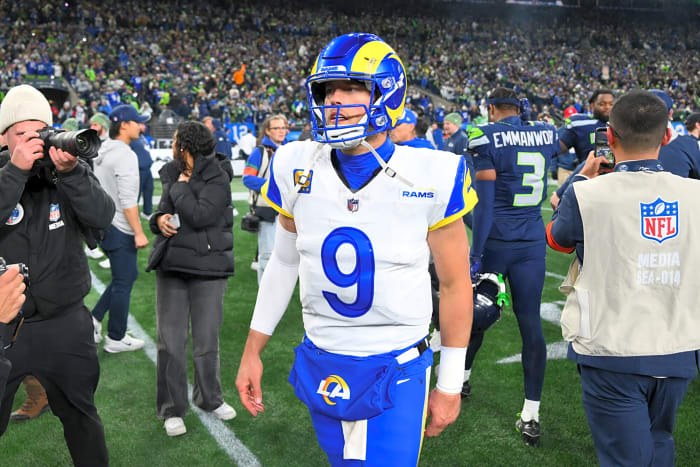
The NFL rulebook draws a sharp line between fumbles and backward passes. On a fumble in the final two minutes or on a conversion attempt, only the fumbling player can advance the ball. On a backward pass that hits the ground, any player from either team can recover and advance it. Verse’s deflection turned Darnold’s backward pass into a forward-bouncing live ball under the second rule, not the first. Sean McVay had coached nine NFL seasons. He had never encountered this distinction. Neither had Matthew Stafford.
The Cascade
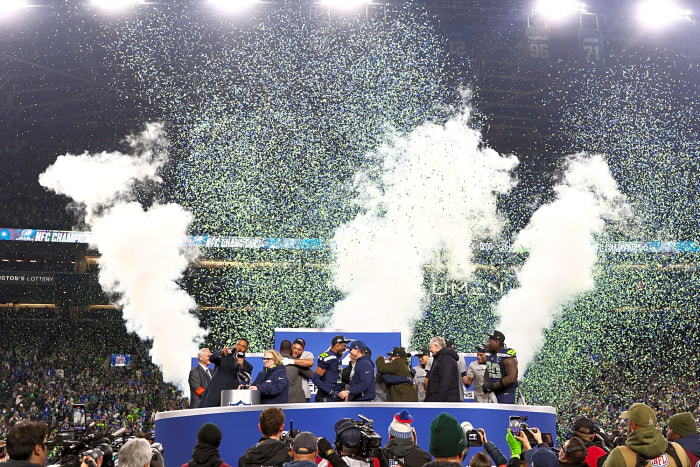
Seattle won 38-37 in overtime. That single conversion flipped the NFC West. The Seahawks finished 14-3 and earned the No. 1 playoff seed. The Rams finished 12-5 and fell to No. 5. Seattle hosted every playoff game. They beat the Rams 31-27 in the NFC Championship. They beat New England 29-13 in Super Bowl LX. One nonchalant pickup after a dead whistle. One phone call from a broadcast booth. One championship.
The Hidden Wiring

The NFL’s replay system is built to catch obvious errors through internal officiating channels. On the most consequential play of the 2025 season, those channels failed. The review happened because a broadcaster noticed, not because the system worked. McVay said postgame: “I didn’t get a clear explanation of everything that went on, just because of some of the timing of it.” The officials on the field ruled an incomplete pass. A man without official authority reversed the outcome from outside the stadium’s chain of command.
Stafford’s Masterpiece
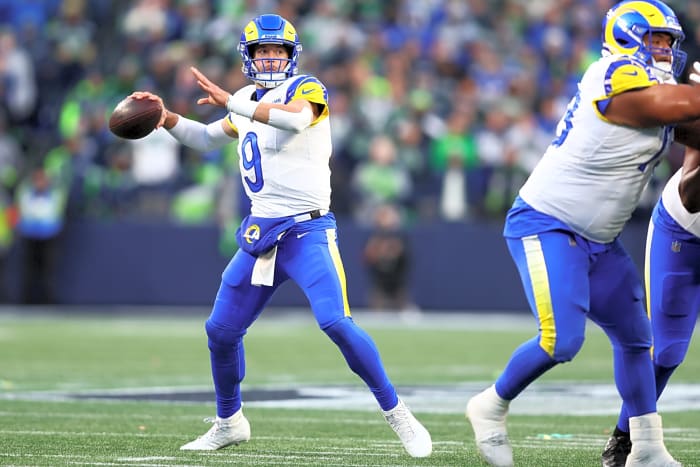
Matthew Stafford threw for 457 yards and three touchdowns that night, his highest output in over a decade of NFL play. The Rams led 30-14 deep into the fourth quarter. Seattle scored 24 unanswered points to force overtime. Stafford had the best game he’d played in years, but none of it mattered because of a rule he didn’t even know about. That rule turned a ball everyone thought was dead into one that was still in play. The fact that a quarterback can play that well and still lose because of an obscure technicality is exactly why the Rams want the rules changed.
The Domino Cost
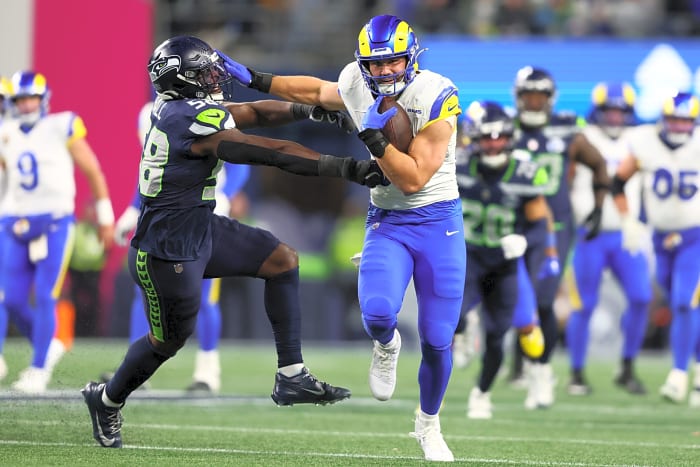
Strip away the Week 16 loss, and the Rams likely win the NFC West, host every playoff game, and keep the Seahawks on the road as a wild card. Instead, Seattle rode home-field advantage through three playoff rounds, generating millions in additional postseason revenue. The Rams played three consecutive road games. Four of their six losses involved special teams breakdowns, but this one carried a different weight. One obscure rule redistributed an entire conference’s playoff wealth and championship probability in a single quarter.
The Proposal
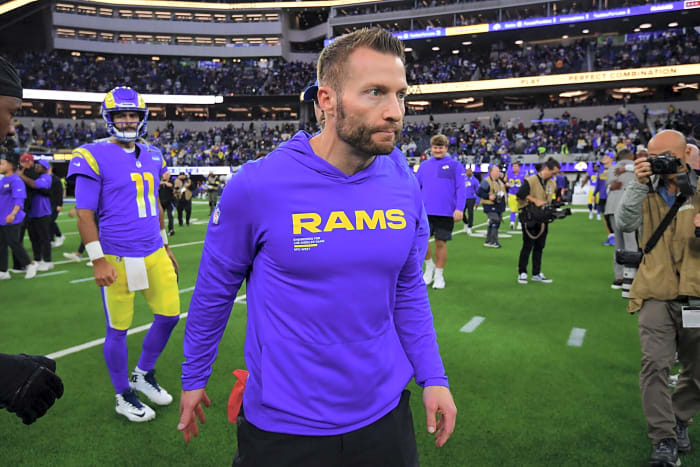
The Rams spent months putting together a proposal with two new rules. The first would change how the league classifies a backward pass that gets knocked forward by a defender. In the final two minutes, on fourth downs, and on two-point conversions, it would be treated as a fumble, meaning only the player who lost the ball could pick it up. The second rule would give officials a strict 40-to-60-second window to start any replay review. Right now, there’s no time limit. These two rules address the two problems that decided the Week 16 game: a technicality most coaches had never heard of and a review system that can kick in at any time. McVay said he just wants clearer rules. Nothing like this has been proposed before.
The Uphill Vote
Rule changes require 24 of 32 NFL owners to pass. The tush push ban attracted roughly 22 votes and still failed. Competition Committee co-chair Rich McKay signaled he does not anticipate many rule changes for 2026. The Rams are asking owners to legislate against a scenario most of them have never seen, for a rule most of them probably didn’t know existed. And the Seahawks, who benefited from the current language, have every incentive to lobby against the change at the March meeting in Phoenix.
The New Rule

McVay put it plainly: “I’ve never seen anything or never been a part of anything like that. And I’ve grown up around this game.” That confession is the real story. The NFL’s most regulated sport contained a mechanism so obscure that a Super Bowl-winning coach needed a broadcast analyst to explain it after it cost him a championship. Every fan who now understands the backward-pass distinction knows something most NFL coaches didn’t until December. The vote is in March. The loophole is still open.
Sources:
CBS Sports, “Rams propose NFL rule change after Seahawks 2-point conversion,” 2026
NBC Sports / Pro Football Talk, “For critical two-point review in Rams-Seahawks, NFL got an assist from Prime Video’s Terry McAulay,” 2026
NBC Sports / Pro Football Talk, “Rams’ proposal based on crazy two-point play has two components,” 2026
Sports Illustrated, “Controversial Call From Rams vs. Seahawks Game Could Lead to Rule Change,” 2026
Heavy.com, referenced for Super Bowl and playoff cascade claims, 2026
The Spun, referenced for Stafford’s statistical performance, 2025
More must-reads:
- Raiders' Maxx Crosby opens up for first time since trade drama, hints at future plans
- Colts' Daniel Jones, Alec Pierce gambles pay off after latest deal
- The '1K-yard, 10-TD-catch NFL seasons' quiz
Breaking News
Trending News


Customize Your Newsletter
 +
+




Get the latest news and rumors, customized to your favorite sports and teams. Emailed daily. Always free!
PRIVACY POLICY COOKIE POLICY CONTACT US
ABOUT YARDBARKER TERMS OF SERVICE


By using this site, you agree to our Terms of Service and Privacy Policy.
This site is for entertainment purposes only.
There is no gambling offered on this site.
Gambling Problem? Call 1-800-Gambler.
