
-

-


Follow Us
-

 On Facebook
 On Flipboard
 On Twitter

This NFL season was a unique one in terms of QB rankings. The familiar faces of Burrow, Jackson and Mahomes struggled for a good portion of their respective seasons and were stymied by bad injury luck. Simultaneously, the QBs that filled the void they left were a mixture of veterans putting up career high numbers and younger men under center establishing themselves as top-tier passers. Today, we’ll be going over those top-tier quarterbacks and rank the ten best based off of their efforts from last year. Playoff performances will also be taken into account, and this is a top ten that only considers the 2025 season, so don’t be surprised if you don’t see the aforementioned Mahomes Jackson or Burrow.
10: Jared Goff

All the talk surrounding Goff and the Lions offense was the brain drain that comes from losing Ben Johnson. Despite that, Goff still recorded similar numbers to his past elite seasons. What’s notable is that this was also done with a much weaker offensive line and a run-game that at times was non-existent. Of course, he had a few regrettable games which lost his squad the team. Regardless, he still led the Lions to be one of the stronger air-attacks in the league.
9: Caleb Williams

The prospect of Ben Johnson’s infusion of offensive genius in Chicago made Caleb Williams one of the top candidates this past year for a breakout. Granted, Williams still dealt with some growing pains, missing throws and struggling with timing at points. However, he more than made up for his mistakes by displaying the best sack avoidance in the NFL and making highlight reel passes from the strangest of angles.
8: Sam Darnold
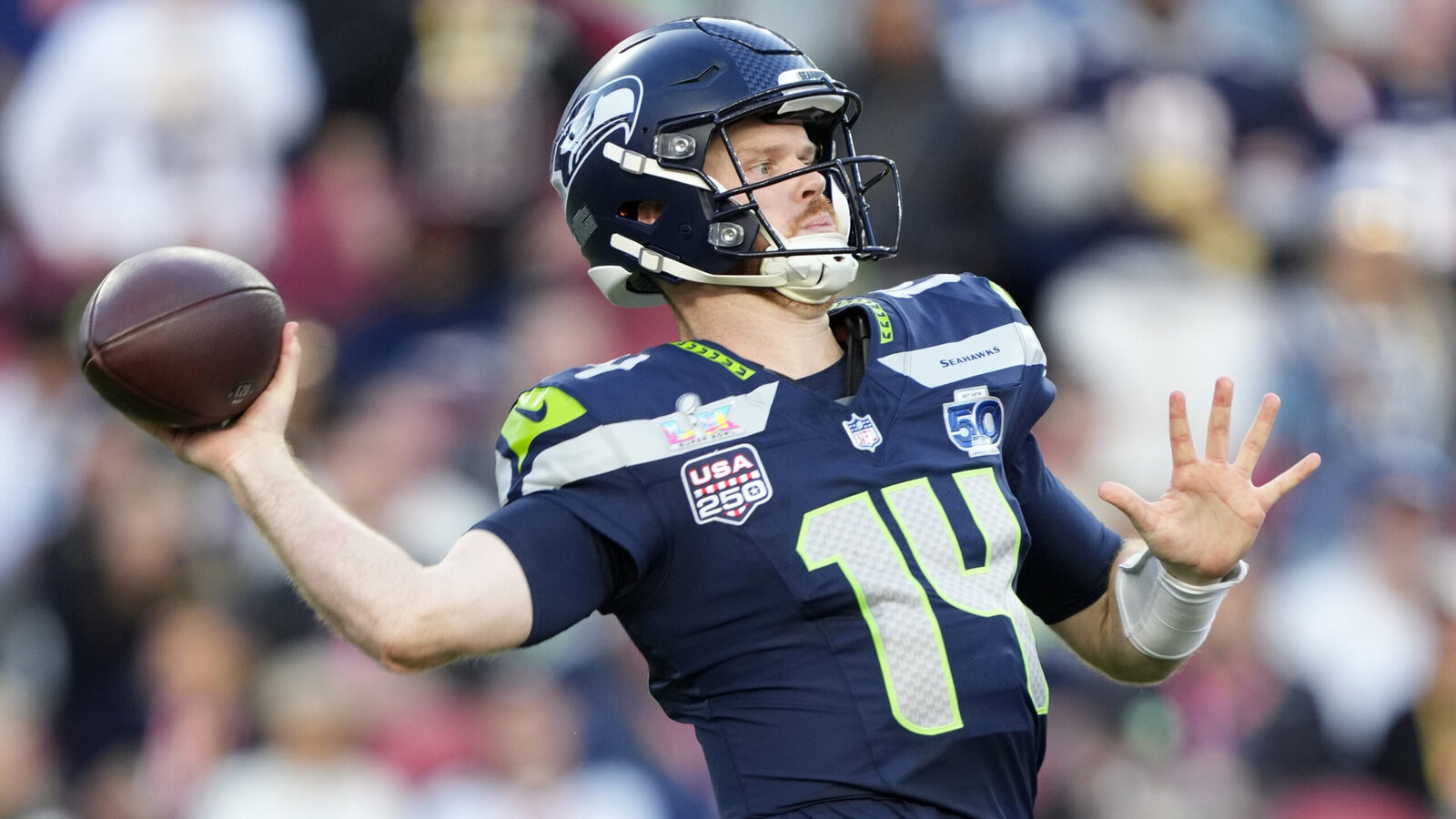
Heading into the year, the fear surrounding Darnold’s Seahawks tenure was in regards to the offensive line. Seattle’s protectors up front were among the bottom in the league the year prior, and Darnold infamously floundered under heavy pressure. Now with a Super Bowl ring on his finger, needless to say he’s quieted the doubters. Darnold conquered his ghosts and with the help of Jaxon Smith-Njigba he led a punishing and powerful offense. Most importantly, he learned how to counter opposing pressure, and that was highlighted in the Super Bowl. He consistently evaded pressure and navigated through the pocket before finding an open man, extending key drives for his team en-route to the win.
7: Justin Herbert

Another playoff collapse for Justin Herbert amplified the voices of his critics. Don’t be fooled, Herbert’s lone playoff game this year was a humiliating display. Nevertheless, it’s important to note that he played with one of the worst offensive lines in the league. Obviously, losing both of your elite starting tackles is a recipe for disaster. Pair that with the sorry excuse that was the interior protection unit, Herbert had to play with opposing rushers constantly barreling down towards him. And yet, he stood his own, and passed for 3727 yards and 26 touchdowns, near single-handedly keeping the offense afloat.
6: Trevor Lawrence

The Jakobi Meyers acquisition along with the ascent of Parker Washington finally granted Trevor Lawrence a core of reliable targets, leading him to reach his third 4000 yard campaign of his career. Lawrence ended the regular season on the highest of notes, riding the wave of an eight game win streak. That streak wouldn’t come to fruition if not for his excellent play. In that span, he threw for 2009 yards, 19 touchdowns and just 5 interceptions. If he can stay hot heading into next year, Liam Coen’s offense is a dark horse to be the league’s best attack.
5: Jordan Love

Jordan “Toyotathon” Love watched as the team around him collapsed due to injuries. Still, he was able to pull his own weight, and was not at fault for Green Bay’s disastrous end to the year. In the same amount of games played as the previous season, Love posted similar yardage and touchdown totals, but had five less interceptions. He was careful with the ball and continues to play as a great successor to Aaron Rodgers.
4: Drake Maye

The return of the evil empire would not unfold without their new leader at the helm. Though his postseason run versus the three best defenses in the game has soured the topic of discussion, undermining Drake Maye’s MVP caliber season would be a mistake. Maye finished the year with the highest EPA per-play rate in the game among QBs with at least 100 plays. He launched the Patriots offense into becoming a top unit, and was consistently making great throws In and out of structure.
3: Josh Allen
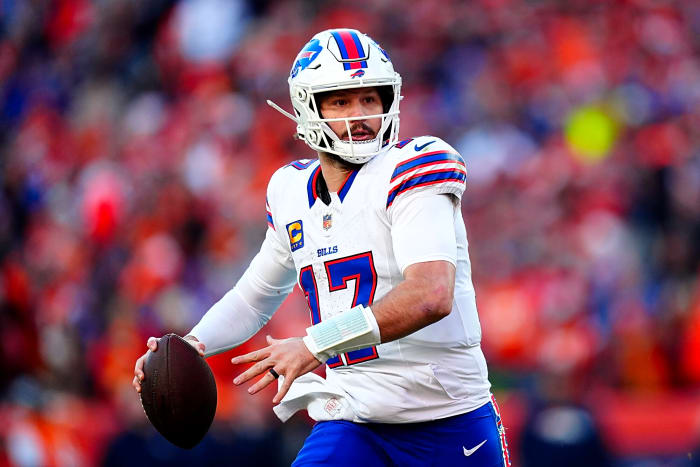
With Josh Allen slinging the rock, Buffalo saw their fourth consecutive EPA per-play offense dominate. Allen bounced off of his MVP campaign with another great season, he worked perfectly in tandem with James Cook, and was able to muster up a very effective pass game without a real number one receiver.
2: Dak Prescott
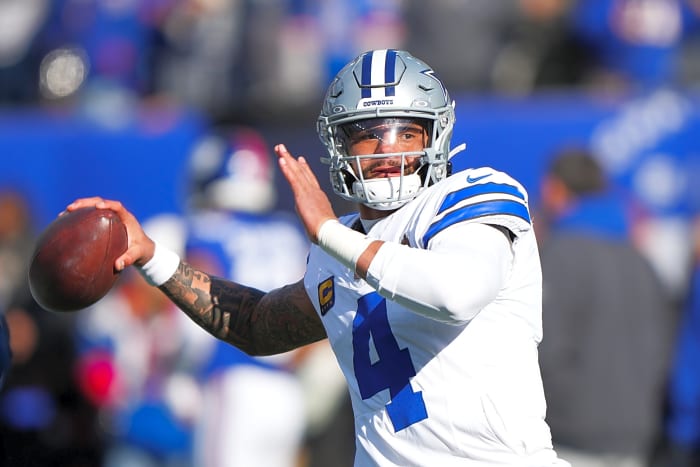
The addition of George Pickens allowed the Dallas offense to reach another level. Even with the defense weighing them down, the Cowboys were the second best offense in the game, posting 6663 total yards. The pass attack was especially potent, and that was thanks to Dak Prescott. If the team as a whole was even half as successful as the offense, he’d finish top five in MVP voting. He was accurate, on point, and the catalyst for an elite unit.
1: Matthew Stafford

Following this season, Stafford may have just punched his ticket to the Hall of Fame. Prior to 2025, Stafford was barely ever even close to an MVP nod. 4707 yards and 46 touchdowns later, he edged it out and won the award in the closest MVP race since 2003. He was dominant all year, and barely anybody could stop him. Against Seattle’s fearsome defense, Stafford not only held his own, he outright excelled facing Mike MacDonald’s unit. He ends the season as the game’s best quarterback, and has likely guaranteed a bust in Canton.
More must-reads:
- Five under-the-radar storylines for the NFL offseason
- Report: Caleb Downs hit with major red flag after combine
- The 'Most passing + rushing TD games' quiz
Breaking News
Trending News

Customize Your Newsletter
 +
+




Get the latest news and rumors, customized to your favorite sports and teams. Emailed daily. Always free!
PRIVACY POLICY COOKIE POLICY CONTACT US
ABOUT YARDBARKER TERMS OF SERVICE


By using this site, you agree to our Terms of Service and Privacy Policy.
This site is for entertainment purposes only.
There is no gambling offered on this site.
Gambling Problem? Call 1-800-Gambler.
