
-

-


Follow Us
-

 On Facebook
 On Flipboard
Four picks in. Eight picks out. Seven undrafted free agents signed before rival teams finished their own paperwork. One veteran edge rusher added on a cap friendly deal ten days after the final round ended. The price tag for the entire draft weekend transformation was a single future fourth rounder sent to Cleveland. General manager John Schneider spent three days turning the league’s smallest pick allotment into the most active roster reshape in the NFL, and he did it without touching his 2026 salary cap sheet. What follows is how the defending Super Bowl champion ran a playbook that the other 31 front offices are about to spend the next twelve months trying to copy.
The Weekend That Broke The Template
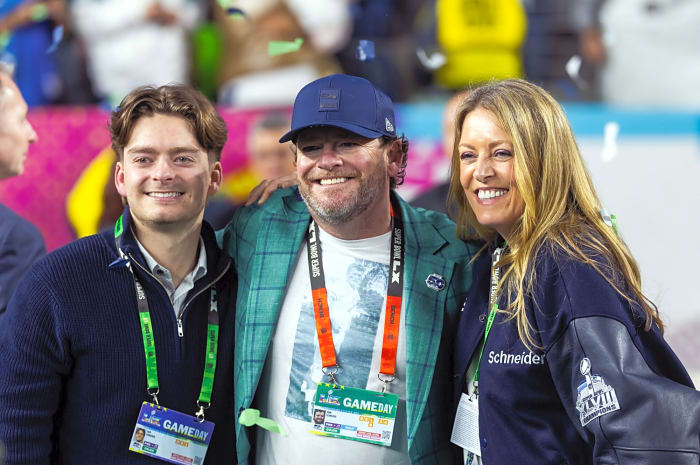
The Seattle Seahawks walked into Pittsburgh with four draft picks. The league minimum. Every other franchise had more. By Saturday night, GM John Schneider had executed four trades, doubled his selections to eight, and signed his undrafted free agent class at record speed. Roughly ten days later, Seattle added veteran edge rusher Dante Fowler Jr. on a one year deal worth up to $5 million. From a defending Super Bowl champion that opened the weekend saying it might not pick at all.
The Poker Face That Started It All
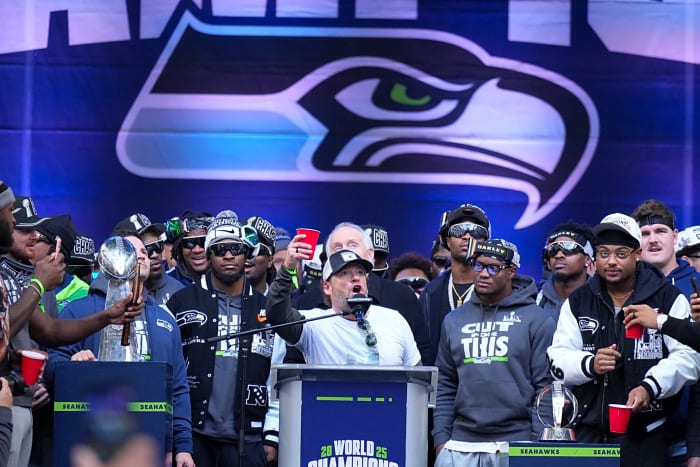
Schneider publicly floated the idea that Seattle might trade out of the first round entirely before the draft began. Then he picked eight times. That opening posture looked like uncertainty. It was leverage. The 2026 class was widely viewed as weak at the top. Schneider anticipated the board would compress, with higher graded players tumbling into later rounds. Projecting passivity encouraged trade partners to negotiate downward. The entire cascade that followed traces back to that calculated stance.
Your New Running Back Costs Less Than You Think
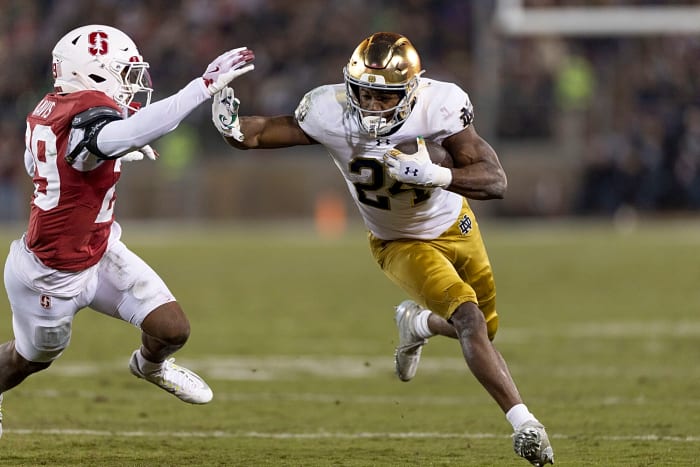
Jadarian Price, Notre Dame running back, went 32nd overall. He is the only projected immediate starter from the entire eight pick haul, lined up to share the backfield in a multi back system replacing Kenneth Walker III’s workload. One starter out of eight picks sounds thin. But that was the point. Schneider built this class for competition, not instant gratification. Every other selection targets internal roster battles that play out over months, not draft night.
Bud Clark, The Quiet Headline Act
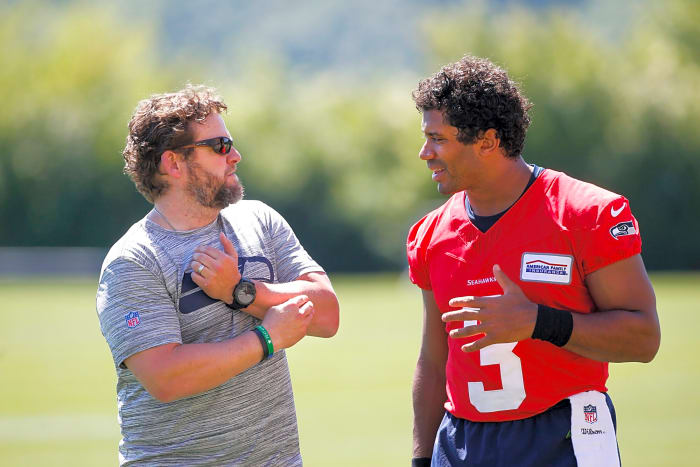
Selected at No. 64, TCU safety Bud Clark carried a 91.3 PFF grade over his final two college seasons. He plays free safety, strong safety, and can slide to boundary corner, giving defensive coordinator Aden Durde four different lineup looks from one roster spot. Multi positional flexibility is the currency Schneider is hoarding, and Clark was the most expensive chip Seattle spent to buy some.
The Guard Who Fell Five Rounds
Beau Stephens was part of an Iowa offensive line that won the Joe Moore Award. He posted a 91.6 PFF pass blocking grade and allowed zero sacks and zero hits in 2025. He fell to pick 148 in the fifth round, and the Seahawks traded a 2027 fourth rounder to Cleveland to grab him. Stephens now competes directly with Anthony Bradford for a starting guard job. PFF called him the highest graded Seahawks pick of the class. That math only works when an entire draft class collapses downward, and Schneider bet it would.
Three Cornerbacks In One Draft Class
Julian Neal at 99. Andre Fuller at 236. Michael Dansby at 255. Three corners in a single class from a team that already had cornerback depth on the roster. Fuller lasted until the seventh round despite similar measurables to Neal, including an identical 4.49 40 yard dash. Dansby and defensive tackle Deven Eastern were Day 3 additions who strengthened the back end of the class. Neal projects as the No. 3 cornerback. The weak class didn’t just drop one player. It dropped entire position groups.
The Trade Ledger In Plain Numbers
Here is the full paper trail. Seattle traded back on Day 2 to pick up additional Day 3 capital, moved from 96 to 99 with Pittsburgh while gaining pick 216, flipped 216 to Green Bay for picks 236 and 255, and sent a 2027 fourth rounder to Cleveland to jump back into the fifth round for Stephens at 148. Four distinct trades. One pick became two. Same principle, repeated. The system feeds itself.
The Mechanism Nobody Is Naming
Weak draft classes create tier compression. Talent bunches together. Higher grades slide to lower rounds. For teams locked into high picks, that compression is a problem. For a team willing to trade back systematically, it is a gold mine. First, identify a class with a thin top tier. Second, project passivity to soften trade partner offers. Third, convert single picks into multiples on Day 3 where the compression is sharpest. The machinery is that simple, and that hard to run on instinct alone.
The Final Draft Calls
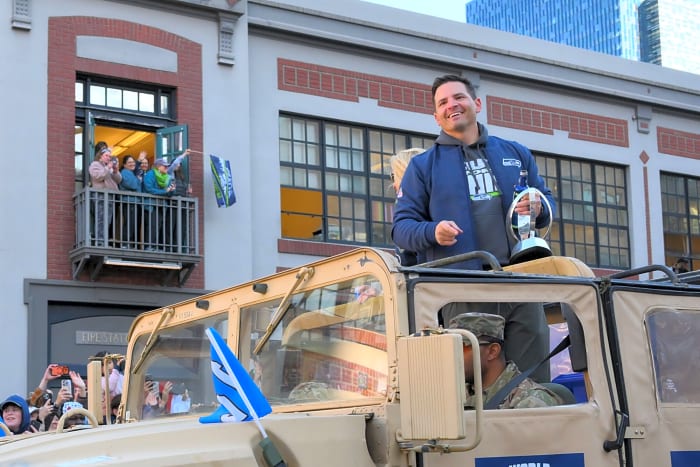
Six of the eight picks signed their rookie contracts on the first day of rookie minicamp, including all six selected in Rounds 3 through 7. The machinery moved that fast. Behind every trade number and draft slot, real people answered phones and had their lives changed by an organization running a system most franchises haven’t figured out yet.
The Post Championship Blueprint
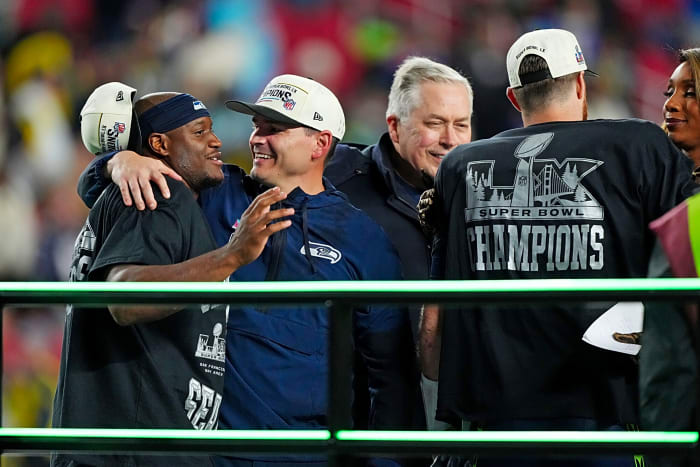
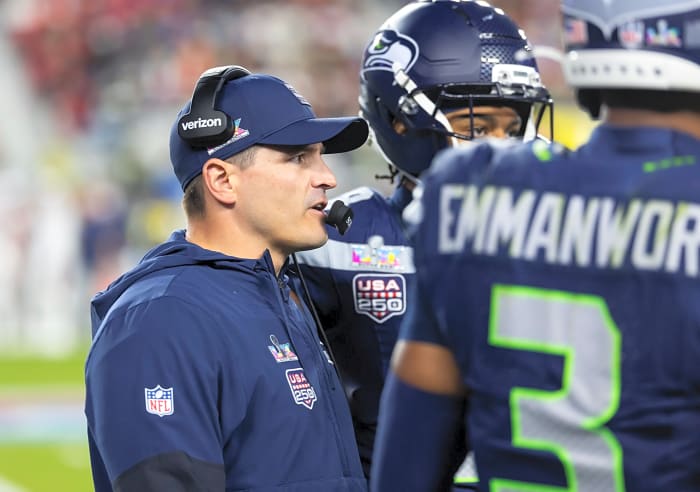
This was Schneider and head coach Mike Macdonald’s draft as reigning Super Bowl champions. Post championship teams historically lean on free agency to reload. The Seahawks are showing that intelligent capital generation through trading can preserve salary cap space while injecting the roster with competition. Players selected to take jobs, not accept backup roles. The team then circled back to its last remaining need by signing Fowler, a former No. 3 overall pick with 58.5 career sacks and Washington’s 2025 team sack leader, to replace departed edge rusher Boye Mafe. Fowler’s up to $5 million deal slots in well below the $15 to $20 million a comparable edge rusher would have commanded in March free agency. Cap preservation and competition in one move.
Who Wins, Who Loses
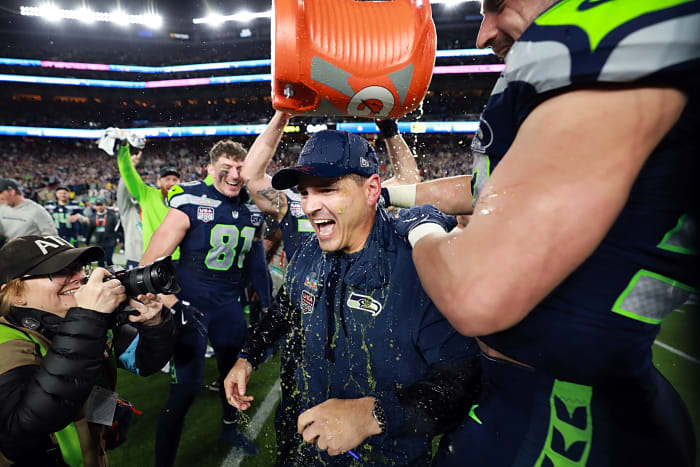
Anthony Bradford just got a highly graded competitor for his starting job. Every rotation cornerback now faces three new challengers. Mid tier free agents across the league lose leverage when a Super Bowl champion can fill needs through draft trades and UDFA speed instead of opening the checkbook. The winners also include Bud Clark and the UDFA class that signed before rival teams could counter. The losers are front offices still treating their draft allotment as fixed inventory.
What To Watch In Training Camp
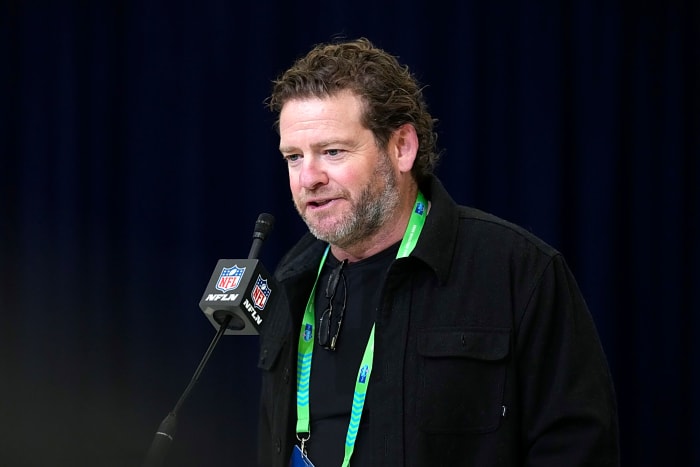
Bradford versus Stephens at right guard is the single most consequential camp battle on the roster. Neal’s climb toward the No. 3 corner role will tell Seattle whether the secondary can absorb its free agency losses. Fowler’s snap share opposite Derick Hall will reveal whether the $5 million bet was a stopgap or a real rotation piece. Price’s workload split in the backfield is the first real test of how much the Walker era actually cost Seattle in 2026 production.
The Cascade Is Still Moving
If Stephens starts at guard and Neal locks down the No. 3 corner spot, every front office in the league will reverse engineer this draft. Trade back strategies will flood the 2027 draft. Teams will price trade downs more aggressively, shrinking the margins Schneider exploited. The UDFA speed advantage disappears once competitors build the same pre calculated systems. Schneider’s playbook works best when nobody else runs it. The Seahawks just showed 31 other franchises exactly how the trick works. The question is whether they can stay ahead of the copycats.
If you ran an NFL front office next April, would you copy Schneider’s trade back playbook, or would you bet on a different weakness in the 2027 class? Tell us in the comments.
Sources:
Seahawks.com, “Seahawks Trade Up To No. 148 In Fifth Round,” April 24, 2026
Seahawks.com, “2026 NFL Draft Day 3 Press Conference,” April 25, 2026
NFL.com, “2026 NFL Draft Trade Tracker: Full details on every draft-related move,” April 22, 2026
The Associated Press, “Super Bowl champion Seahawks bolster defense and address holes with 8 draft picks,” April 25, 2026
ESPN, “Inside the Seahawks’ strategy to draft competitors,” May 1, 2026
NFL Network (Tom Pelissero), “Seahawks signing pass rusher Dante Fowler Jr. to one-year deal worth up to $5 million,” May 5, 2026
More must-reads:
- New OC Frank Reich makes stunning claim about Jets' ineptitude
- Browns' Shedeur Sanders gets more bad news amid Deshaun Watson reports
- The 'NBA scoring champions' quiz
Breaking News
Trending News


Customize Your Newsletter
 +
+




Get the latest news and rumors, customized to your favorite sports and teams. Emailed daily. Always free!
PRIVACY POLICY COOKIE POLICY CONTACT US
ABOUT YARDBARKER TERMS OF SERVICE


By using this site, you agree to our Terms of Service and Privacy Policy.
This site is for entertainment purposes only.
There is no gambling offered on this site.
Gambling Problem? Call 1-800-Gambler.
