
-

-


Follow Us
-

 On Facebook
 On Flipboard
 On Twitter

So picture this. Confetti is raining down at Levi’s Stadium, and Mike Macdonald is just standing there. Head tilted back, staring at the sky, soaking it all in. Around him, his players are passing the Lombardi Trophy hand to hand like kids on Christmas morning. This guy almost took a finance gig at KPMG. Never played a snap of college football. Now he’s got a 29-13 Super Bowl win over New England on the scoreboard behind him, and every fingerprint on that trophy tells the story.
Broken Franchise
Seattle had made the playoffs once in three seasons before Macdonald arrived. Pete Carroll’s final year produced a defense ranked 24th in points allowed at 23.6 per game. The franchise felt stuck. Macdonald’s first season yielded a 10-7 record and a second-place finish in the NFC West. Respectable, not historic. The Seahawks signed Sam Darnold before 2025, giving him a three-year, $100.5 million deal, and handed the offensive playbook to coordinator Klint Kubiak. Every chip went to the center of the table.
Offensive Myth

For 15 years, NFL owners followed the same playbook. Hire an offensive guru, build around a quarterback, outscore everybody. McVay. Shanahan. It became gospel. Then Mike Macdonald flipped the whole thing on its head. His Seahawks went 14-3 in 2025 — the franchise’s best regular season since joining the NFC in 2002. Their defense allowed just 17.2 points per game, the stingiest in the league. A 38-year-old former intern was preaching a completely different sermon, and the scoreboard kept proving him right.
First Ever
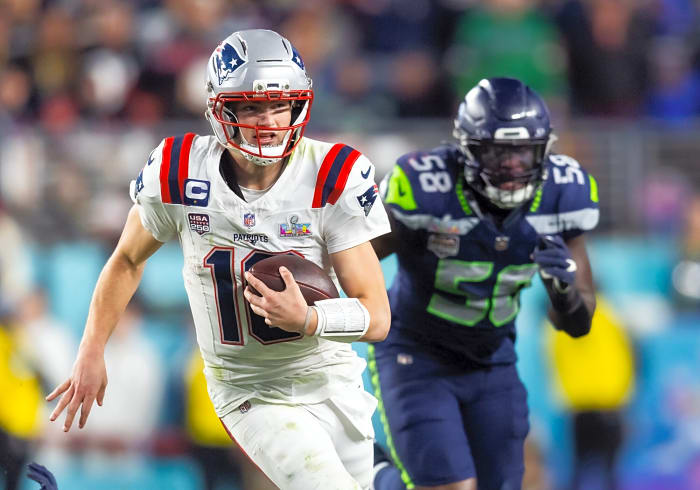
Macdonald became the first head coach in NFL history to win a Super Bowl while serving as his team’s primary defensive play-caller. No coach had ever done it. His defense sacked Drake Maye six times. New England managed 42 rushing yards and 48 passing yards in the first half. Six sacks. Forty-two yards on the ground. The Patriots’ offense was dead before halftime. The man who nearly became an accountant had just authored the most dominant defensive Super Bowl performance in recent memory, and the old coaching blueprint cracked under the weight of it.
The System

Here’s the thing about Macdonald’s defense — it’s basically chess disguised as football. Cover-six looks on 45% of Super Bowl snaps, defenders rotating after the snap like pieces switching squares. Rookie Nick Emmanwori, the 35th pick, played linebacker while technically being a safety. Meanwhile, Kubiak ran the offense with play-action magic, and Darnold completed 67.7% of his passes during the regular season. The head coach called defense. The coordinator handled the offense. No egos. Just results. And 31 other franchises told themselves it couldn’t work.
Numbers Talk

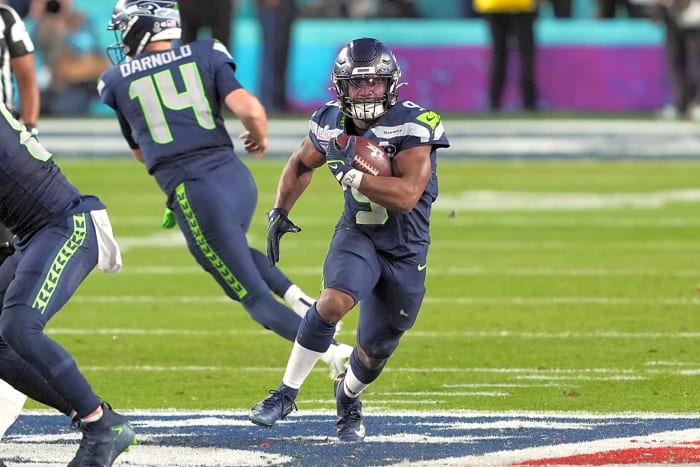
Kenneth Walker III rushed for 135 yards in the Super Bowl and won MVP honors, the first running back to claim that award since Terrell Davis in 1997. A 28-year gap, closed by a Seahawks back running behind a defense-first culture. Jaxon Smith-Njigba caught 119 passes for 1,793 yards during the regular season, both franchise records. Seattle’s improvement from 24th in scoring defense to first represents roughly a 26% jump in defensive efficiency across two seasons. The talent was real. The system made it lethal.
Poaching Season

Kubiak accepted the Las Vegas Raiders’ head coaching job immediately after the Super Bowl. Defensive coordinator Aden Durde interviewed with the Falcons and Browns for their head coaching vacancies. Walker III hits unrestricted free agency in March 2026 as a Super Bowl MVP commanding top-market money. Seattle built a championship roster, and now the league is dismantling it piece by piece. The Ravens already proved what losing Macdonald costs: Baltimore’s defense fell from first in points allowed under him to 18th the year after he left.
New Rule

Macdonald’s 27 wins across two seasons tie Jim Harbaugh and Steve Mariucci for the most by any head coach in NFL history over that span. He matched them at 38, the third-youngest coach to ever win a Super Bowl, behind only Sean McVay and Mike Tomlin. This stopped being an exception the moment the confetti fell. Macdonald validated faith-based culture, non-traditional pedigree, and defensive play-calling as a championship formula. Every owner with a coaching vacancy just watched the hiring blueprint flip upside down.
Fragile Dynasty
And now for the reality check. The Seahawks head into 2026 without their offensive coordinator, possibly without their defensive coordinator, and staring down a salary cap squeeze that could push Walker III right out of town. Sound familiar? Macdonald’s 2023 Ravens defense finished first in both points allowed and sacks — the only unit in NFL history to pull that off. Then he left, and it all fell apart. The big question now: does his system travel with the assistants, or does it live inside his head? One offseason will tell us everything.
Fingerprints

After the game, Macdonald held the Lombardi Trophy and said, “It’s a little lighter than I thought. But the cool part was in the locker room, you could see all the fingerprints on it, and that’s pretty awesome.” Then he said something most Super Bowl champions never say: “I believe God called me to be a coach and I listened to Him.” Twelve years from a KPMG desk to a championship podium. The next wave of NFL coaching hires will look nothing like the last 15 years, and Macdonald’s fingerprints will be on every one.
Sources:
Sports Spectrum, “Seahawks Super Bowl Coverage,” February 9, 2026
CBS Sports, “Seahawks Super Bowl / Season Analysis,” 2026
Field Gulls, “Seahawks Franchise and Roster Analysis,” 2026
Heavy, “Seahawks Historic Season Coverage,” 2026
World InfoNacional, “Mike Macdonald Ties Coaching Record,” February 2026
ESPN, “Seahawks RB Kenneth Walker III Named MVP of Super Bowl LX,” February 8, 2026
More must-reads:
- Travon Walker's contract extension could be long-term steal for Jaguars
- Insider shares notable update on Shedeur Sanders' status with Browns
- The 'Rushing-TD leaders by NFL team' quiz
Breaking News
Trending News




Customize Your Newsletter
 +
+




Get the latest news and rumors, customized to your favorite sports and teams. Emailed daily. Always free!
PRIVACY POLICY COOKIE POLICY CONTACT US
ABOUT YARDBARKER TERMS OF SERVICE


By using this site, you agree to our Terms of Service and Privacy Policy.
This site is for entertainment purposes only.
There is no gambling offered on this site.
Gambling Problem? Call 1-800-Gambler.
