
-


Follow Us

 On Facebook
 On Flipboard
 On Twitter

One of the definitions of insanity is doing the same thing over and over again and expecting different results. That's exactly what the Baltimore Ravens have been doing over the past decade under head coach John Harbaugh.
Dating back to the 2016 season, when it comes to falling short in the biggest games with massive implications on whether they make a deep playoff run or even make the postseason altogether, they do so in the most gut-wrenching, backbreaking, soul-crushing, mindboggling and most of the time, inexcusable fashion.
In the last two years of Joe Flacco as the full-time starter at quarterback, their playoff hopes were ended at the hands of AFC North rivals in win-and-get-in games on last-minute plays where the defense couldn't get a stop when it mattered most. During the Lamar Jackson era, it has largely been the offense that has been at fault with untimely turnovers and inconsistency in execution.
In many ways, the Ravens' record-breaking 17th loss in a game in which they held double-digit leads in the second half against the New England Patriots in Week 16 was a microcosm of not only this year's snakebitten season, but of what the Harbaugh Ravens have become since winning the Super Bowl in 2012. They show flashes of dominance and brilliance on both sides of the ball, but ultimately become the architects and orchestrators of their own demise due to critical mistakes and highly questionable decision-making by players and coaches alike in the most pivotal moments.
Even after losing their two-time league MVP quarterback to a back injury late in the second quarter against the Patriots, they were still able to build a double-digit lead early in the fourth quarter, but weren't able to hold onto it because they once again deviated from what had built them that advantage.
After racking up 128 rushing yards and scoring his second touchdown on his 18th carry at the 12:50 mark, five-time Pro Bowler running back Derrick Henry didn't touch the ball or see the field again for the remainder of the game. The future Hall of Famer was their only ball carrier who was able to establish consistent traction on the ground with an average of 7.1 yards as the New England defenders struggled to bring him down as he kept bludgeoning them up and down the field.
In the aftermath of the damaging loss, Harbaugh was questioned multiple times by reporters about why the Ravens didn't stick with the hot-hand method that had served them well in the past and that he himself established and endorsed. Instead, he gave a lame rationale that they had a rotation going with third-year pro Keaton Mitchell, who didn't have a rush longer than 5 yards and averaged just 1.4 yards on 9 carries.
This was just the latest in a long list of damming examples of Harbaugh opting not utilize his authority as head coach to take command of his team and instruct his assistants on how he wants it run and who he wants in the game in certain key situations. Instead, he continues to be a bystander who indirectly deflects blame at others using the guise of hindsight and, at times, even scapegoating.
This time around, it was running back coach Willie Taggart who consulted with Henry and Mitchell about sticking with the rotation on the Ravens' second-to-last possession when they still held the lead and needed to chew time off the clock and get another score to potentially put it out of reach. Earlier in the season, during their 1-5 start, he essentially threw offensive coordinator Todd Monken under the bus following the team's Week 4 loss to the Kansas City Chiefs by excoriating his play-calling publicly after another game where Jackson left with an injury.
As the head coach, he is the commander and chief on the team and coaching side of the organization whose job is to oversee that the collective vision of how the team is supposed be ran and perform is being implemented and executed. When it doesn't, he alone should shoulder the blame for that loss in the same manner that starting quarterbacks do, even when they are let down by those around.
Biggest stars continue to come up short when it matters most
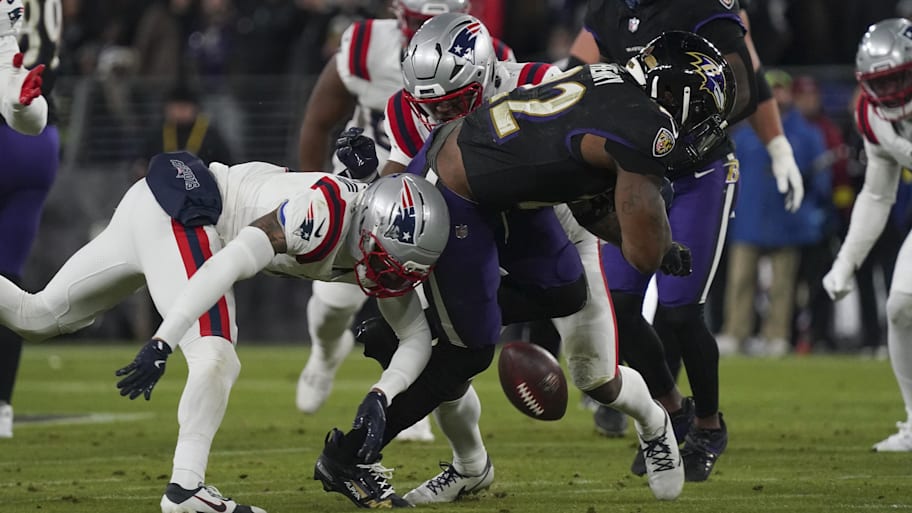
While the Ravens didn't lose the turnover battle as has been the case in so many of their losses that followed a similar script, they still turned it over at the most inopportune times, which let the Patriots gain momentum and ultimately win the game in the end. And once again, it was some of their best players who were at fault as both Henry and two-time Pro Bowl wide receiver Zay Flowers fumbled the ball in key moments.
Following the defense coming up with an interception on the Patriots' first drive of the game, the Ravens appeared poised to go up by double figures in the first quarter until Henry put the ball on the ground after a 5-yard gain. It was his first fumble lost since Week 3 and cost the Ravens a chance to go up by at least 10-0, if not 14-0, with how well they were moving the ball to start and throughout the game with him on the field.
After their defense gave up the lead late in the fourth quarter, the Ravens still had a chance to mount a game-winning drive of their own but it was cut short on it's second play and first back from the two-minute warning when Flowers coughed up the ball while trying to make a defender miss in the open field instead of just getting upfield as fast he could. It marked his third fumble of the season, all of which thwarted what could've been key scoring drives.
Harbaugh has historically abhorred fumbling and hasn't been afraid to bench or even bury talented players down on the depth chart when they've struggled with ball security. However, given that Henry and Flowers are their top two playmakers on offense after their quarterback and that the talent gap between them and the next best player at their respective positions remain wide, he can't just put and leave them in the doghouse.
While coaches often can't and shouldn't be blamed when a player loses the ball, they are at fault when their team and its best players exhibit a continued lack of situational awareness, especially when trailing or trying to put a tight game away.
The most telling postgame commentary that supports this unfortunate trend being a coaching issue didn't come from the Ravens locker room following this past week's loss, but rather the opposing one from the player who came up clutch for the Patriots by punching the ball out of Flowers' grasp. While speaking to reporters, veteran edge defender K'Lavon Chaisson compared the Ravens' ball carriers to speed skaters, which made them easier marks prone to fumbling.
Patriots LB K'Lavon Chaisson on the Ravens:
— Bobby Trosset (@bobbybaltim0re) December 22, 2025
"We knew they had a couple speed skaters on their side of the ball. Ball getting a little lose from their body. ... It's kind of how a couple of their ball carriers move with the ball. We already knew that going in. A couple of guys… https://t.co/zK3D6rmhW2 pic.twitter.com/NCefcJXCci
"Ball getting a little lose from their body," Chaisson said. "It's kind of how a couple of their ball carriers move with the ball. We already knew that going in. A couple of guys put it on film already."
If the Patriots coaches and players picked up on it and were able to exploit it, the Ravens coaches and players should've noticed and corrected it as well during the self-scouting process. How many times does the same mistake have to rear its ugly head at the worst times before something changes? Flowers isn't the only talented pass catcher on this team who suffers from his bad habit.
In their last two home losses prior to this most recent, fourth-year tight end Isaiah Likely's inability to hold onto the ball in the end zone in Week 14 and before crossing the goal line in Week 13 resulted in a touchdown getting overturned on a questionable review and a touchback after he fumbled a yard away from pay dirt.
In last year's Divisional round playoff loss to the Buffalo Bills, three-time Pro Bowl tight end Mark Andrews fumbled the ball trying to do too much in the open field with the ball away from his body and missed the opportunity to redeem himself by dropping what would've been the game-tying two-point conversion.
Change is inevitable
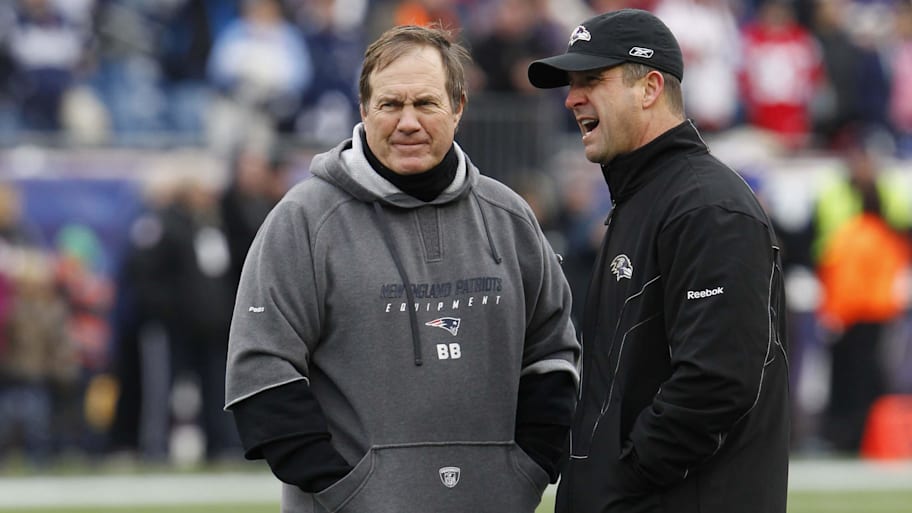
Even some of the best and winningest coaches in NFL history have been either fired or mutually parted ways with the franchises with which they have enjoyed so much prosperity over an extended period, and that time might have finally arrived in Baltimore.
Hall of Fame coach Tom Landry was let go as head coach of the Dallas Cowboys in 1989—one year short of three decades on the job—when Jerry Jones took over as owner. Similarly, Harbaugh's mentor, Andy Reid, was fired by the Philadelphia Eagles after 14 years despite being regarded as one of the game's most brilliant offensive minds. Reid's subsequent tenure as head coach of the Kansas City Chiefs, aside from the 2025 season from hell, has far surpassed his first chapter.
Despite building the greatest dynasty in NFL history that spanned over two decades, over a dozen division titles, nine Super Bowl appearances and bringing six Vince Lombardi trophies to the organization, not even the great Bill Belichick was able to finish his coaching career with the New England Patriots.
Whether it comes as an amicable dissolution via mutually parting of ways like Belichick or a straight-up firing like Reid if the team doesn't make the playoffs after entering the season as the odds on Super Bowl favorite, the end of Harbaugh's tenure as the steward of his team feels long overdue and imminent at this point baring a miraculous run to a championship.
More must-reads:
- Lions, Broncos have big playoff implications with Christmas games
- Browns fan tackled by James Harrison in 2005 credits ex-Steelers star for changing his life
- The 'Most 3-passing, 1-rushing TD games' quiz





Customize Your Newsletter
 +
+




Get the latest news and rumors, customized to your favorite sports and teams. Emailed daily. Always free!
PRIVACY POLICY EDITORIAL POLICY CONTACT US
ABOUT YARDBARKER TERMS OF SERVICE


Use of this website (including any and all parts and
components) constitutes your acceptance of these
Terms of Service and Privacy Policy.
This site is for entertainment purposes only.
There is no gambling offered on this site.
Gambling Problem? Call 1-800-Gambler.
