
-

-


Follow Us
-

 On Facebook
 On Flipboard

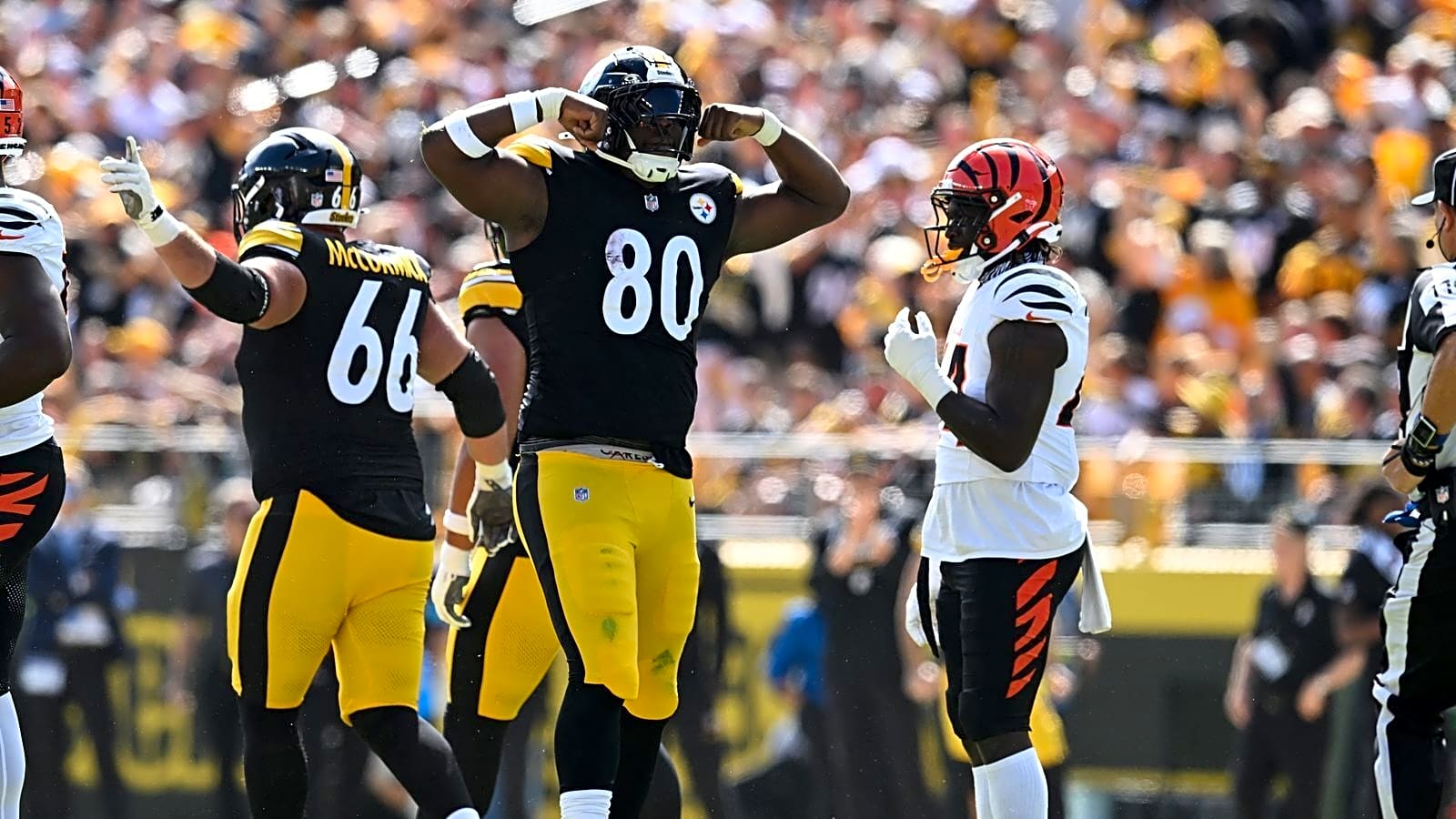
The Pittsburgh Steelers spent the first two weeks talking about finding more work for their tight ends. Sunday finally provided the kind of evidence that can turn those conversations into something much harder for a coaching staff to ignore. Pittsburgh needed one late drive to retake control of a back-and-forth AFC North game, and one of the most unusual athletes on the roster reminded everyone that tackling him in open space is less of a football assignment than a group project nobody volunteered for.
Darnell Washington delivered one of Pittsburgh's biggest offensive plays in its 30-27 win over the Cincinnati Bengals, turning a completion from Aaron Rodgers into a 48-yard catch-and-run late in the fourth quarter. The gain helped put Pittsburgh in position for the go-ahead field goal.
The reaction from Derrick Harmon afterward might have described Washington better than any scouting report could. During his postgame media availability, Harmon was asked about watching his teammate with the football.
“It's crazy. That's a big human being,” Harmon said.
There is something particularly funny about a 6'4", 313-pound defensive lineman sounding impressed by somebody else's size. Harmon is one of the largest people in almost any room he enters. Washington, listed at 6'7" and 264 pounds, still managed to make him react like he had just spotted a refrigerator running down the sideline.
Cincinnati's defense probably understood the feeling.
Washington had already supplied an earlier example of why Pittsburgh should be interested in putting the football in his hands more often. On a first-quarter reception, he caught the ball short of the sticks and proceeded to run through a collection of Bengals defenders rather than accepting the yardage that was available.
What looked like a routine underneath completion turned into a first down because bringing Washington down required considerably more bodies than Cincinnati initially budgeted.
The fourth-quarter gain was even more consequential. With Pittsburgh trying to answer after Cincinnati had taken a late lead, Rodgers found Washington with room to run. Once the big tight end got moving, defensive backs were suddenly dealing with a physics problem instead of a normal tackle attempt. The play flipped field position and helped Pittsburgh move into scoring range during one of the biggest possessions of the afternoon.
That kind of production is exactly what Pittsburgh had been waiting to see after Washington opened the season with only three receptions for 25 yards through two games. His limited early involvement had already prompted questions because Head Coach Mike McCarthy repeatedly talked about wanting both of his top tight ends involved in the passing game.
Washington offers something Pittsburgh cannot really duplicate elsewhere.
His blocking is already valuable enough to keep him on the field without a target. That creates the useful part for McCarthy. Defenses see Washington attached to the formation and have to account for a player capable of functioning like another offensive lineman. If he releases instead, the defender assigned to him suddenly has to cover a player whose dimensions make an ordinary five-yard completion considerably more dangerous.
There is no need to turn him into a high-volume possession receiver. Washington's value comes from making a small number of touches unusually expensive for the defense.
Sunday was a perfect example.
The Steelers did not need 10 Washington receptions. They needed Cincinnati to feel every one of them. A short catch became a tackle-breaking first down. A late completion became a 48-yard swing that helped decide the game. Those plays force future opponents to think twice before treating Washington as merely another blocker who occasionally wanders into a route.
Rodgers should benefit from that uncertainty too. A quarterback does not need much separation when his target creates such an enormous throwing window, particularly underneath. Washington can present his frame to the football, secure the catch and then make smaller defenders solve the unpleasant second half of the assignment.
Steelers Need To Keep Making Washington Everyone Else's Problem
Harmon's reaction was funny because of who delivered it, but there is a useful football truth inside those six words.
Washington really is an abnormal human being for the position.
Pittsburgh has spent years benefiting from that size primarily as a blocker. Sunday showed why the Steelers should continue exploring what happens when defenders have to deal with it after the catch. A 264-pound tight end accelerating into the secondary changes tackling angles, forces additional defenders toward the football and can turn safe throws into explosives without asking Rodgers to hold the ball for a deep route.
The Bengals experienced both versions Sunday.
Washington ran through defenders early, then delivered one of the game's defining offensive gains when Pittsburgh needed it most late. The numbers may never look like those of a traditional featured receiver, and they do not have to. His impact can come from making three or four touches feel much larger than the reception total suggests.
That should be appealing to an offense still trying to build answers around Rodgers. Pittsburgh has enough conventional receivers. Washington gives McCarthy access to something much stranger.
Harmon spends his workweek colliding with NFL offensive linemen, and even he apparently finds Washington's dimensions a little ridiculous.
Cincinnati probably left Acrisure Stadium agreeing with him.
More must-reads:
- NFL Week 3 winners, losers: Brock Bowers dominates in return, Drake Maye flops
- Buccaneers' start goes from bad to worse with Baker Mayfield's injury
- The 'Active NFL catch leaders' quiz
Breaking News
Trending News







Customize Your Newsletter
 +
+




Get the latest news and rumors, customized to your favorite sports and teams. Emailed daily. Always free!
PRIVACY POLICY COOKIE POLICY CONTACT US
ABOUT YARDBARKER TERMS OF SERVICE


By using this site, you agree to our Terms of Service and Privacy Policy.
This site is for entertainment purposes only.
There is no gambling offered on this site.
Gambling Problem? Call 1-800-Gambler.
