-

-


Follow Us
-

 On Facebook
 On Flipboard

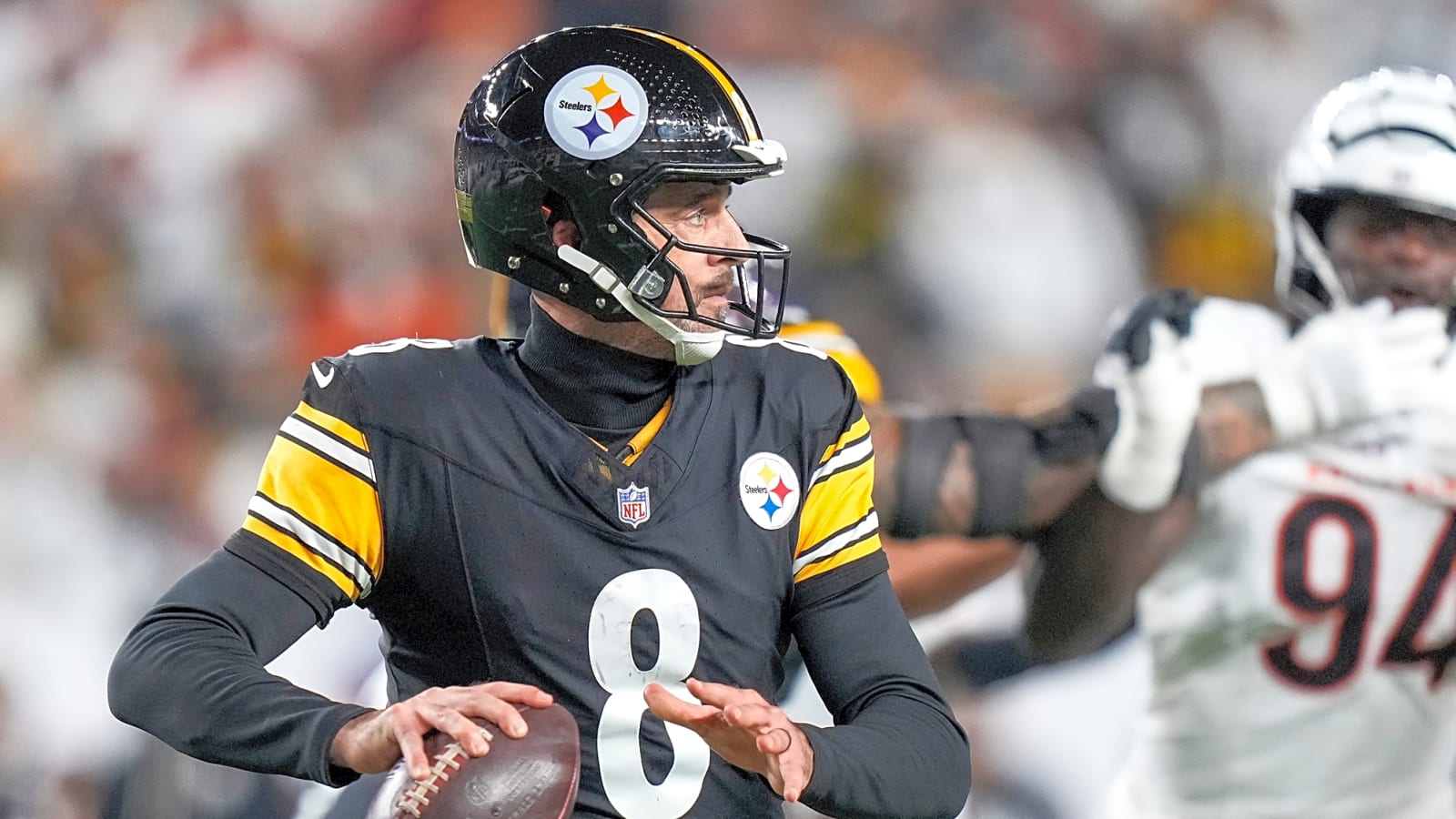
The Pittsburgh Steelers entered Sunday’s matchup against the Philadelphia Eagles with an opportunity to rebound from an embarrassing loss to the Cincinnati Bengals. Philadelphia had won just two games entering the weekend, was starting an inexperienced quarterback, and had struggled on both sides of the football throughout the season.
Instead, the Steelers found themselves on the wrong end of another disappointing result, losing 19-16 and extending their losing streak in Philadelphia to 12 games. Pittsburgh hadn’t won in the city since 1965, and despite facing an Eagles team that appeared vulnerable on paper, the Steelers couldn’t end that drought.
What made Sunday’s loss particularly frustrating was how many opportunities Pittsburgh wasted. The Steelers outgained Philadelphia, controlled possession for more than 35 minutes, and held the Eagles to just six points over the final three quarters. Yet they never led, and their only touchdown came with less than two minutes remaining.
Here are some of the biggest surprises from another afternoon the Steelers would probably prefer to forget.
The Eagles’ Pass Rush Suddenly Looked Dominant
One of the more favorable matchups entering Sunday appeared to be Pittsburgh’s passing attack against Philadelphia’s pass rush. The Eagles had recorded just 16 sacks through their first nine games, ranking near the bottom of the league. That should have provided Aaron Rodgers with opportunities to operate comfortably, particularly against a defense that hadn’t consistently pressured opposing quarterbacks.
Instead, Philadelphia sacked Rodgers five times for 45 yards in losses. The Steelers struggled to protect their quarterback throughout the afternoon, with the Eagles repeatedly disrupting drives before Pittsburgh could establish any offensive rhythm.
Perhaps the most frustrating sequence came early in the second quarter when Rodgers was sacked on consecutive plays, turning a manageable situation into fourth-and-31. Philadelphia’s Byron Young finished with two sacks, while the Eagles received additional contributions from several defenders. Pittsburgh’s offensive line had no answers for a pass rush that hadn’t exactly frightened opponents entering the weekend.
Aaron Rodgers Was Pittsburgh’s Leading Rusher
Considering the Steelers entered Sunday with Jaylen Warren among the league’s most productive running backs, few would’ve expected Rodgers to finish as Pittsburgh’s leading rusher. Yet that’s exactly what happened, as the veteran quarterback gained 29 yards on five attempts, edging Warren’s 28 yards on nine carries.
Rico Dowdle added 15 yards on five attempts, leaving Pittsburgh’s running backs with just 43 rushing yards on 14 carries. That’s an especially disappointing performance against an Eagles defense that entered the game allowing more than 126 rushing yards per contest.
The Steelers have spent much of the season trying to establish an offensive identity built around their running game, but Sunday offered little evidence of that approach working. Pittsburgh couldn’t consistently create running lanes, and its inability to establish the ground game contributed to the pressure Rodgers faced throughout the afternoon.
The Steelers Couldn’t Capitalize on a Gift-Wrapped Opportunity
One of the few encouraging moments came immediately after halftime when Robert Spears-Jennings forced a fumble on Philadelphia’s kickoff return. Carson Bruener recovered the loose football and advanced it to the Eagles’ 24-yard line, giving Pittsburgh excellent field position while trailing 13-3.
It was exactly the type of momentum-changing play the Steelers needed. With an opportunity to cut into Philadelphia’s lead and potentially make it a three-point game, Pittsburgh’s offense managed just two yards on three plays.
Rodgers threw consecutive incompletions after a short Dowdle run, forcing Chris Boswell to attempt a 40-yard field goal.
Boswell converted the kick, but the possession was another example of Pittsburgh’s inability to capitalize on favorable situations. The Steelers’ defense and special teams provided an opportunity to change the game, only for the offense to settle for three points without seriously threatening the end zone.
DK Metcalf Became a Liability Instead of a Difference-Maker
DK Metcalf was supposed to be one of Pittsburgh’s biggest offensive weapons against Philadelphia. Instead, the veteran receiver finished with one catch for two yards on four targets before being disqualified late in the third quarter.
Metcalf’s ejection came during a possession in which the Steelers had advanced to Philadelphia’s 19-yard line. Following an incomplete pass on third down, his disqualification resulted in a 15-yard penalty that pushed Pittsburgh backward and turned a shorter field goal attempt into a 52-yarder.
Fortunately, Boswell made the kick, but the result doesn’t excuse the penalty or Metcalf’s lack of production. Pittsburgh needed its top receiver to provide explosive plays and help an offense that had struggled to move the football. Instead, Metcalf contributed almost nothing statistically and left his teammates without another receiving option for the remainder of the game.
Max Hurleman Became the Steelers’ Most Productive Receiver
While Metcalf struggled, Max Hurleman unexpectedly emerged as Pittsburgh’s leading receiver. Hurleman caught six passes for 61 yards, including his first career NFL touchdown on a 20-yard reception from Rodgers with 1:26 remaining in the fourth quarter.
Hurleman’s touchdown capped a 13-play, 72-yard drive that brought the Steelers within three points, but his contributions weren’t limited to that final possession. He also caught passes of 14 and 10 yards during Pittsburgh’s third-quarter possessions, providing some of the few productive plays in an otherwise stagnant passing attack.
What makes Hurleman’s performance particularly surprising is that he played just 22 offensive snaps, accounting for 31 percent of Pittsburgh’s offensive plays. He also handled return duties, contributing 36 yards on three punt returns and 32 yards on two kickoff returns. On a day when Pittsburgh’s established offensive weapons struggled, Hurleman made the most of his opportunities.
The Defense Held Philadelphia to Just 214 Yards and Still Lost
After surrendering 38 points to Cincinnati the previous week, Pittsburgh’s defense had plenty to prove. Although the Eagles jumped out to a 13-0 first-quarter lead, the Steelers responded by holding Philadelphia to just six points over the remaining three quarters.
Joe Milton completed only 11 of 21 passes for 141 yards, while Philadelphia managed 91 rushing yards and converted four of 13 third-down opportunities. The Steelers also recorded three sacks, including two from Alex Highsmith before he exited with an injury after playing just six defensive snaps.
Unfortunately, the defense couldn’t overcome the offense’s inability to score. Philadelphia’s 38-yard touchdown run by Saquon Barkley late in the first quarter proved to be the game’s only rushing touchdown, and Jake Elliott‘s four field goals provided enough separation to keep Pittsburgh chasing the Eagles throughout the afternoon.
The Steelers have now lost consecutive games in vastly different ways. Against Cincinnati, the defense couldn’t stop the Bengals. Against Philadelphia, Pittsburgh’s offense couldn’t take advantage of a defense that largely kept the Eagles in check. That’s perhaps the most concerning surprise of all: the Steelers continue to find new ways to lose games they should be competitive in, and the same recurring problems are becoming increasingly difficult to ignore.
More must-reads:
- Steelers' DK Metcalf ejected from Eagles game in nasty turn of events
- Travis Kelce passes Rob Gronkowski for third-most TDs by a TE in NFL history
- The 'Most 200-receiving-yard games' quiz
Breaking News
Trending News

Customize Your Newsletter
 +




Get the latest news and rumors, customized to your favorite sports and teams. Emailed daily. Always free!
PRIVACY POLICY COOKIE POLICY CONTACT US
ABOUT YARDBARKER TERMS OF SERVICE


By using this site, you agree to our Terms of Service and Privacy Policy.
This site is for entertainment purposes only.
There is no gambling offered on this site.
Gambling Problem? Call 1-800-Gambler.