
-

-


Follow Us
-

 On Facebook
 On Flipboard
 On Twitter
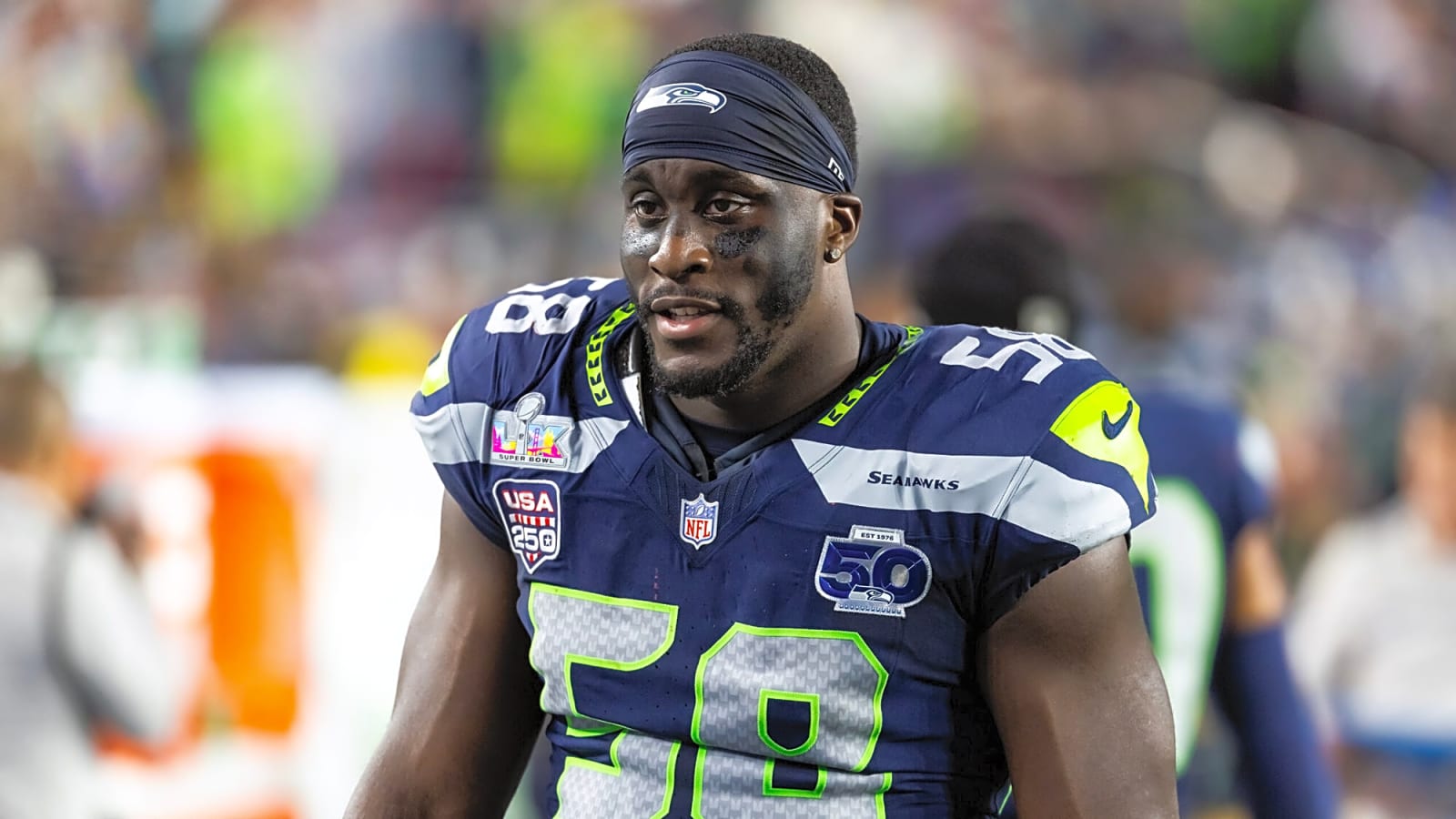
Confetti still hung in the air at Levi’s Stadium when Derick Hall walked off the Super Bowl LX field with two sacks and a forced fumble against New England. The Seahawks’ defense had just delivered six sacks as a unit, tying for the most in Super Bowl history, and the 24-year-old edge rusher from Auburn looked like a player Seattle would build around for a decade. Weeks later, Pro Football Focus tagged him as the franchise’s most valuable trade piece.
The Invisible Season
Before that Super Bowl eruption, Hall’s 2025 regular season looked like a disappearing act. Two sacks across the regular season. For a guy who posted eight sacks in 2024, that number screamed regression. Fans who track box scores had already written him off. The Seahawks finished 14-3, earning the NFC’s top seed, and their second-round pick from 2023 barely registered in the stat column. But the stat column was lying. Hall’s pressure rate had jumped from 12.2% to 18.5%, a 52% improvement that traditional numbers buried completely.
The Sack Suppression Machine

Mike Macdonald’s defense ran split-safety looks on the majority of snaps and blitzed at a below-average rate. Yet Seattle generated one of the league’s best pressure rates. The scheme spreads credit across the entire front. Interior stunts, simulated pressures, coverage disguises. Hall kept winning his matchups at an elite clip, but the sack itself often landed on someone else’s stat line. The system made the defense dominant. It also made Hall’s box score look pedestrian, which is exactly what created the contract leverage problem.
The Number That Rewrites Everything

Hall’s 27.6% pass-rush win rate in true pass sets ranked sixth among all NFL edge rushers. Sixth. In the entire league. Two sacks in the regular season, and the man was beating offensive tackles at a rate only five players in professional football could match. His PFF grade vaulted into the mid-70s, a significant leap from his 2024 mark. PFF analyst Zach Tantillo called him “a quiet star” who earned 70-plus grades in both run defense and pass rushing. Quiet because the system kept him quiet.
The Scheme That Hides Stars
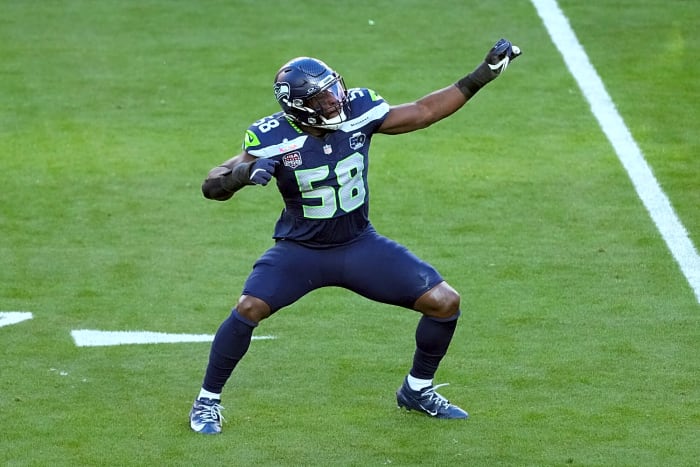
Think of it like a point guard with an elite assist rate but modest scoring numbers. The offense runs through him, but the bucket shows up on someone else’s highlight reel. Macdonald’s defense functions the same way. Hall wins at the snap, collapses the pocket, and forces the quarterback to step into a stunt or a delayed blitzer. Seahawks analyst Brian Nemhauser put it plainly: “Hall is a great example of how sack totals can be misleading.” The film showed a beast. The box score showed a backup.
Two Sacks, One Game, Everything Changes
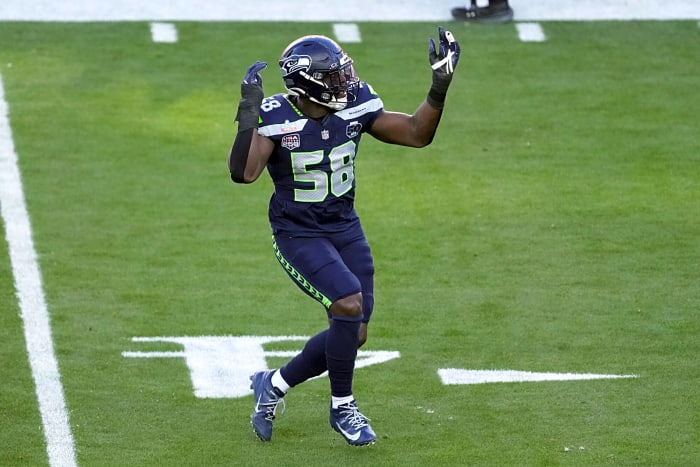
Then came Super Bowl LX. Hall matched his entire regular-season sack total in a single contest. Two sacks and a forced fumble against New England. His strip-sack of Drake Maye was recovered by Byron Murphy II, setting up a Seahawks scoring drive. The Seahawks’ defense forced three turnovers and held the Patriots scoreless through three quarters in one of the most dominant championship performances in recent memory. For one night, the system couldn’t hide him. And that performance landed right before extension negotiations, inflating his asking price at the worst possible moment for Seattle’s cap planners.
The $20 Million Problem
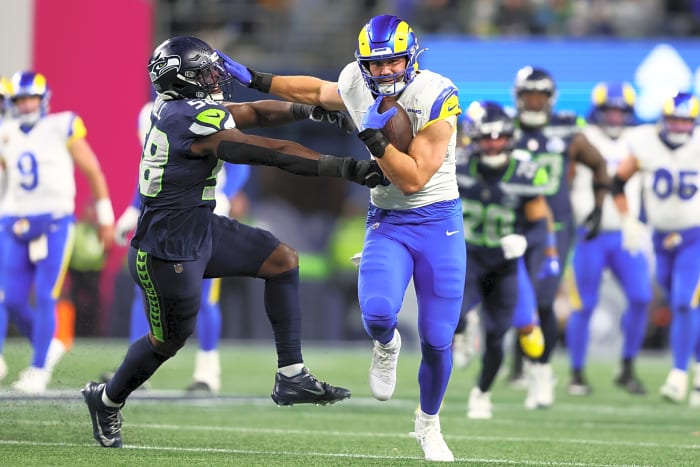
Hall’s rookie contract pays roughly $2.28 million per year. His extension, based on current edge rusher market comparables, would command an estimated $20 million or more annually. That’s an 8-to-10x salary jump. If Seattle extends him at that rate, they’re betting the analytics are right, and the sack totals don’t matter. If they trade him, they cash in the metrics premium from teams that trust PFF grades over box scores. Meanwhile, Boye Mafe already departed as a free agent, and DeMarcus Lawrence and Uchenna Nwosu aren’t getting younger.
The Double Bind Nobody Sees

Here’s what makes this different from a normal contract dispute. Macdonald’s system creates two completely valid but contradictory valuations of the same player. Sack counters see a declining asset worth $16 million. Analytics departments see an ascending star worth $22 million. The Seahawks can use the low sack totals to push Hall’s extension price down internally, while the trade market, driven by metrics, would pay a premium. Hall is simultaneously undervalued and overvalued, depending on which ruler you use. Once you see that contradiction, the entire negotiation reframes.
The Stacked Room Prophecy

In July 2025, Hall told reporters, “The D-Line Room Is Stacked.” He meant it as a celebration of depth. Months later, that depth became the reason PFF identified him as expendable. Lawrence and Nwosu provide enough coverage that Seattle could absorb Hall’s departure without cratering. His own praise of the room’s talent made the trade math work. If Hall leaves, the Seahawks lose their second-round investment and their analytical edge, but the room he celebrated survives without him. His confidence led him to write his own trade justification.
The Bet Seattle Has to Make
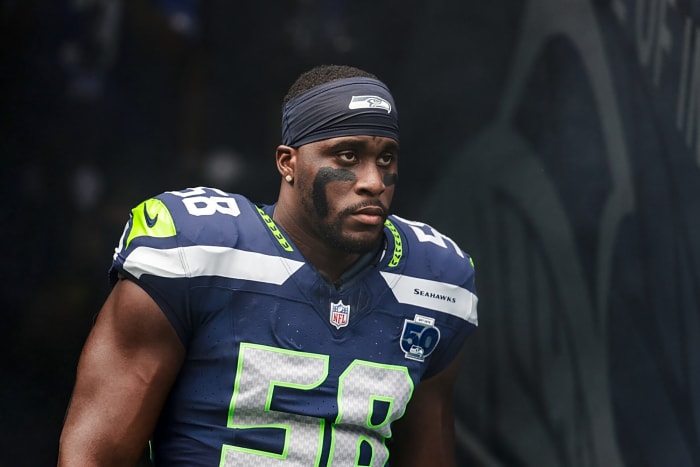
Hall’s agent will point to the Super Bowl film, the 27.6% win rate, and the scheme that suppressed his counting stats. Seattle’s front office will point to two regular-season sacks and a market they’d rather not inflate. If negotiations collapse, competing teams will offer first-round-caliber draft capital for a 24-year-old edge rusher entering his prime. The Seahawks captured roughly $30 to $40 million in below-market value over Hall’s cheap rookie years. Now they have to decide which valuation method they actually believe in.
Sources:
Wikipedia, “Super Bowl LX,” February 2026
Heavy.com, “Analytics Reveal Young Seahawks Pass Rusher Is an NFL Edge…,” November 23, 2025
Seahawks Wire / USA Today, “Derick Hall nabbed as Seahawks’ most valuable trade piece,” March 24, 2026
Emerald City Spectrum, “Derick Hall Thriving as One of Seahawks’ Biggest Macdonald-Era Riser,” November 25, 2025
SI.com, “PFF names unsung Seahawks pass rusher as their ‘secret superstar,'” January 20, 2026
Yahoo Sports, “Boye Mafe’s free-agency departure exposes Seahawks’ biggest…,” March 10, 2026
More must-reads:
- Early look at Seahawks' sale reveals name of interest
- Five teams that should consider NFL Draft trades
- The 'Rushing-TD leaders by NFL team' quiz
Breaking News
Trending News







Customize Your Newsletter
 +
+




Get the latest news and rumors, customized to your favorite sports and teams. Emailed daily. Always free!
PRIVACY POLICY COOKIE POLICY CONTACT US
ABOUT YARDBARKER TERMS OF SERVICE


By using this site, you agree to our Terms of Service and Privacy Policy.
This site is for entertainment purposes only.
There is no gambling offered on this site.
Gambling Problem? Call 1-800-Gambler.
