
-

-


Follow Us
-

 On Facebook
 On Flipboard
 On Twitter
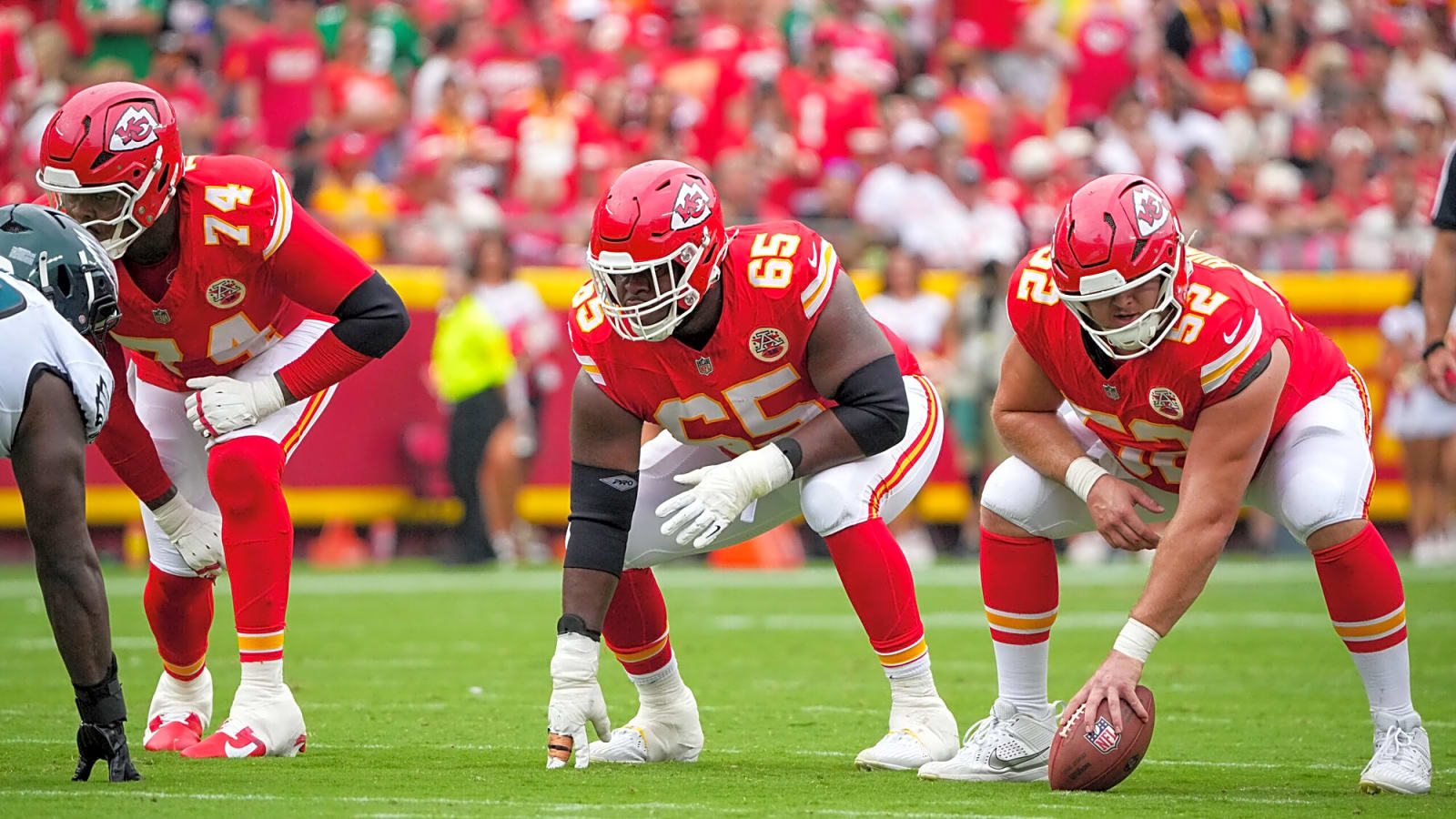
Three years ago, Kansas City handed a right tackle an $80 million contract to protect the most valuable arm in football. By March 4, 2026, that same tackle was gone. Cut loose. Not traded for assets, not restructured into something manageable. Released outright, with $7.4 million in dead money still bleeding against the books. The Chiefs absorbed the loss like a business writing off a failed acquisition, except this one wore a helmet and committed more penalties than any player in the NFL.
Penalty King
Jawaan Taylor committed 92 penalties across seven NFL seasons. That total stands 19 higher than any other player in the league. He led the NFL with 24 penalties in his first Chiefs season alone, then tied for the league lead with 19 the following year. The franchise paid $80 million for a blindside protector who spent more time drawing yellow flags than blocking pass rushers. And all of it unfolded while Kansas City entered the 2026 offseason $57 to $62 million over the salary cap, the worst position in football.
Dynasty Debt

The assumption was always that Kansas City’s front office could manage its way through anything. Three Super Bowls in four years built that myth. But the 2025 season told a different story: 6-11, the franchise’s first losing record in over a decade, and its first playoff miss in ten consecutive years. The Chiefs went 1-9 in one-score games after going 11-0 in those same situations the previous season. That reversal exposed something the trophy case had been hiding for years.
Sacrifice Ignored

Patrick Mahomes restructured his contract, converting $54.45 million of salary into a signing bonus and creating $43.56 million in immediate cap room. He did it voluntarily, coming off knee surgery for a torn ACL and LCL. The franchise responded by trading All-Pro cornerback Trent McDuffie to the Rams. Then Jaylen Watson signed a $51 million deal with the Los Angeles Rams. Bryan Cook left for Cincinnati at $40.25 million. Three secondary starters. Gone in one week. Mahomes gave the team breathing room. The team used it to dismantle his defense.
The Trap

The Chiefs built their dynasty on a specific formula: draft defensive talent cheaply, develop it through Steve Spagnuolo’s system, and avoid long-term mega contracts. That formula produced McDuffie, Watson, and Cook from a single 2022 draft class. All three became Pro Bowl-caliber players. All three demanded market-rate compensation in the same offseason. The model’s fatal flaw was mathematical. You cannot pay a quarterback $78 million annually, retain three elite defenders at market price, and stay under the salary cap. The dynasty was consuming itself from the inside.
Broken Numbers

The wreckage shows up everywhere in the data. Kansas City’s running backs averaged under four yards per carry in 2025, ranking 31st in the NFL. Isiah Pacheco gained just 462 rushing yards, only 40 more than quarterback Mahomes. The defense recorded 30 total sacks, with 63 percent coming from just two players: Chris Jones and George Karlaftis. Andy Reid’s offense ranked 20th in points scored despite having Mahomes and Travis Kelce. The roster wasn’t just expensive. It was underperforming at every level that mattered.
Expensive Replacements

Instead of fixing the offensive line that Taylor’s release left bare, Kansas City signed running back Kenneth Walker III to a three-year, $43.05 million deal with $28.7 million guaranteed. New furniture for a house with a cracked foundation. The secondary rebuild fell to cheaper parts: safety Alohi Gilman at $24.75 million over three years, defensive tackle Khyiris Tonga at $21 million. Meanwhile, Chris Jones’ cap hit ballooned to $44.85 million, now higher than Mahomes’ restructured number. One defensive lineman is carrying more cap weight than the franchise quarterback.
New Rule
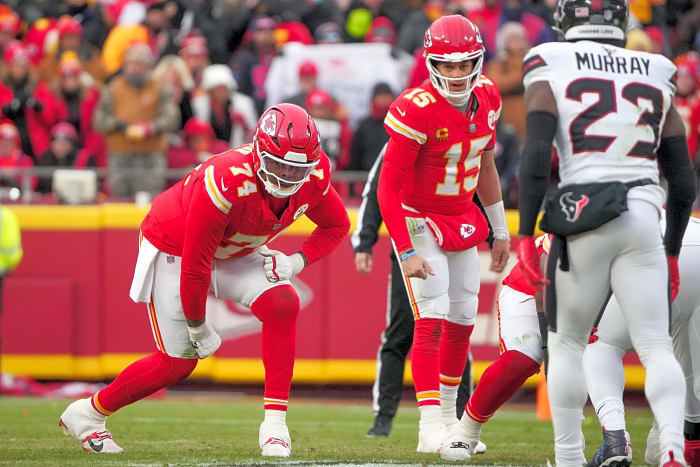
This collapse follows a pattern Kansas City established when it traded cornerback L’Jarius Sneed in 2024 rather than extend him. McDuffie’s departure mirrors it exactly: develop an All-Pro, refuse to pay market rate, trade for draft picks, repeat. The Rams now project to pay McDuffie more than $120 million in an extension. Kansas City’s first top-10 draft pick since selecting Mahomes in 2017 sits at No. 9 overall. The franchise that avoided rebuilding for a decade just admitted it needs one, and the salary cap made the confession mandatory.
Uncertain Return

Mahomes posted “Not the ending we imagined” after the season. Jay Glazer reported his recovery is ahead of projections, noting “his pain threshold is different, his work ethic is different.” But the quarterback returns to a roster stripped of its best coverage players, protected by an offensive line missing its $80 million investment, and relying on draft classes that have underwhelmed since 2022. Kansas City holds nine picks, including two first-rounders. If Brett Veach misses on those selections, the conversation shifts from rebuild to regime change.
The Math Always Wins
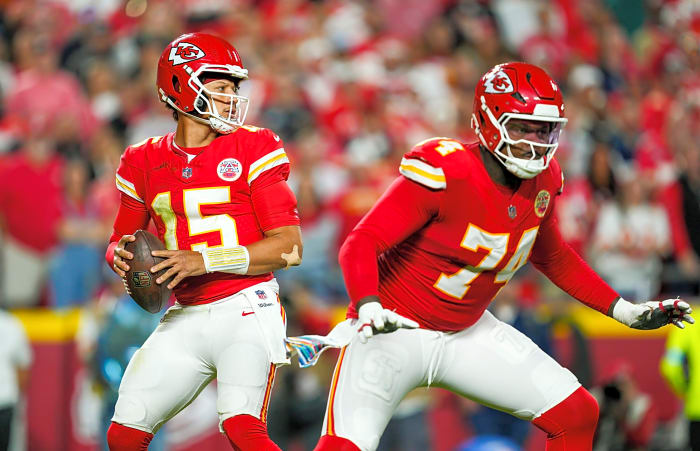
Every NFL fan watching Kansas City’s dismantling should recognize the blueprint for their own team’s future. The Chiefs didn’t collapse because of bad coaching or poor scouting. They collapsed because the salary cap, by design, punishes sustained excellence. Draft well, develop stars, watch those stars demand market compensation, lose them because one quarterback contract consumes a quarter of the cap. That cycle is not a Chiefs problem. It is an NFL problem. The only question left is which dynasty learns this lesson next, and whether the league even wants them to.
Sources:
CBS Sports, “Chiefs to release OT Jawaan Taylor, ending three-year tenure,” March 1, 2026
ESPN, “Chiefs restructure Patrick Mahomes’ deal, create cap space,” February 17, 2026
Sports Illustrated, “Chiefs Salary-Cap Tracker: Space, Dead Money, New Signings,” March 5, 2026
NFL.com, “Chiefs restructure Patrick Mahomes’ contract to free up over $43 million cap space,” February 18, 2026
ESPN, “Rams add another Chiefs CB, this time Jaylen Watson,” March 9, 2026
Fox News, “Patrick Mahomes’ knee surgery showed more than just torn ACL,” December 16, 2025
More must-reads:
- Early look at Seahawks' sale reveals name of interest
- Five teams that should consider NFL Draft trades
- The 'Rushing-TD leaders by NFL team' quiz
Breaking News
Trending News




Customize Your Newsletter
 +
+




Get the latest news and rumors, customized to your favorite sports and teams. Emailed daily. Always free!
PRIVACY POLICY COOKIE POLICY CONTACT US
ABOUT YARDBARKER TERMS OF SERVICE


By using this site, you agree to our Terms of Service and Privacy Policy.
This site is for entertainment purposes only.
There is no gambling offered on this site.
Gambling Problem? Call 1-800-Gambler.
