
-

-


Follow Us
-

 On Facebook
 On Flipboard

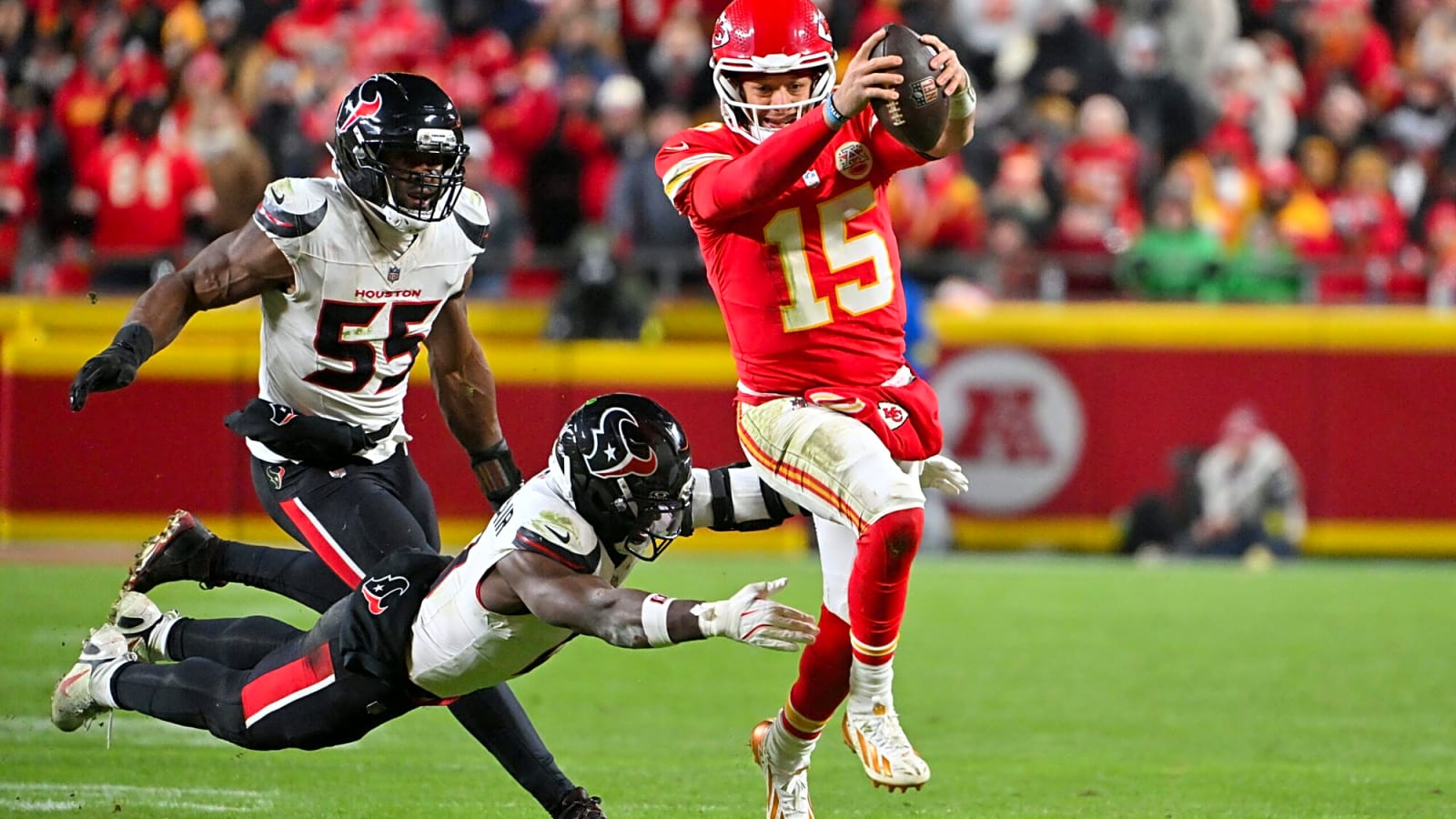
Nobody in the draft room called his name. Not in the first round. Not in the seventh. Azeez Al-Shaair walked into the NFL in 2019 without a team believing he was worth a single pick. He spent four seasons buried on San Francisco’s depth chart behind Fred Warner and a loaded linebacker corps, watching starters collect game checks and Pro Bowl invitations. After a one-year stop with the Tennessee Titans in 2023, DeMeco Ryans made the phone call that changed everything. What happened next rewrote the inside linebacker market entirely.
The $34 Million Bet
Ryans recruited Al-Shaair to Houston in March 2024 on a three-year, $34 million deal with $21.5 million guaranteed and an $11 million signing bonus. The coach had worked alongside Al-Shaair during those San Francisco years and saw something 31 other front offices missed. That first season delivered only 11 games. A three-game suspension for a hit on Trevor Lawrence, $338,233 in fines for that single play, and a season cut short. The Texans had spent $34 million on a player who couldn’t finish the year.
The Fines Keep Coming

Al-Shaair racked up hundreds of thousands of dollars in total fines across multiple infractions between 2023 and 2025, including several game fines in 2024 alone. The league kept penalizing him. Most front offices would have started hedging. Houston restructured his contract instead, lowering his 2025 cap hit by $6.26 million to create breathing room. That restructure told you everything about organizational conviction. The common assumption was that Al-Shaair’s aggression made him a liability. Ryans treated it like an asset worth protecting.
The Trevor Lawrence Hit Explained
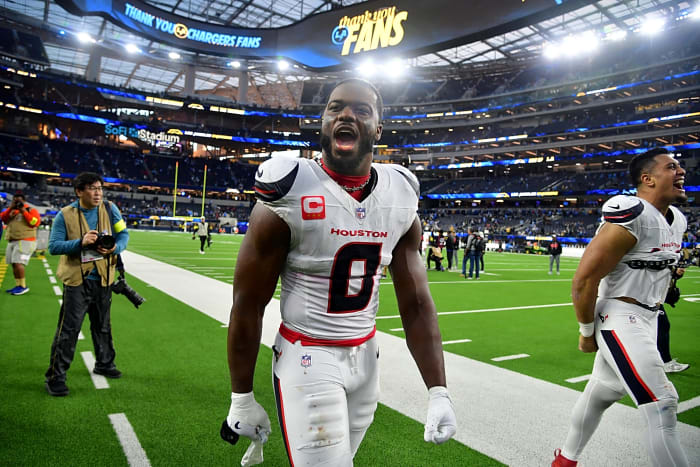
The December 2024 play that triggered the suspension came on a quarterback slide from Jacksonville’s Trevor Lawrence, with Al-Shaair arriving late and delivering forearm contact to the head area. The league office classified it as unnecessary roughness and unsportsmanlike conduct, escalating the punishment to three games, which ranked among the longest in-season suspensions handed out during the 2024 campaign. Al-Shaair publicly apologized afterward but maintained the hit was not intentionally targeted at the head. The fine total for that single play sat at $338,233, one of the largest single-play fines the league issued that year.
Pro Bowl in Year One
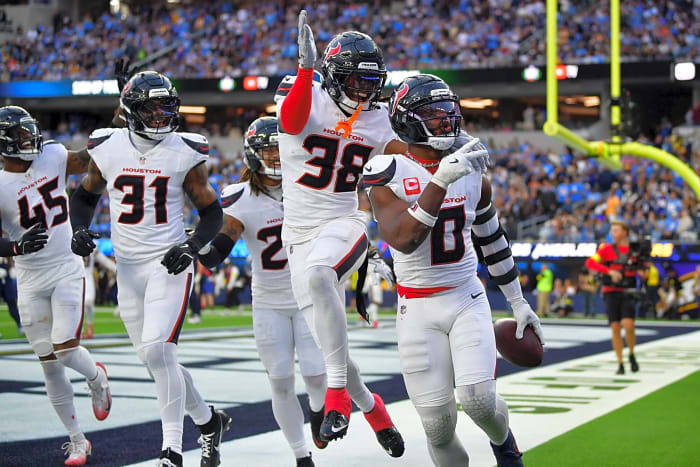
Then 2025 happened. Al-Shaair played and started every regular-season game and led the Texans with 103 tackles, two interceptions, and nine pass deflections. Career highs across the board. First Pro Bowl selection. Walter Payton Man of the Year recognition. Same player San Francisco used as a depth piece for four seasons. Same player the league fined seven times. Ryans’ system unlocked production nobody projected. On April 29, 2026, Houston locked him up: three years, $54 million, $18 million annually through 2029.
The Walter Payton Nomination
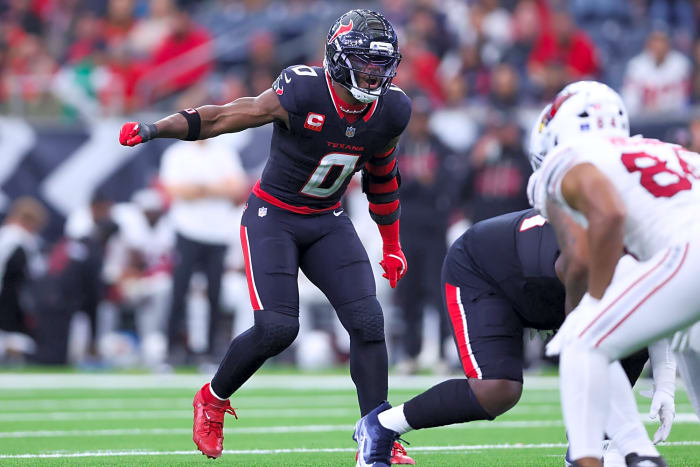
The Man of the Year nod carried weight because it came one year after the Lawrence hit defined his public reputation. Al-Shaair’s community work in Houston centered on youth mentorship programs and support for families affected by gun violence, initiatives he expanded through 2025 in parallel with his on-field reinvention. The nomination signaled that the locker room and the Texans front office viewed his character arc as part of the investment case. That reframing mattered when the extension conversation opened, because a player fined seven times is a harder sell than a Man of the Year nominee.
The System Behind the Money

Conventional wisdom says inside linebackers are fading in a pass-first NFL. Al-Shaair’s $18 million AAV says otherwise. Only Fred Warner at $21 million with the 49ers and Roquan Smith at $20 million with the Ravens earn more at the position. Both were first-round picks. Al-Shaair went undrafted. The difference is coaching architecture. Ryans built Houston’s defense around inside production, centralizing the linebacker role as the system’s engine. That philosophy turned a backup into a foundational investment. The Texans aren’t paying for Al-Shaair’s draft pedigree. They’re paying for Ryans’ multiplier effect.
How Ryans’ Defense Differs From San Francisco
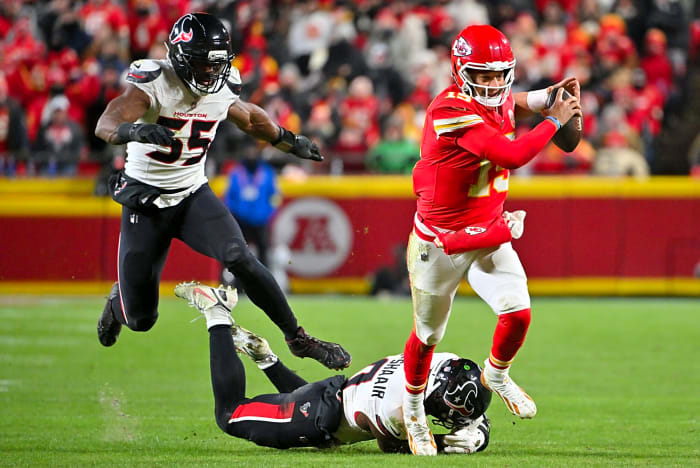
San Francisco’s scheme under Robert Saleh and later Steve Wilks leaned on a Wide-9 front that asked the MIKE linebacker to clean up runs flowing outside the tackles. Houston’s version under Ryans pulls the inside linebacker closer to the line of scrimmage and gives him green-dog blitz responsibilities on obvious passing downs. That change explains why Al-Shaair’s pressure rate and run-stop numbers climbed in 2025 despite similar athletic traits to his 49ers tape. The system does not just feature the MIKE. It routes the defense’s decision-making through him.
From $11 Million to $18 Million
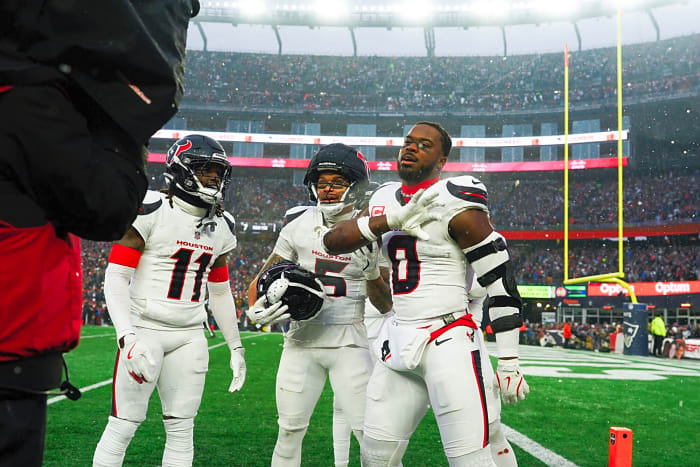
The math tells the story cold. Al-Shaair’s previous deal averaged $11.33 million annually. His new extension averages $18 million. That represents roughly a 59% raise in under two years. ESPN reported he had no guaranteed money remaining on his original contract before the extension landed. Zero security. He could have been cut with no financial consequence to Houston. Instead, the Texans voluntarily committed $54 million before he entered a contract year. As NFL Network’s Mike Garafolo noted, this deal closed “ahead of what would’ve been a contract year.”
Cap Mechanics of the Extension

Over The Cap data shows the Texans structured the extension to spread cash across 2026 through 2029, with a signing bonus prorated across the life of the deal to soften early cap hits. Void years at the back end give Houston the option to push money forward if the 2028 cap environment tightens. The practical effect is a 2026 cap number that fits inside the Texans’ current operating room without forcing another restructure immediately. It also means the dead-money cost of cutting Al-Shaair grows sharply through 2027, which functionally guarantees the first two years of the extension even though paper guarantees do not extend that far.
$204 Million in 12 Days

Al-Shaair’s extension dropped less than two weeks after Will Anderson Jr. signed a three-year, $150 million deal in mid-April. Combined, roughly $204 million in fresh money landed on the defensive core in under two weeks. Houston has layered those commitments onto an existing defensive payroll that already ranked in the league’s upper third. That’s not reckless spending. That’s a philosophical declaration, and Ryans has effectively chosen to fully fund the defensive identity rather than balance spending across offense and defense.
What Anderson’s $150 Million Deal Set Up
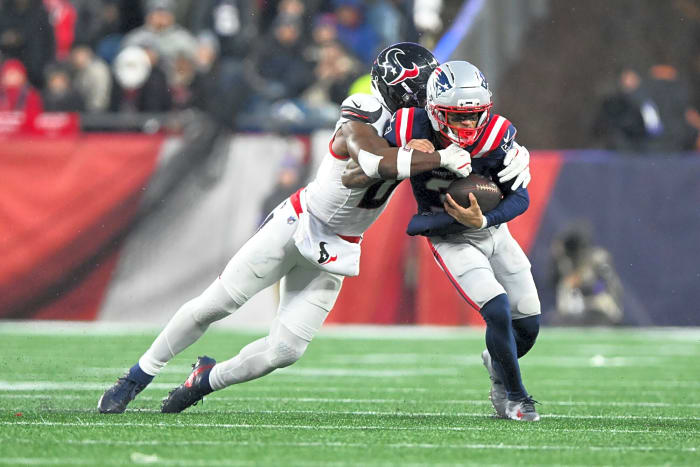
Anderson’s extension on April 16 did more than reward the edge rusher. It established the cap runway that made Al-Shaair’s deal structurally possible twelve days later. By front-loading Anderson’s signing bonus and creating void years, Houston freed operational cash that rolled directly into the linebacker negotiation. The sequencing was not coincidental. Front offices often pair high-dollar deals when the cap accounting for one creates room for the next, and the Texans executed that playbook on a compressed timeline rarely seen outside franchise-tag windows.
The New Linebacker Market
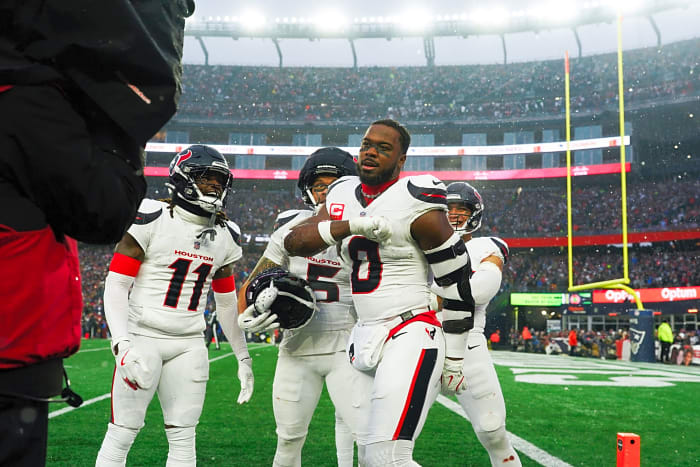
Once you see the pattern, you can’t unsee it. Warner, Smith, and now Al-Shaair all play inside linebacker in elite defensive systems coached by architects who centralize the position. The market hasn’t inflated randomly. It split. System-fit inside linebackers now command $18 million or more. Everyone else lands well below that tier. Al-Shaair’s extension sets a new floor for any team trying to acquire a proven inside starter. He stands as a rare example of an undrafted inside linebacker cracking the top of positional pay.
Where Baun, Queen, and Campbell Fit

Zack Baun sits just outside the top tier at roughly $17 million annually with Philadelphia, a deal that looked like the market ceiling until Warner reset it. Patrick Queen in Pittsburgh and Alex Singleton in Denver occupy the next tier down, generally landing between $10 million and $14 million per year depending on guarantees. That gap between the top three and the next grouping is the clearest evidence the market has bifurcated. Teams are either paying premium money for scheme-critical inside linebackers or staying in the middle tier entirely, with very little activity in between.
The Gamble Nobody’s Discussing

Locking Al-Shaair through 2029 removes his potential free agency and narrows Houston’s flexibility to upgrade through defensive trades. Every dollar poured into defense is a dollar not spent elsewhere on the roster. If the Texans reach the AFC Championship in January 2027, Ryans becomes the model for every defensive-minded coach in the league. If they miss the playoffs, $204 million in defensive commitments becomes the cautionary number every front office cites for a decade. Week 1 of the 2026 season now carries meaning well beyond a single game.
Do you see Ryans’ defense-first blueprint as the smartest bet in the AFC, or is Houston one missed playoff run away from the worst cap crunch in the league? Tell us in the comments.
Sources:
Rapoport, Ian, and Mike Garafolo. “Texans, LB Azeez Al-Shaair agree to terms on three-year extension.” NFL.com, April 28, 2026.
Wilson, DJ. “Sources: Texans, Azeez Al-Shaair agree to 3-year, $54M extension.” ESPN, April 28, 2026.
“Report: Texans, LB Azeez Al-Shaair reach 3-year extension.” Reuters, April 30, 2026.
“Azeez Al-Shaair Contract Details and Salary.” Over The Cap, accessed May 1, 2026.
“Linebacker Contracts and Salaries.” Over The Cap, accessed May 1, 2026.
Dulac, Cody. “The Houston Texans Defensive Scheme: Winning With Simplicity.” Match Quarters, January 11, 2026.
More must-reads:
- Vikings' Carson Wentz gets bad news after replacing Kyler Murray
- Commanders linked to blockbuster trade for $70 million star
- The '5+ rushing-TD NFL seasons' quiz
Breaking News
Trending News





Customize Your Newsletter
 +
+




Get the latest news and rumors, customized to your favorite sports and teams. Emailed daily. Always free!
PRIVACY POLICY COOKIE POLICY CONTACT US
ABOUT YARDBARKER TERMS OF SERVICE


By using this site, you agree to our Terms of Service and Privacy Policy.
This site is for entertainment purposes only.
There is no gambling offered on this site.
Gambling Problem? Call 1-800-Gambler.
