
-

-


Follow Us
-

 On Facebook
 On Flipboard

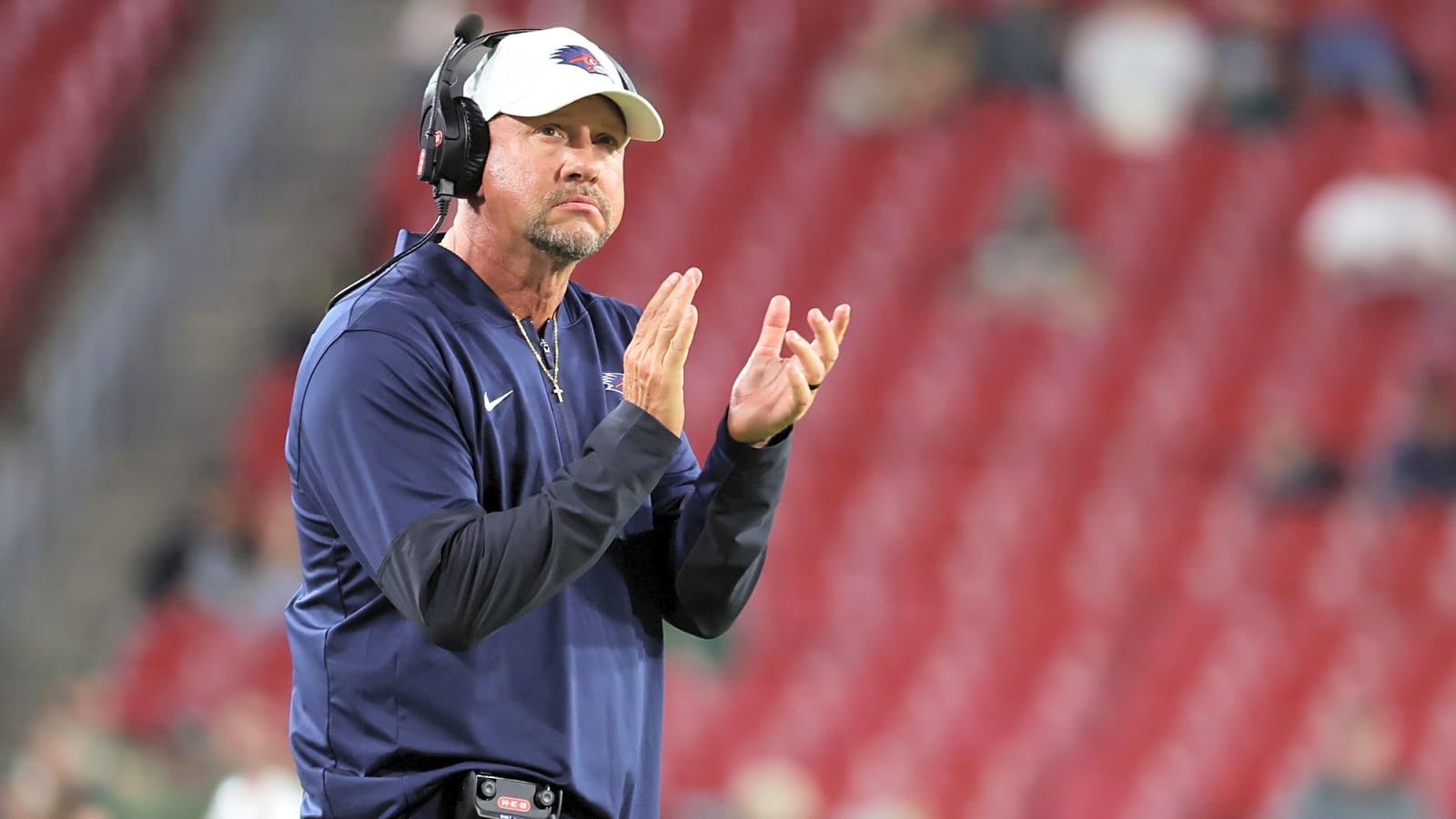
Jeff Traylor is recognized as one of the top Group of Six coaches in college football. Prior to his arrival at UTSA, the Roadrunners went 45-61 from their inaugural 2011 season through 2019. Since Traylor took over in 2020, UTSA is 53-26, a run that includes two conference championships and three bowl wins. However, the past two seasons have exposed an Achilles’ heel: UTSA is 2-10 in true regular-season road games since the start of 2024. During a recent appearance on the “Wake Up Call with Dan Tortora” show, Traylor said, “For whatever reason, we’ve lost our identity on the road.” The Roadrunners can’t carry their home identity on the road anymore and UTSA must solve this mystery in 2026.
Home Sweet Dome
Since 2020, UTSA’s 33-5 record under Traylor at the Alamodome gives the Roadrunners the fifth-best home winning percentage among programs that have competed in the FBS throughout the past six seasons. Only Georgia, Alabama, Oregon and Ohio State have been better. Traylor’s home success gets even crazier in conference games, where UTSA is 25-1 against league opponents at the Alamodome, with Army’s 27-24 win in 2025 as the lone loss. After a 48-26 upset victory over Tulane at home on October 30, 2025, quarterback Owen McCown was asked about the Alamodome magic and said, “I wished I could tell you so we could bring it on the road with us. … Obviously it’s special.”
Misery Loves Company
What other teams have been dominant at home but struggled on the road? Were they able to break that curse and what did they do? Let’s look closer at two case studies with UCLA and Washington to see if there are lessons learned UTSA can leverage.
2017 UCLA Bruins
Background: The Bruins were undefeated at home with a 6-0 record but winless on the road. UCLA had a +10.8 scoring margin at home but -16.8 on the road.
Action Taken: UCLA fired Mora and hired Chip Kelly for the 2018 season. UCLA went 1-4 and 2-4 on the road over the next two seasons and the home dominance disappeared too.
Lesson Learned for UTSA: This one is for the fan base: be patient with the current coach if the road woes continue in 2026. Roadrunners fans have been spoiled with the overall success achieved under Traylor. They need to remember the next coach may have the team perform badly no matter where the game is located.
2024 Washington Huskies
Background: The Huskies were 6-0 at home and 0-5 on the road in their first Big Ten season. The other game was a neutral-field loss to Washington State at Lumen Field in Seattle. Washington’s five road opponents finished the regular season 50-12. The Washington Post calculated that Washington traveled 8,278 miles for Big Ten road games in 2024, compared with roughly 3,100 miles for the equivalent four-game Pac-12 schedule.
Action Taken: Significant operational changes included a larger plane, a different departure schedule and a revised Friday walkthrough plan. Washington studied how the Seattle Seahawks handled their road games and frequently analyzed how travel impacted recovery and preparation. Washington saw improvement in 2025 as it went 3-2 on the road and, most impressively, saw its road scoring margin swing from -19.6 in 2024 to +10.6 in 2025.
Lesson Learned for UTSA: In the previously mentioned appearance on the “Wake Up Call with Dan Tortora” show, Traylor said, “We really studied what we’re doing on our travel, how early we’re getting on the plane, how early we’re getting to the opponent’s hotel. I’ve got to get my team fresher and more excited to play on the road. We’ve looked at it all.” This is an easy one, and hopefully it already happened: UTSA should have its coaching and operations staff learn directly from their Huskies counterparts.
Closing Thoughts
Speaking before the start of fall camp in August, Traylor said he believed UTSA had fielded a 10-win team in each of the previous two seasons, but acknowledged, “Three of those are on coaching, and that has to be better.” The UTSA staff must focus on four key areas to solve the road Rubik’s Cube problem: travel and sleep, crowd and energy dependence, halftime coaching adjustments and mental toughness when bad things happen.
UTSA gets two very difficult road tests against 2025 nine-plus-win teams, Texas and Tulane, but four of its six road opponents went a combined 19-29 last regular season. The 2025 trip to Texas A&M showed UTSA can flash on the road, but flashes are not the same as solving the problem. So if UTSA really has solved its road problem mystery, this upcoming season gives them some reasonable opportunities to prove it. It’s time for the Roadrunners to become road runners again.
More must-reads:
- Raiders QB Fernando Mendoza gets welcome-to-the-NFL moment against Texans defense
- NFL must address the real problem after Dolphins, Giants become latest teams to brawl in joint practice
- The 'Rookie receiving leader by team' quiz
Breaking News
Trending News






Customize Your Newsletter
 +
+




Get the latest news and rumors, customized to your favorite sports and teams. Emailed daily. Always free!
PRIVACY POLICY COOKIE POLICY CONTACT US
ABOUT YARDBARKER TERMS OF SERVICE


By using this site, you agree to our Terms of Service and Privacy Policy.
This site is for entertainment purposes only.
There is no gambling offered on this site.
Gambling Problem? Call 1-800-Gambler.
