
-

-


Follow Us
-

 On Facebook
 On Flipboard
 On Twitter

Another offseason, another name walking out the door in Minnesota. The Vikings watched a skill-position player pack up and leave through NFL free agency, and this time the sting landed squarely on an offense already running out of familiar faces. No trade and even no compensation. Just a departure that leaves the roster lighter and the front office scrambling before training camp. The word “another” is doing a lot of heavy lifting in Minnesota right now, and that should worry every Vikings fan alive.
Mounting Exits
This wasn’t the first skill-position exit of the offseason. That’s the part that turns a roster move into a pattern. Minnesota’s offense had already absorbed hits before this latest departure, and each one strips away continuity, chemistry, and proven production. Replacing one contributor is manageable. Replacing several forces a franchise into patchwork mode, stitching together an offense from whatever’s available rather than building from strength. The Vikings now face exactly that kind of offseason math, with fewer answers than they had a week ago.
Snap Pressure
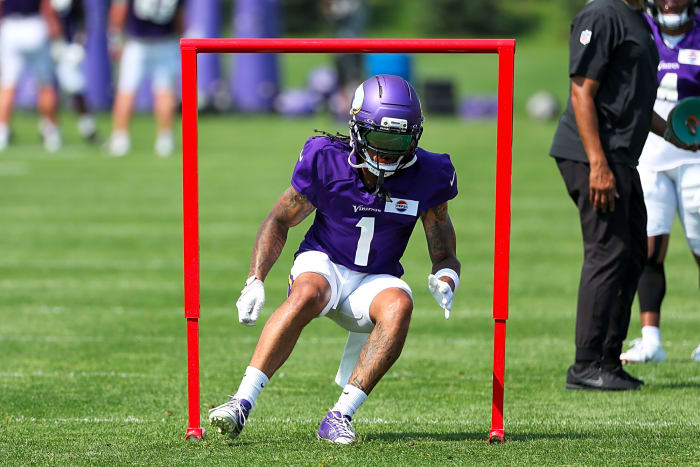
Every departure creates a hole measured in snaps. Somebody lined up, ran routes, and caught passes in that offense. Now those reps belong to nobody. The front office has to fill them through the draft, free agency, or internal development, and the clock is already running. Losing a skill-position contributor forces the coaching staff to redesign packages, redistribute targets, and trust unproven options in spots where a known commodity once stood. That’s not rebuilding. That’s scrambling with a deadline.
The Real Cost
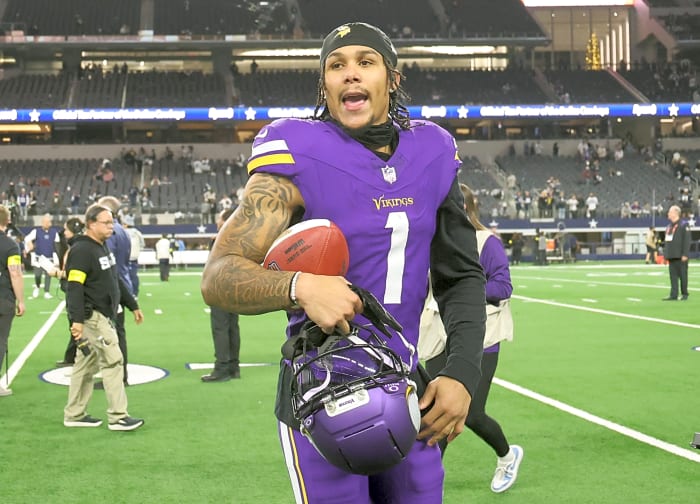
Strip away the name and the destination. The core reality is this: Minnesota’s offense keeps getting thinner as the offseason moves forward. Each exit compounds the last. One fewer weapon means defenses have one fewer problem to solve, and that cascading simplification is what kills passing attacks. Fewer threats. Fewer mismatches. Fewer answers on third down. The cumulative effect matters more than any single departure. The Vikings aren’t losing a player. They’re losing options. And the menu was already short.
Domino Math

Think of it like a restaurant losing another cook mid-shift. Dinner still gets served, but the remaining staff covers more stations, quality dips, and the margin for error vanishes. That’s Minnesota’s offense right now. Every skill-position exit redistributes pressure onto whoever remains, and the players still on the roster didn’t sign up to absorb someone else’s target share overnight. The Vikings need reinforcements, and they need them before the playbook gets finalized. Roster math doesn’t wait for sentiment.
Forced Moves

The operational consequence is blunt: replace key snaps or watch the offense regress. Minnesota’s front office now operates in replacement mode, hunting for contributors who can step in and absorb meaningful reps immediately. That means draft capital spent on need rather than value, free-agent signings made under pressure rather than patience, and internal promotions handed to players who haven’t earned them yet. None of those paths is ideal. All of them carry risk. The Vikings chose none of this. Free agency chose it for them.
Ripple Effect

The damage extends beyond the receiver room. When an offense loses skill-position depth, the entire operation adjusts. Protection schemes change because defenses can play more aggressively against fewer threats. Play-calling narrows because the coordinator trusts fewer personnel groupings. And the quarterback, whoever takes snaps in Minnesota, inherits a thinner supporting cast at the worst possible time. One departure reshapes one position group. Multiple departures reshape the entire offensive identity. That’s where the Vikings sit heading into this offseason’s final stretch.
New Normal

This is bigger than one transaction. The pattern Minnesota is living through reflects a structural reality: when a team enters an offseason needing to replace multiple skill-position contributors simultaneously, the rebuild isn’t a single move. It’s a chain reaction that affects the draft board, the salary cap, and the development timeline simultaneously. Once you see the cumulative pressure, every remaining roster decision looks different. The Vikings aren’t solving one problem. They’re managing a cascade, and each fix creates its own downstream question.
Unresolved Roster

The offseason still has months left, and Minnesota’s front office has tools at its disposal. Draft picks. Cap space. Trade conversations. But tools without time pressure produce better results than tools deployed in panic, and the Vikings are edging closer to panic territory with every departure. The question hanging over the franchise isn’t whether they’ll find replacements. They will. The question is whether those replacements arrive ready to contribute immediately or need a development runway that the 2025 schedule won’t provide.
The Clock

Here’s what most people miss about cumulative free-agency losses: the damage isn’t visible on paper until September. Minnesota will fill every roster spot. The depth chart will look complete. But the difference between a name on a depth chart and a proven contributor who knows the offense is the gap where seasons go to die. The Vikings are betting they can close that gap before the opener. Every team that’s lost this many skill-position pieces in one offseason has made that same bet. Most lose it.
Sources:
MSN, “Vikings Lose Wide Receiver and Punter in First Wave of Free Agency,” March 2026
Pro Football Reference, Jalen Nailor career statistics page
ESPN, “Vikings 2026 Free Agency Tracker: Offseason Moves, Signings,” March 2026
OverTheCap, Vikings salary cap and contract page
Spotrac, Jalen Nailor or Vikings free agency contract page
The Athletic, “Vikings Free-Agency Predictions: Who Stays? Who Goes,” January 2026
More must-reads:
- Five teams that should consider NFL Draft trades
- Insider shares notable update on Shedeur Sanders' status with Browns
- The 'Rushing-TD leaders by NFL team' quiz
Breaking News
Trending News





Customize Your Newsletter
 +
+




Get the latest news and rumors, customized to your favorite sports and teams. Emailed daily. Always free!
PRIVACY POLICY COOKIE POLICY CONTACT US
ABOUT YARDBARKER TERMS OF SERVICE


By using this site, you agree to our Terms of Service and Privacy Policy.
This site is for entertainment purposes only.
There is no gambling offered on this site.
Gambling Problem? Call 1-800-Gambler.
