
-

-


Follow Us
-

 On Facebook
 On Flipboard
 On Twitter
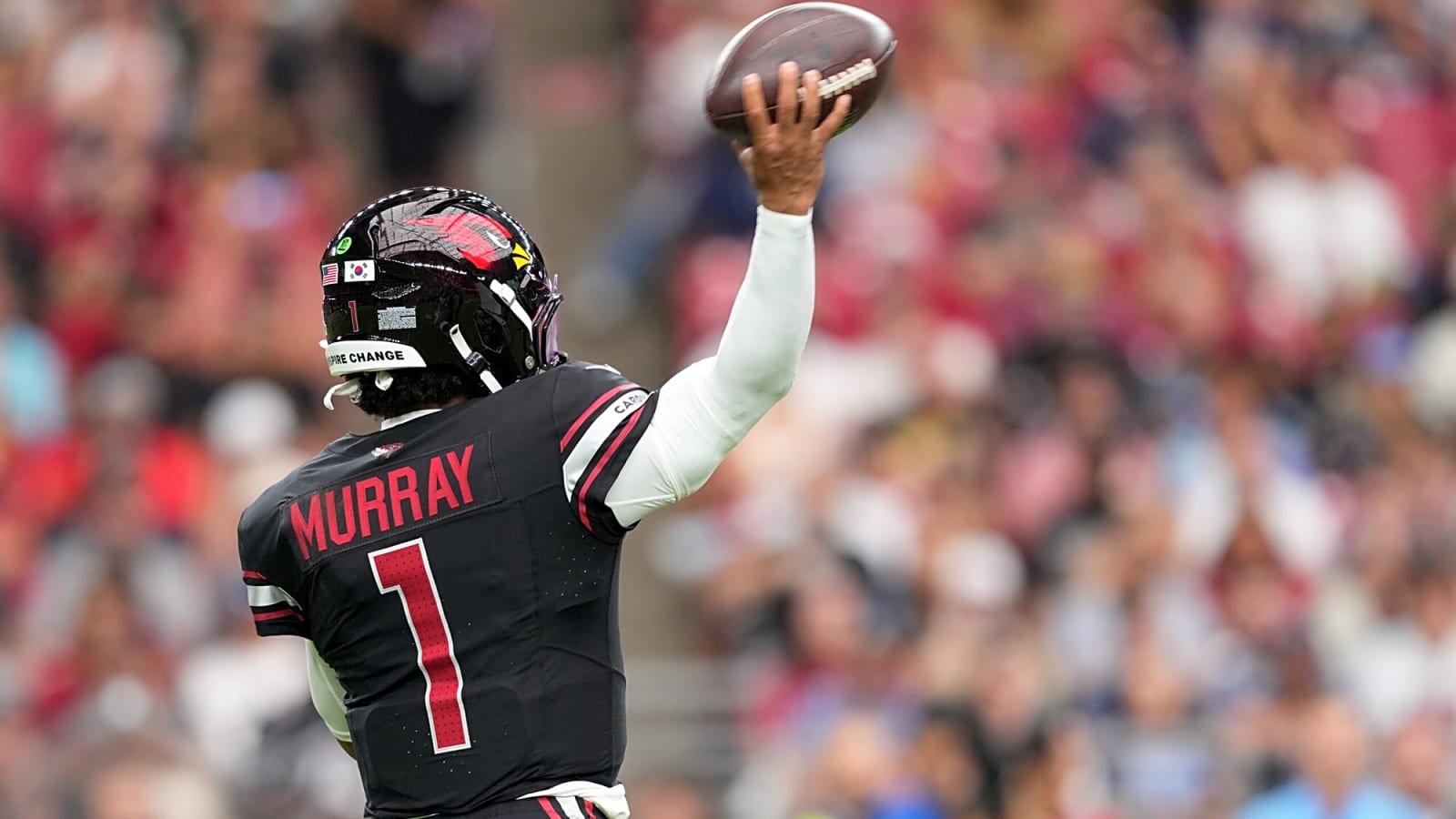
One contract. One signature on one piece of paper in Minnesota, and front offices across the league started recalculating. The Vikings signed Kyler Murray to a one-year, $1.3 million deal on March 12, 2026—the veteran league minimum—after the Cardinals released him on the first day of the new league year. Arizona still owes Murray $36.8 million in guaranteed money from the extension he signed in 2022, meaning Minnesota landed a former No. 1 overall pick for almost nothing. In a league where starting quarterbacks are the scarcest commodity, even a budget move sends shockwaves. The frenzy didn’t start with a blockbuster. It started with a bridge deal.
Arizona’s Exit
The Cardinals informed Murray ahead of the 2026 league year that they intended to release him. Murray’s cap hit was projected at $52.7 million for 2026, and keeping him would have triggered another $19.5 million in guarantees for 2027 on March 15. Arizona designated him as a post-June 1 release to spread the dead-money charge across two seasons—roughly $47.5 million in 2026 and $7.2 million in 2027. The move freed modest cap space but left the Cardinals without a starting quarterback and carrying one of the largest dead-money charges in recent NFL history.
Bridge Money
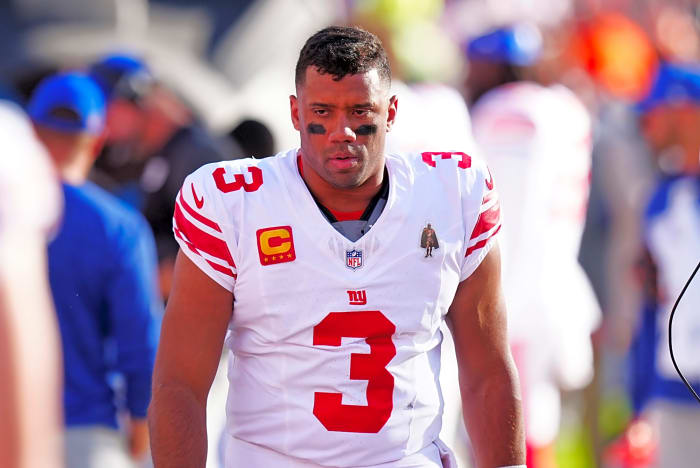
Murray’s $1.3 million deal follows a now-familiar template: Russell Wilson signed a minimum deal with the Steelers in 2024, and Tua Tagovailoa did the same with the Falcons in 2026. These arrangements work because the player’s former team still owes the bulk of the guaranteed money—the new team pays only the minimum, and the offset reduces the old team’s payment by that amount. For Minnesota, it’s a low-risk addition. Murray’s contract also includes a no-tag clause, guaranteeing him a path back to free agency after the 2026 season. The Vikings didn’t just buy a quarterback. They bought a one-year audition at a fraction of the market price.
The Competition
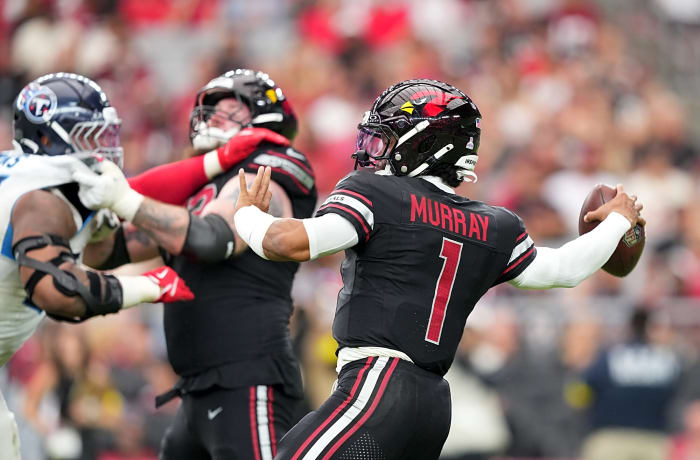
In Minnesota, Murray enters a quarterback room with J.J. McCarthy, the No. 10 pick in the 2024 draft, who finished his 2025 season with a 35.6 QBR across 10 starts. Coach Kevin O’Connell declined to name a starter, saying in March: “It’s March. We signed Kyler today” . Murray brings two Pro Bowl selections and 153 career touchdowns (121 passing, 32 rushing) to a supporting cast that includes Justin Jefferson, Jordan Addison, and T.J. Hockenson . O’Connell framed the signing as creating competition that elevates the entire room.
Shared Scarcity
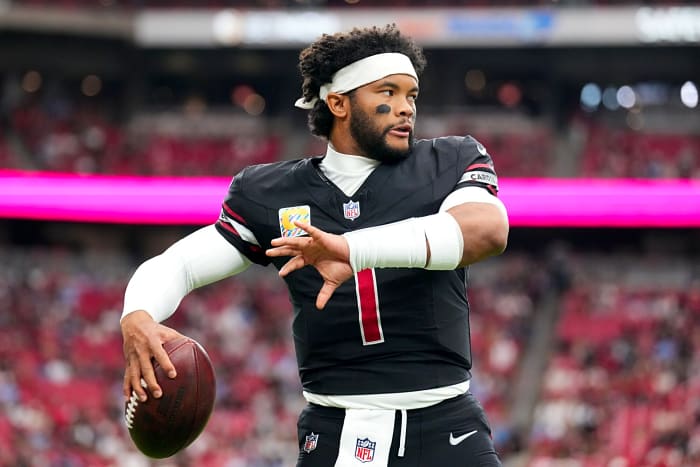
QB markets are interdependent. By the time Murray arrived in Minneapolis on the night of March 12, most quarterback-needy teams had already made their moves . The Raiders had traded Geno Smith to the Jets . The Dolphins signed Malik Willis to a three-year deal worth up to $35 million. Kirk Cousins, Aaron Rodgers, and Russell Wilson were all available as free agents. The first signing in a scarcity-driven market is never the biggest number on the board—it’s the one that starts the bidding war.
Injury History
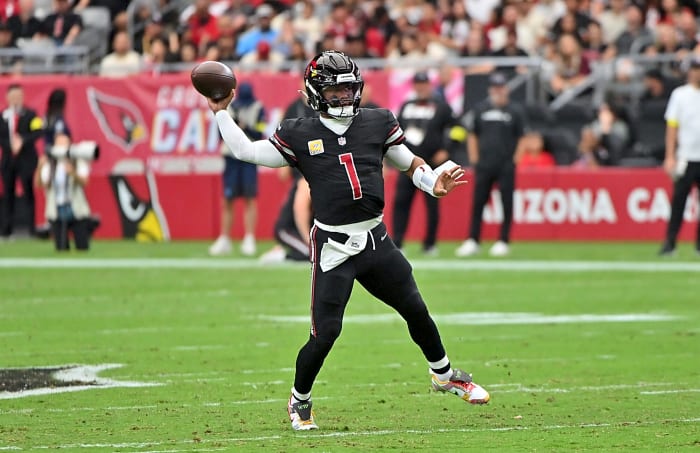
Murray’s seven seasons in Arizona were defined by highlight-reel plays and significant injuries. He tore his ACL at the end of 2022 and missed extended time recovering . In 2025, he played only the first five games before a foot injury ended his season . His career record with the Cardinals was 38-48-1, with just one playoff appearance—a wild-card loss to the Rams in 2021. Minnesota is betting that a healthy Murray, surrounded by elite skill-position talent, can recapture the form that earned him those Pro Bowl nods.
The Ripple
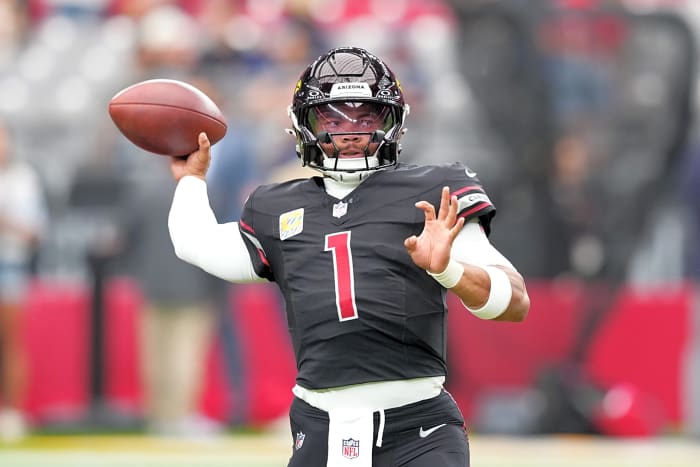
Nine teams entered the 2026 offseason with clear quarterback needs, according to pre-free-agency analysis: the Cardinals, Browns, Colts, Dolphins, Falcons, Jets, Panthers, Raiders, and Titans. Each Murray-caliber signing removes one option from the pool and raises the remaining options’ prices. Contract comps get anchored by visible deals. Cap planning pressure increases when even minimum-salary signings take a starter off the board. The Vikings proved you can land a former franchise quarterback for $1.3 million.
Draft Pressure
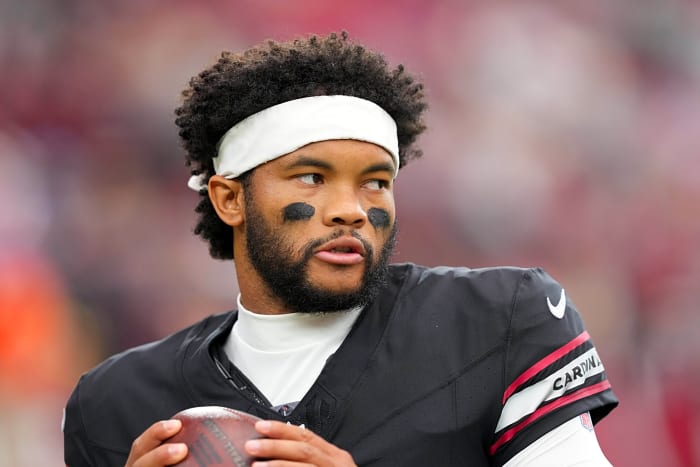
With the veteran market thinning fast, teams that missed out now face a binary choice: overpay for a remaining free agent or gamble a premium draft pick on a rookie. The Raiders hold the No. 1 overall pick in a draft where Indiana quarterback Fernando Mendoza is considered the top signal-caller. Other teams are eyeing Alabama’s Ty Simpson as a second-round option. The old myth that quarterback decisions are isolated died the moment one team’s budget signing forced multiple front offices to accelerate their timelines.
Escalation Path
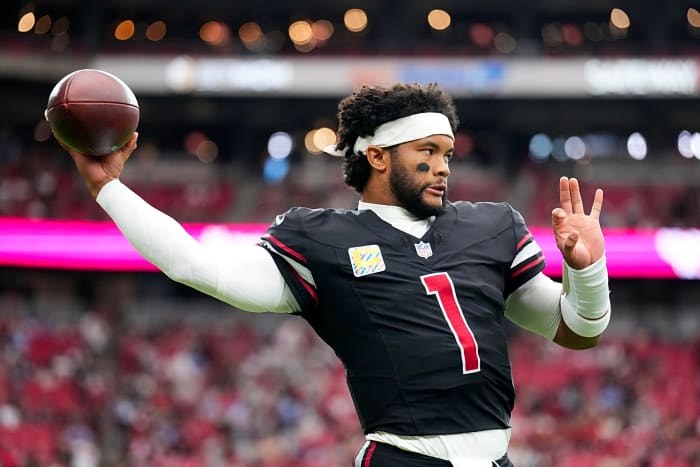
The chain reaction follows a predictable sequence: one release forces one signing, which reshuffles the trade market, which forces one draft reach. Minnesota spent $1.3 million on a bridge and created a competition with its 2024 first-round pick. The Cardinals absorbed roughly $55 million in dead money to move on. The Dolphins committed $30–35 million to Willis. Every transaction repriced the next. The teams that lose are the ones that pretended they had time.
What’s Next
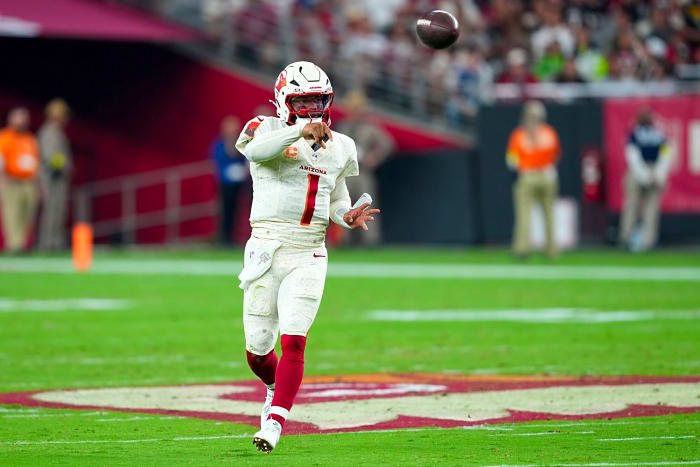
Murray himself seemed to understand the stakes. “I cannot wait to touch that field and be a Minnesota Viking,” he said Thursday evening . The no-tag clause means this is a one-year prove-it deal—if Murray plays well, he hits free agency again in 2027 and triggers another market reset. If he doesn’t, Minnesota still has McCarthy. Either way, QB scarcity is shared across all 32 teams, and the next signing will reset the board again.
Sources:
NFL.com, “Vikings sign QB Kyler Murray for one-year, league minimum deal,” March 12, 2026
ESPN, “Kyler Murray signs with Vikings, ‘cannot wait’ to touch field,” March 12, 2026
Yahoo Sports, “Kyler Murray release: Salary cap implications for Arizona Cardinals,” March 4, 2026
Yahoo Sports, “Cardinals to release Kyler Murray, potentially open up,” March 3, 2026
Fox Sports, “2026 NFL Free Agency: Prescribing Plan A and B for 9 QB-needy teams,” March 3, 2026
ESPN, “Sources: Jets get their QB, trade with Raiders for Geno Smith,” March 10, 2026
More must-reads:
- Five teams that should consider NFL Draft trades
- Insider shares notable update on Shedeur Sanders' status with Browns
- The 'Rushing-TD leaders by NFL team' quiz
Breaking News
Trending News



Customize Your Newsletter
 +
+




Get the latest news and rumors, customized to your favorite sports and teams. Emailed daily. Always free!
PRIVACY POLICY COOKIE POLICY CONTACT US
ABOUT YARDBARKER TERMS OF SERVICE


By using this site, you agree to our Terms of Service and Privacy Policy.
This site is for entertainment purposes only.
There is no gambling offered on this site.
Gambling Problem? Call 1-800-Gambler.
