
-


Follow Us

 On Facebook
 On Flipboard
 On Twitter
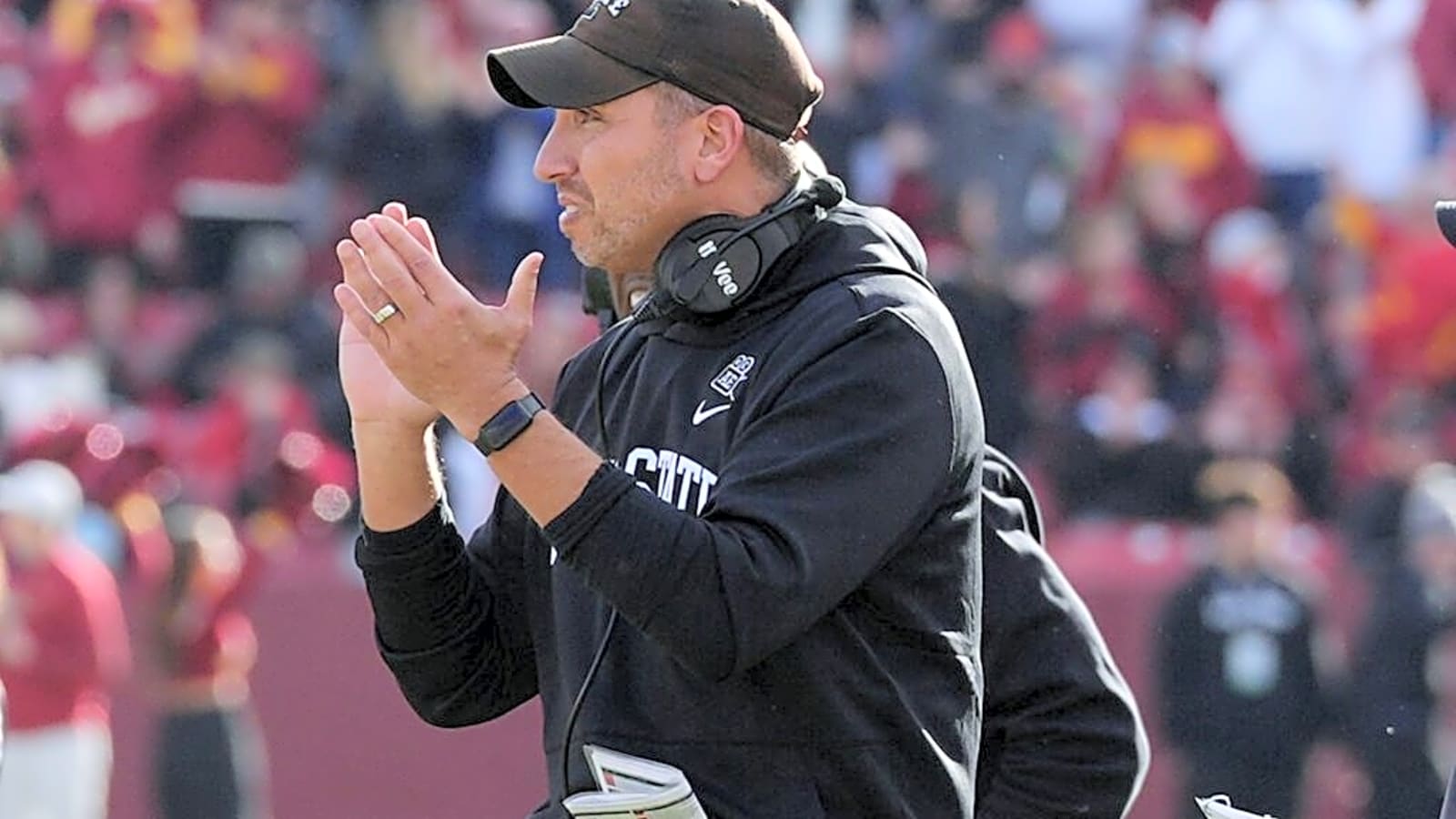
Penn State appears to be in the final stages of hiring Iowa State’s Matt Campbell as its next head coach. This brings a decisive end to a search that stretched more than seven weeks. It also generated national scrutiny.
Around 12:30 p.m. central time, multiple outlets reported that Penn State is working to finalize a deal with Campbell. This signals that the university has aligned internally on the direction of the program. Campbell, 46, is the winningest coach in Iowa State history with a 72–55 record. His reputation centers on elevating a historically limited program into consistent Big 12 relevance. His teams have produced multiple top-25 seasons and a major bowl win. They also created a culture defined by resilience and development. For Penn State, which has recruited well but plateaued competitively, Campbell represents real change. He brings both a stylistic shift and a philosophical shift.
Campbell’s Early Career and Rise Through the Ranks
Campbell’s rise traces through several stages that shaped his coaching identity. His earliest roles came at Bowling Green, where he worked as a graduate assistant in 2003 and 2004 and later returned to coach the offensive line and oversee the run game. Between those stops, he spent two seasons at Mount Union calling plays for an alma mater that helped form his developmental philosophy. Each move broadened how he understood offensive structure and roster building.
The turning point arrived at Toledo. Campbell joined the staff as an assistant and then took over the program in 2011 at only 32 years old. He stacked a 35–15 record across four seasons. The Rockets’ consistency pushed him onto the national radar and positioned him as a Power Five option. Iowa State hired him in 2015 to stabilize a program defined by inconsistency and limited resources. His impact surfaced quickly as Iowa State shifted from a perennial afterthought into a team built on toughness, detail, and belief. ESPN once labeled him the “king-slaying, miracle-working toast of college football.”
Several milestones marked that transformation. The 2020 team reached the Big 12 Championship Game and then beat Oregon in the Fiesta Bowl, giving the Cyclones their first major bowl win. That season became the program’s highest end-of-year ranking. Campbell later delivered another signature moment with a 42–41 win over No. 15 Miami (FL) in the 2024 Pop-Tarts Bowl. Those achievements showed staying power at a place where sustained success had rarely existed.
National Interest and Why His Move to Penn State Matters
Interest followed from both the NFL and major college programs. Reports linked Campbell to the Detroit Lions in 2021 and to the New York Jets in 2018, though he declined to pursue either opportunity. Several college searches, including USC, Florida, Washington, Notre Dame, Auburn, Nebraska, Michigan State, and UCLA, explored him as a candidate. Although no formal offer was confirmed, outlets reported that Campbell either declined to engage or chose to remain at Iowa State.
His pattern of turning away from outside pursuits built a reputation rooted in stability and alignment. It signaled that he valued control of his program and long-term development over salary or prestige. It also underscored how significant a move to Penn State would be for him. Leaving Ames would require a rare fit, full alignment, and a belief that the next step offered more than the comfort and control he had earned at Iowa State.
Campbell’s decision-making history builds the case for why Penn State’s opportunity matters. It is one of the few programs with the infrastructure, brand, and competitive ceiling capable of matching his development-based approach. His career reflects careful choices and deliberate movement. A shift to State College would represent not only a major national storyline but one of the most meaningful coaching transitions in recent cycles.
The Structure and Philosophy Behind a Matt Campbell Offense
Campbell builds offenses with clear structure and planned sequencing. Each formation and shift serves a defined purpose within the system. That approach differs sharply from what Penn State ran under Mike Yurcich and later Andy Kotelnicki. Yurcich favored spread tempo concepts but struggled to pair the run and pass within a consistent framework. His offense often relied on isolated play calls rather than a cohesive menu. Kotelnicki added variety but lacked a stable foundation, leaving the attack without a reliable week-to-week identity.
Penn State also lacked a dependable hard play-action package. The offense rarely tied run-game actions to layered vertical routes. Shotgun formations dominated the structure and restricted under-center sequencing. These choices prevented the offense from threatening defenses vertically in a sustained way. Without that threat, fronts condensed space and disrupted the run game. Campbell’s system answers those issues directly. His offenses use formation diversity with defined sequencing. They tie the run game to play-action and build vertical stress into the structure.
Campbell’s broader philosophy emphasizes control through alignment, leverage, and sustained rhythm. His offenses force defenses into clear rules and predictable responses. The structure adapts without losing identity, which has been a consistent trait of his tenure. That steadiness offers the week-to-week reliability Penn State lacked in recent seasons.
A New Level of Program Resources
Campbell’s success at Iowa State is more impressive when viewed through resource gaps. The Cyclones consistently recruited outside the top 40 nationally. The 2026 class currently sits around No. 50, per 247Sports. This shows how hard it is to draw top talent to Ames. Campbell compensated through physical identity and cohesion. He also relied on situational mastery. These traits produced NFL players and strong units without blue-chip depth. At Penn State, he would gain far greater recruiting infrastructure. He would also gain real NIL support and a national brand. This gives him a chance to scale his system with top athletes. The question is not whether he can win with less. It is what he can achieve with more.
With Penn State’s brand supporting him, Campbell could widen recruiting pipelines. He could push into the Midwest and Southeast. His message of toughness and adaptability fits those regions well. The early impact may be muted. Few Iowa State commits project as Big Ten difference-makers. The real advantage lies in long-term evaluation and portal work. Campbell has excelled at finding undervalued players and maximizing them. This could lift Penn State’s depth and reduce volatility during transitions. The move is not without risk. Campbell has never faced the pressure of a major Big Ten job. He has also never managed this level of roster scrutiny. Success requires turning developmental strength into high-end recruiting wins.
National Perception and Why Analysts Believe Campbell Fits Penn State
External evaluations of Campbell remain strong. Analyst Josh Pate highlighted Campbell’s impact in a recent profile. He said, “Iowa State football has existed 134 years… Campbell has them in the midst of the best 3-year run in program history. His DNA blends perfectly with what PSU needs.” Campbell’s comments after the TCU win showed the same values. He said the persistence and response of his players represented “the right struggle.” His ability to create buy-in has shaped his reputation.
Pate also called Campbell a “perfect fit for Penn State.” He pointed to Campbell’s culture, development record, and adaptable structure. These traits define Campbell’s teams. Penn State has searched for toughness and modern adaptability. Campbell brings that blend. The question is whether the model can scale inside a program with massive expectations.
The Pat Kraft Audio Leak and Its Unexpected Impact
The leaked audio involving athletic director Pat Kraft did more than shape the narrative. It revealed the exact mindset awaiting Penn State’s next coach. Some intended the leak to hurt Kraft. Instead, it did the opposite. The recording showed a leader who speaks bluntly about winning. It showed a refusal to accept second place. It also showed real pressure on every part of the operation. His goal is simple. He wants Penn State in the national-title race.
For Campbell, that message resonates. His career is built on internal standards and blocking out outside noise. Kraft’s tone matched those instincts almost perfectly. The recording highlighted a shared mentality. It also showed a willingness to rebuild outdated recruiting structures. It showed commitment to the investment needed to close the elite gap. Coaches talk about alignment. Few athletic directors show it this clearly.
The leak likely strengthened Penn State’s position. It showed Kraft is willing to fight for the program’s ambitions. That resonates with a personality like Campbell’s. At a key moment, the audio provided clarity. It showed that Penn State’s leadership will match Campbell’s urgency.
Campbell’s Vision Aligns With Penn State’s Path to the Top
Campbell’s impending hire represents a major stylistic shift for Penn State. It signals a move toward adaptability and development. His history of maximizing talent offers a clear blueprint. It fits a program trying to rise into the national elite. With Penn State’s resources, Campbell gains a new opportunity. He can pair his development model with Big Ten athletes and structure. The risks remain real. He has never worked under this level of scrutiny. Translating developmental success into blue-chip recruiting is not guaranteed. If alignment holds between Kraft, Campbell, and the long-term vision, Penn State may finally rise to its full ceiling.
More must-reads:
- Lions receive devastating news on safety Brian Branch
- Jerry Jones shares his thoughts on George Pickens' effort
- The 'Receiving leaders by NFL team' quiz
Breaking News
Trending News





Customize Your Newsletter
 +
+




Get the latest news and rumors, customized to your favorite sports and teams. Emailed daily. Always free!
PRIVACY POLICY EDITORIAL POLICY CONTACT US
ABOUT YARDBARKER TERMS OF SERVICE


Use of this website (including any and all parts and
components) constitutes your acceptance of these
Terms of Service and Privacy Policy.
This site is for entertainment purposes only.
There is no gambling offered on this site.
Gambling Problem? Call 1-800-Gambler.
