
-


Follow Us

 On Facebook
 On Flipboard
 On Twitter
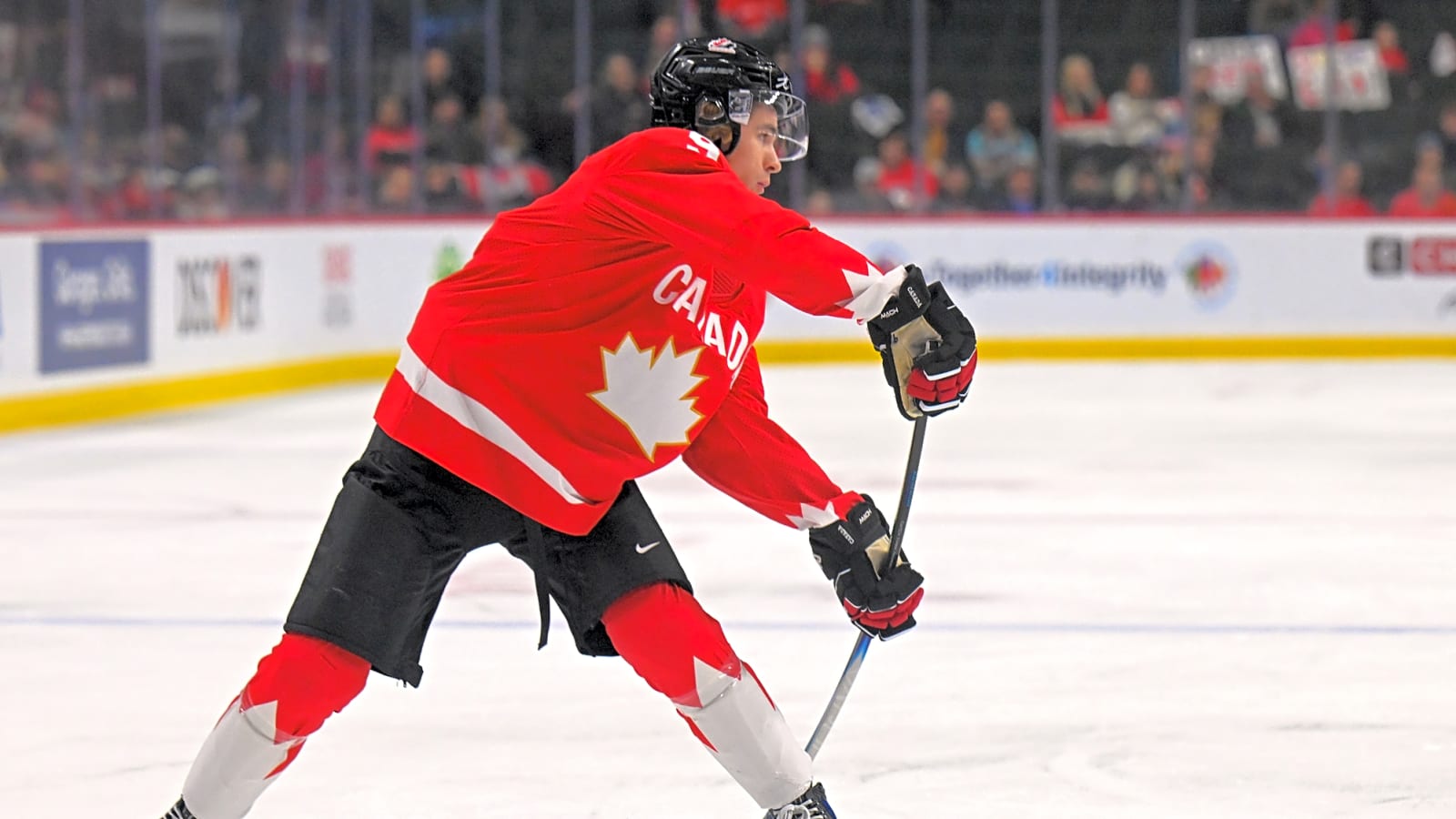
This is as fluid an NHL Draft as I’ve covered.
The 2025 NHL Draft saw James Hagens start the season as the projected No. 1, only for Matthew Schaefer to overtake him by December. Gavin McKenna was the clear favorite heading into 2026, but Ivar Stenberg has established himself as the new top prospect.
In McKenna’s case, most scouts are happy he went the college route. His flaws – primarily his off-puck play – were evident at various international showcase events, such as the U-17 World Challenge and Hlinka Gretzky Cup. At his best, few can dominate shifts as consistently as he can. He had 129 points in 56 games in the WHL last year, and he would have easily surpassed the 150-point mark this year, especially with how well Medicine Hat is playing. Going to college has been a huge net positive for McKenna’s overall game, even if he’s no longer a surefire No. 1 pick.
For Stenberg, the talent is undeniable. Each year, scouts are hoping to see youngsters jump up to the European pro ranks and make an impact. Usually, we’re talking about guys chipping in maybe 10 points in a season or just getting a few looks every now and then while dominating their own age group. But Stenberg has averaged around a point-per-game all season long with Frolunda. He’s on pace for 41 points this season – only Daniel Sedin (42 points in 1998-99) has managed to do that among U-19 players.
Is this a special draft? No. Is it a below-average draft? No. If you’re drafting high, you’re still going to be thrilled. Both Macklin Celebrini and Matthew Schaefer have blown all expectations out of the water this season, earlier than expected. Don’t be surprised if we see that with many of the top players this year, too.
Let’s break down the top 64 prospects with the season passing the halfway point:
1. Ivar Stenberg, LW (Frolunda, SHL)
I spent way too long deciding who should go No. 1 here. Scouts are leaning toward Stenberg, but it’s still close, depending on whom you talk to. The reason for Stenberg going No. 1 (right now, at least) is that he’s the most rounded player in the draft. There truly isn’t an area he struggles with. He’s incredible with the puck, has a fantastic shot and might have the second-best hockey sense of anyone in the draft – No. 1 being the guy below. Stenberg has been incredibly productive in the SHL, on track for one of the best seasons by a U-20 player ever. Add in an excellent gold-medal performance with Sweden at the World Juniors, and it’s hard not to fall in love with his game. I’m not saying Stenberg is the next Macklin Celebrini, but Stenberg is the closest in terms of how rounded he is since the Sharks picked the phenom first overall in 2024.
2. Gavin McKenna, LW (Penn State University, NCAA)
I finally moved him down. But, seriously, it’s still a close fight, and anyone who tells you otherwise isn’t being realistic. There are a few public scout polls out there right now – Stenberg has the edge, but it’s not an absolute slam dunk. That’s because McKenna has the highest skill ceiling and is the most “elite” thinker in the draft. He’s a tremendous skater, is perhaps the best passer in the draft and he has improved his D-zone play in recent months. But scouts are quick to point out that he’s not as rounded as Stenberg, who has a better shot, is more engaged physically and will impact the game more significantly without the puck. But McKenna’s ability to outthink opponents with the puck, consistently at the college level despite lacking true impact linemates, is incredible. Right now, I’d say McKenna has a higher ceiling but a lower floor than Stenberg. Also anyone saying McKenna is struggling in college hasn’t watched him play.
3. Keaton Verhoeff, RHD (University of North Dakota, NCAA)
Verhoeff has played some of his best hockey of the season since returning from the World Juniors. I thought he looked good for Canada, despite ice time being difficult to come by. What was especially important, though, was how he bounced back from a bad shift in a way so few his age can. He’s putting up excellent numbers with the University of North Dakota, and being mobile and 6-foot-4 doesn’t hurt. Some scouts think he’d be good enough for the pro game already. I still think he needs to focus on his defensive-zone play, but there isn’t a more rounded defender in this draft class, although the next two options might put up an argument.
4. Chase Reid, LHD (Soo Greyhounds, OHL)
Reid always does a good job of slowing things down when it’s needed. He’s a good puck distributor who makes great heads-up passes from his own zone, and he has the defensive awareness to get back after skating up the ice for a rush. I love how he elevates his game against tougher competition – the World Juniors and the recent OHL Top Prospects Game helped prove that. Reid makes excellent moves with the puck, especially on the power play. Reid is in the running to become the first defenseman taken this June. I’d be shocked if he’s not taken by, say, the sixth pick. For what it’s worth, I was extremely close to putting Reid at No. 3.
5. Alberts Šmits, LHD (Jukurit, Liiga)

Šmits’ offensive impact hasn’t been as profound in the Finnish Liiga over the past two months, but scouts aren’t worried. The fact that he’s playing 20 minutes a night as an 18-year-old in one of the top European pro leagues says a lot. The offensive defenseman stands tall at 6-foot-5, can play in all situations and has a boatload of confidence. After an excellent showing with Latvia at the World Juniors, he’s set to become the youngest player at the Winter Olympics. Latvia typically prioritizes veteran blueliners internationally, which shows how good Šmits is.
6. Tynan Lawrence, C (Boston University, NCAA)
It’s been a rough few weeks for Lawrence, who left the Muskegon Lumberjacks after dominating the USHL during a 13-game stretch. Now, he has just a single point to show for it, although BU hasn’t been particularly good, either. Lawrence has shown much more confidence, and scouts liked how he looked like his old, shift-dominant self against Providence recently. Lawrence’s ability to win battles consistently and get shots into dangerous areas has been evident this year. But injuries have limited Lawrence to fewer than 30 games total this year, so there’s still a bit of catch-up going on. As of now, though, Lawrence is the best center in this draft class, and he has the potential to be a No. 1 in the NHL.
7. Carson Carels, LHD (Prince George Cougars, WHL)
Carels’ defensive awareness, two-way skill, strong physique and high-end hockey sense make him one of the top defensive prospects in this year’s draft class. He plays a ton of minutes, is smart with the puck and is a tremendous play-breaker, as he showed at points during the World Juniors. Defensively, there aren’t many flaws in his game. If Carels can improve the velocity and accuracy of his shot, as well as his general offensive-zone awareness, Carels will be in excellent shape.
8. Caleb Malhotra, C (Brantford Bulldogs, OHL)
Some scouts think Malhotra could be the first center taken. His ability to wait out opponents before making a last-second pass into a scoring lane is unmatched. Malhotra is a great skater who plays a strong two-way game and loves getting involved physically, as well. Malhotra’s hockey IQ is among the best you’ll find in this class, and he’s a tremendous passer, too. Scouts are still wondering if he can be a first-line center – but most say, at minimum, he’ll be a second-liner.
9. Ethan Belchetz, LW (Windsor Spitfires, OHL)
I had Belchetz up much higher back in November, but a slight cooling-off period, as well as a couple of underwhelming showcase events, led to Belchetz falling a bit. Still, that doesn’t change what I like about him. He’s a productive forward who loves to shoot the puck. At 6-foot-5 and nearly 230 pounds, he’s absolutely massive, too. One knock against him is his lackluster skating, and it doesn’t seem like he’ll be a play-driver at the next level. But as a second-line wrecking ball, there’s a lot to love.
10. Viggo Björck, C (Djurgardens, SHL)

Björck can play both center and the wing, and while scouts wish he was bulkier (he’s 5-foot-10), his hockey IQ is off the charts. Björck’s shot is incredibly deceptive, especially on the power play. He doesn’t give you much to work with if you’re a goalie – and it’s because he doesn’t need to. He’s quick, accurate and always in a dangerous spot. A strong showing at the World Juniors proved that Björck can outsmart and outskill his opponents consistently – and he’s playing 19 minutes a night already against men.
11. Ryan Lin, RHD (Vancouver Giants, WHL)
If you’re going to thrive in the NHL as a smaller defender, you need to be an incredible skater and exceptionally smart. That’s what makes Lane Hutson so lethal – and that’s why Lin deserves your attention. The Giants aren’t a great team by any means, but Lin plays 26 minutes a night and absolutely deserves every second of it. He rarely makes a bad pass, which has led to some fantastic production throughout his WHL campaign. I know his lack of size and physical strength won’t help him, but you should always, always bet high on talent.
12. Daxon Rudolph, RHD (Prince Albert Raiders, WHL)
Rudolph has been one of the best defensemen as of late. The Raiders are one of the top teams in the CHL right now, and Rudolph has managed to stay hot with 16 points over his past 10 games. He’s getting a ton of shots on net, hitting everyone in sight, and does all that without sacrificing his defensive metrics. Rudolph is going to have an excellent career, but I’m not 100 percent convinced he’ll be as dynamic as guys like Lin or Carels in the NHL, which could lead to Rudolph falling a bit.
13. Oscar Hemming, LW (Boston College, NCAA)
It took forever for Hemming to get into actual game action this year. A contract dispute back in Finland meant he went 134 days between his last game at the Hlinka Gretzky Cup and his first outing with Boston College. That’s why Hemming was ranked so low for me the past few months – he just wasn’t playing. Now that he is, we’re back to seeing what makes Hemming so intriguing. He had an excellent two-assist night in just his second game, and while the production has slowed down a bit, he’s still impactful away from the puck thanks to his relentless work ethic. Hemming is 6-foot-4 and plays a high-energy power forward game – he’ll have no issue adjusting to the NHL once he eventually makes it.
14. J.P. Hurlbert, C/RW (Kamloops Blazers, WHL)
Hurlbert has been the CHL’s most productive forward throughout most of the season, and he’s a sure bet to crack the 100-point barrier as a WHL rookie. The University of Michigan commit has a great one-touch shot that he routinely unleashes on the power play. He’s also an exceptionally smart puck-mover who has very little difficulty getting it where it needs to be against players his own age. My two pre-season concerns – his play away from the puck, and his lack of high-end speed – are still issues, which is why I’m not ranking him higher. The good news? Skating can be fixed. Bet on skill.
15. Adam Novotný, LW (Peterborough Petes, OHL)

The Czech-born forward was absolutely snakebitten on the scoresheet at the World Juniors, but he was an absolute beast at retrieving pucks and getting them into dangerous areas. Novotný was outstanding at the OHL Top Prospects Game (which was played in Peterborough), and he’s been downright lethal ever since. You can count on him getting at least four shots on net a night, and he continues to get better at using his rugged frame to win battles. I’ve really come to like his game in recent weeks.
16. Marcus Nordmark, LW (Djurgardens, Sweden U-20)
When the puck is on Nordmark’s stick, everyone notices. He has averaged just under two points per game with Sweden’s U-18 team and is tracking for about 45 points in 30 games in the second-tier Swedish league. The only area he hasn’t dominated this year has been in the SHL, but he managed an assist in his first game he played more than 10 minutes in earlier this month. Nordmark loves to shoot, and while his game away from the puck still needs tinkering, the numbers prove that he’s deadly with the disk.
17. Oliver Suvanto, C (Tappara, Liiga)
Suvanto has spent the season playing against men in Tappara, where he has shown himself to be sound and reliable defensively. Suvanto has been solid internationally this year, primarily playing against older competition in the U-20 ranks. His domestic league numbers might not be special, but it’s hard not to like his play away from the puck. I don’t think there’s a ton of high-end upside, but I like Suvanto as a middle-six center who can shift to the wing if needed.
18. Xavier Villeneuve, LHD (Blainville-Boisbriand Armada, QMJHL)
Villeneuve has been highly productive throughout his three years with the Armada, and he was outstanding at the U-18 World Championship last spring. He loves touching and distributing the puck, and he’s an absolute monster on the power play. Villeneuve is just 5-foot-11, and while that’s not an ideal size, he makes up for it with what he does with the puck. I could see him going higher than this thanks to his tremendous hockey sense and dynamism. But we know teams prioritize size on the back end, so it feels like he’s bound to fall.
19. Malte Gustafsson, LHD (HV71, Sweden U-20)
Gustafsson is a 6-foot-4 defender who is already playing a ton of minutes against men in the top Swedish league and is even getting some power-play time. His skating alone makes him intriguing – he’s not the quickest, but he can get where he needs to be without much extra effort. I like how he never stops moving in the D-zone, and his willingness to suffocate you along the boards makes him so difficult to play against. I don’t think he’ll be a big-time producer in the NHL, but I can see him being an excellent third-pairing guy who can eat minutes if needed.
20. Elton Hermansson, RW (MoDo, Sweden U-20)

Hermansson has been one of my favorite Swedes this year. He’s great with the puck, is always looking to create high-quality chances and can absolutely dominate the competition on the power play. Hermansson might not be the most rounded player at this point. But his play in the second-tier pro league, as well as his dominance internationally, have been impressive. The big knock against him right now is he struggles defensively, but he makes up for it with his puck dominance. Hermansson will need to be in a scoring role to be truly dangerous, though.
21. Juho Piiparinen, RHD (Tappara, Liiga)
Piiparinen is a smart defender who doesn’t make many mistakes with the puck. He’s good when he keeps things simple, but he can also rush the puck up the ice and lower the boom when needed. He’s been playing decent hockey against men, and his international play has been solid, too. Piiparinen’s game isn’t as flashy or as skilled as those of some of the other defenders on this list, but he’s rock-solid defensively and should have a good career.
22. Nikita Klepov, LW (Saginaw Spirit, OHL)
Klepov was recently one of the top performers at the OHL Top Prospects Game, where he showed just how lethal he could be in scoring lanes. He’s in his first year of OHL competition, but he’s tracking for around 40 goals and 50 assists. Klepov is equally skilled as a shooter and a playmaker, and I love how often he finds open scoring lanes. Find him a high-end setup guy and he’ll fire shots home all night long.
23. Ilia Morozov, C (Miami University, NCAA)
It has been fun watching Morozov this season. His production is nothing too remarkable but, given he’s the youngest player in the NCAA, he has handled 20 minutes a night as well as anyone could have expected. Morozov has a big 6-foot-3 frame, he loves to attack on the forecheck, and he’s absolutely relentless. I think we’ll see him top out as a No. 2 center, but I feel really confident he can be a dominant No. 3 center in the same way I saw Dean Letourneau at the same age.
24. Mathis Preston, RW (Vancouver Giants, WHL)
Preston was traded to the Giants back in early January, although he was injured in his second game and hasn’t played since. Scouts were hoping to see a bit more out of him in Spokane, but the team was a disaster offensively and he was the one often having to do most of the work. Preston does a good job of getting to the middle of the ice to redirect chances and take space away. I’ve liked him more in the showcase events (Hlinka, CHL USA Prospects Challenge), which shows he can rise to the occasion when needed.
25. William Håkansson, LHD (Lulea, SHL)
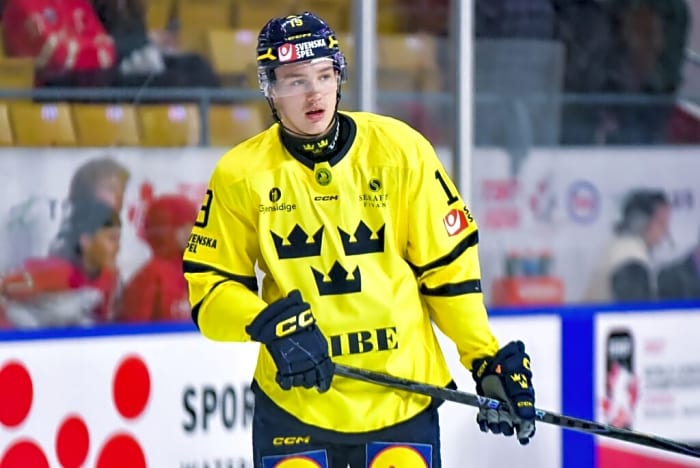
There’s nothing flashy about Håkansson’s game, but he’s darn good defensively. He didn’t play a ton down the stretch at the World Juniors, but he was relied on for his long reach and physical attributes on the penalty kill. He’s a raw prospect who plays more of a chip-out-of-danger puck game, although he does a solid job of disrupting plays and blocking scoring lanes. Teams love big defenders, and at 6-foot-4, he’s one of the more mobile ones available in the top 50 this year.
26. Yegor Shilov, C (Victoriaville Tigres, QMJHL)
When it comes to Shilov, some scouts wondered if his production was legit or only amplified because he plays in the Q (defense can be a bit rough to watch sometimes). But Shilov is a legit difference-maker most nights, and he’ll finish with around 90 points if he keeps plugging away like he is. Shilov is excellent with the puck, skates well and does a great job of finding teammates through traffic. My biggest complaint is that it feels like he takes too many shifts off, just floating around, hoping for something to happen. Fortunately, he makes enough plays happen to make up for it.
27. Wyatt Cullen, LW (USNTDP)
Cullen was USA’s top player at the CHL USA Prospects Challenge back in the fall, and he was the top forward in the recent USA Hockey All-American Prospects Game, too. His ability to get to the net and capitalize on loose pucks is second to none. The son of former NHLer Matt Cullen is an excellent skater who can beat you in a foot race in so many different ways. Mix in the hockey sense and a quick, deceptive release, and I see a good middle-six forward down the line.
28. Alessandro Di Iorio, C (Sarnia Sting, OHL)
Di Iorio has been great in nearly all my viewings this year. Even when he’s not putting pucks in the net, he’s driving the play, making responsible decisions with the puck, and seems to make everyone around him better. Di Iorio does an excellent job of carrying the puck through the middle of the ice, showcasing his high-end playmaking and his quick release. I think there’s a very safe chance he goes late in the first round, which is where I’ve been projecting him to go throughout most of the season.
29. Adam Goljer, RHD (Trencin, Slovakia)
I’m a big Goljer fan. I’ve seen him play some excellent hockey at the U-20 level this season, and he was one of my favorites with the U-18 team a year ago. I know offense isn’t the name of his game (although he shows some solid proficiency with the puck), but defensively, he gets the job done very effectively. I like the idea of him being a potential second or third-pair defender down the line, but I want him to head to North America next season to face more age-appropriate competition.
30. Nikita Shcherbakov, LHD (Tolpar Ufa, MHL)

NHL teams like big defenders, and Shcherbakov meets that criterion. The 6-foot-5 defender started the year in the KHL but has primarily played in the second-tier Russian league since the end of September. Shcherbakov has missed plenty of time due to injury, though, which doesn’t help. He’s strong, but he moves well – which is important for a guy his size. Shcherbakov is very intriguing, and I’m glad he’s looking comfortable in the MHL. I just wish he didn’t struggle as much as we’ve seen him in his play against men this year, though.
31. Niklas Aaram-Olsen, LW (Orebro, SHL)
Aaram-Olsen loves to shoot the puck, and while he’s not massive, he plays with a ton of power. He has struggled to produce against men, but he rarely gets ice time. Against his own age group, though, he has been downright unstoppable. He’s a big reason why Norway will play in the World Juniors next year. I could see NAO becoming a legit middle-six scoring threat who brings energy to every single shift.
32. Tomas Chrenko, C (Nitra, Slovakia)
There might not be a more effective forward on the power play in this draft class than Chrenko. He was dynamite at the World Juniors and was one of the best players at the 2025 U-18 World Championship, too. I want him to be better at 5-on-5, given that’s where the majority of the game is played. But on the man advantage, Chrenko is a legit game-changer in a way very few in this draft class are. If he can be more dangerous at even strength, he’ll be a steal.
33. Simas Ignatavicius, RW (Geneve Servette, NL)
Lithuania has never been a hockey hotbed – Dainius Zubrus and Darius Kasparaitis are the only Lithuanians drafted to the NHL. Funny enough, both were first-round picks. Could Ignatavicius be next? He’s a 6-foot-3 forward having a solid season in Switzerland’s top league and has been downright dominant internationally. Ignatavicius is so versatile, finding so many different ways to impact the play both with and without the puck. He’s good defensively, has a great shot release, has obvious muscle and is incredibly skilled, too.
34. Giorgos Pantelas, RHD (Brandon Wheat Kings, WHL)
I dropped Pantelas just slightly in my rankings, but I really like him. His offense quieted down a bit in recent weeks, but I like how he never stops moving, has incredible confidence with the puck and sacrifices his body for a play. Pantelas is the type of player who won’t let you down defensively and will continue to improve offensively. He’s a project, by all accounts, but one worth taking a chance on.
35. Ryan Roobroeck, LW (Niagara IceDogs, OHL)

Once considered a potential top-10 pick, Roobroeck has fallen in the eyes of scouts, publicly and privately. Most will agree – myself included – that he has the natural ability to dominate shifts. But a lack of effort away from the puck and his overall inconsistency have seen him drop quite a bit. Roobroeck will likely crack the 80-point mark, but scouts simply wanted to see more. That being said, Roobroeck has proven he can still take over games by using his power and quick shot release to obliterate goaltenders. Roobroeck can score from anywhere – but can he do it consistently enough to ignore the lack of effort that sometimes creeps through (and has since his U-15 days)?
36. Maddox Dagenais, C (Quebec Ramparts, QMJHL)
Dagenais comes from quality hockey bloodlines – his father, Pierre, carved out a decent NHL career. At 6-foot-4, it’s easy to notice Dagenais. At times, he’s able to dominate the puck better than most other big forwards in this draft class. When Quebec is thriving, Dagenais is often a big reason. His hockey IQ is impressive, and he’s a good skater for his size. His numbers are nothing to get too thrilled about, but I like his potential as a second- or third-line forward.
37. Jack Hextall, C (Youngstown Phantoms, USHL)
Scouts seem a bit split on Hextall, who, in my opinion, has the skill to dominate shifts more, but the results haven’t necessarily shown. He played some of his best hockey of the season in January, though, which included a solid showing at the USA Hockey All-American Game. Hextall plays with a ton of skill, and he has a deadly accurate shot. He’s great on the power play, as well. I’d like to see him improve his skating and his defensive awareness to help him take the next big step in his game.
38. Casey Mutryn, RW (USNTDP)
Mutryn is one of my favorite prospects out of the USNTDP. I like his physicality and work ethic and think that could allow him to be a decent third-liner. He’s smart, battles hard and has the ability to find chemistry with just about everyone. Although I don’t think his ceiling is that high, I feel confident Mutryn will be an NHLer. Most likely as a third- or fourth-liner who can grind it out and win most of his battles, but he’ll be a good one at that.
39. Alexander Command, C (Orebro, Sweden U-20)
I wasn’t too sure what to think of Command heading into the season. He didn’t make Sweden’s Hlinka Gretzky Cup team, and NHL Central Scouting had him projected as a sixth-seventh rounder early on. But between his U-20 league play, and his Sweden national team action, he’s been quite impressive this season. He wins a ton of faceoffs, defends hard and plays a smart game overall. There’s nothing too flashy about his game, but he does enough at both ends of the ice to be worth a second-round pick.
40. Adam Valentini, C (University of Michigan, NCAA)
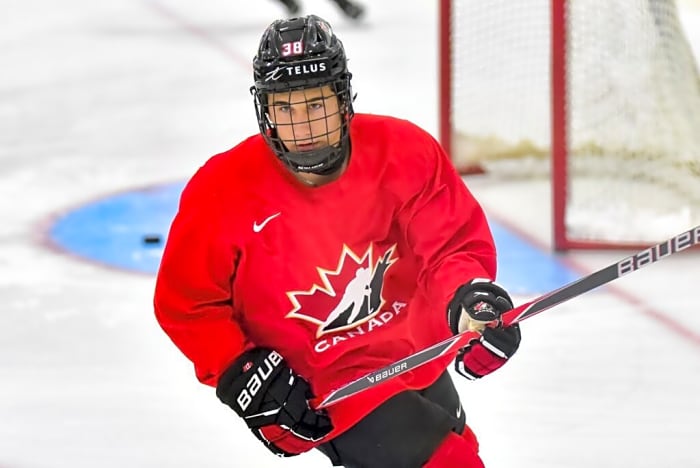
Valentini is so energetic that he can chase the whole game without losing much pace. He can be a bit of a pain in the butt around the net because you can almost never keep up with his footwork. I like how his game has progressed in college, but he needs to add more muscle. With the puck, though, Valentini brings so much to the table. Producing at just less than a point per game as a 17-year-old in the NCAA isn’t too shabby.
41. Brooks Rogowski, C (Oshawa Generals, OHL)
I’ve really liked my viewings of Rogowski, one of the best “big dudes” in the draft this year. At 6-foot-7, he’s obviously got size. But I also appreciated how well he hustled at both ends, chasing pucks and breaking up plays. He’s a smart forward who uses his big frame to win battles, but he also has a good shot and isn’t afraid to launch it from anywhere in an attempt to surprise the goaltender. Rogowski won’t be a big-time offensive threat, but as a supporting player, he has a ton of tools to make himself useful.
42. Liam Ruck, RW (Medicine Hat Tigers, WHL)
Ruck was excellent at the Hlinka Gretzky Cup and has continued that hot play alongside his twin, Markus, with Medicine Hat. I love Liam’s work ethic, his defensive zone play and how mobile he is on the penalty kill. He’s an all-around player who might not be big but has all the tools to have a good NHL career. Ruck is the type of player you can pair with a shooter and make magic happen. I hope whoever drafts Liam takes Markus, as well.
43. Oscar Holmertz, C (Linköping, Sweden U-20)
I have really enjoyed watching Holmertz in international play, where he has looked excellent at the U-16/17/18 levels. Domestically, he hasn’t blown the doors off the Swedish U-20 league, but he’s becoming more confident the more he plays. And he’s playing a lot, bouncing around the U-18 and U-20 junior leagues. He’s speedy, smart and has a great shot release. If he continues to improve his defensive-zone awareness, he’ll be a nice pickup.
44. Victor Plante, LW (USNTDP)
Plante doesn’t need to dominate with the puck to be useful. I really like how he consistently forces opponents to make decisions while attempting to break up plays. Plante is a smart forward who lacks size, but he has the willpower to battle hard and win most of his matchups. He’s a good puck distributor who likes the middle of the ice, but he’s no slouch along the perimeter, even as a smaller player. Plante doesn’t seem to lack confidence, which I like.
45. Jaxon Cover, RW (London Knights, OHL)

Cover is one of the most raw prospects in the draft, having only started playing ice hockey at the age of 13. So the fact that he has been so productive with the puck and so dangerous without it has really excited scouts. He’s so quick, using his speed to force turnovers and break into scoring lanes. Cover loves to get creative with the puck in the offensive zone, and it feels like his hands keep improving the more I watch him.
46. Vladimír Dravecký, RHD (Brantford Bulldogs, OHL)
I was disappointed that Dravecký didn’t get into any World Junior games this year, but I still really like his game. He’s a bit undersized, but he makes up for it with a high degree of hockey sense and confidence with the puck. Dravecký rarely makes an unforced error when looking for a linemate, and he’s a solid skater, too. I think scouts will want him to add a bit more speed if he can’t find a way to bulk up (he’s six-foot), but there’s potential for him to be an impact third-pairing blueliner who can keep things simple yet effective.
47. Lavr Gashilov, C (Yekaterinburg, MHL)
Gashilov has been the most productive draft-eligible prospect in the MHL by a country mile. The puck seems to be glued to him – and he’s an excellent playmaker, to boot. His speed is impressive, and he’s a solid 200-foot player. By all accounts, he has the base to become a true difference-maker – but he seems allergic to physical play, which is difficult to watch out of a 6-foot-2 forward. His shot needs work, too, but that can be fixed at the next level.
48. Lars Steiner, RW (Rouyn-Noranda Huskies, QMJHL)
Steiner started the season as a first-round pick, but scouts are starting to sour on him. He was excellent on the power play at the World Juniors, but scouts wanted to see him do a bit more at 5-on-5. A shoulder injury prior to the WJC really seemed to slow him down – he’s taking a ton of shots still, but missing a bit of the velocity that made him so lethal. Offensively, Steiner has proven he’s capable of creating damage, and he has the skating teams love. He’s just on the smaller side, and I’m not sure he’ll be enough of a game-breaker to overcome that. Interestingly enough, Steiner signed a multi-year deal to play with HC Davos starting next season, meaning he’ll go up against men (potentially in a second-line role) instead of continuing against junior players.
49. Braidy Wassilyn, RW (London Knights, OHL)
Many were hoping a trade from Niagara to London would thrust Wassilyn into a first-round pick. It’s not looking probable, but I still like him. He’s a solid shooter who plays with a ton of skill and is fully capable of play-driving every now and then. The Boston University commit is really competitive and isn’t afraid to lay the body, even if he’s more of a mid-sized winger. I wouldn’t call his physical game a strength, though. I think he has all the right tools to be a middle-six forward, but scouts want him to become more impactful defensively. His game is better than his numbers would suggest, in my opinion.
50. Beckham Edwards, C (Sarnia Sting, OHL)
I was hoping to see a bit more offense from him – he’s tracking to match the 45 points he registered as a rookie last year. He was known as a highly touted goal scorer during his minor hockey career, but it just hasn’t come as easily this year. Sarnia isn’t a great team, though, and Edwards was a huge part of the team’s early-season play, at the very least. I like how physically strong he is, and he’s good as a support player. I just wish he found another level to his game.
51. Pierce Mbuyi, LW (Owen Sound Attack, OHL)

Mbuyi has grown a bit over the past year, eliminating the “he’s way too small” conversation. He still hasn’t bulked up by any means, but he plays an aggressive game and isn’t afraid to battle much bigger competition. The Penn State commit loves creating chances on the breakaway, and he rarely loses a 1-on-1 battle in the offensive zone. I’d like to see some improved game-to-game consistency, and I feel like he can shoot more. But the talent is definitely there.
52. Mikey Berchild, LW (USNTDP)
Berchild is small but mighty, especially when it comes to his shot. The University of Denver commit is skilled, battles hard along the boards and wins most individual battles. But at 5-foot-9, it’ll be hard to get himself higher on draft boards. If he can spend the rest of the season bulking up, he might be able to outplay the size concerns. I want to see him keep getting pucks on net because when he’s on his game, he can be so lethal. For what it’s worth, he’s been heating up since his impressive All-American Game performance.
53. Axel Elofsson, RHD (Orebro, Sweden U-20)
I’ve been very impressed with just how effective Elofsson is with the puck. The 5-foot-10 defender plays with a ton of skill and he loves exploiting opponents on the man advantage. He does shy away from physical games, which isn’t ideal. But you’ll have that when you’re on the smaller side. His lack of size will hurt his draft stock, but he’s as skilled with the puck as you’ll find in this draft class. His defensive game needs to improve against stronger competition if he’s going to excel.
54. Ryder Cali, C (North Bay Battalion, OHL)
I liked Cali in Jr. A last year – putting up more than 50 points as a 16-year-old in the OJHL is no small feat, even if the competition has diminished over time. But I was hoping to see more from him offensively in North Bay this year – the offense has been a bit disappointing. Cali is built like a tank, though, and he puts a ton of power into every shift, with and without the puck. I can see him becoming a solid bottom-six forward if he can improve his playmaking. I considered ranking him lower, but I know some scouts really like him as a long-term project.
55. Brady Knowling, G (USNTDP)

Knowling has been a blast to watch this year. Between his outstanding Hlinka Gretzky performance and his 42-save effort in the CHL USA Prospects Challenge, Knowling has been lights out whenever the spotlight has been on him. His numbers with the USNTDP are nothing to get excited about, but he almost gives his team a chance to win every single night. You can’t complain about his 6-foot-5 frame, either. Lots of scouts have different picks for the top goaltender, but I like Knowling the most right now.
56. Gleb Pugachyov, RW (Torpedo Nizhny Novgorod, KHL)
If you’re looking for flash, you won’t find it here. But Pugachyov is a big, 6-foot-3 forward who has shown little difficulty adjusting to playing against quality competition in the KHL, even in limited minutes. He can physically dominate his own age group, and he has done so this year without getting himself into too much trouble. He’s strong, plays a solid two-way game and won’t stop moving. I think he’ll go higher than this, but I don’t think his offensive game will translate to the NHL. Still, scouts really like him.
57. Markus Ruck, C (Medicine Hat Tigers, WHL)
I love Ruck as a playmaker. While Liam is the more offensively minded twin, Markus chases after opponents and often gets the puck where it is needed. Ruck is a smart, hard worker who won’t score in the NHL, but he can fill a lot of roles in a lineup. His relentless energy, smart hockey sense, and solid two-way play will make him very useful no matter which team takes him. But, seriously – if the team that selects Liam doesn’t take Markus, they’re making a grave mistake.
58. Blake Zielinski, RW (Des Moines Buccaneers, USHL)
Zielinski was USA’s best player throughout the Hlinka Gretzky Cup and recently made a huge splash at the World Junior A Challenge. He sees the ice so well, and he has the quick hands to make passes look so easy. I’ve consistently liked his play every time I’ve watched him – it feels like he has been everywhere on the attack while making his linemates more dangerous thanks to his high-end playmaking. I want to see him take over more games in the USHL, but I feel like he has a good future as a support middle-six forward.
59. Luke Schairer, RHD (USNTDP)
I’m still not 100 percent sure how I feel bout Schairer. On one hand, he has the ideal size for a defender at 6-foot-3 and nearly 200 pounds. He does a good job of breaking up plays and keeping the puck away from the net. But that’s really all he seems to do – the two-way game just simply isn’t there right now. I just want to see his game evolve in a way that makes him more dynamic and dangerous. I think he’ll be an NHLer, especially since he’s a good skater. But I’m not sure I like enough about his game to consider him more than a late second-round pick at this point.
60. Olivers Mūrnieks, C (Saint John Sea Dogs, QMJHL)

There were points where Mūrnieks was one of Latvia’s best players at the World Juniors, but it still felt like a serious step down from a year ago. And, overall, that’s kind of the sentiment most scouts are feeling about his season overall. It’s been a difficult year for Mūrnieks, who simply hasn’t looked comfortable or overly dangerous in the QMJHL. I do think he’s a smart forward who can take over a shift at times, but it just hasn’t happened enough this season. I still think Mūrnieks has the makings of being an NHLer – but perhaps more of a fourth-liner, while some scouts thought there used to be second-line potential.
61. Charlie Morrison, LHD (Quebec Ramparts, QMJHL)
There isn’t much to Morrison’s offensive game worth getting excited about. Instead, he has built a profile based on being the toughest motherfuzzball around. He’s a strong skater who isn’t afraid of anything. He played big minutes right away with Quebec as a rookie, showing solid reliability in his own zone. He won’t wow anyone with his puck skills, but he consistently makes himself difficult to play against while keeping his game simple overall.
62. Tobias Trejbal, G (Youngstown Phantoms, USHL)
Trejbal has been excellent in his first season in North America with the USHL’s Youngstown Phantoms. Being 6-foot-4 doesn’t hurt, either. The stats don’t lie – the busier Trejbal is, the better he plays. His ability to stay calm and composed under pressure is impressive, and he has quick hands and quicker feet. Trejbal’s athleticism has gotten scouts talking, and his big frame makes him an easy project for a team willing to be patient with the UMass commit.
63. Jakub Vaněček, LHD (Tri-City Americans, WHL)
Vaněček has had a productive first season in North America, pacing for about 15 goals and 40 points. We’ve also seen him play quite a bit internationally at both the U-18 and U-20 levels. I think he’s a decent skater who has a good reach. He also boasts an excellent shot and consistently gets himself out of trouble under pressure.
64. Adam Nemec, LW (Sudbury Wolves, OHL)
I’m still trying to figure out what type of player Nemec is going to be at this point. He has some solid hockey IQ and is a good skater. I think he has a decent shot, too. There just aren’t many standout qualities that scream “NHLer” to me at this point, which is why he keeps falling down my rankings. I’m not sure if playing in the Slovak league did him many favors, but he has gotten better against older competition throughout the season before going to Sudbury, at least.
Just Missed the Cut: Samu Alalauri, RHD (Pelicans, Finland U-20); Chase Harrington, LW (Spokane Chiefs, WHL); Brek Liske, RHD (Everett Silvertips, WHL); Ben MacBeath, LHD (Calgary Hitmen, WHL); Landon Nycz, LHD (UMass, NCAA)
More must-reads:
- Red Wings' Patrick Kane passes Hall of Famer Mike Modano to become top-scoring U.S.-born player in NHL history
- Hurricanes pull off historic comeback win against Mammoth
- The '100-yards + TD Conference Champ games' quiz
Breaking News
Trending News







Customize Your Newsletter
 +
+




Get the latest news and rumors, customized to your favorite sports and teams. Emailed daily. Always free!
PRIVACY POLICY EDITORIAL POLICY CONTACT US
ABOUT YARDBARKER TERMS OF SERVICE


Use of this website (including any and all parts and
components) constitutes your acceptance of these
Terms of Service and Privacy Policy.
This site is for entertainment purposes only.
There is no gambling offered on this site.
Gambling Problem? Call 1-800-Gambler.
