
-

-


Follow Us
-

 On Facebook
 On Flipboard

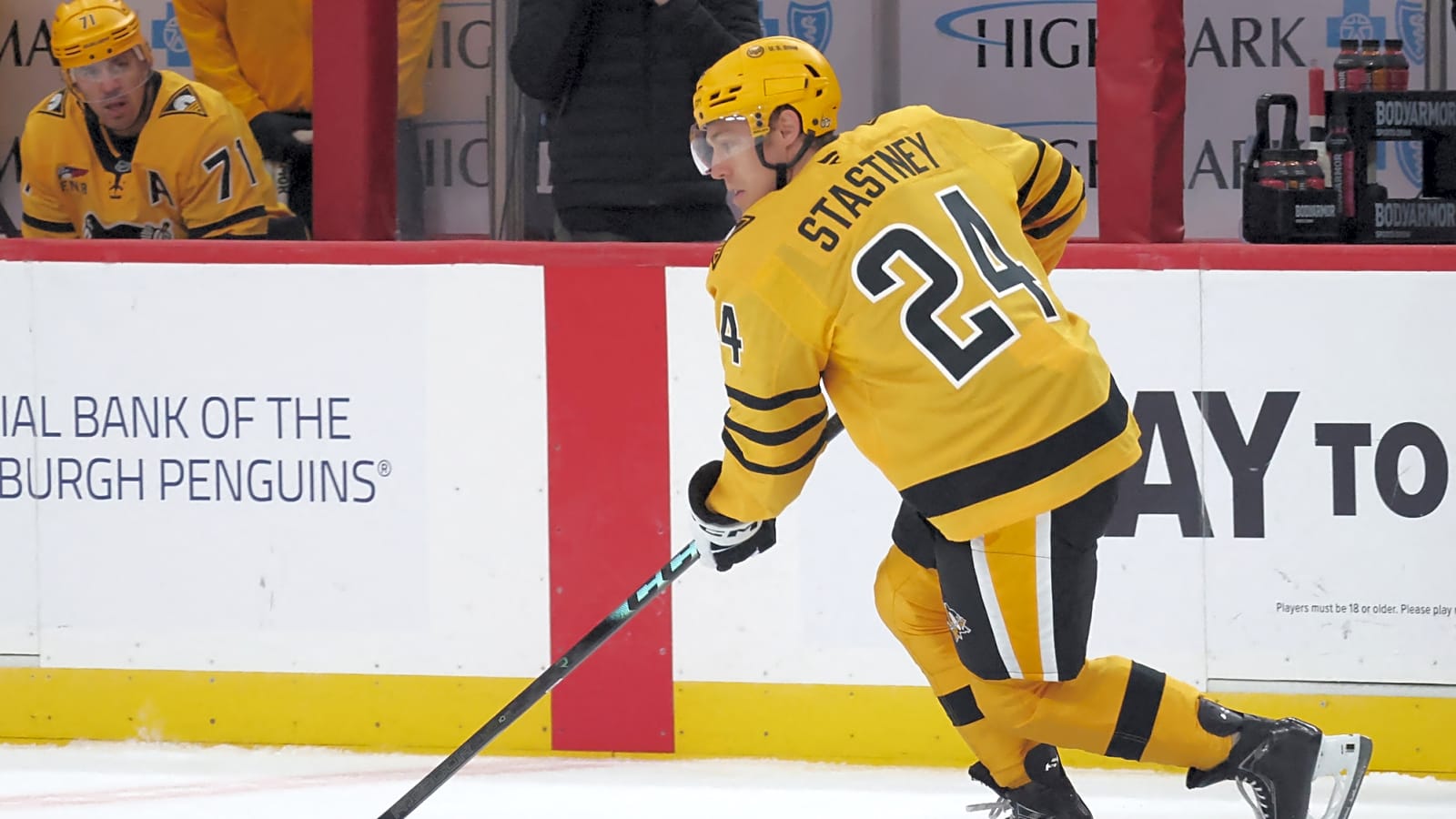
The Pittsburgh Penguins and Edmonton Oilers recently made an interesting trade, swapping forward Filip Hallander for defenseman Spencer Stastney. The trade’s timing was unusual, as Hallander was finally starting to resemble an NHL player after years of setbacks. Hallander missed most of last year after dealing with a blood clot that required a 10-month recovery, and he returned to the NHL just a few weeks ago, tallying a goal and two assists in the Penguins’ season opener. It was a feel-good start to the season, but the positive vibes didn’t last long: Hallander was scratched in the Penguins’ October 5 loss to the Winnipeg Jets and, shortly after, unceremoniously traded to the Oilers. The trade wasn’t about Hallander not being good enough; it was a numbers game that made him the odd man out.
The series of events was as surprising as it was peculiar and capped off a very strange relationship between the player and the Penguins. The Penguins drafted Hallander in the second round (58th overall) in 2018, but he didn’t reach North America until the 2021-22 season, when he played 61 games in the AHL and posted pedestrian offensive numbers: 14 goals and 14 assists. However, off the ice, a lot happened with Hallander and the Penguins. He was traded by Pittsburgh to the Toronto Maple Leafs along with a first-round pick in exchange for Kasperi Kapanen but was then dealt back to Pittsburgh along with a seventh-round pick for Jared McCann.
Circling back to Hallander’s on-ice play. In his second AHL season, Hallander posted much better offensive numbers, with 11 goals and 22 assists in 43 games. After that season, he bolted for Sweden and spent two seasons overseas, becoming one of the SHL’s top scorers in his second campaign, with 26 goals and 27 assists in 51 games. That production earned him a two-year, one-way deal with the Penguins that guaranteed him NHL money. Last year, of course, he managed just four points in 13 NHL games before a blood clot ended his season.
Back to the trade, the Penguins entered this season with 18 NHL-calibre forwards, and everyone knew they needed to make moves to comply. Hallander made the NHL roster out of training camp, but with Bryan Rust returning from injured reserve, Pittsburgh had to make a corresponding move, and the Oilers were interested in Hallander. Effectively, someone had to go, and given his age and production, the team shipped out Hallander. Unfortunately for the Penguins, they might regret that decision, even though Hallander was a 26-year-old with just 18 NHL games of experience.
It’s ironic, because the Penguins have spent the Kyle Dubas era finding players who weren’t given an opportunity at the NHL level, acquiring them and giving them a chance. It has worked out well for the Penguins, as evidenced by Ryan Shea, Justin Brazeau, Connor Dewar, Anthony Mantha, Parker Wotherspoon, and potentially Nicholas Robertson this season. But now they can’t give a drafted, homegrown player like Hallander the same opportunity.
So now Hallander gets his opportunity in Edmonton, where there isn’t as much of a logjam in the bottom six, and he will be playing for his NHL career. The Oilers apparently circled Hallander for a while and were intrigued by his offensive upside, work ethic, and pace. All it cost the Oilers was a defenseman who wasn’t playing and probably wouldn’t play much in Edmonton. What makes it worse for the Penguins is that Stastney likely won’t play much in Pittsburgh either, because they have a defensive logjam and an older prospect in Owen Pickering who should be playing in the NHL.
The trade itself is, as the kids would say, “Meh.” Hallander wasn’t a big needle-mover, and if the Penguins made a mistake moving him, it won’t be a big one. The bigger issue for the Penguins is that they don’t have room for their young players, even as they talk constantly about the future. As Josh Yohe of The Athletic points out, they are stuck between being a decent team now and preparing for the future. Players like Pickering, Avery Hayes, and Rutger McGroarty should all be seeing NHL minutes, but they likely won’t this year, barring injuries or the Penguins falling out of contention and having a fire sale of veterans. It’s surprising Pittsburgh didn’t pursue a mid-round draft pick in exchange for Hallander instead of a defenseman they don’t really need. But Dubas and company might see something in Stastney, and they have found reclamation projects before, so that possibility exists.
Back to Hallander, he won’t be an elite NHL player and might end up as a fourth-liner. But Pittsburgh showed some seriously encouraging signs beyond the three points in his first two games. He also had an 86.31% expected goals share at five-on-five. Granted, that’s a minuscule sample size, but it’s worth exploring his capabilities for such a low cost. This wasn’t a couple of lucky bounces; it was a player helping drive play at even strength, and Edmonton can certainly use that in their bottom six.
We won’t know for a while whether this move was a mistake for Pittsburgh, and granted, they created a roster problem with their own actions this summer. They still face that problem in the coming days and weeks should the forward group get healthy. Brazeau has to come back at some point, and there really isn’t a spot for him right now, since he’ll also have to fight for a bottom-six role.
The Penguins made a small trade that looks perfectly reasonable in a vacuum and could end up being a nothing burger, but if Hallander shows he is an NHL player, it might be a move Kyle Dubas wants to reverse. Only time will tell.
More must-reads:
- Connor Hellebuyck drama with Jets is about to get ugly
- Panthers make NHL history with third consecutive natural hat trick
- The 'Most WNBA double-doubles' quiz
Breaking News
Trending News




Customize Your Newsletter
 +
+




Get the latest news and rumors, customized to your favorite sports and teams. Emailed daily. Always free!
PRIVACY POLICY COOKIE POLICY CONTACT US
ABOUT YARDBARKER TERMS OF SERVICE


By using this site, you agree to our Terms of Service and Privacy Policy.
This site is for entertainment purposes only.
There is no gambling offered on this site.
Gambling Problem? Call 1-800-Gambler.
