
-

-


Follow Us
-

 On Facebook
 On Flipboard

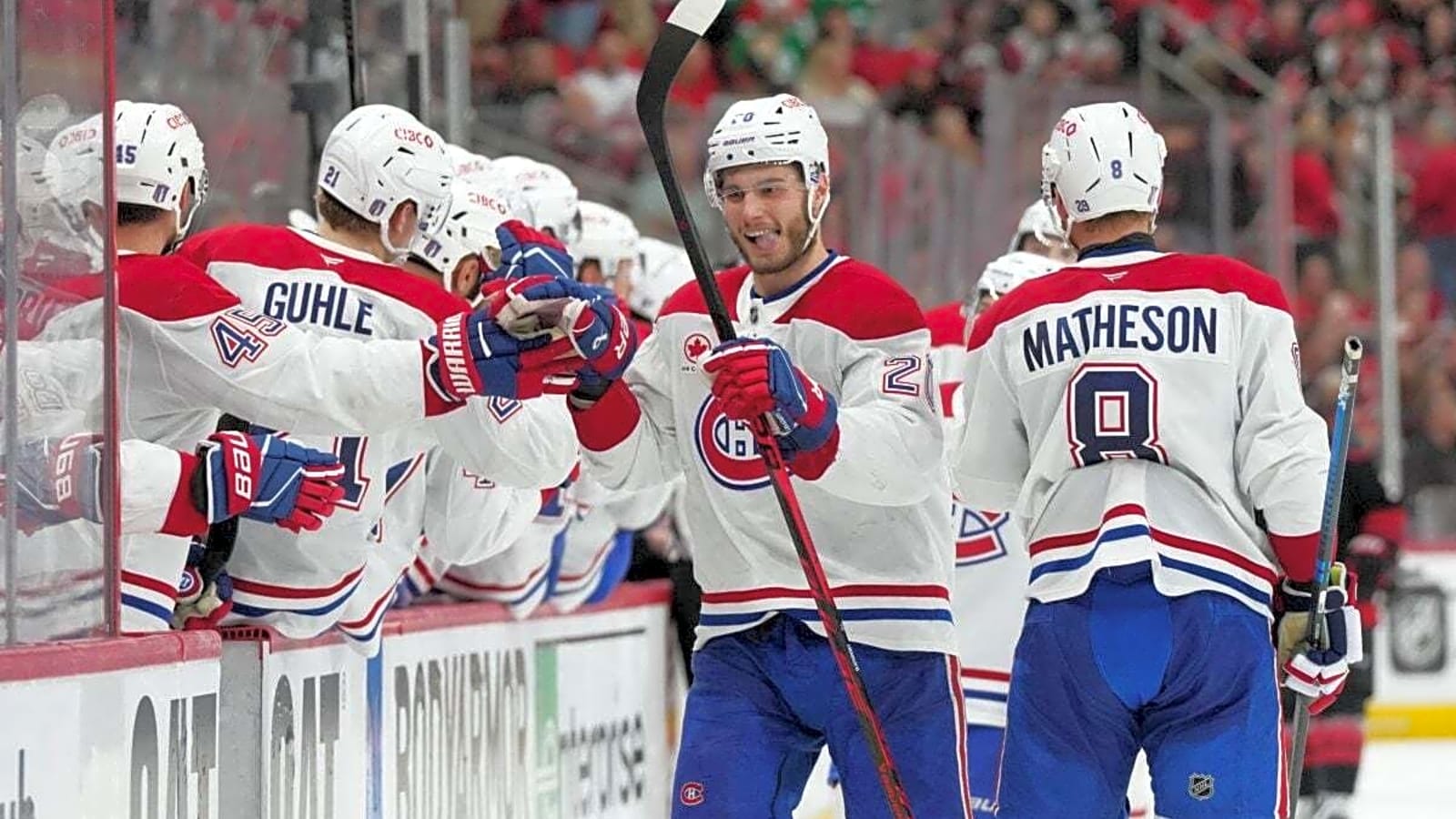
Despite the chaos of NHL free agency, staggering contracts, and questionable fits, the Montreal Canadiens essentially stood pat. While they didn’t make a splash in free agency, they took care of important business by signing Ivan Demidov to an eight-year extension and Jakub Dobeš to a three-year extension. Dobeš, who led all rookie goaltenders with 29 wins last season, was rewarded after emerging as a key part of Montreal’s run to the Eastern Conference Final.
Demidov was locked up long-term before his entry-level contract expired. Compared to some of the money handed out elsewhere in the league, including the massive offer sheet signed by Leo Carlsson, Demidov’s contract already looks like one of the better deals completed this summer.
Still, some Canadiens fans on social media clamoured for a second-line centre and a top-four, right-shot defenceman, frustrated that Kent Hughes and Jeff Gorton couldn’t find either. Those fans aren’t concerned with maintaining the salary hierarchy or avoiding moves that mortgage the future. They want what they want, and they want it now. Those fans will always exist. There’s nothing you can do about that.
So let’s get back to reality and talk about what Montreal’s lineup could actually look like this season. Hughes and Gorton may have tried to acquire another impact player, but only at a price they felt was reasonable. If the asking price became too high, they were comfortable walking away. That’s been their approach since taking over, and so far it’s hard to argue with the results.
The other part of that equation is internal development. Rather than overpaying in free agency or sacrificing assets in a trade, the Canadiens have players knocking on the NHL’s door. David Reinbacher, Adam Engstrom, and Owen Beck appear ready to compete for roster spots. Vinzenz Rohrer could force his way into the conversation with a strong training camp. Montreal has earned the luxury of patience because its prospect pipeline remains one of the deepest in hockey.
The First Line Could Be Even Better
It’s almost a foregone conclusion that Nick Suzuki, Cole Caufield and Juraj Slafkovsky will begin the season together. Some people doubt Suzuki can match or exceed last season’s production, and the same goes for Caufield after his 51-goal season. I see two players entering their prime who have finally figured it all out. Last season may not have been the ceiling. It may have been the beginning.
Slafkovsky is only 22 years old and hasn’t even reached his prime yet. His game continues to evolve, and he’s getting stronger and more confident with the puck while making quicker decisions. If he takes another step this season, it will only make Suzuki and Caufield even more dangerous. Montreal’s top line has the potential to rank among the NHL’s very best.
The Second Line Doesn’t Deserve the Doubt
As much as Montreal would have liked to acquire a legitimate second-line centre, starting the season with Alex Newhook between Ivan Demidov and Oliver Kapanen could be a lot worse. Newhook got off to an excellent start last season before a serious injury interrupted his momentum. When he returned, he finished the season strong and elevated his game again during the playoffs. There’s every reason to believe he can continue that steady upward trajectory.
Kapanen also showed plenty of promise as a rookie. Like many first-year players, his game faded somewhat late in the season and during the playoffs, but that shouldn’t come as a surprise. He had never played that many meaningful games in a single season. It’s easy to imagine him spending the summer preparing to come back stronger.
Then there’s Demidov. Expectations couldn’t be much higher after his outstanding rookie season, but everything about his approach suggests he’ll spend the offseason looking for ways to improve. Given what we’ve already seen from him, it’s difficult to predict anything other than continued growth. If both young wingers continue progressing and Newhook picks up where he left off, I like those odds. It’s also fair to ask: had Montreal traded for a second-line centre, who’s to say he would have fit?
One of Hughes and Gorton’s greatest strengths has been identifying players who fit the culture they’re building. Odds are they would have found someone who fit, but at what cost? Who would have gone the other way, and how might that have affected the chemistry this team developed during its playoff run? Sometimes the best move is the one you don’t make.
Depth Will Be Earned
The bottom six should feature veterans Josh Anderson, Phillip Danault, and Jake Evans alongside Alexandre Texier, Zachary Bolduc, and, assuming his contract situation is resolved, Kirby Dach. That mix gives Montreal useful depth but narrows openings for younger players. Beck or Rohrer may have to wait unless they force the coaching staff’s hand, particularly with their penalty killing. Considering the Canadiens’ penalty kill needed improvement last season, that could be their clearest path to regular ice time.

It will also be interesting to see whether Bolduc can build on the identity he established during the playoffs. He looked like the type of player every team wants in the postseason, difficult to play against, willing to agitate opponents and capable of capitalizing on offensive opportunities. Dach remains one of Montreal’s biggest question marks. His talent has never been in doubt. The uncertainty lies in his contract situation and whether he can finally stay healthy for a full season, something no one can predict with certainty.
Texier has shown he can make a difference. If he can bring that same level of play consistently from one night to the next, he’ll become another valuable piece of Montreal’s forward depth. As for Danault, Evans and Anderson, the Canadiens know exactly what they’re getting. Experience, reliability and defined roles are valuable commodities, especially on a team that’s still one of the youngest in the NHL.
Some of Montreal’s Atlantic Division and Eastern Conference rivals improved on paper through free agency, but there’s no guarantee those additions will work. Every free agent has to adapt to a new system, dressing room, and often a new role. Some thrive. Others don’t. The Canadiens, on the other hand, have few unknowns. They already know what most of their roster is capable of, and there’s value in that familiarity.
More Depth and Competition on Defence
Defensively, Montreal is quietly becoming one of the deepest teams in the league. With Lane Hutson, Mike Matheson, Noah Dobson, and, assuming he stays healthy, Kaiden Guhle, the Canadiens have an outstanding combination of offensive creativity, skating ability, puck movement, and defensive reliability. If that group performs to its potential, Montreal’s top four can match up with almost any team in the NHL.
Alexandre Carrier appears to have earned the coaching staff’s trust. Jayden Struble and Arber Xhekaj will continue battling for regular playing time. Behind them, Adam Engstrom and David Reinbacher are very much in the mix. Both can earn NHL jobs, and if either forces his way onto the roster, internal competition on the blue line will only grow stronger.
Stability in Goal
Dobeš appears ready to take on a much larger role this season after proving he belongs at the NHL level. Behind him, Jacob Fowler continues to establish himself as one of the organization’s most important long-term prospects. Whether he begins the season in Laval or earns NHL action later, the Canadiens are in an enviable position with two young goaltenders who project to be key pieces of the organization’s future. That gives Montreal impressive depth in goal and a much clearer picture of its long-term outlook.
Samuel Montembeault’s future remains uncertain, but he could begin the season in a backup role while Fowler takes the majority of the starts in Laval. The Rocket also re-signed Kaapo Kähkönen, last season’s starter, along with three other goaltenders, creating a crowded crease in the American Hockey League (AHL).
With Dobeš and Fowler appearing to be ahead of Montembeault in the organization’s long-term plans, the Canadiens will likely try to get something in return for Montembeault, even if that means waiting until after the season begins, when injuries around the league could increase demand and improve Montreal’s return.
Team Building Still Matters
Every offseason, the conversation revolves around free agency and blockbuster trades. Teams become obsessed with finding the missing piece. But whatever happened to simply building a team? That’s exactly what the Canadiens have done. They’ve allowed an exceptionally young core to develop together, struggle together, improve together and win together. Rather than constantly reshaping the roster, Hughes and Gorton have emphasized continuity, chemistry and internal growth.
Very few organizations have shown this level of patience. Most eventually panic and chase the quick fix. Montreal hasn’t. It has trusted the process, trusted its young players and resisted the temptation to sacrifice the future for immediate gratification. So far, that approach has worked remarkably well. There’s no reason to believe it can’t continue, and that’s what makes the Canadiens one of the NHL’s most intriguing teams heading into the season.
More must-reads:
- Ducks make massive Leo Carlsson decision
- Don Mattingly appears to reveal Kyle Schwarber's Home Run Derby participation
- The 'First-overall NHL Draft picks' quiz
Breaking News
Trending News


Customize Your Newsletter
 +
+




Get the latest news and rumors, customized to your favorite sports and teams. Emailed daily. Always free!
PRIVACY POLICY COOKIE POLICY CONTACT US
ABOUT YARDBARKER TERMS OF SERVICE


By using this site, you agree to our Terms of Service and Privacy Policy.
This site is for entertainment purposes only.
There is no gambling offered on this site.
Gambling Problem? Call 1-800-Gambler.
