
-

-


Follow Us
-

 On Facebook
 On Flipboard

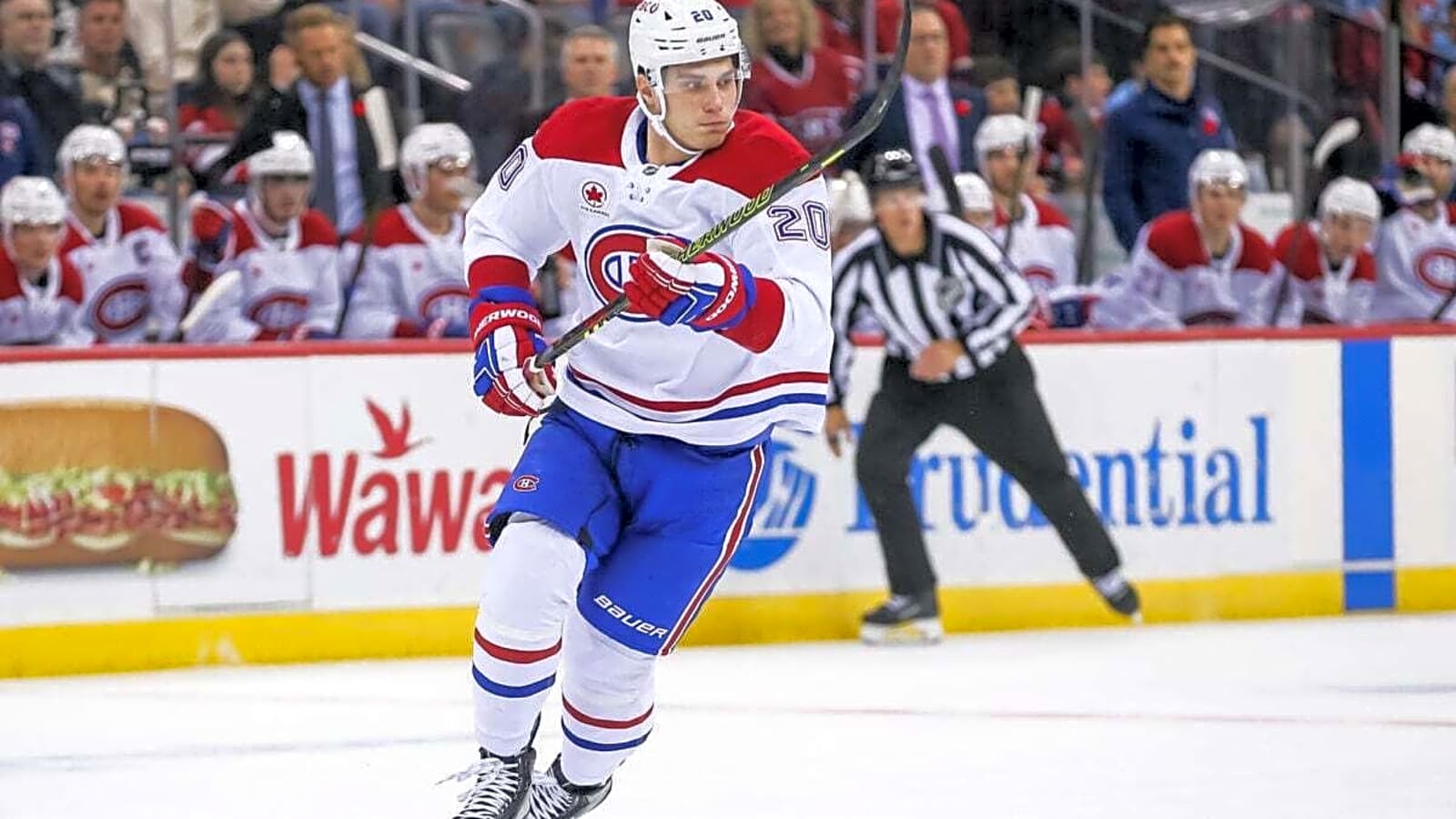
The Montreal Canadiens have four players participating in the 2026 Olympic Games in Milan: Nick Suzuki (Canada), Alexandre Texier (France), Oliver Kapanen (Finland) and Juraj Slafkovsky (Slovakia). The rest of the roster is enjoying the three weeks off at home.
But participating in the Olympics is a positive for the Canadiens’ young players, especially Slafkovsky, who was a standout at the 2022 Winter Olympics in Beijing and is repeating that impact this year in Milan. His performance this season and at this tournament is a signal that he is ready to break out, especially when the games matter most.
Canadiens Olympian Performance
Slafkovsky’s preliminary round performance was dominant. He has had a star showing so far, and is only the fourth male to reach 10 Olympic goals before age 22 and the first since 1948.
Best mode… https://t.co/WFLwWNnJtP pic.twitter.com/5zERLYaIIR
— Mike Kelly (@MikeKellyNHL) February 14, 2026
While Connor McDavid is outscoring everyone, he is doing so on a stacked Canadian squad. Slafkovsky, however, is taking an underdog Slovakian club and has upset not only Finland, but also Sweden to take top spot in Group B and earn a direct berth in the Quarterfinals. This was not expected of the upstart Slovaks. This is a direct result of Slafkovsky’s dominant performance thus far and has made them the talk of the tournament. Because of this, he should earn Olympic hockey Most Valuable Player (MVP), again, especially if he can lead them to another medal finish — no player has combined impact, consistency, and situational dominance the way he has throughout the tournament thus far.
Juraj is more mature as a player. He didn’t have that confidence last year or during his other seasons in Montreal. He was dominant four years ago for Slovakia with seven goals, but he didn’t play such a complete game. Now, he works as part of a team, he controls the puck, he plays well defensively, and he’s skating with intensity to get back to the bench. I love the way he handles himself.
His physicality has created space, his vision has elevated his linemates, and his scoring has touch forced opponents to adjust their entire defensive structure around him. For him to win the MVP award at this tournament, the voters will need to believe that this isn’t about highlight reels alone but rather about defining the tournament for his club. Slafkovsky thus far has dictated pace, tilted ice in his team’s favour, and proved to be the most influential player on the Olympic stage, exactly what the award is meant to recognize.
HOCKEY MASCULIN
— Radio-Canada Sports (@RC_Sports) February 14, 2026Quel but de l’attaquant du Canadien de Montréal Juraj Slafkovský! C’est 1 à 1 entre la Slovaquie et la Suède.@LNH_FR#MilanoCortina2026 #rcsports #hockey #equipecanada #jeuxolympiques pic.twitter.com/frJpxGVdmX
For Slafkovsky, Milan isn’t just another tournament. It is the catalyst that can turn potential into production.
Second Line Slaf
Before arriving in Milan, Slafkovsky’s evolution into a true line driver with the Canadiens helped to fundamentally reshape his game. Slotting into the second-line role required him to do more than complement skill; he had to create the conditions for it to thrive and create the space to capitalize on it. That meant carrying the puck through the neutral zone, winning battles along the wall, and sustaining offensive-zone pressure against quality matchups.
He has already reached NHL career highs in goals (21), power-play goals (10) and power-play points (17) in only 57 games so far this season for Montreal. He is the only NHL player with at least 20 goals, 100 shots on goal (117), 80 hits (83) and 40 blocked shots (53) this season. This may have a lot to do with his offseason work on his first step, as he has increased his burst speed, and is on pace to crush his shot totals, high danger scoring chances, and offensive zone time from last season.
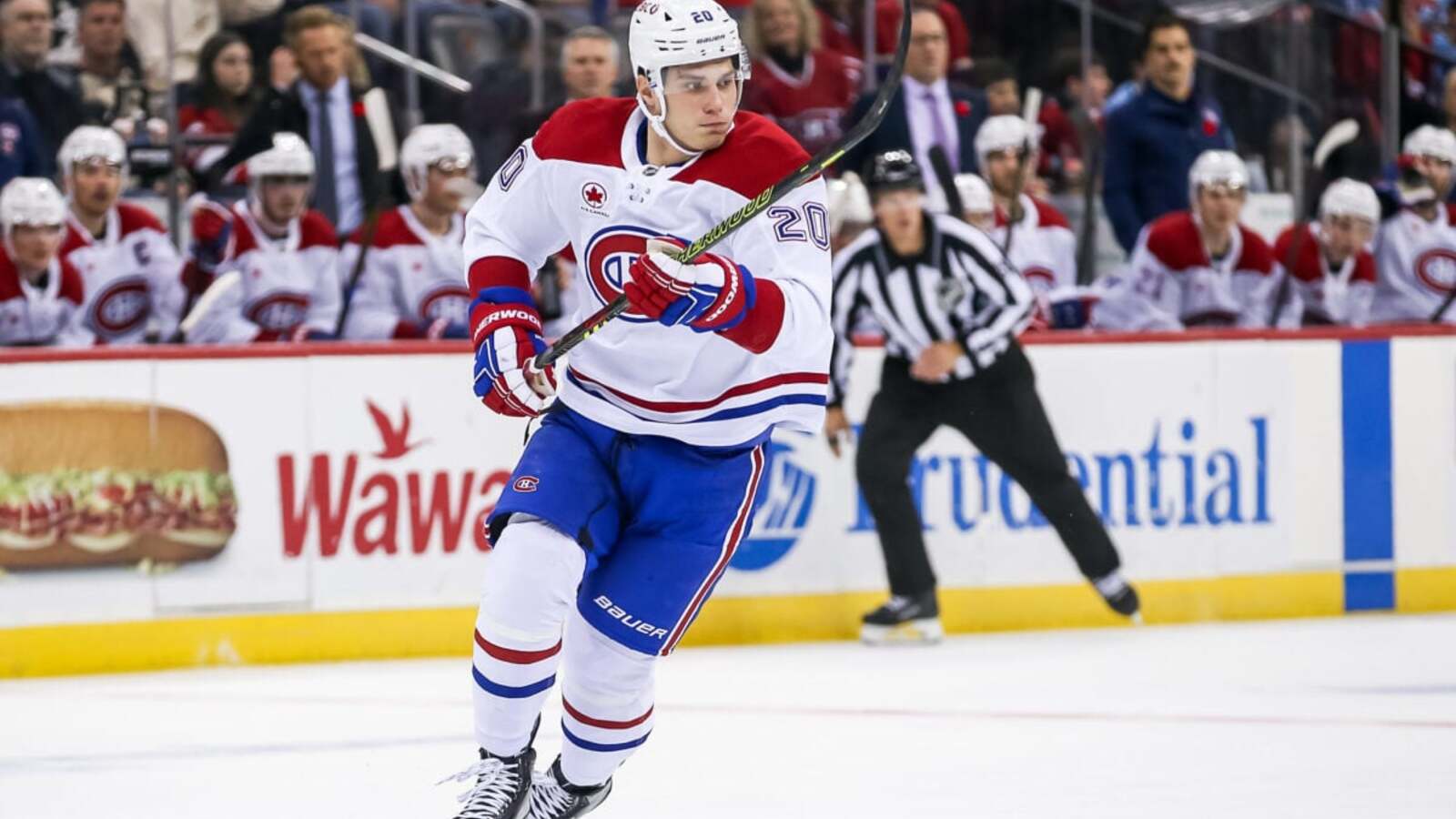
Operating as the engine of a line has also sharpened his details away from the puck. Head coach Martin St. Louis, since placing him on the second line, has trusted him with tougher defensive assignments, more defensive-zone starts, and responsibility late in games. That burden has refined his reads, improved his positioning, and demanded quicker decision-making under pressure. When he joined Slovakia at the Olympics, those learned habits translated seamlessly. Instead of needing to adjust to a bigger role, he stepped naturally into one as he was already accustomed to being the forward who initiates possession and absorbs top-pair defensive attention.
Slovak Mountain Set to Dominate
Slafkovsky has been dominant so far at the Olympics, and it was as soon as he stepped onto the ice. Thus far, it doesn’t just feel like another strong international showing. From that first shift, it looked like a player stepping fully into his power. Against elite competition, in high-pressure games, he dictated shifts. He has won board battles, drove defenders back off the rush, and created space for linemates with the kind of poise that only comes when talent meets confidence. The Olympics are where stars either hesitate or announce themselves. Slafkovsky has done the latter to this point.
.@CanadiensMTL's Juraj Slafkovský scores the first goal of the #MilanoCortina2026 men's hockey tournament
— CBC Olympics (@CBCOlympics) February 11, 2026pic.twitter.com/RXpr8Bx6SZ

That matters because playoff hockey mirrors the Olympic stage, because it is time to win or go home. In the NHL, the pace is heightened, time and space disappear, and games hinge on who can handle contact while still making plays. While the odds are still stacked against the Canadiens making a deep playoff run, Slafkovsky has shown he can thrive in that environment. His puck protection below the goal line and willingness to attack the interior translate directly to postseason success. More importantly, his decision-making under pressure has clearly matured. He isn’t just overpowering opponents physically; he’s anticipating, adjusting, and exploiting weaknesses shift after shift.
For Montreal, that evolution couldn’t come at a better time. A playoff run often requires a young forward to make “the leap” from promising to dominant. This Olympic performance suggests the leap is already in motion. The swagger and the patience are there. The understanding of when to take over a game is there. If his Olympic surge was a preview, this spring won’t be about potential; it will be about arrival. He is also embracing the pressure that comes with the Olympics as well.
“I’m enjoying it. Playing in Montreal means being under scrutiny and I love it. I hope to enjoy every match we play here that is important. I want to be the player that counts. But the main tournament starts now and I believe that on Wednesday (Feb. 18 Quarterfinal game) we will show the best we can.”
According to a study on how the Olympics can impact a player’s scoring by RG.org, players who go to the Olympics often use the tournament as a boost for the stretch run. Among players scoring 0.5 to 0.75 points per game before the Games, which is about where Slafkovsky is production-wise, Olympians saw an average decline of just 1.63% compared to 10.05% for non-Olympians. That could put him on pace for close to 35 goals and 70 points this season, and that would be a giant step forward before his 22nd birthday at the end of March.
Perhaps most importantly, leading a line in Montreal instilled offensive confidence. He learned that when he attacked the middle of the ice and used his size to protect pucks, good things followed. That assertiveness has become a cornerstone of his Olympic performance. Rather than deferring to veterans, he has played with the same puck-dominant mindset he’d cultivated in the NHL. The Canadiens’ second line didn’t just give him minutes; it gave him the foundation to embrace and thrive in the spotlight on hockey’s biggest international stage and has set him up for success and a breakout season.
More must-reads:
- U.S. Hockey Hall of Fame names 2026 inductees
- 49ers injury issues keep mounting with De'Zhaun Stribling injury
- The 'Most 10-TD catch NFL seasons' quiz
Breaking News
Trending News







Customize Your Newsletter
 +
+




Get the latest news and rumors, customized to your favorite sports and teams. Emailed daily. Always free!
PRIVACY POLICY COOKIE POLICY CONTACT US
ABOUT YARDBARKER TERMS OF SERVICE


By using this site, you agree to our Terms of Service and Privacy Policy.
This site is for entertainment purposes only.
There is no gambling offered on this site.
Gambling Problem? Call 1-800-Gambler.
