
-

-


Follow Us
-

 On Facebook
 On Flipboard


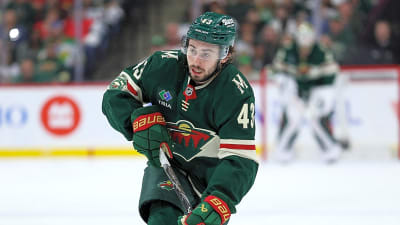
Montreal Canadiens forward Josh Anderson isn’t a bad choice to be named alternate captain, which he was to start the week. There were better options, though. There was at least one, anyway.
Anderson vs. Gallagher
Obviously, an opening in the leadership group opened up with ex-alternate Brendan Gallagher having been traded earlier this summer. Anderson’s initial candidacy for the role would have been based on his on-ice effort level and physicality, effectively what many people associate with the term “grit.” It also helps that he’s worn the “A” before.
Since having been acquired prior to the team’s 2020-21 season, which culminated in an unforeseen run to the Stanley Cup Final, in which Anderson scored the team’s first championship-series game-winning goal since 1993, he has undeniably come to epitomize what many would consider a prototypical hockey player. Gallagher had been likened to the team’s engine in the past. It’s fair to say Anderson is the Hab who best personifies it now.
So, why is Anderson the wrong choice? It’s mainly a matter of practicality, with his contract set to expire at the end of the season. While there’s always a chance he signs an extension and sticks around, it’s worth noting Anderson is 32. His best statistical season with the Habs, during which he tallied a modest 21 goals and 32 points, was four years ago already.
That isn’t to suggest a player’s star power should necessarily factor in, only that Anderson’s production is realistically in decline. He too is realistically in decline. While he can still contribute in other ways, i.e., as a relative speed demon and from the aforementioned physicality standpoint, anything other than a short-term contract would be unwise.
Some may see that as blasphemous to suggest such a thing. However, professional hockey is still a business. Tough decisions are made all the time. On a packed roster like the Canadiens’, where the pipeline is brimming with young talent, it’s not that out of the question that the Habs opt to move on in a single year’s time.
Look no further than Gallagher himself as an example of a heart-and-soul player that fell by the wayside relative to the team’s long-term plans. Despite his consistent effort level, he also fell out of favour with a segment of the team’s fan base as a result of his $6.5 million cap hit, which unfortunately didn’t match his production in recent years. On a list of the team’s bad contracts, Gallagher probably would have ranked No. 1 by many. Anderson, at $5.5 million, would arguably have been right behind him as recently as 2025-26. Partly because Anderson is entering the final year of his deal, it is no longer seen as (that) detrimental.
Hutson a Deserving Canadiens Captaincy Candidate
Not that the quality of one’s contract should necessarily factor in either, here. It’s sheer coincidence that defenseman Lane Hutson is considered to have one of the best in the league, while having independently earned relatively widespread consideration to replace Gallagher at one time. Full disclosure: He ranked first on this writer’s list of the likeliest candidates to do so (while Anderson placed fourth).
From Lane Hutson to Jack Hughes, my annual look at the 10 best contracts in hockey. https://t.co/Og577AoeCg pic.twitter.com/qnlLSie13z
— dom(@domluszczyszyn) July 22, 2026
Ultimately, it’s not Hutson’s contract per se. It’s the term, in that Hutson is projected to stay with the Canadiens for the next eight years. Furthermore, while many might point to consistent Anderson’s effort level and how he leads by example, no one should dare delude themselves into thinking Hutson falls short in that regard.
The only real way Anderson beats out Hutson is in terms of sheer stature, as the latter is listed at 5-foot-9, 162 pounds (6-foot-3, 226 pounds), but that should speak more to Hutson’s perseverance to have made it as far as he has, which in and of itself is an admirable quality that should speak to his capacity to lead. Maybe it’s a tad hyperbolic to suggest, but Hutson doesn’t seem the type to shy away from a challenge of any type. And anyone who suggests the Canadiens shouldn’t have a diminutive captain is choosing to conveniently ignore several things:
- Actual captain Nick Suzuki may be 5-foot-11, but he’s 207 pounds, while Mike Matheson, the Canadiens’ other alternate, is 6-foot-2, 196 pounds. They can afford to have one smaller member of the leadership core.
- Head coach Martin St. Louis was 5-foot-8, 176 pounds and he captained the Tampa Bay Lightning in 2013-14, also serving as an alternate from 2005-2013.
Some may counter with how St. Louis wasn’t a captain on the team’s 2003-04 Stanley Cup-winning team, which, let’s be honest, would be splitting hairs. The fact he was named an alternate the following season speaks to the leadership role he had unofficially filled prior to that point, which speaks to one undeniable fact:
In the grand scheme of things, aside from being the designated player to talk to referees when the captain isn’t around, alternates are more so figureheads than anything else. It should undoubtedly be an honour while playing for such a storied franchise, but nothing prevents non-captains from leading by example in their own right or even speaking up in the locker room. After all, that’s in part how future captains are identified.
So, while Anderson is an admittedly deserving alternate captain for the 2026-27 season, everything fans have seen up to this point out of Hutson should point to him getting the nod eventually himself. It would not have been outrageous for him to have gotten it instead of Anderson now, but perhaps the Canadiens would prefer the 22-year-old focus on what he does best, with Suzuki (only) having been named captain at Age 23. There’s no harm in having someone else keep the “A” warm for him until his time comes. And rest assured it will soon.
More must-reads:
- NHL CBA changes will dramatically alter contracts, playoffs and schedule
- Who's trending up, down through first two races of the NASCAR Cup Series Chase
- The 'Most yards through two NFL seasons' quiz
Breaking News
Trending News




Customize Your Newsletter
 +
+




Get the latest news and rumors, customized to your favorite sports and teams. Emailed daily. Always free!
PRIVACY POLICY COOKIE POLICY CONTACT US
ABOUT YARDBARKER TERMS OF SERVICE


By using this site, you agree to our Terms of Service and Privacy Policy.
This site is for entertainment purposes only.
There is no gambling offered on this site.
Gambling Problem? Call 1-800-Gambler.
