
-

-


Follow Us
-

 On Facebook
 On Flipboard

The Montreal Canadiens made the most of their draft capital during the rebuild. Some of those selections have already become key pieces of the roster, others are nearing the NHL, and a few later-round picks could still exceed expectations.
Rather than examine every prospect, I focused on the players with the best chance of reaching the Canadiens, dividing them into three categories: high probability, possible, and long shots. Michael Hage and David Reinbacher are already on track for NHL roles, so I left them off the list.
2025
Hayden Paupanekis — C — Round 3, #69 — Possible
Hayden Paupanekis is another prospect that Montreal traded up to acquire. Just like their first-round pick in this year’s draft, Gleb Pugachyov, the Canadiens coveted his size (6-foot-5), skating and physicality. At the Habs’ development camp, Paupanekis said he wants to model his game after Josh Anderson, and that’s exactly the profile Montreal was after when they selected him. Paupanekis will be moving from the Western Hockey League (WHL) Kelowna Rockets to St. Cloud State for the upcoming season, where he will undoubtedly benefit from the training and coaching resources available in the NCAA.
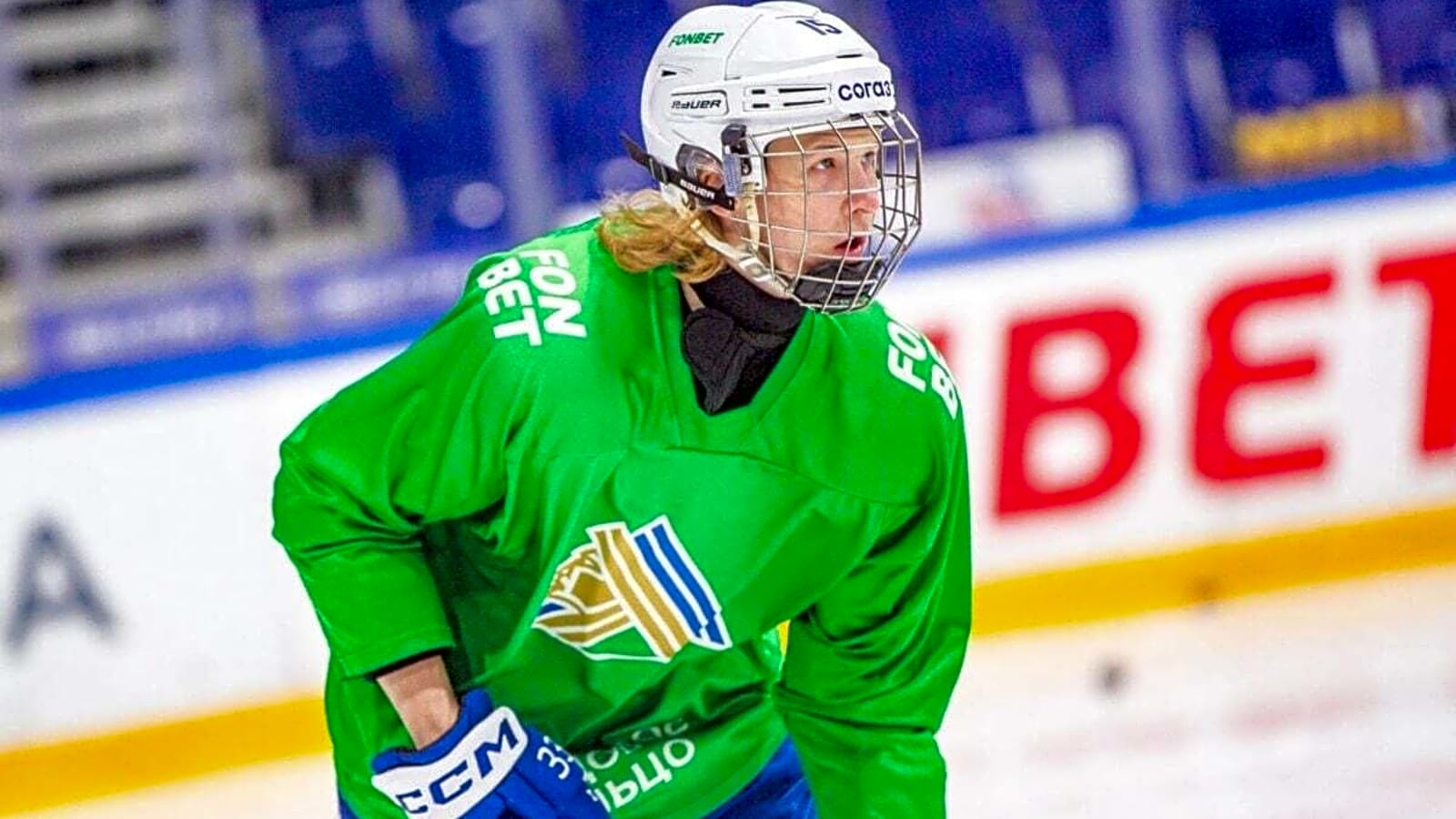
Alexander Zharovsky — LW — Round 2, #34 — High Probability
Few prospects saw their stock rise more than Alexander Zharovsky, who won Kontinental Hockey League (KHL) Rookie of the Year despite at times limited ice time last season.
He’ll return to the KHL this season, where he will focus on improving his offensive numbers, likely see more usage, and hopefully arrive ready to make the jump to the NHL in 2027–28.
Bryce Pickford — RD — Round 3, #81 — Possible
Fresh off winning Canadian Hockey League (CHL) Defenceman of the Year after scoring 45 regular-season goals, Bryce Pickford was revealed to require shoulder surgery, which will keep him out for 4–6 months. Once he is healthy again, he will likely join the Laval Rocket, where it will be very interesting to see how his game translates at the pro level. Because of that uncertainty, and despite his clear offensive talent, it would be more accurate to classify Pickford as possible rather than high probability.
L.J. Mooney — C — Round 4, #113 — Possible
L.J. Mooney is doing his best to move up to high probability, and to anyone discounting him based on his small size alone, need I remind them of players named Cole Caufield and Lane Hutson. That being said, the reality is Caufield and Hutson are smaller in stature, and as everyone witnessed during Montreal’s amazing playoff run this past spring, too many small players very likely will not get you to the promised land in the NHL.
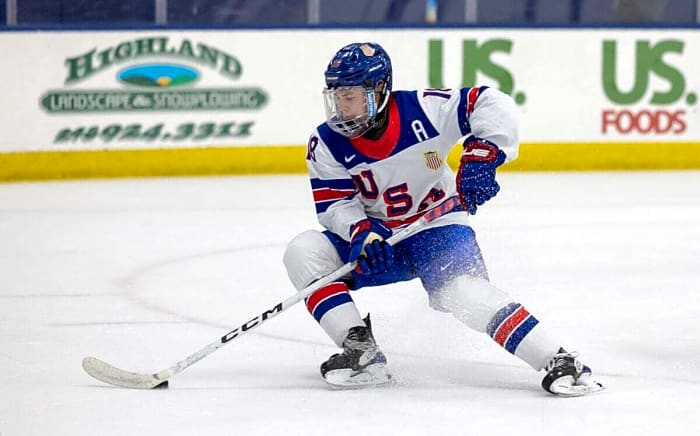
Mooney tallied seven goals and 23 assists for 30 points in 34 games with the University of Minnesota — a definitely noticeable point total for a freshman. Combined with his selection to Team USA at the World Junior Championship, this indicates a level of talent that is widely recognized.
Alexis Cournoyer — G — Round 5, #145 — Possible
After his impressive draft-year play in the Quebec Maritimes Junior Hockey League (QMJHL), Alexis Cournoyer continued his progression at Cornell in the NCAA. He was named the Ken Dryden Goaltender of the Year and First Team All-Star in the ECAC. In a recent press availability at Montreal’s development camp, Cournoyer referred to how he considers himself a winner, and that it was hard to be beaten so badly by the eventual NCAA champs, Denver, earlier in the season. Cournoyer has the size combined with a winning attitude — the question now is whether he can take his game to the next level, and if so, where that will lead him.
2024
Owen Protz — LD — Round 4, #102 — Possible
The one word you’ll find associated with Owen Protz is violence, and his highlight reel backs it up. He is a physical defenceman, and that’s something Montreal doesn’t have a lot of right now. One stat that really jumps off the page when you look at his season in Brantford of the Ontario Hockey League (OHL) is plus-45. If Protz can bring that physicality combined with defensive reliability at the NHL level, he’ll be a welcome addition to the team, as long as he can translate his playing style to the professional level.
Logan Sawyer — C — Round 3, #78 — Possible
Logan Sawyer has grown so much since he was drafted that none of his prospect profiles reflect his current height and weight. Most of what you’ll find online lists him at 6-foot-1 and 174 pounds, but in a midwinter interview with Marco D’Amico of RG Media, Sawyer said he had put on 20–25 pounds last summer and was close to 6-foot-3 at that point. That size, plus playing a big, physical game, led to twice as many points as in his previous season with Providence College. Sawyer is definitely a prospect on the rise.
Aatos Koivu — C — Round 3, #70 — Long Shot
Montreal drafting Saku Koivu’s son was a great story, and for a minute, it looked like he might be the real deal. He scored 6 goals, tied for most, at the World Junior Summer Showcase last summer. Fast forward to the World Junior tournament in December, and Koivu was anything but a factor for Finland. He hasn’t been very productive in his first two seasons with TPS Turku in Liiga, and aside from his shot, which is considered his best asset, he doesn’t seem to be making strong, steady progress in his development at the professional level. Koivu will have one more season to prove that he deserves at least an entry-level deal, or risk being cut loose altogether.
2023
David Reinbacher and Jacob Fowler aside, the rest of the 2023 draft class are all somewhere between long shot and a slight mix of possible. Florian Xhekaj (LW-Round 4, #101) and Luke Mittelstadt (LD-Round 7, #197) are the only other prospects currently under contract. Like his older brother Arber, the younger Xhekaj plays a rough and physical game, but he also brings an offensive element. He will need to bulk up significantly, however, to give himself a legitimate shot at the NHL.
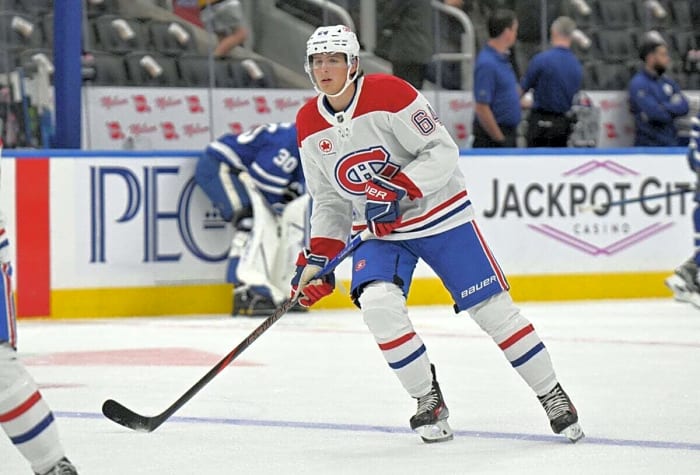
Mittelstadt, meanwhile, made a seamless transition from the NCAA to the American Hockey League (AHL) and could earn a call-up next season. Former Laval head coach Pascal Vincent was impressed by the young defenceman’s play, saying, “He can jump into the play and can defend. I’ve been very impressed with him. It looks like he has been here the whole year. He’s a good player.” Not bad for a seventh-round pick.
Players of note who will either sign an entry-level contract or be let go after the upcoming season are Bogdan Konyushkov (RD – KHL), Quentin Miller (G – NCAA), Sam Harris (LW – NCAA), and Yevgeni Volokhin (G – KHL).
2022
Most of the 2022 draft picks are either in the NHL, next in line, or out of the picture altogether.
Adam Engstrom — LD — Round 3, #92 — High Probability
I’d be slightly shocked if Adam Engstrom didn’t make the opening night roster. That said, he still sits behind both Jayden Struble and Arber Xhekaj on Montreal’s defensive depth chart. Even so, he does appear to have greater upside than either of them in his skating and offence. I think this is the season where he carves out a permanent spot.
Owen Beck — C — Round 2, #33 — High Probability
Despite being behind four centres on Montreal’s depth chart, Owen Beck could still carve out a regular role this season. With Brendan Gallagher and Joe Veleno gone, roster spots have opened up, and Beck’s faceoff ability, skating, and above-average shot make him a strong candidate to earn one.
Vinzenz Rohrer — RW — Round 3, #75 — Possible
After spending three seasons in the Swiss League with one of the league’s top teams, Vinzenz Rohrer might have a leg up when it comes to making the big club. He’s known to be defensively responsible and tenacious, despite his relatively small frame. The heaviest I was able to find him listed at is 173 pounds, which could work against him at the NHL level.
The Pipeline Is Still Delivering
No team hits on every draft pick, and Montreal will be no exception. What matters is that the Canadiens continue to graduate NHL players while maintaining enough organizational depth to replace those who don’t pan out.
With players such as Ivan Demidov, Lane Hutson, Juraj Slafkovsky and Jacob Fowler already forming the foundation of the rebuild, this next wave doesn’t need to become stars. If a handful develop into reliable NHL contributors, Montreal’s drafting during the rebuild will have accomplished exactly what it was supposed to do: build a sustainable contender.
More must-reads:
- Insider reveals Maple Leafs are still in pursuit of blockbuster deal
- Kyle Lowry wraps up 20-year NBA career as a Raptors all-time great
- The 'First-overall NHL Draft picks' quiz
Breaking News
Trending News






Customize Your Newsletter
 +
+




Get the latest news and rumors, customized to your favorite sports and teams. Emailed daily. Always free!
PRIVACY POLICY COOKIE POLICY CONTACT US
ABOUT YARDBARKER TERMS OF SERVICE


By using this site, you agree to our Terms of Service and Privacy Policy.
This site is for entertainment purposes only.
There is no gambling offered on this site.
Gambling Problem? Call 1-800-Gambler.
