
-

-


Follow Us
-

 On Facebook
 On Flipboard

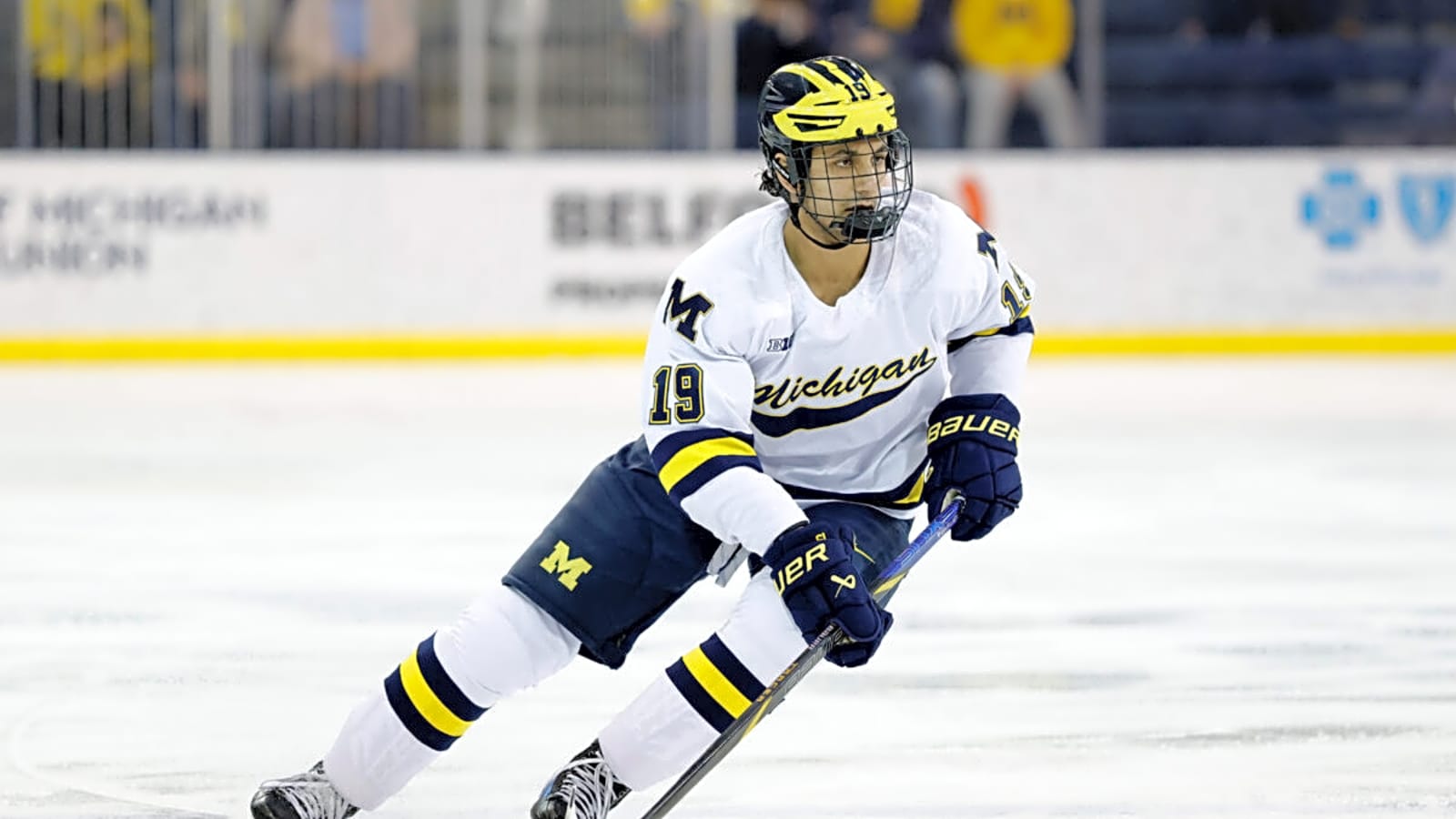
In hockey’s modern landscape, player development has moved well beyond traditional on-ice repetitions and general fitness routines. As teams invest more in analytics, coaching resources, and development departments, the game’s rising talent is shaped not just by what they do on the ice, but by how they grow as individuals within a collective culture.
In today’s hockey landscape, the path from draft day to the NHL roster isn’t linear. Players arrive from junior hockey, European professional hockey, or American colleges, then journey through rookie camps and pro tryouts. Each player has unique challenges, and their needs and each player’s progress highlight how individualized training and a supportive team culture can shape a player’s long-term trajectory.
Taking the Personal Development Road
Where once every prospect might have followed the same set of drills and expectations, NHL clubs increasingly tailor development plans to each player. In the Montreal Canadiens’ organization, for example, expanded player development staff now communicate consistently with prospects, crafting custom development plans and providing targeted feedback to work on specific areas of growth.
Development becomes measurable beyond stats. Instead of tracking only points or ice time, teams assess improvements in situational play, decision-making, and adaptability, all crucial for long-term success. One example is Michael Hage. University of Michigan head coach Brandon Naurato emphasized to RG.org that for Hage to thrive at the next level as a centre, he must consistently attack the middle, show more physicality down low, and create scoring chances from the inside. He put all these things on display at the 2026 World Junior Championships and helped Canada win a bronze medal.
Canadiens’ defence prospect Owen Protz is another good example of this approach. Protz’s rise wasn’t overnight. After being selected 102nd overall in the 2024 NHL Entry Draft, he steadily improved his game with the Ontario Hockey League’s (OHL) Brantford Bulldogs. In the 2024-25 OHL season, Protz exploded offensively, posting a career-high 32 points (five goals, 27 assists) in 67 games and anchoring one of the league’s most effective blue lines. His play also carried into the playoffs, where he finished with six points and a team-leading plus-10 rating in 11 games. This season, he has continued on the same offensive pace.
Protz has got the equalizer
— Ontario Hockey League (@OHLHockey) December 31, 2025
The @BulldogsOHL even things at one in Erie as Owen Protz nets his 3rd of the year from the point!@FloHockey | #GoHabsGo pic.twitter.com/rsK34RK16P

Yet Protz’s offence wasn’t what got the attention of the scouts; it was his physicality. Protz is a throwback style of physical defenceman. Older Canadiens fans may be reminded of Craig Rivet, who was a sturdy, physical, positional defenseman. That kind of jump doesn’t happen by accident. It’s the product of customized skill work and positional refinement. For a player like Protz, whose game blends positional play and physicality with some puck mobility, individual training drills focus on decision-making under pressure, edge work, skating mechanics, gap control, and body positioning. This has allowed him to be effective defensively against faster competition.
Protz’s first taste of professional hockey was at the Canadiens’ main training camp. For him, it became about survival, but mostly to test his skills against grown men, learning the pace, and identifying areas needing refinement. For many prospects, that transition period is where individualized training plans are most valuable: adjusting to faster reads, heavier hits, and more complex systems. This was confirmed in a recent interview with r.org’s Marco D’Amico — Protz identifies a moment that highlighted why he needs to expect more from himself if he wants to compete with the best players in the world.
“When (Brendan) Gallagher’s coming down on you, there’s no soft boxing out. He’s doing everything in his power to get to the net.”
– Owen Protz
This tailored programming helps bridge the gap between junior accomplishments and pro expectations. The fact Protz was invited to Hockey Canada’s National Junior Team summer development camp speaks to his growth and the confidence others have in his potential.
Canadiens’ Culture Is the Catalyst
Individual progress thrives where culture supports risk, resilience, and learning. That’s evident in how Protz has been deployed by the Bulldogs and through his brief pro experience with the American Hockey League (AHL) Laval Rocket on an Amateur Tryout. He didn’t appear in any games but practiced with the team and gained experience within a professional hockey environment. This exposure was valuable as it provided him with a taste of what it means to work in a professional environment that pushes young players beyond their comfort zones.
Montreal is a market that looks far beyond the highlight-reel moments and the numbers on the scoresheet. It is a city that appreciates the finer points of the game, such as a well-timed defensive read, the smart stick in a passing lane, and the quiet body position that eliminates a scoring chance before it ever develops. Canadiens fans understand that winning hockey is built as much on these subtle details as it is on goals and assists. For a player whose identity is rooted in those elements, that level of awareness and respect from the crowd is not just meaningful, it is empowering, reinforcing the value of the work that often goes unnoticed elsewhere.
“There’s a significant appreciation for throwback defensemen, every single detail is applauded at the Bell Centre, and I’m a detail-oriented guy in my defensive game. I think that goes hand in hand.”
Under general manager (GM) Kent Hughes, Montreal is committed to long-term player advancement and, because of this, isn’t afraid to let prospects struggle at times so long as they’re learning. Trust and accountability are as important as well. Emphasizing hard work and accountability are fine, but only if they help young players like Protz take ownership of their progress. This is something that he is aware of, as he identifies the challenges he faces and isn’t afraid to own up to the fact he is still not quite ready to make the leap to the NHL.
Most importantly, the Canadiens provide role clarity to their prospects, making it clear to them what attributes and skills got them drafted while they provide clarity on what improvements remain. By emphasizing those roles, such as Protz’s identity as a physical, reliable defenseman, they can provide him with a clear path to how his skill set fits within their organization and demonstrate that he can become a highly-valued player.
The Canadiens’ culture, which increasingly values patience and proper development pipelines, allows players like Protz to grow into their roles rather than be rushed into them, a model that’s proving effective in the current rebuild that is starting to bear fruit. When prospects can see NHL veterans embrace continuous improvement, it reinforces the mindset that development is a career-long process, not a short sprint.
More must-reads:
- David Pastrnak saves Bruins from elimination with overtime winner in Game 5 against Sabres
- 'It's become a distraction': Senators' Brady Tkachuk growing sick of trade rumors
- The 'Stanley Cup Playoff hat-tricks' quiz
Breaking News
Trending News





Customize Your Newsletter
 +
+




Get the latest news and rumors, customized to your favorite sports and teams. Emailed daily. Always free!
PRIVACY POLICY COOKIE POLICY CONTACT US
ABOUT YARDBARKER TERMS OF SERVICE


By using this site, you agree to our Terms of Service and Privacy Policy.
This site is for entertainment purposes only.
There is no gambling offered on this site.
Gambling Problem? Call 1-800-Gambler.
