
-


Follow Us

 On Facebook
 On Flipboard
 On Twitter
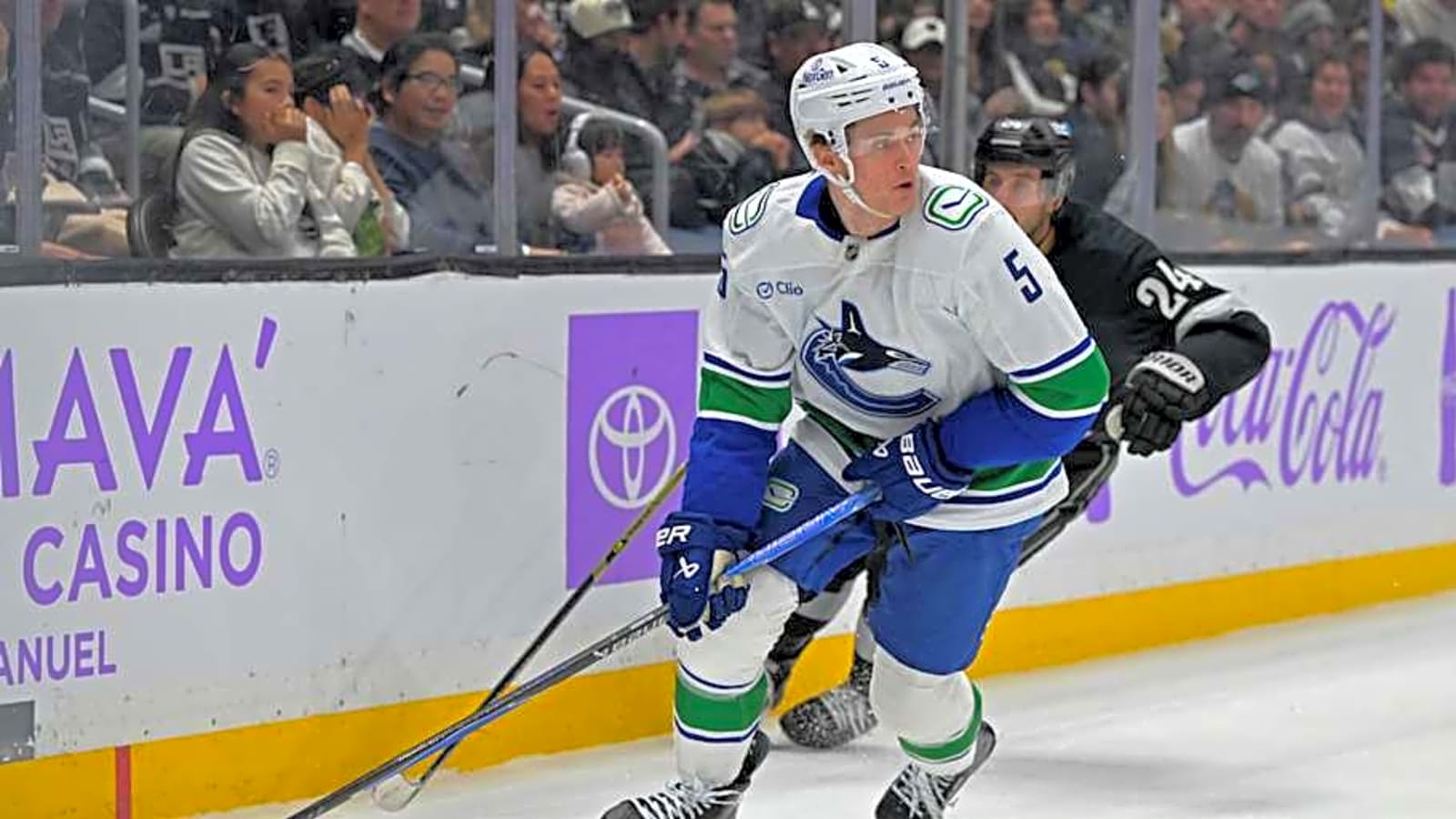
The Vancouver Canucks have been stuck in hockey purgatory for over a decade, and if you've been wondering why the organization never committed to a full teardown and rebuild, The Athletic's Thomas Drance has some answers.
According to firsthand accounts from multiple sources within Canucks hockey operations over the past 15 years, ownership has consistently refused to green-light any sort of rebuild, no matter how badly the team needs one.
The impact of that refusal has shaped every decision the organization has made since the end of the Sedin era, and it explains why Vancouver keeps spinning its wheels without ever committing to a clear direction.
Two Executives Dismissed for Advocating Patience
Drance revealed that in 2014 and 2017, the Canucks effectively dismissed two top hockey operations executives who were pushing internally for a more patient, rebuild-focused approach.
The big-picture direction of any franchise gets set at the top, and in Vancouver's case, that direction has been clear. Ownership does not want to rebuild. Back in 2014, following the disastrous John Tortorella season, ownership was reportedly reluctant to sign off on Mike Gillis' proposed rebuild centered around the aging Sedin twins.
Instead, they preferred Jim Benning's plan to accelerate out of the team's struggles. In 2017, ownership again chose Benning's approach over Trevor Linden's more patient Chicago model, which would have emphasized draft picks and development.
Current Management Inherited a Different Situation
Drance noted that the current regime under Jim Rutherford and Patrik Allvin is slightly different. When they took over midway through the 2021-22 season, they inherited Quinn Hughes and Elias Pettersson under 25, Bo Horvat at 26, and J.T. Miller at 28.
At the time, it was reasonable to believe the Canucks had a young, elite core worth building around rather than tearing down. So while ownership's influence on past regimes is well documented, there's no indication they forced Rutherford and Allvin into their retooling approach.
That decision appears to have been made by hockey operations based on the talent they inherited.
Late-Season Wins Matter More Than Draft Position
Perhaps the most revealing detail Drance shared was about ownership's obsession with finishing seasons strong. According to sources, Vancouver ownership has explicitly communicated to previous head coaches that winning late in the year is an important benchmark, even in seasons where the playoffs are completely out of reach.
The organization has shown zero interest in tanking to improve draft positioning, even when losing meaningless games in March and April would clearly serve the team's long-term interests.
Whether that's motivated by business concerns around season ticket sales or a naive refusal to ever embrace losing, the result is the same. The Canucks have never committed to a true rebuild under the Aquilini ownership.
Drance summed it up bluntly. Considering rebuilding or tanking is something Canucks ownership has historically had zero interest in, and that philosophical stance has defined Vancouver's direction for over a decade.
More must-reads:
- Patriots coaches echo players about challenge of facing Broncos' Jarrett Stidham
- Indiana’s Fernando Mendoza makes expected decision
- The 'Last 100-catch season by team' quiz
Breaking News
Trending News





Customize Your Newsletter
 +
+




Get the latest news and rumors, customized to your favorite sports and teams. Emailed daily. Always free!
PRIVACY POLICY EDITORIAL POLICY CONTACT US
ABOUT YARDBARKER TERMS OF SERVICE


Use of this website (including any and all parts and
components) constitutes your acceptance of these
Terms of Service and Privacy Policy.
This site is for entertainment purposes only.
There is no gambling offered on this site.
Gambling Problem? Call 1-800-Gambler.
