
-

-


Follow Us
-

 On Facebook
 On Flipboard

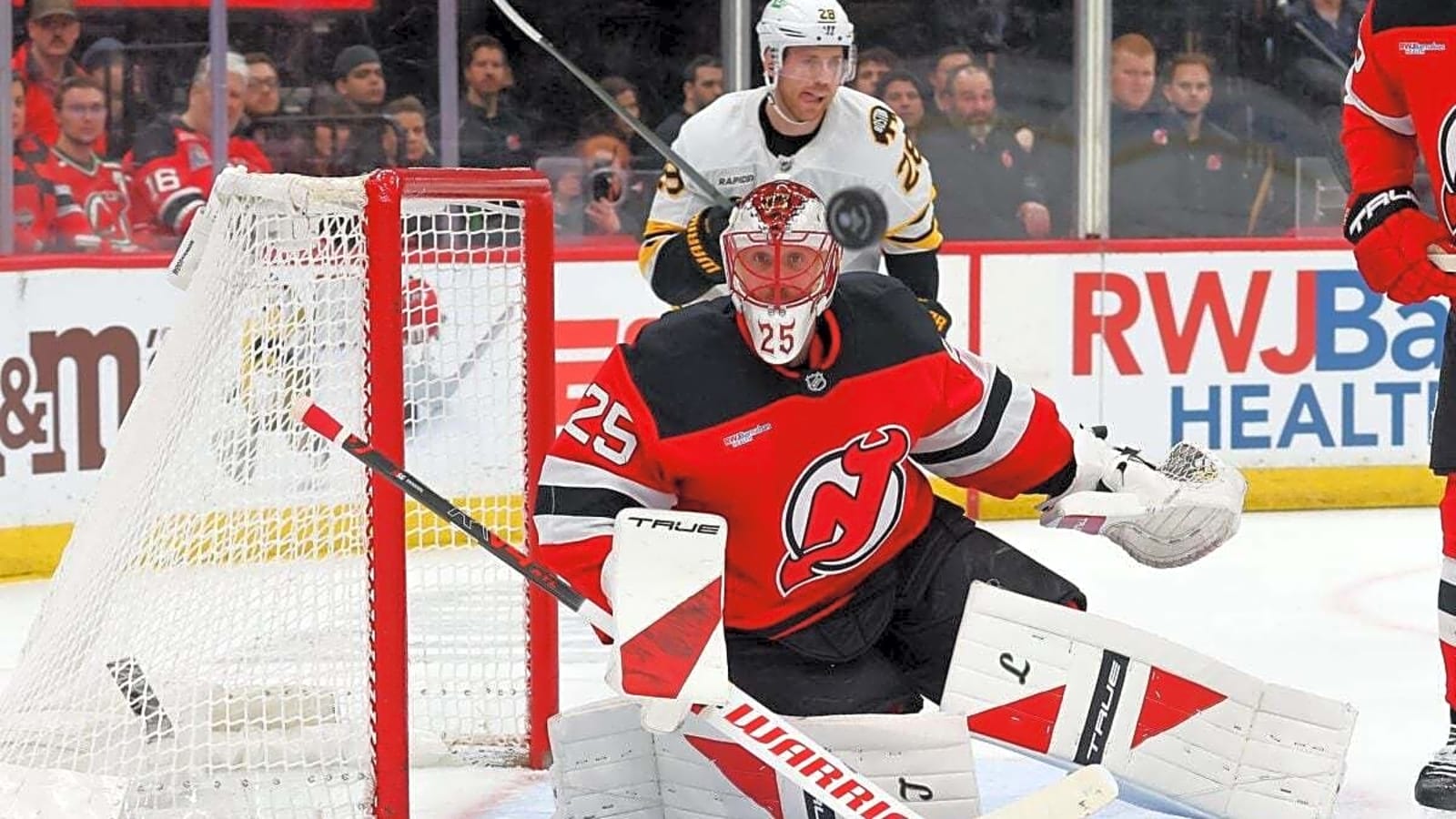
The New Jersey Devils entered the 2025-26 season with the belief their roster was talented enough to compete for a playoff spot. With stars like Jack Hughes and captain Nico Hischier leading a dynamic forward group and a young, promising defense featuring players such as Luke Hughes and Simon Nemec, the expectation was that the team would take another step forward. However, with just eight games left in the season, the Devils find themselves out of a playoff spot and once again evaluating what needs to change heading into next season. Among the concerns that have surfaced throughout the season, one issue has stood out: the team’s goaltending.
Inconsistency in net has played a significant role in the team’s struggles, raising important questions about whether the organization should reevaluate its goaltending situation heading into next season. While there have been moments of solid play, the overall performance between the pipes has not always matched the level required from a team hoping to contend.
Season Full of Inconsistency
Goaltending stability is often the backbone of a successful NHL team, but the Devils have struggled to find that stability throughout the season. The tandem of Jacob Markstrom and Jake Allen was expected to provide experience and reliability, especially with the team aiming to balance its young core with veteran leadership.
At times, both goaltenders delivered strong performances. Markstrom, in particular, showed flashes of the form that once made him one of the league’s more-dependable starters. His ability to handle heavy workloads and make difficult saves kept the Devils competitive in several games where they were outshot or defensively overwhelmed.
However, those strong performances were often followed by difficult stretches. Soft goals, inconsistent rebound control, and games where the Devils allowed goals in bunches created frustration for both the coaching staff and the fan base. Even when the team generated strong offensive output, shaky goaltending occasionally erased those efforts.
So far this season, Markstrom has posted a 3.12 goals-against average (GAA) and an .883 save percentage (SV%), numbers that mirror the kind of struggles he hasn’t experienced in nearly a decade. One particularly stark example came on Jan. 6 against the New York Islanders, when Markstrom surrendered nine goals in a single game, marking one of the worst individual performances of his entire career. For a goaltender expected to carry the starter’s workload, those statistics simply aren’t good enough.
When a team relies heavily on its number-one goaltender to provide stability, that level of inconsistency can quickly become a major problem. Instead of delivering the steady presence th Devils hoped for, Markstrom’s performance has often left the team searching for answers, especially in key moments where a timely save can shift momentum.
The other half of the tandem is Allen, brought in to provide veteran depth and experience, similarly to Markstrom. While his overall numbers, 2.69 GAA and a .906 SV%, look stronger than Markstrom’s, his play was far from consistent. There were nights when Allen appeared calm, confident, and sharp, giving the Devils a boost in net, but just as often, he struggled to maintain that level of performance.
This inconsistency created a difficult situation for the team, leaving them uncertain about which goaltender would provide the steadier presence from night to night. When neither option can be fully relied upon, it forces the rest of the roster to overcompensate defensively, often stretching players out of position and impacting the team’s overall performance.
Defensive Issues and Goaltending Pressure
It would be unfair to place all the blame solely on the goaltenders. The Devils’ defensive play has also contributed to the challenges in net. Injuries, inconsistent pairings, and young defensemen still adjusting to the NHL level have created situations where goaltenders faced a high number of dangerous scoring chances.
Turnovers, missed assignments, and sloppy plays in front of the net became all too common for both the veteran and young defensemen on the Devils this season. These lapses frequently left the goaltenders exposed, forcing them into vulnerable positions and putting additional pressure on the goalies to try to cover for the mistakes.
The team’s overall defensive structure appeared to waver throughout the season. When the Devils played with strong defensive support and limited high-danger opportunities, their goaltenders often looked far more comfortable. But during stretches when the team’s structure collapsed, the workload for the goalies became overwhelming.
Still, elite teams typically rely on their goaltenders to steal games or stabilize difficult moments. For the Devils, that type of game-changing performance has been relatively rare this season.
Should the Devils Reevaluate?
Given the circumstances, it is fair to ask whether the Devils should reconsider their goaltending strategy heading into the offseason.
Reevaluating the position does not necessarily mean a complete overhaul. Markstrom still has the experience and capability to provide solid goaltending when he is at his best. However, relying solely on veteran options with inconsistent results may not be the ideal approach moving forward.
The Devils have a few potential paths to address their goaltending concerns. One option would be to bring in a new goaltender who could challenge for the starting role and help create a more balanced, reliable tandem. However, any plan is complicated by the fact that both Markstrom and Allen signed contract extensions at the start of the season. Allen agreed to a five-year, $9 million deal, while Markstrom signed a two-year, $12 million contract—moves that left many fans questioning management’s decision making.
Now, the challenge is clear: how can the Devils add a new goaltender when their current options are locked into multi-year commitments? Finding a solution will require creative thinking, whether that means pursuing a trade, restructuring the roster, or exploring other avenues to ensure the team has stability and consistency between the pipes heading into next season.
The Importance of Finding Stability
If the Devils want to return to being a serious playoff contender, stabilizing their goaltending will likely be one of the most important priorities of the offseason. Championship-caliber teams typically feature dependable goaltending that provide consistency over an 82-game season.
The Devils’ roster still contains the core pieces needed to compete. Their forward group remains dangerous, their defense is young and improving, and the leadership within the locker room continues to grow. But without reliable goaltending, even talented teams can struggle to achieve their full potential.
For general manager Tom Fitzgerald and the Devils’ front office, the coming offseason could present an opportunity to carefully evaluate whether the current goaltending tandem is the right fit moving forward.
As the offseason approaches, the question facing the Devils is not just whether their goaltenders can improve, but whether the team is comfortable betting another season on that possibility.
More must-reads:
- Jets' Connor Hellebuyck saga ends with trade to Devils
- Blowout loss to the Maple Leafs highlight Oilers' flaws
- The 'World Series Game 1 starters' quiz
Breaking News
Trending News



Customize Your Newsletter
 +
+




Get the latest news and rumors, customized to your favorite sports and teams. Emailed daily. Always free!
PRIVACY POLICY COOKIE POLICY CONTACT US
ABOUT YARDBARKER TERMS OF SERVICE


By using this site, you agree to our Terms of Service and Privacy Policy.
This site is for entertainment purposes only.
There is no gambling offered on this site.
Gambling Problem? Call 1-800-Gambler.
