-

-


Follow Us
-

 On Facebook
 On Flipboard

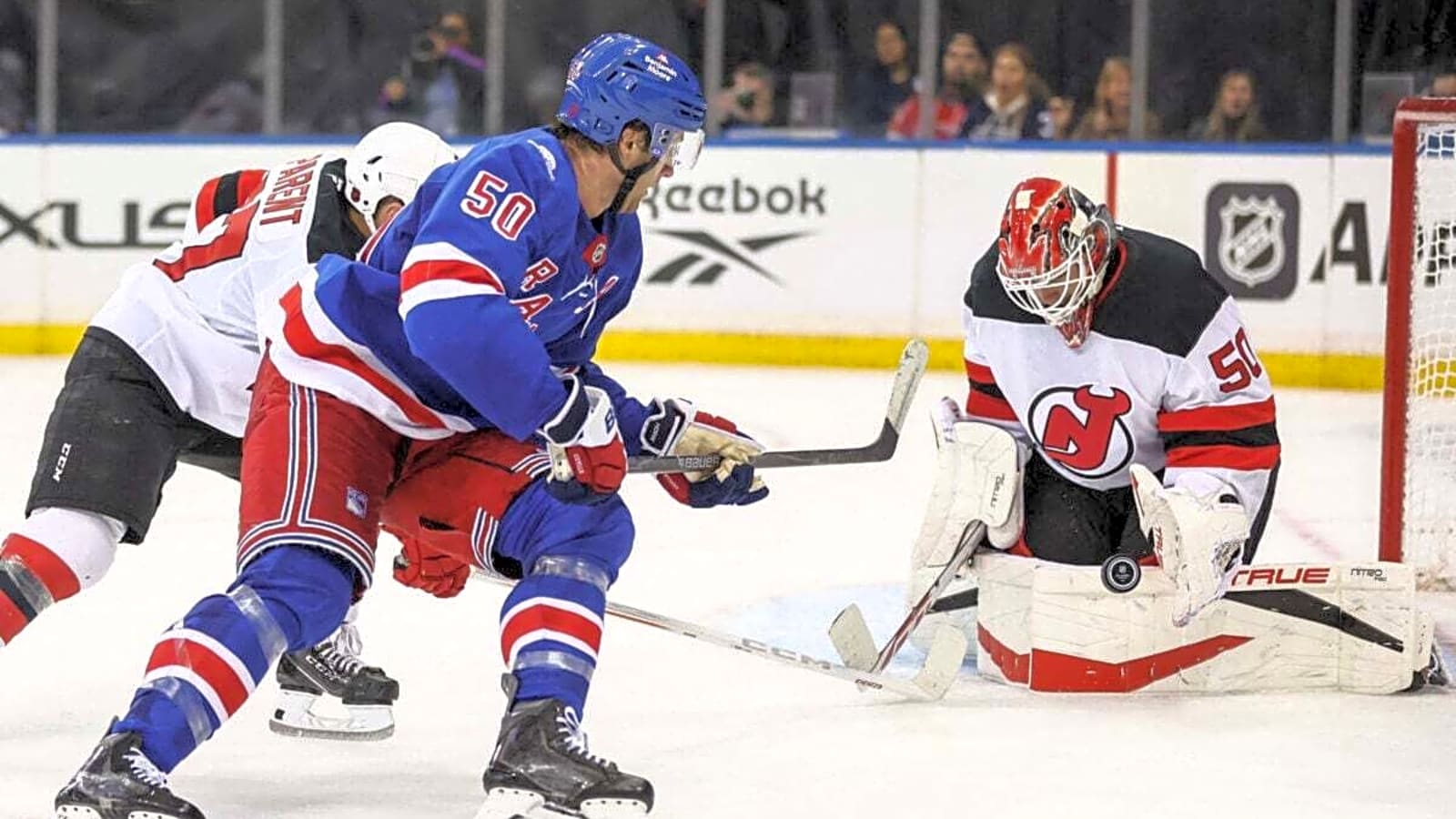
The New York Rangers hit a huge milestone on Monday, Nov. 16. The Blueshirts faced the Montreal Canadiens, a fellow Original Six team, in their big centennial celebration. The Rangers were the last of the Original Six to hit the centennial milestone.
Early Years of the Blue Shirts
The Rangers are a part of the Original Six. The Original Six is a group of hockey teams that formed the NHL.
The founder of the Rangers, Tex Rickard, was a big name in the early days of professional hockey. Back in 1923, he decided that the Big Apple needed an arena. He signed a deal with the Madison Square Garden Corporation to get the naming rights to Madison Square Garden.
Once the building opened on Nov. 28, 1925, Rickard wanted to be the first to claim a team. He had a history with the Canadiens, as he gave the Canadiens their well-known nickname “The Habs.” He wanted to have a bigger say in the world of hockey. The agenda would be to make sure New York City would be next to have a hockey team. The original name he picked was the “Tex Rangers,” but he eventually switched it to the “New York Rangers.” They were founded on Nov. 16, 1926.
Bill Cook
In their inaugural season, the Rangers drafted their original All-Star lineup. It started with Bill Cook, who was their first team captain. He helped the Rangers claim their first Stanley Cup title in 1928, then again in 1933. They won against the Montreal Maroons in a 3-2 series. History repeated itself in 1933, as the Rangers won another Stanley Cup. This time it was a 3-1 series win over the Toronto Maple Leafs. At the end of the first season, Cook had 33 goals and 37 points.
Frank Boucher
Along with Cook, the team drafted well-rounded center Frank Boucher. Boucher, along with Cook, helped lead the team to Stanley Cup glory in both 1928 and 1933. Boucher decided that after playing, he was going to return to his alma mater and coach them. He served as the Rangers’ head coach from 1939 to 1949. This was the first time any coach was able to get their team to back-to-back Stanley Cup championships.
Birth of the Hudson River Rivalry
What started off as a series in the Stanley Cup Playoffs became the biggest rivalry in the NHL. In the 1992 Playoffs, the Rangers and New Jersey Devils faced each other in the Eastern Conference Final. The Rangers secured the Eastern Conference championship in a 4-3 series.
Fans of both teams gather at the Prudential Center or Madison Square Garden to support their side. The Hudson River Rivalry is played multiple times throughout the season. Despite this being the biggest rivalry in the NHL, fans of both teams bond over the tight competition.
The Year of New York
Throughout the second half of the 20th century, the Rangers dominated the NHL. New York City was at its best in sports. As the Rangers grew in popularity, more New York City teams were added. Madison Square Garden allowed the National Basketball Association (NBA) to be in the Big Apple. The New York Knicks claimed Madison Square Garden as their home arena.
New York City saw its peak in sports back in the 1993-94 season. The Rangers won their fifth Stanley Cup, while the Knicks made it to the Finals.
A Centennial in the Making
The Rangers have seen massive improvements to their team throughout the early 2000s to now. Players like Adam Fox, Igor Shesterkin, and Mika Zibanejad have shaped the Rangers into what they are today.
Even though the Rangers have not made the playoffs since 2023-24, the fans are looking forward to stronger contention this season. The saying goes, “No Quit in New York,” and that has been the mindset of the team and its fans since the beginning of the franchise.
More must-reads:
- Kirill Kaprizov breaks his own record in Wild's win vs. Sharks
- Blackhawks' season goes from bad to worse as Connor Bedard needs surgery
- The 'Most 200-receiving-yard games' quiz
Breaking News
Trending News
Customize Your Newsletter
 +
Get the latest news and rumors, customized to your favorite sports and teams. Emailed daily. Always free!
PRIVACY POLICY COOKIE POLICY CONTACT US
ABOUT YARDBARKER TERMS OF SERVICE


By using this site, you agree to our Terms of Service and Privacy Policy.
This site is for entertainment purposes only.
There is no gambling offered on this site.
Gambling Problem? Call 1-800-Gambler.