-

-


Follow Us
-

 On Facebook
 On Flipboard


The NHL salary cap no longer holds teams in place. It moves them. The upper limit hit $104 million for the 2026-27 season, up from $95.5 million last season. It will climb to $113.5 million in 2027-28. League projections put the 2028-29 ceiling as high as $127.5 million.
That growth has set off a contract boom that is changing how general managers build rosters and make trades. The Philadelphia Flyers signed Leo Carlsson to a record offer sheet in July. Cale Makar became the first $20 million player of the cap era in August. Young stars across the league have signed deals that would have seemed impossible two years ago. Every trade conversation now starts with the same question: What will this player cost when the cap jumps again?
The Leo Carlsson Offer Sheet Changed the Market
On July 3, the Flyers tendered Carlsson, a restricted free agent, a five-year, $90 million offer sheet. Its $18 million average annual value was the richest in NHL history at the time. Had Anaheim declined to match, the Ducks would have received four Philadelphia first-round picks, one in each of the next four drafts.
The structure made the offer hard to match. Carlsson’s base salary sat near the league minimum each year, and signing bonuses made up most of the money. His first-year bonus alone was $19.95 million. About $85.3 million of the $90 million came as bonus money, and the final season carries a no-movement clause. Anaheim rarely pays signing bonuses.
The Ducks matched on July 9, a day before the deadline. Carlsson is now signed through the 2030-31 season. He has said Philadelphia made “an offer that I couldn’t say no to,” but added that he “always wanted to be here too.”
Carlsson faced the Flyers for the first time on October 24 in Philadelphia. He scored and set up Beckett Sennecke’s game-winner in a 5-4 Ducks comeback that snapped a five-game losing streak. Through 11 games, the 21-year-old center leads Anaheim with 13 points.
The offer sheet’s real impact landed elsewhere. Before July, teams could hold down second contracts for players coming off entry-level deals because those players lacked arbitration rights. Philadelphia showed that a rival with cap space could break that leverage. Teams responded by paying their young cores quickly and generously.
A Wave of Record Extensions
The deals followed fast. On July 29, Macklin Celebrini signed a five-year, $94 million extension with the San Jose Sharks. His $18.8 million AAV starts in 2027-28. Connor Bedard signed a five-year, $75 million extension with Chicago at $15 million per season.
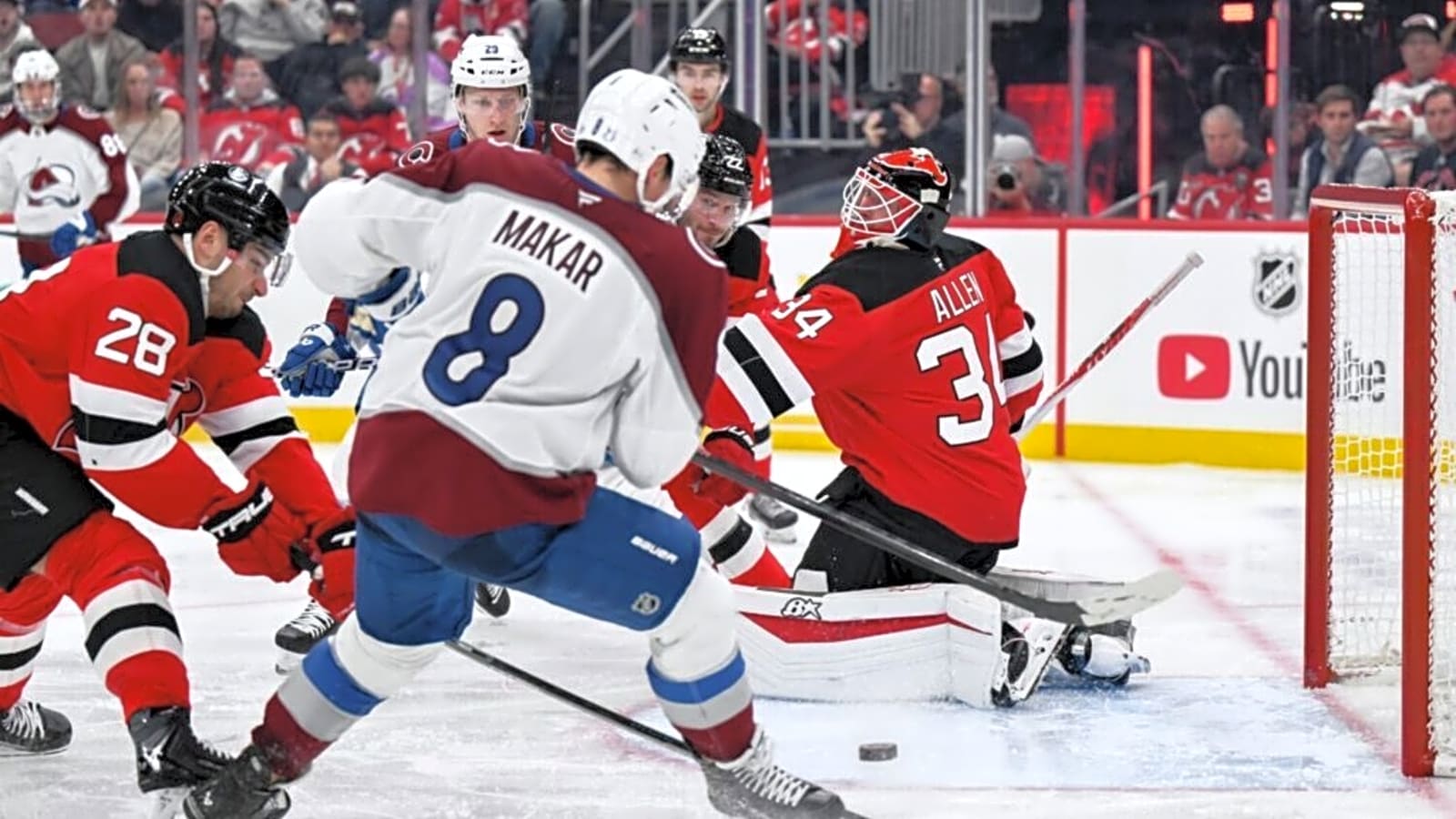
On August 28, Makar signed an eight-year, $163.2 million extension with Colorado. His $20.4 million AAV begins in 2027-28 and sits just below the $20.8 million maximum, which equals 20% of the current cap.
The money kept flowing. Columbus signed Adam Fantilli to a six-year, $82.5 million contract on September 24 at $13.75 million per year. That figure falls just $250,000 short of the record $14 million AAV Leon Draisaitl set in September 2024. Anaheim re-signed Cutter Gauthier for six years and $81 million. Washington gave Ryan Leonard an eight-year, $92 million extension after one full season and 45 points. Vancouver locked up defenseman Zeev Buium for eight years and $75.04 million.
Not every negotiation ended in a long-term deal. Seattle reportedly offered Jason Robertson eight years at upward of $15 million annually in a sign-and-trade. Robertson declined. He and Dallas settled on a one-year, $12 million contract that takes the 45-goal scorer to unrestricted free agency next summer.
How the New CBA Shapes Trade Decisions
A new four-year collective bargaining agreement took effect on September 16. It caps contract length at seven years for players re-signing with their own team and six years for players signing elsewhere. It also limits signing bonuses to 60% of a contract’s total value. Carlsson’s bonus-heavy structure would no longer be allowed.
Those limits change how teams approach trades. An acquiring team can only offer seven years to a player it trades for and re-signs. That makes the cap hit and term on a player’s current deal even more important. A star on a below-market contract carries enormous trade value in an inflating market. A player on an expensive long-term deal can become hard to move if his production slips.
Retained salary remains a key tool. A team can retain up to 50% of a player’s cap hit in a trade. For example, a player with a $6 million hit would cost a buyer $3 million at full retention. Third-party teams still act as brokers, retaining a slice of salary in exchange for draft picks. Rising caps give more clubs the room to play that role.
The rising ceiling also favors teams that commit early. In hindsight, Anaheim could have extended Carlsson in July 2025 at a far lower number. Teams now race to sign young stars before the next cap jump resets the market. Others hold space open, either to pursue offer sheets or to absorb contracts from teams in trouble.
The Next Contracts Will Test Every Team
The pressure is building. Quinn Hughes can re-sign with Minnesota at any point this season. If he reaches July 1 unsigned, he becomes an unrestricted free agent. Nikita Kucherov, last season’s Hart Trophy winner, is also in the final year of his deal with Tampa Bay.
Next summer, Connor McDavid, Auston Matthews and Zach Werenski become eligible to re-sign with their current teams. The projected maximum AAV will then reach $22.7 million. If those players wait until 2028, that figure could reach $25.5 million.
Commissioner Gary Bettman has said the rapid growth will slow. “Once we recapture it, which will take probably two more years, give or take, then it’ll go up at the same rate as revenues grow,” he said.
Until then, expect more record contracts and more creative trades. Contenders must weigh rising star salaries against the depth they need in the spring. Rebuilding teams can turn cap space into picks and prospects. Carlsson’s offer sheet proved that cap room can serve as a weapon as well as a cushion.
More must-reads:
- Steelers linked with Chargers' Ladd McConkey, Jaguars' Brian Thomas Jr. amid trade deadline rumors
- Mississippi State's Kamario Taylor to miss remainder of season
- The 'Fewest passing-yards in a win' quiz
Breaking News
Trending News


Customize Your Newsletter
 +




Get the latest news and rumors, customized to your favorite sports and teams. Emailed daily. Always free!
PRIVACY POLICY COOKIE POLICY CONTACT US
ABOUT YARDBARKER TERMS OF SERVICE


By using this site, you agree to our Terms of Service and Privacy Policy.
This site is for entertainment purposes only.
There is no gambling offered on this site.
Gambling Problem? Call 1-800-Gambler.