
-

-


Follow Us
-

 On Facebook
 On Flipboard
 On Twitter
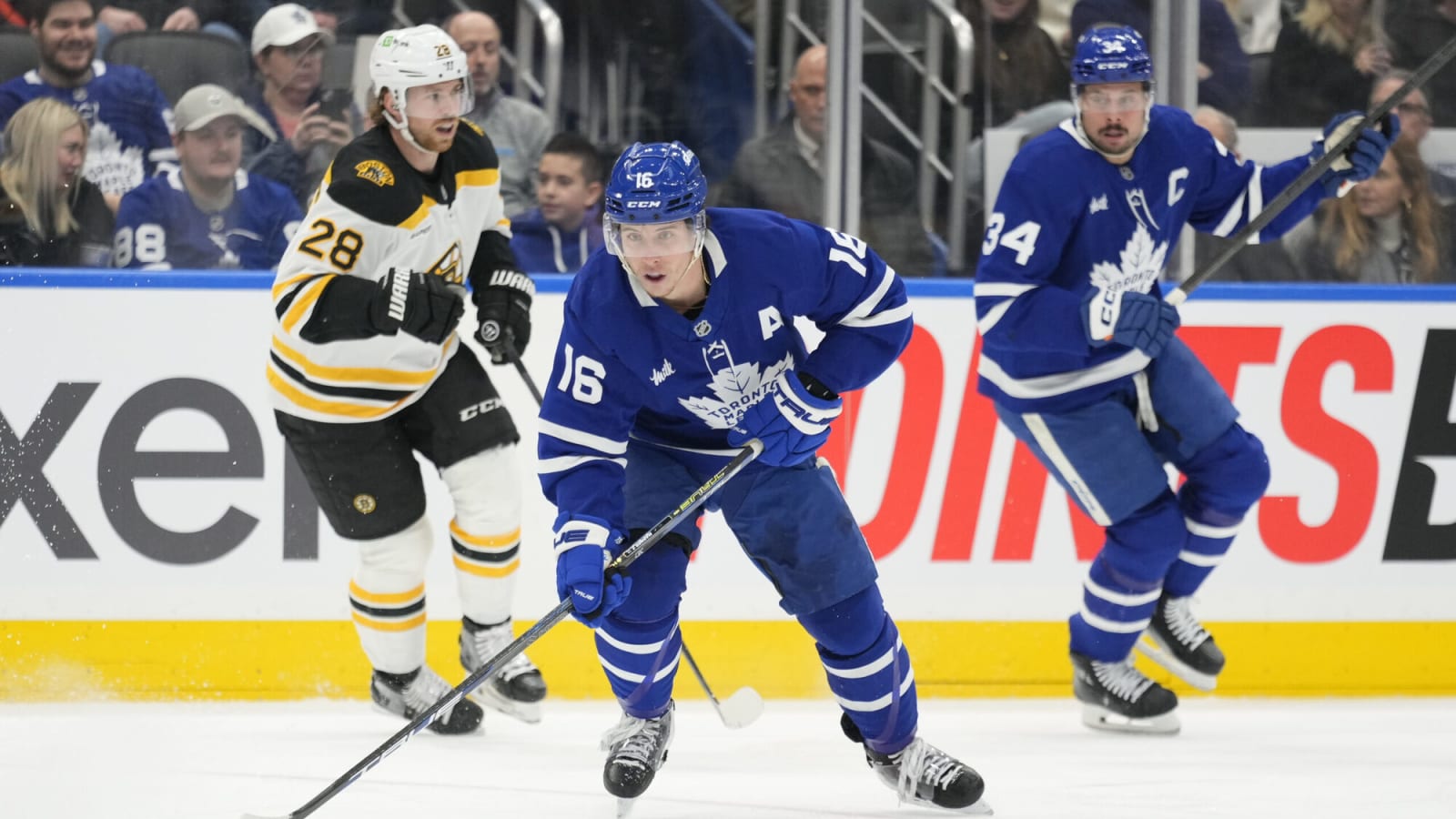
Time flies by when you’re leading the Atlantic Division, but the Toronto Maple Leafs are halfway through the regular season, which means it’s time for our second-quarter grades. We submitted our first-quarter report card on November 26, and the Maple Leafs have remained competitive while fighting through a wave of injuries to several key players, including our first-quarter co-valedictorian, Anthony Stolarz.
It’s worth a reminder that these grades are relative to expectations, while taking in other considerations such as injuries.
Here are our second-quarter grades for the Maple Leafs:
Simon Benoit: Benoit’s physicality ought to be commended, but it often comes at the risk of putting himself out of position. Toronto controls just 40 percent of the expected goals at 5-on-5 when he’s on the ice, and the second half of the season should come down to risk management for an otherwise useful third-pair defender. C
Connor Dewar: Dewar has come alive during the second quarter, after effectively treading water to begin his season. He’s been constantly throwing hits since the end of December and pushing himself into high-danger areas for a resurgent fourth line. And now we wait to see if his uptick in productivity will lead to some actual goals. B-
Max Domi: Domi has registered three goals and seven points in 14 games during this quarter, while centring Toronto’s third line. He’s creating plays for McMann and Robertson and has been effective off the rush, but he still needs to improve defensively, particularly when opponents are creating out of chaos. C+
Oliver Ekman-Larsson: Ekman-Larsson’s competitiveness, physicality and championship pedigree has lent itself well to the Maple Leafs, and he’s been a sturdy presence on Toronto’s blue line. He’s prone to a few defensive lapses at times, but he’s also assertiveness enough to break up plays and now it’s just a matter of increasing his offensive production. B
Nikita Grebenkin: Grebenkin was returned to the Marlies during the first week of December after going without a point in seven games. C
Jani Hakanpaa: Hakanpaa is still working his way back into form after being placed on injured reserve, working on his skating in individual sessions but has not played this quarter. Incomplete
Dennis Hildeby: Hildeby isn’t ideally suited for the NHL but he’s function as Joseph Woll’s backup through January and has recorded a 3-1-0 record in four starts. He hasn’t provided great goaltending with a .892 save percentage but he’s winning his starts, he holds himself accountable and he’s getting some spot starts at the NHL level, while the Maple Leafs are still optimistic about his potential. B-
Pontus Holmberg: Holmberg was miscast in a top-six role when the Maple Leafs were scrambling to place a healthy lineup, but he simply needs to do more. He’s not producing enough when placed in the top-six, while Dewar and Fraser Minten are better fits on the fourth line. He’s been a healthy scratch through January. C-
Calle Jarnkrok: Jarnkrok has been on long-term injured reserve for the entire season. Incomplete
David Kampf: Kampf has been a strong penalty killer and he’s building chemistry on the fourth line. He was moved into a top-six role at times during December and while he’s not an ideal fit in that role, he played better than Holmberg, and is now back in his comfort zone. C+
Matthew Knies: Knies went into a bit of a scoring slump through December and wasn’t playing to his strengths, and he admitted as much. The 22-year-old power forward kept battling and has exploded during Auston Matthews’ return to the lineup, authoring his first career hat-trick against the Boston Bruins on January 4. Knies is a key component of Toronto’s first line, he’s trending towards a 30-goal season, and scoring slumps happen, even for the best young players in the league. B+
Steven Lorentz: Lorentz’s speed and physicality are assets to the fourth line, and he’s not coming out of the lineup, after winning a role on a professional tryout agreement. He plays to the identity Craig Berube wants out of the team, and now it’s just a matter of playing more consistently throughout the second half. B-
Mitch Marner: Marner has continued to function as the Maple Leafs’ MVP through the second quarter of the year, with 16 points in 20 games since November 26, and he should be among the leading Selke Trophy candidates. He’s thriving in all situations, his ongoing contract status is no longer a daily talking point and he’s fourth in NHL scoring at the moment. It may be time to start ramping up the Hart Trophy discussions if he continues at this pace. A+
Auston Matthews: Matthews returned to the lineup on November 30, but his upper-body injury limited his effectiveness throughout the middle of December. He aggravated the injury against the Buffalo Sabres on December 20, and missed another six games due to the injury, then revealed he may be fighting through the effects for the remainder of the season. Matthews has recorded a goal and five points in two games since returning to the lineup on January 9, and he will need to be load managed through the second half of the season. It’s a tricky grade to figure out — even when he wasn’t at his best, Matthews was still a top-line player, who wasn’t finishing his chances. Relative to his own stratospheric expectations, the grade may seem underwhelming, but we’re looking forward to a second-half explosion. B
Jake McCabe: McCabe has been Toronto’s second-best defenceman when healthy — some would argue he’s been more impactful than his partner, Chris Tanev. He missed five games after taking a puck to the face on November 30 and he suffered an upper-body injury on Sunday, after fighting Philadelphia Flyers forward Garnet Hathaway. When he’s been in the lineup, McCabe has embodied everything Craig Berube wants from his defencemen. B
Bobby McMann: McMann has been the key to Toronto’s third line providing some secondary scoring, as his elite speed unlocks opportunities for Max Domi and Nick Robertson. He underwent a bit of a dry spell, and now it’s just about consistency for a player who can occasionally take over games when he’s at his best. B
Dakota Mermis: Mermis hasn’t played a game for the Maple Leafs. Incomplete
Fraser Minten: We still believe that Minten is one of Toronto’s 12 best forwards, but he was returned to the AHL’s Toronto Marlies on December 17. Minten recorded two goals and four points with the Maple Leafs, while playing a defensively mature game, but his efficiency waned, and he was returned to the Marlies, where he’s entered a bit of an offensive slump. The 20-year-old will be a fixture on the roster by next season. C+
Matt Murray: Murray won his first NHL game in 20 months on December 20, which was one of the feel-good stories of the year. After a poor showing against the Washington Capitals on December 28, Murray admitted he’s still re-adjusting to the speed of NHL shooters. Murray remains a curiosity — could he be a potential option for the second half of the season? It’s possible he may get a spot start or two in January before Stolarz returns. C
Philippe Myers: What a difference a quarter makes. Myers only played in one game during the first quarter of the season, but he’s been a constant presence in the lineup since December where his recent uptick in form led to a two-year extension, which he signed on January 3. Myers has formed an effective partnership with Morgan Rielly and he’s this term’s most improved player. B
Alex Nylander: The younger Nylander was returned to the AHL’s Toronto Marlies on December 11, then cleared waivers. He did not make the most of his opportunity with the NHL club, going without a point in five games. D
William Nylander: Nylander hasn’t scored a goal in seven games, but he’s often functioned as the Maple Leafs’ offensive engine through the second quarter, particularly through a December stretch where the 5-on-5 offence was drying up. We’re sure he’ll regain his goal-scoring touch and he’s still in the running for the Rocket Richard. A-
Max Pacioretty: Pacioretty can play throughout the lineup and he spoke about the positive qualities of an imperfect first half prior to Sunday’s game. You can play him on the second line or the fourth line and he will provide some secondary scoring touch, some physicality and hockey intelligence, which are all key assets heading into the second half of the year. B-
Ryan Reaves: We don’t mean to be cruel, but this team is simply better off when Reaves is out of the lineup. Toronto’s fourth line is much better when Reaves isn’t playing, and while he’ll need a few games to spell his teammates, as the team prepares for the playoffs, Toronto simply loses in the minutes when he’s on the ice. D
Morgan Rielly: Rielly is perhaps the toughest skater to assess. His offensive production hasn’t been close to what we’ve expected, but he’s also facilitated the best results of Philippe Myers’ season and still has to be accounted for off the rush. Rielly is playing like a fine No. 3 during the first half of the season, but it’s now incumbent upon him to elevate his game to another tier, which he’s certainly capable of, during the second half. B-
Marshall Rifai: Rifai hasn’t played a game for the Maple Leafs, but could see some playing time soon, after Jake McCabe suffered an upper-body injury Sunday against the Philadelphia Flyers. Incomplete
Nick Robertson: Robertson has snapped out of a scoring slump, with nine points in 16 games during the second quarter. He’s finding his footing alongside Bobby McMann and Max Domi, but now it’s incumbent upon Robertson to put together some more consistent efforts leading up to the trade deadline. B-
Alex Steeves: Steeves was assigned to the Marlies on November 30. He’s been an excellent scorer at the AHL level, but can’t produce this same type of impact at the NHL level. C
Anthony Stolarz: Stolarz was emerging as a legitimate Vezina Trophy candidate before suffering an injury on December 12 against the Anaheim Ducks. He underwent a procedure to remove a loose body in his knee, and he’s expected back for the end of January. Toronto will have to be careful with his minutes during the second half, while giving Joseph Woll ample rest — if Stolarz returns to top form, he could be the one tasked with leading the Maple Leafs to their first Stanley Cup since 1967. B+
Chris Tanev: Tanev is the NHL’s best shot blocker and continues to function as Toronto’s most important defender. He makes clean, easy exits, he breaks up chances off the rush, he will never shoot the lights out but he’s an underrated passer and has a nasty competitive streak. Toronto controls 58 percent of the expected goals at 5-on-5 when Tanev is on the ice alongside Jake McCabe, and the 35-year-old may take on an even larger role now that his primary partner has been placed on injured reserve. It was an excellent second quarter for Tanev. A
John Tavares: Tavares was Toronto’s second-leading scorer during the second quarter of the season, in what’s been a tremendous season overall. He’s the team’s best faceoff man, he constantly creates chances for his linemates, and he’s tied for 11th league-wide with 19 goals — which came at a premium during Toronto’s dry spell in December. Many people owe Tavares an apology for prematurely anticipating his decline. A
Conor Timmins: Timmins struggled through the second quarter and has been outplayed by Myers throughout December. He won the No. 6 role out of training camp in large part due to the fact that he minimized his propensity for risk, but some bad habits have re-entered his game. Timmins hasn’t played in January and with Myers in great form, it may be tough to find some playing time. C-
Joseph Woll: Woll has been Toronto’s unquestioned No. 1 goaltender since December 12, and he’s done everything that’s been asked of him. The underlying numbers would suggest that he’s underperformed, but you can dismiss them, considering he’s won his past four starts, he’s playing the largest volume of games of his career and he’s stole a few wins for the Leafs during this span. Woll is a No. 1 goalie on a Stanley Cup contender, which is an accomplishment in and of itself. B+
More must-reads:
- Sidney Crosby assigns blame after Penguins' second straight blowout loss
- Steve Yzerman's time should be up if Red Wings miss playoffs again
- The 'Active MLB 3+ 30-homer seasons' quiz
Breaking News
Trending News






Customize Your Newsletter
 +
+




Get the latest news and rumors, customized to your favorite sports and teams. Emailed daily. Always free!
PRIVACY POLICY COOKIE POLICY CONTACT US
ABOUT YARDBARKER TERMS OF SERVICE


By using this site, you agree to our Terms of Service and Privacy Policy.
This site is for entertainment purposes only.
There is no gambling offered on this site.
Gambling Problem? Call 1-800-Gambler.
