
-

-


Follow Us
-

 On Facebook
 On Flipboard
 On Twitter
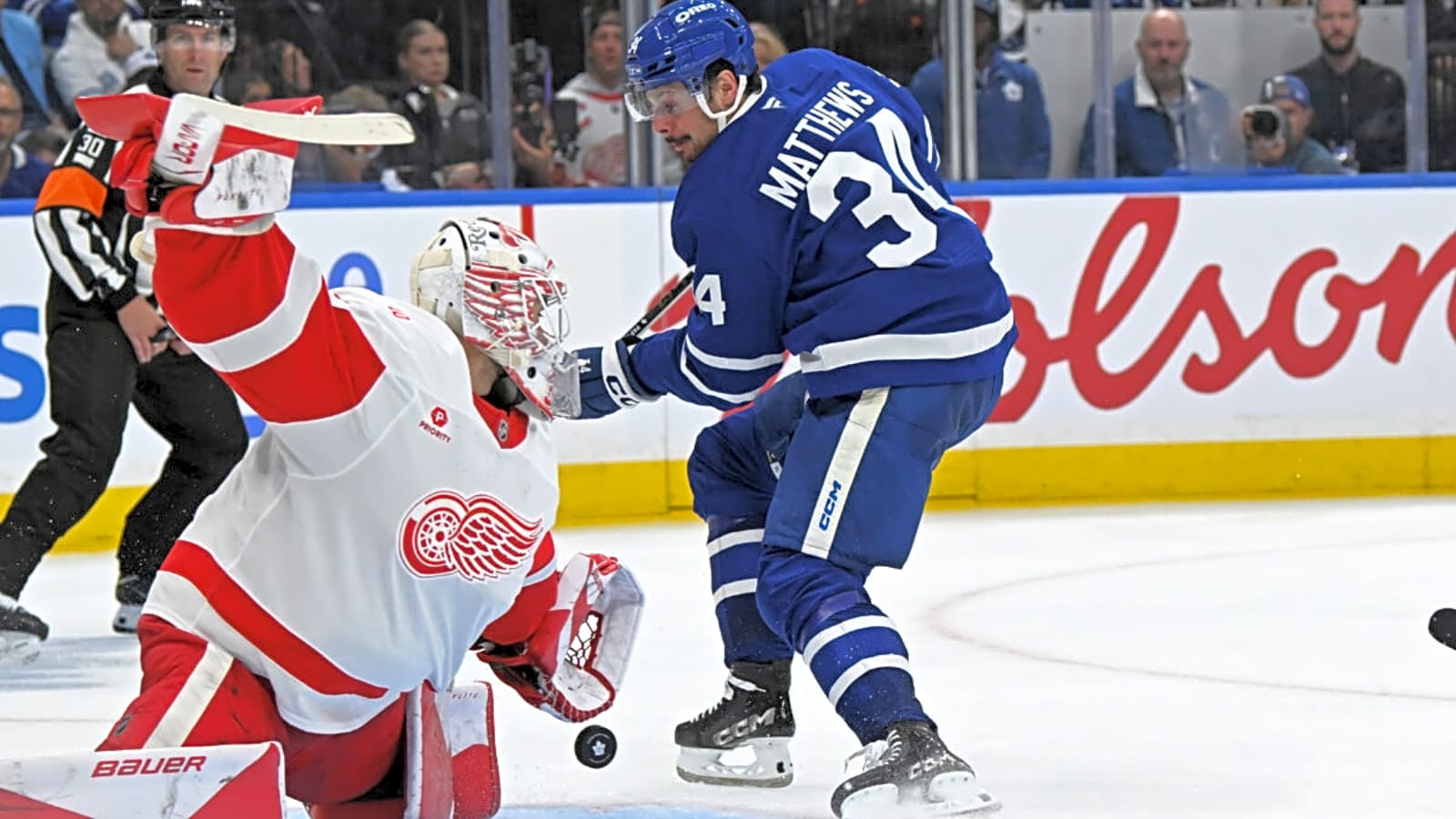
There are nights when the Toronto Maple Leafs look like they are still finding their footing, and others when it feels like they’re still searching for the right balance. Wins are coming, points are being banked, but the conversations around the Maple Leafs haven’t grown quieter. That’s what happens when a team hasn’t quite clicked yet.
There’s a tension that runs through everything right now. The stars can still produce, but not always in familiar ways. Depth players are chipping in at important moments, but not consistently enough to settle everyone’s nerves. And behind it all, there are philosophical questions about how the group is being put together, coached, and plays. Here’s where a few things stand as Toronto prepares to face the Washington Capitals tonight on the road.
Item One: Auston Matthews Is Scoring — But Something’s Off
The historical context matters here. The only time Auston Matthews has finished a season below a point per game was his rookie year in 2016–17. That’s the standard. Right now, he’s tracking toward roughly 69 points, which would be a clear outlier in the modern phase of his career. The goal-scoring hasn’t vanished: he’s put up 14 goals in 27 games. But his playmaking distribution is unusual and low. Nine assists tell the story. Matthews is finishing plays, not driving them.
Tuesday’s comeback win over the Chicago Blackhawks captured that tension perfectly. Matthews tied the game late with a classic power-play goal, curling out from behind the net and snapping a shot past Spencer Knight’s glove. It was vintage. He added an assist as well, his first multi-point night in seven games. On paper, that might look like a breakout. Watching it, it felt more like a reminder that the player is still there, even if his normal flow hasn’t returned.
He’s still shooting the puck, already over 100 shots, and he’s still dangerous when he touches it. But the game isn’t running through him the way we’re used to seeing. Whether that’s system, chemistry, health, or just one of those stretches elite players endure, it remains one of the biggest unresolved questions surrounding the Maple Leafs.
Item Two: Maple Leafs Secondary Scoring Is Showing Up
One of the more encouraging developments has been production from outside the usual headline names. Oliver Ekman-Larsson (OEL) is having a solid season and has scored in back-to-back games. He’s already well ahead of last season’s pace. With six goals and 22 points through 32 games, he’s doing more than stabilizing the blue line. He’s actively contributing offence at a time when the defence has been stretched thin.

Up front, Dakota Joshua has started to make an impact that should encourage Maple Leafs fans. His goal against the Blackhawks came just eight seconds after Matthews tied the game, the kind of moment that flips momentum instantly. It was a typical Joshua goal, nothing pretty. Instead, it was a product of his strength and ability to finish in tight. After missing a game due to illness, Joshua has goals in back-to-back games. He’s starting to make a difference.
Taken together, OEL and Joshua are reminders that Toronto can’t rely solely on its stars to solve every contest. Secondary scoring doesn’t need to be flashy — it just needs to arrive when games hang in the balance. Lately, it has.
Item Three: The Maple Leafs’ Silence Around Analytics
My sometimes co-author, Stan Smith, sent me an interesting email yesterday, sharing what he has noticed about this season’s organization. One subtle but noticeable shift has been the near-complete absence of talk about analytics. Under former general manager Kyle Dubas and head coach Sheldon Keefe, the Maple Leafs’ analytics department was part of the public conversation. It was referenced, debated, and often defended. Under current general manager Brad Treliving and head coach Craig Berube, it’s barely mentioned at all.

That doesn’t mean analytics have been abandoned, but the silence raises questions. Are analytics still central to the organization’s decision-making? Has their role changed? Or is this simply a philosophical shift toward keeping those discussions internal? Given how closely analytics were once tied to the organization’s identity, the lack of visibility stands out.
What’s Next for the Maple Leafs?
The upcoming stretch feels huge for the Maple Leafs, not just in terms of points but also for clarity. Does Matthews rediscover his usual rhythm as a play-driver, not just a finisher? Can the secondary scoring continue to show up when games tighten? Will the team’s broader identity — stylistically and philosophically — become easier to read?
The Maple Leafs are a team in crisis. They are far from settled. The coach is calling out his players in the media, and the players are acknowledging their frustration on the ice, even when they win. Somewhere between flashes of skill and lingering questions, they’re still trying to find out who they are.
The next few weeks should bring that picture into sharper focus. The plain truth is that, if they want to make the playoffs, they are going to need to pull up their socks.
More must-reads:
- Capitals' Alex Ovechkin makes more NHL history with another 30-goal season
- Senators' brutal mistake leads to the fastest goal in Panthers history
- The 'NBA yearly free throw leaders' quiz
Breaking News
Trending News








Customize Your Newsletter
 +
+




Get the latest news and rumors, customized to your favorite sports and teams. Emailed daily. Always free!
PRIVACY POLICY COOKIE POLICY CONTACT US
ABOUT YARDBARKER TERMS OF SERVICE


By using this site, you agree to our Terms of Service and Privacy Policy.
This site is for entertainment purposes only.
There is no gambling offered on this site.
Gambling Problem? Call 1-800-Gambler.
