-

-


Follow Us
-

 On Facebook
 On Flipboard


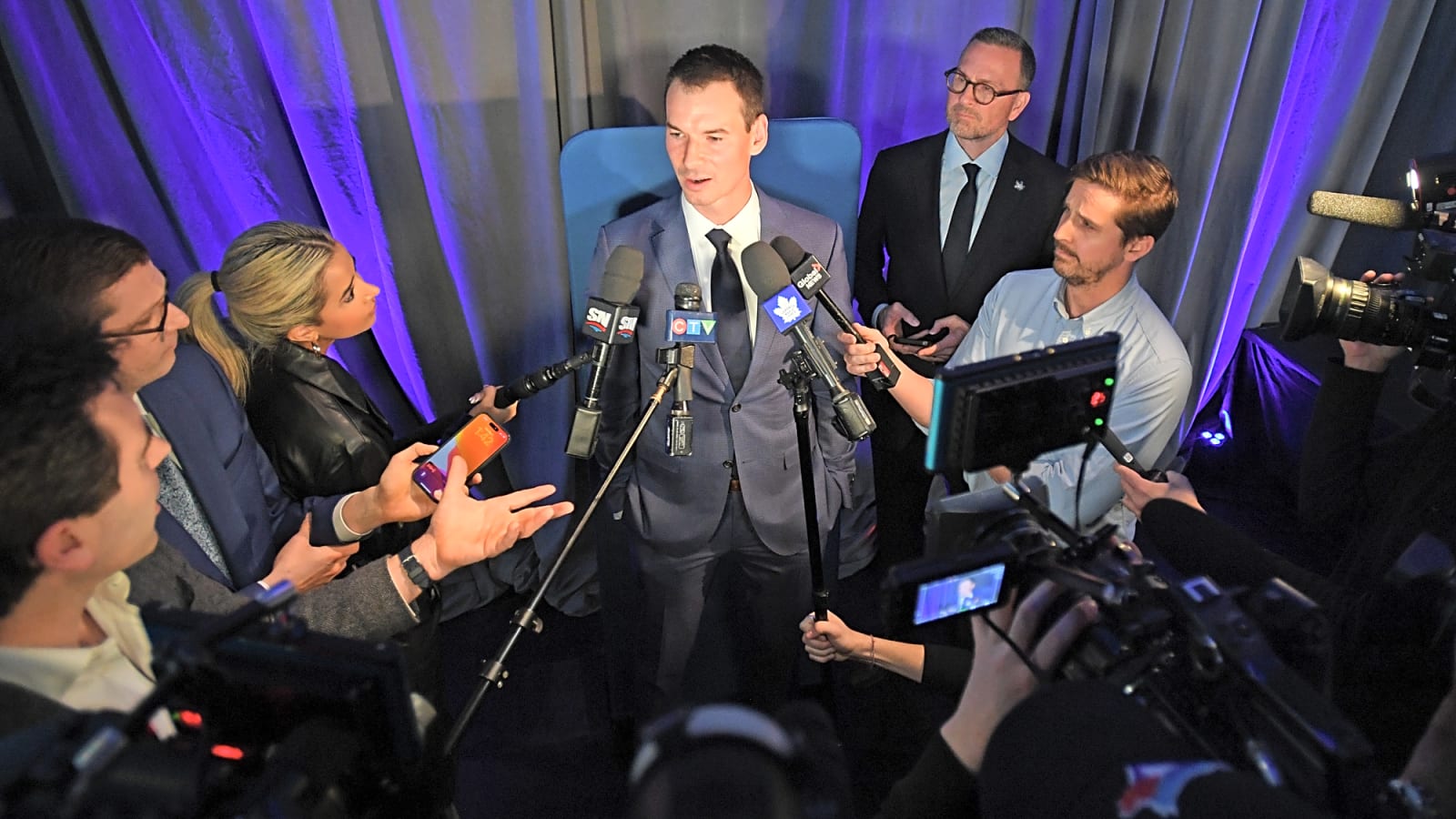
When Toronto Maple Leafs general manager John Chayka was hired this past June, he clearly had a mandate to turn the aging, underachieving roster over to get the team back to the playoffs. He set out quickly to do so, reshaping the team’s bottom-six forward group and adding a top-six forward, a top-four defenseman, and a former two-time Vezina Trophy-winning goaltender. At the quarter point of the regular season, the changes haven’t worked out well, and if that continues, it will leave the Maple Leafs with an old, expensive roster, little flexibility, and almost no help on the way.
The case for optimism is out there, but many Toronto fans are feeling déjà vu, and it’s easy to see why. The Maple Leafs finished last season well out of the playoffs, and it was clear that they had a lot of holes in their roster, particularly in their bottom six and on their defense. The team lacked secondary scoring, didn’t have much physicality, needed more speed, and needed to address their goaltender. They tried to address all of those issues and spent significantly to improve, but what they gained doesn’t appear to be an overall upgrade. That isn’t to say all of the summer moves were bad, but overall the body of work leaves a lot to be desired.
As mentioned earlier, the Maple Leafs didn’t address many of the underlying issues that were haunting the team but committed substantial money to many of their summer additions, including forward Kirill Marchenko ($12.5MM AAV starting in 2027-28), defenseman Darren Raddysh ($8.5MM AAV), and Sergei Bobrovsky ($7MM AAV). Right now, the Marchenko move looks good, and the Raddysh deal looks fine for the short term, but Bobrovsky has been terrible, and Toronto has zero salary-cap flexibility this season or next because of their summer moves. That lack of flexibility isn’t the result of just those signings, though, as the Maple Leafs also acquired Colton Sissons, Nick Paul, Jack Roslovic, Teddy Blueger, and Brandon Duhaime, and all of those moves have left Toronto with virtually no other impact moves to make to get better this year or next.
The depth moves might be the most concerning issue outside of Bobrovsky, as the Maple Leafs gave a lot of multi-year commitments to guys who don’t play with a ton of pace, don’t score often, and aren’t overly tough, all things Toronto could’ve really used in their lineup. Blueger has just five points in 22 games, Duhaime has four, and Paul has seven; the group also hasn’t been a defensive stalwart.
Speaking of the defense, the Maple Leafs defensive core remains arguably the biggest question mark on the team despite Chayka’s efforts to improve it. The deal with Raddysh will likely improve the offense from the back end for the next few seasons, but giving a 30-year-old late bloomer an eight-year deal comes with considerable risk. And that is a common denominator with Toronto’s defensemen; they all come with considerable risk. Morgan Rielly has been better offensively, but offers almost nothing defensively and gives up too much in the defensive zone. Chris Tanev is a warrior, but he is closer to the end of his career than the beginning and has to be load-managed to be effective. Jake McCabe and Oliver Ekman-Larsson are both very useful players, but they can’t be expected to be top pairing defenders at this stage of their careers. The Maple Leafs gave up the 31st most goals in the NHL last season, and adding an offensive defender, a bunch of bottom-six forwards, and an old goaltender will only do so much to help.
Speaking of that older goaltender, Bobrovsky was expected to stabilize the net for Toronto, but that was clearly going to be tough given how badly last season went off the rails in Florida for the now 38-year-old. Bobrovsky rocked a .877 SV% with Florida last year, and his -12.2 goals saved above expected was the ninth-worst figure in the entire NHL (as per MoneyPuck). If Bobrovsky can’t rebound this year, he could be another massively expensive issue for the Maple Leafs, who are fortunate to still have veteran Anthony Stolarz in tow.
Toronto now sits at 8-12-2 and is seventh in the Atlantic Division, with playoff dreams falling further into the rearview. Injuries to Marchenko, Sissons, and Rielly haven’t helped and have made a difficult situation even worse. The Maple Leafs lack an identity as a team, remain inconsistent, and lack depth despite spending heavily to add it this past summer. A playoff push would likely require additional acquisitions, but even a minor trade could be difficult with so few assets and almost no roster flexibility.
The biggest issue the Maple Leafs face is determining the franchise’s path forward. They don’t own their own first-round pick in the next two drafts (if it falls in the top five), so a full roster teardown feels premature. But with Auston Matthews less than two years away from being a UFA, does it make sense to push more futures out the door to build around a very flawed group? Probably not. Toronto has already changed out management and the coaches multiple times on both fronts. One constant remains, though. This team keeps finding interesting ways to lose. They look less and less like a playoff contender, and fans are growing more impatient by the day.
More must-reads:
- Connor McDavid's historic start continues by tying Wayne Gretzky record
- Tipping off: The unstoppable Spurs; Lakers on pace to rack up even more wins
- The 'National League MVPs' quiz
Breaking News
Trending News







Customize Your Newsletter
 +




Get the latest news and rumors, customized to your favorite sports and teams. Emailed daily. Always free!
PRIVACY POLICY COOKIE POLICY CONTACT US
ABOUT YARDBARKER TERMS OF SERVICE


By using this site, you agree to our Terms of Service and Privacy Policy.
This site is for entertainment purposes only.
There is no gambling offered on this site.
Gambling Problem? Call 1-800-Gambler.